BREAKING: Iran REFUSES To Fold; Trump Threatens New Strikes; IDF On Alert | TBN Israel
YouTube · BNqIQg-_6kg
Quick Read
Summary
Takeaways
- ❖Iran submitted a 14-point proposal demanding US military withdrawal, lifting of blockades, and compensation, setting a 30-day deadline.
- ❖The US rejected Iran's proposal, with Trump signaling skepticism and threatening renewed strikes, believing Iran has not 'paid a heavy enough price'.
- ❖Trump's strategy relies on creating total ambiguity and an aggressive economic blockade to choke Iran's funding for terror proxies.
- ❖The IDF is on high alert, preparing for renewed fighting and coordinating potential strikes on Iranian energy facilities with the US military.
- ❖Experts argue that military strikes alone will not change the Iranian regime; only regime change, driven by financial pressure and internal opposition, is effective.
- ❖Global shipping companies are bypassing the Strait of Hormuz with new land-sea routes, reducing Iran's strategic leverage over the waterway.
Insights
1Iran's Maximalist Negotiation Stance
Iran's updated 14-point proposal, submitted via Pakistani mediation, is an aggressive counter-response to a previous US proposal. It demands guarantees of non-aggression, withdrawal of US forces from surrounding areas, immediate removal of the naval blockade, unfreezing of Iranian assets, compensation payments, and an end to fighting on all fronts including Lebanon. Crucially, it pushes the Iranian nuclear program discussion to a 'phase two', effectively delaying or avoiding it.
Iran transferred to Washington through Pakistani mediation an updated proposal that includes 14 clauses... The Iranians for their part firmly reject the American timetable and emphasize that the central disputes must be resolved within only 30 days... Thran is demanding guarantees of non-aggression, the withdrawal of United States military forces from the areas surrounding the Islamic Republic, the immediate removal of the naval blockade, the unfreezing of Iranian assets frozen around the world, and even the payment of compensation... The first stage of the document seeks to achieve a framework agreement within one month and only after that would the second stage begin focusing on the Iranian nuclear program.
2Trump's Strategy of Ambiguity and Economic Pressure
President Trump's approach to Iran is characterized by creating total ambiguity and keeping all options open, including threatening renewed strikes. He rejected Iran's proposals, stating Iran has not 'paid a heavy enough price'. The primary tool is an aggressive economic blockade, physically closing sea routes and preventing oil exports, which is proving more effective than air strikes in cutting off funding for terror proxies and internal repression.
President Trump's winning strategy against the Iranian regime is based on creating total ambiguity and keeping all options open... Trump, who only on Friday rejected outright a previous Iranian proposal, claiming that he was not satisfied with it, responded with great skepticism to the new initiative... The United States is applying an aggressive economic blockade that is proving to be more effective than the air strikes as it shoke the funding for sources of the terror proxies and internal repression.
3IDF Preparations for Escalation
The IDF is maintaining high readiness for a potential new round of fighting, completing preparations for escalation both offensively and defensively. This includes high alert for air defensive systems and readiness of the Israeli Air Force to carry out strikes based on plans coordinated with the American military. Israel understands that any US strike, even limited, will likely provoke an Iranian response against Israel.
Officers in the IDF estimate that the United States will be required to carry out a limited strike move in Iran... The IDF is competing and completing the preparations for escalation also on defense while maintaining a high level of readiness in the air defensive systems... the Israeli Air Force is prepared to carry out strikes according to the plans that are prepared with the American military... In Israel, there is an understanding that a strike of any scale will bring an Iranian response against Israel.
4Limited Efficacy of Military Strikes vs. Regime Change
According to analysis, no military strike the US is willing to take will fundamentally change the Iranian regime or force a policy shift regarding its nuclear ambitions, proxy warfare, or oil sales. The regime is seen as sanctifying death and willing to sacrifice its people and economy. True change, it is argued, requires regime change, achieved through sustained financial and military pressure, coupled with strengthening internal opposition factions.
There is no military strike that the United States is willing to take... that will actually change the Iranian regime... The only thing that will really stop these people is regime change. The only thing that scares them is regime change... a bombing campaign would reach the point or meet the goal of further weakening the Iranian regime, but it will not open up the straight of Humus and it will not force the Iranian regime to give in.
5Global Shipping Bypasses Strait of Hormuz
Due to the blockade and increased risk, global supply chains are adapting. MSC, the world's largest shipping company, has introduced a new land-sea route: ships sail through the Suez Canal to Western Saudi Arabian ports, cargo is then trucked 1,300 km across the Arabian Peninsula to Dam, and from there to Gulf ports. This expensive and slower alternative signifies a broken trust in the Strait of Hormuz as a reliable maritime passage, diminishing Iran's leverage over the waterway.
Global supply chains are also starting to bypass Hmuz. The shipping company MSC has presented a new route. Ships from Europe will sail through the Suez Canal to ports Western Saudi Arabia. And from there, cargo will be moved by trucks about 1,300 kilometers across the Arabian Peninsula to Dam and from there to ports in the Gulf... The straight of Homus is no longer the maritime passage. Has become a business security and political risk.
Bottom Line
Iran's strategy of turning its own economic pain into global pain by disrupting oil markets through the Strait of Hormuz is being undermined by new logistical bypass routes.
This reduces Iran's leverage as a 'hostage-taker' of global energy flows, potentially weakening its bargaining position in future negotiations and making the economic blockade more effective without causing global panic.
Investment in alternative shipping and logistics infrastructure in the Arabian Peninsula could see increased demand and strategic importance, creating new trade corridors independent of traditional choke points.
Opportunities
Develop and invest in alternative land-sea logistics corridors.
Given the instability around critical maritime passages like the Strait of Hormuz, there's a clear need for robust, secure, and efficient alternative trade routes. This involves investing in port infrastructure, trucking networks, and intermodal solutions that connect major shipping lanes to land-based transit across stable regions, as exemplified by MSC's new route through Saudi Arabia.
Key Concepts
Asymmetrical Warfare (Economic/Geopolitical)
The US employs an economic blockade as a primary weapon, aiming to cripple Iran's financial capabilities and support for proxies, rather than relying solely on conventional military force. Iran, in turn, uses its control over the Strait of Hormuz and threats of regional escalation as leverage, trying to turn its own pain into global pain to force concessions.
Negotiation by Uncertainty
Trump's strategy against Iran involves maintaining total ambiguity regarding military action and negotiation terms. This keeps the Iranian leadership stressed and unable to predict the next move, forcing them to react to an unpredictable opponent rather than dictating terms.
Lessons
- Monitor global oil market reactions to the US naval blockade on Iran and the effectiveness of new shipping bypass routes, as these indicate shifts in geopolitical leverage and potential energy price volatility.
- Analyze the strategic implications of 'negotiation by uncertainty' as employed by the US against Iran, considering its application in other high-stakes international or business negotiations.
- Assess the long-term viability and security of supply chains that rely on contested maritime chokepoints, and explore diversification into alternative logistics networks to mitigate geopolitical risks.
Notable Moments
Iran's 14-point proposal is presented as an 'aggressive counter response' to a US proposal, demanding significant concessions without addressing its nuclear program.
This highlights Iran's defiant posture and its attempt to dictate terms, while strategically avoiding the core issue that triggered the conflict, signaling a lack of genuine intent for a comprehensive peace deal.
Trump's strategy of 'total ambiguity' and aggressive economic blockade is described as his 'winning strategy' against Iran.
This indicates a shift from traditional diplomatic or purely military approaches, emphasizing psychological warfare and economic strangulation to pressure the Iranian regime without direct, predictable engagement.
The world's largest shipping company, MSC, reveals a new land-sea route to bypass the Strait of Hormuz.
This demonstrates a tangible global response to Iran's threats, reducing its strategic leverage over a critical maritime choke point and indicating a long-term adaptation of global trade routes to regional instability.
Quotes
"Iran has probably not yet paid a heavy enough price."
"The focus must shift from extending the ceasefire to an operational move that will lead to the complete end of the war."
"Trump's winning strategy against the Iranian regime is based on creating total ambiguity and keeping all options open."
"There is no military strike that the United States is willing to take... that will actually change the Iranian regime."
"An oil well is not a light switch. You cannot always turn it off and on without paying a price."
Q&A
Recent Questions
Related Episodes
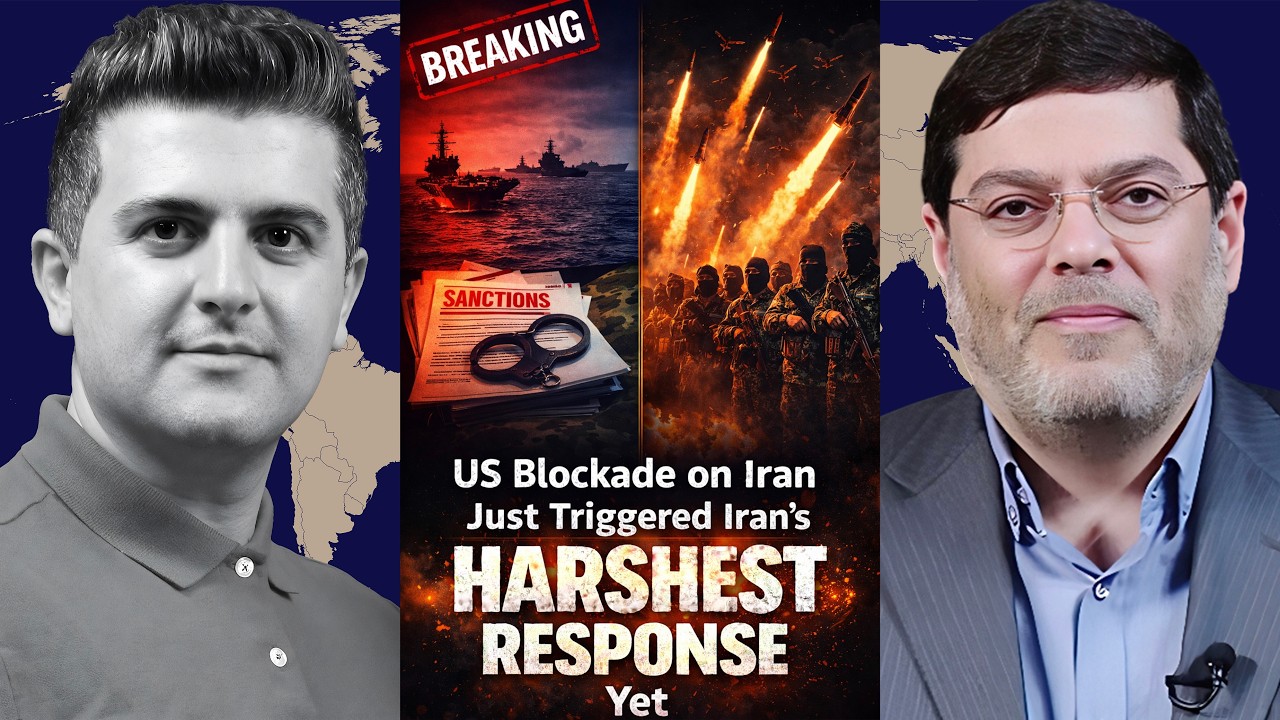
Seyed M. Marandi: US Blockade on Iran Just Triggered Iran’s HARSHEST Response Yet
"An Iranian professor details how US demands and an imposed blockade triggered Iran's harshest response, exposing American strategic missteps and the vulnerability of Gulf Arab states."

Patrick Henningsen: Hezbollah JUST Fired Back at Israel - Iran Vows to “Crush” All Attacks
"Patrick Henningsen argues that the US and Israel initiated an illegal war against Iran, driven by Trump's incompetence and Israeli influence, leading to an inevitable escalation with severe global economic repercussions."
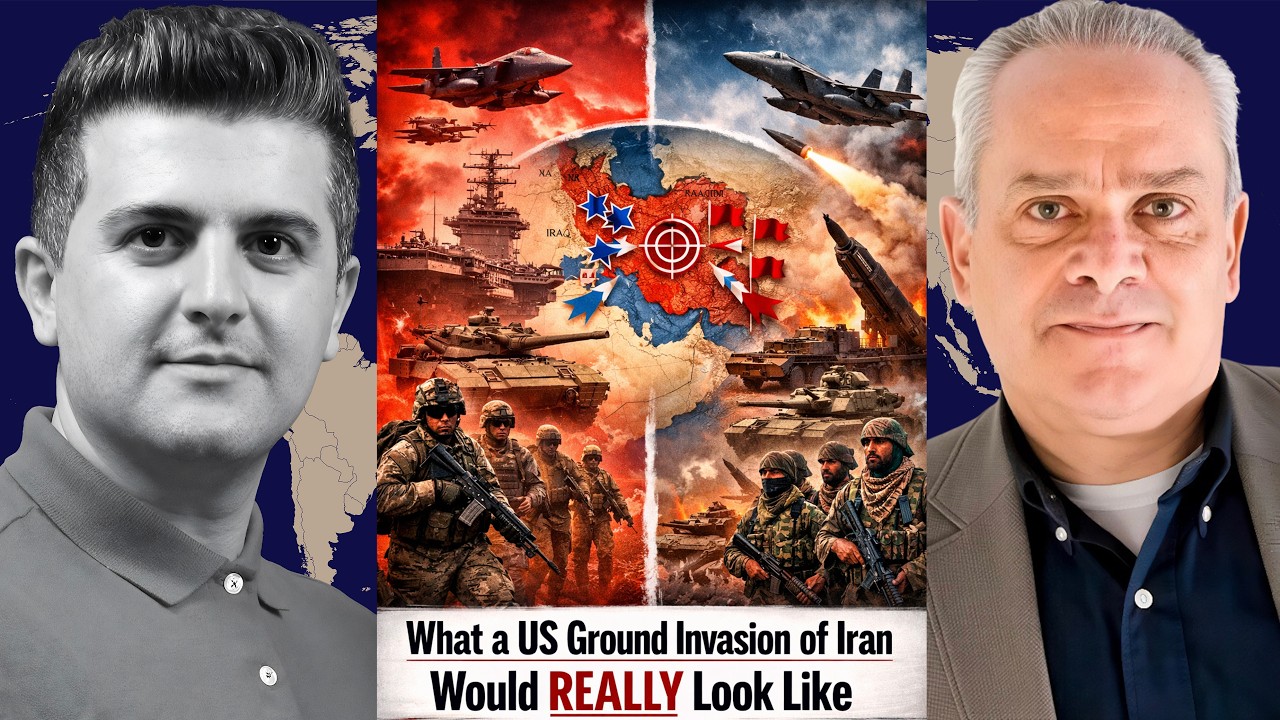
Col. Jacques Baud: What a US Ground Invasion of Iran Would REALLY Look Like
"Colonel Jacques Baud dissects the strategic futility of a US ground invasion of Iran, arguing that current troop levels are insufficient and such an action would backfire, exposing US allies and potentially leading to Iran's nuclearization."

Bibi DEMANDS Ground Troops As Marines Rushed to Iran
"Benjamin Netanyahu is pushing for US ground troops in Iran, framing air strikes as insufficient, while the US rushes Marines to the region and struggles to secure the Strait of Hormuz against surprisingly capable Iranian defenses."