HOT TOPICS | Donald Trump's Iran War: No Plan, No Strategy, Just Chaos!
YouTube · BZXzE-62Wzw
Quick Read
Summary
Takeaways
- ❖The Trump administration's Iran war is characterized by a complete absence of rationalization or coherent strategy.
- ❖Pentagon briefings, led by figures like Pete Hegseth, are described as 'incomprehensible' and 'word salad,' pushing religious nationalism.
- ❖President Trump's statements on the war are contradictory, simultaneously claiming it's 'finished' and 'just beginning,' aiming to manipulate markets and public opinion.
- ❖Evidence suggests a U.S. Tomahawk missile hit an Iranian girls' school, killing over 180, which the administration is allegedly covering up.
- ❖Rick Wilson asserts that Iran holds an asymmetric advantage, capable of prolonged low-intensity conflict and terrorism, which the U.S. is unprepared for.
- ❖The war's high cost (billions per day) and low public approval (comparable to Vietnam's end) make it unsustainable.
- ❖Rick Wilson suggests Israeli Prime Minister Netanyahu benefits from a perpetual 'devil' in Iran to maintain political power, contributing to the conflict's continuation.
Insights
1Lack of Coherent Strategy and Contradictory Messaging
The host and guest argue that the Trump administration's Iran war lacks any rationalization or clear strategy. President Trump and Pentagon officials, particularly Pete Hegseth, issue contradictory statements regarding the war's progress and objectives. Trump claims the war is 'very complete' and Iran's military 'wiped out,' while Hegseth simultaneously declares 'the most intense day of strikes.' This inconsistency is seen as an attempt to manipulate public perception and markets, rather than provide transparent information.
Donald Trump's statements about the war being 'very complete' and 'just beginning' (), Pete Hegseth's 'incomprehensible' briefings (, , ), and the host's observation that 'this administration has no credibility when it comes to authority and the truth' ().
2Religious Nationalism in Military Briefings
Don Lemon criticizes the inclusion of specific religious scripture and prayer in official Pentagon briefings, led by Pete Hegseth. He argues that while personal faith is acceptable, pushing 'religious nationalism' in a diverse military context violates the separation of church and state and is inappropriate for a public, official setting.
Pete Hegseth quoting Psalm 144: 'Blessed be the Lord, my rock, who trains my hands for war and my fingers for battle' (), and Lemon's commentary on the inappropriateness of 'pushing the religious nationalism' ().
3Alleged U.S. Missile Strike on Iranian School Cover-Up
The episode highlights strong evidence, including geolocated footage and expert analysis, indicating that a U.S. Tomahawk missile struck an Iranian girls' primary school, killing 180 people, mostly children. The administration, including President Trump, is accused of lying about this incident, claiming Iran bombed its own school or that 'other nations' use Tomahawks. This cover-up is seen as a major credibility issue that will be exploited by Iran.
Reporter's question to Trump about bombing an 'elementary school' (), Trump's denial and claim that 'tomahawks are used by others' (), and confirmation from 'drop site news' and Trevor Bell that 'US Tomahawk missiles hit the girls primary school' ().
4Netanyahu's Political Motivation for Perpetual Conflict
Rick Wilson posits that Israeli Prime Minister Benjamin Netanyahu has a political incentive to maintain a state of conflict with Iran. He suggests Netanyahu 'cannot afford to have a safe, prosperous, democratic Iran allied with the West' because he 'needs the devil' to 'scare the Israelis' and consolidate his political power by presenting himself as the sole protector against an 'imaginary nuclear threat.'
Rick Wilson stating, 'BB Netanyahu cannot afford to have a safe, prosperous, democratic Iran allied with the West. He needs the devil. He needs the threat.' ().
Bottom Line
Iran possesses an asymmetric advantage in this conflict, capable of a 'waiting game' and low-intensity tactics like terrorism, which the U.S. is poorly equipped to counter, especially after internal intelligence purges.
This suggests that despite U.S. conventional military superiority, Iran can inflict significant damage and prolong the conflict, potentially bringing terrorism to American soil, impacting public safety and economic stability.
Policymakers should prioritize intelligence rebuilding and counter-terrorism strategies focused on asymmetric threats, rather than solely relying on conventional military might, and consider the long-term implications of current military actions on global and domestic security.
The war with Iran started with historically low public popularity, comparable to the end of the Vietnam War, due to the absence of a '9/11 moment' to galvanize American support.
This indicates a significant public skepticism towards foreign military interventions without a clear, immediate threat, making the war politically unsustainable and vulnerable to public backlash as costs and casualties mount.
Political leaders should recognize this public sentiment and avoid engaging in conflicts lacking broad support or clear justification, as such wars are likely to fail politically and domestically, regardless of military outcomes.
Key Concepts
Asymmetric Warfare
The guest, Rick Wilson, explains that Iran, despite being outmatched conventionally, holds an asymmetric advantage. They can employ low-intensity tactics like terrorism (car bombs, suicide bombers) in a prolonged 'waiting game' to exhaust the U.S. and exploit vulnerabilities, rather than engaging in direct military confrontation they cannot win.
Separation of Church and State
Don Lemon emphasizes his deep understanding and belief in the separation of church and state, criticizing Pentagon officials for incorporating specific religious scripture and prayer into official military briefings, arguing it is inappropriate given the diverse beliefs within the military.
Crisis Management (Truth First)
Rick Wilson states the 'first rule of crisis management is get the truth out first.' He applies this to the alleged U.S. missile strike on an Iranian school, arguing that the administration's refusal to admit responsibility exacerbates the crisis and will be exploited by Iran.
Lessons
- Critically evaluate official government and military statements during times of conflict, especially when messaging appears contradictory or lacks specific details.
- Recognize the potential for political motivations to drive military actions and foreign policy decisions, and question narratives that seem to serve domestic political agendas.
- Understand the concept of asymmetric warfare and how seemingly weaker adversaries can leverage unconventional tactics to counter superior military forces, impacting global and domestic security.
- Support organizations that advocate for transparency and accountability in government, particularly concerning military actions and civilian casualties.
Notable Moments
Don Lemon criticizes Pete Hegseth's 'incomprehensible' and 'clown-like' Pentagon briefing, including the use of religious scripture.
This highlights concerns about the professionalism and appropriateness of official military communications, especially when perceived as mixing religious nationalism with strategic updates.
Rick Wilson explains Iran's asymmetric advantage and the potential for terrorism on U.S. soil as a consequence of the war.
This provides a stark warning about the long-term, unconventional threats posed by the conflict, shifting the focus from traditional warfare to domestic security implications.
The discussion of the alleged U.S. Tomahawk missile strike on an Iranian girls' school and the administration's denial.
This moment underscores issues of military accountability, government transparency, and the potential for such incidents to fuel anti-American sentiment and prolong conflict.
Laura Ingraham's unexpected questioning of Senator Ted Cruz regarding Lindsey Graham's lobbying for war with Israel.
This is presented as a rare instance of bipartisan agreement on the need for accountability in foreign policy, suggesting even some conservative voices are questioning the war's origins and conduct.
Quotes
"Blessed be the Lord, my rock, who trains my hands for war and my fingers for battle."
"This administration has no credibility when it comes to authority and the truth."
"Strategy without tactics is the slowest way to lose a war. But tactics without strategy is the noise before defeat."
"We have opened a bad door. If we wanted to change the regime in Iran, I would have been all for it... But now I think the Mullas are like the Americans are going to kill us all. You better be with us. We're going to protect you."
"The first rule of crisis management is get the truth out first."
"BB Netanyahu cannot afford to have a safe, prosperous, democratic Iran allied with the West. He needs the devil. He needs the threat."
Q&A
Recent Questions
Related Episodes

Patrick Henningsen: Hezbollah JUST Fired Back at Israel - Iran Vows to “Crush” All Attacks
"Patrick Henningsen argues that the US and Israel initiated an illegal war against Iran, driven by Trump's incompetence and Israeli influence, leading to an inevitable escalation with severe global economic repercussions."
What happens to Trump voters when Trump is gone?
"The David Pakman Show explores the contentious path forward for Trump voters after his political era, exposing alleged corruption, economic misrepresentation, and the necessity of media literacy."

🚨 THEY F*CKED AROUND FOR THE LAST TIME 😭😭😭
"This episode unleashes a torrent of highly opinionated commentary on the US-Iran deal, Israel's role, and a scathing critique of 'leftist' policies and immigration, particularly highlighting the UK grooming gang report as evidence of Western societal decay."
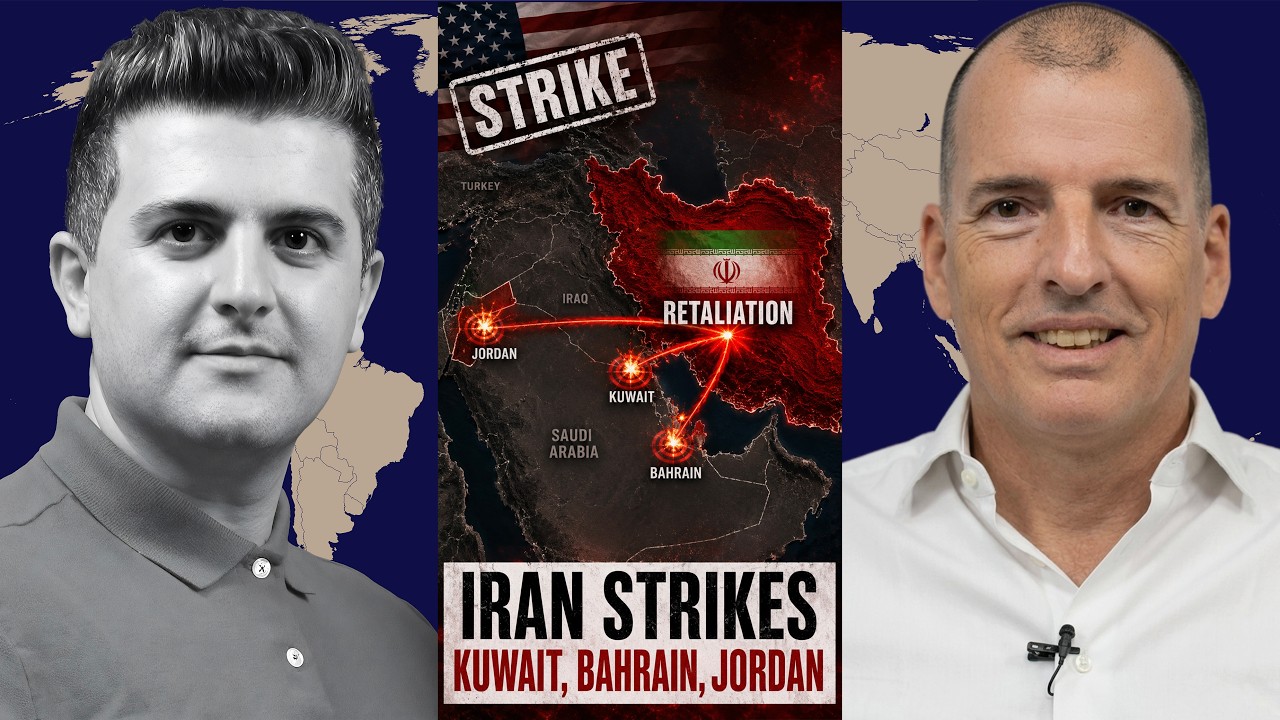
Alex Krainer: US STRIKES Iran – Iran RETALIATES Against Kuwait, Bahrain & Jordan!
"Amidst escalating US-Iran conflict and Iranian retaliation against regional US allies, this episode argues that US foreign policy is deeply controlled by an 'Anglo-Zionist conspiracy' led by the Rothschild banking dynasty, prioritizing Israeli interests over American ones."