YouTubers Eat Their Last Meal Marathon
YouTube · CK02J3jwM4g
Quick Read
Summary
Takeaways
- ❖Cultivate curiosity and a 'let's find out' mindset, especially in parenting, to foster exploration and learning.
- ❖Recognize that online personas are curated; behind the camera, emotions are complex and often differ from public displays.
- ❖Hope is a necessity for survival, not just an intellectual exercise, especially when facing despair or profound challenges.
- ❖Prioritize real-life community and local impact over solely digital relationships to find tangible positive contributions.
- ❖Understand that online platforms often incentivize negativity, making it crucial for creators to consciously promote positivity and objective analysis.
- ❖Embrace personal growth and the evolution of identity, even if it means letting go of past versions of yourself or your work.
- ❖Challenge the gamification of online success by valuing personal well-being and genuine connection over metrics like viewership and subscriber counts.
- ❖Leverage humor and social commentary to address complex issues, using platforms to provoke thought and challenge societal norms.
Insights
1Embracing Curiosity in the Face of Adversity
Hank Green discusses how his innate curiosity, fostered by supportive parenting, helped him navigate his cancer diagnosis. Instead of being overwhelmed, he delved into understanding the science behind his treatments, transforming a terrifying experience into an opportunity for learning and communication.
Hank Green recounts how his father encouraged curiosity with 'let's find out' and how he applied this to understanding his cancer, researching treatments and their history.
2The Necessity of Hope Against Despair
John Green articulates that hope is not merely an intellectual exercise but a vital means for survival. He explains that despair offers compelling, yet false, explanatory power, making hope essential to resist these narratives and find meaning, even when the world feels like it's worsening.
John Green states, 'I struggle with despair. I struggle with feelings of hopelessness... despair has such a profound explanatory power, it makes everything make sense... there has to be cause for hope because I know intellectually that that simple story is just way too straightforward to actually be true.'
3Navigating Digital Legacy and Personal Identity
Rhett reflects on the challenge of his digital legacy, where his online persona (e.g., 'chocolate piss guy') is experienced by far more people than his personal impact as a father or husband. He grapples with the disconnect between his public, often humorous, online identity and his private self, acknowledging that the internet often dictates public perception.
Rhett discusses the 'conundrum of somebody who has a lot of evidence of their existence out there' and how 'way more people experience me is whatever they however they experience me on the internet.' He mentions the 'chocolate piss guy' video as an example of an unexpected legacy.
4The Evolution of Online Culture and Monoculture
Rebecca Black discusses how the internet's collective consciousness has changed since her 'Friday' viral moment. She notes a shift from a monoculture where everyone experienced the same phenomena to a more decentralized 'metaverse' where intense online events can occur in isolated 'worlds,' leading to less collective shame but potentially more frequent, localized dehumanization.
Rebecca Black observes that 'the internet runs actually so much wilder with the way they portray and kind of like dehumanize people than I think they did with me.' She notes the death of monoculture, where a 'Friday' moment might not reach 'the other side of the universe.'
5Creator Retirement and Parasocial Responsibility
MattPat details his intentional 10-week countdown to stepping down as a main host, viewing it as a necessary grieving process for his audience. He highlights the deep, often parasocial, connections fans form with creators, making a sudden departure unfair. This demonstrates a unique responsibility creators feel towards their digital communities.
MattPat explains, 'I wanted to make sure that we had a 10 week countdown to to me leaving cuz if I just up and said like this is my last episode, that would be unfair to the people who have invested so much in me.' He describes the 'best friend mentality' of parasocial relationships.
6The Profit Model of Online Negativity
MattPat and Jacksepticeye discuss how online platforms' profit models incentivize negativity and extreme content. The anonymity of the internet allows for unchecked impulses, leading to toxic communities that are rewarded with engagement, creating a vicious cycle that platforms are reluctant to break due to shareholder pressure.
MattPat states, 'The anonymity of being online... allows people to exhibit the worst of themselves, their worst impul like, you don't have to have impulse control.' Jacksepticeye adds, 'it's all built on actual profit model of psychology of keeping people on the page.'
7The Value of Local, Tangible Impact
Ludwig expresses a desire to transition from global content creation to a local bakery, seeking tangible positive impact within his immediate community. He questions the effectiveness of 'raising awareness' on global issues when direct local contributions can create more measurable and fulfilling change.
Ludwig states, 'I want to see the tangible positives that I can add to like a local community... you see a lot more impact if you just help the people around you.'
8Drag as a Challenge to Societal Norms
Trixie Mattel explains that drag's power and interest stem from its ability to disrupt established systems and challenge conservative ideals of gender, beauty, and freedom. The inherent 'danger' of drag lies in its questioning of traditional structures, which can provoke strong reactions from those invested in the status quo.
Trixie Mattel says, 'The more inflammatory crossdressing becomes, I like to poke the bear.' She notes that drag 'disrupts a very old system' and that homosexuals 'represent so much freedom' which 'calls into question the system in general.'
9Challenging Culinary Gatekeeping and Racism
Uncle Roger (Nigel Ng) passionately advocates for MSG and critiques Western chefs who misrepresent Asian cuisine. He highlights how MSG became a symbol of anti-Asian racism and uses humor to educate and challenge culinary gatekeeping, emphasizing the importance of authentic technique and flavor.
Uncle Roger states, 'MSG really became like a symbol for anti-Asian racism in America. Why is it so important to you to promote MSG? Because you guys hate flavor.' He criticizes BBC for putting 'olive oil in Southeast Asian food.'
Bottom Line
Rhett's discomfort with dwelling on good memories, viewing them as 'unchangeable' and thus 'depressing,' suggests a unique psychological drive towards future creation and improvement, rather than nostalgic contentment.
This challenges the common wisdom of cherishing past successes and highlights how a relentless forward-looking mindset can be a powerful, albeit sometimes isolating, motivator for continuous innovation.
For creators or innovators, understanding this drive can inform strategies for maintaining momentum and avoiding creative stagnation, by constantly seeking the 'next best thing' rather than resting on laurels.
Ludwig's observation that digital communication layers (like text vs. in-person) contribute to a 'lack of empathy' due to disjointed interpretation, reveals a core vulnerability of online interaction.
This implies that the ease of digital communication may be eroding fundamental human capacities for understanding and compassion, as nuanced cues are lost.
Developers of communication tools could focus on integrating more non-verbal cues (e.g., advanced haptics, nuanced visual feedback) to bridge this empathy gap, or educators could emphasize digital literacy in interpreting subtle online signals.
Trixie Mattel's belief that drag's 'gas in the tank' comes from its inflammatory nature and conservative pushback suggests that social progress, if it completely normalizes drag, might paradoxically diminish its artistic and political edge.
This implies that some forms of art thrive on tension and opposition, and their power might be diluted if they become fully mainstream and accepted without challenge.
Artists and activists could explore how to maintain a 'provocative edge' even in increasingly progressive environments, perhaps by constantly pushing new boundaries or finding new 'bears to poke' to ensure their work remains impactful and relevant.
Opportunities
Swamp Water Soda Brand
MattPat's custom soda mix (60% Diet Coke, 30% Sprite Zero, float of Dr. Pepper and root beer) could be commercialized as a unique, customizable beverage. The idea highlights a niche market for complex, 'DIY' soda flavors.
Community-Centric Bakery
Ludwig's aspiration to open a local bakery after content creation, focusing on providing 'amazing bread for your community,' suggests a business model centered on local value and tangible community impact, rather than global digital reach.
Drag-Themed Pothole Repair Service
A satirical yet actionable idea from Trixie Mattel: drag queens filling potholes in local cities, taking 'sexy shoots' around it. This combines community service with viral marketing and social commentary, leveraging visibility for practical good.
Key Concepts
The 'Let's Find Out' Mindset
Hank Green advocates for responding to curiosity with 'let's find out' rather than 'I don't know,' fostering a continuous process of exploration and learning, applicable to both science and personal challenges like a cancer diagnosis. This encourages active engagement with the unknown.
Hope as a Necessity for Survival
John Green frames hope not as a luxury or an intellectual exercise, but as a fundamental means for survival, particularly when confronting despair. He argues that despair offers overly simplistic, powerful explanations, and hope is essential to resist these lies and continue forward.
The Two Mountains of Life
Rhett describes a concept where the 'first mountain' is about individual accomplishment and success, while the 'second mountain' (often in the latter half of life) shifts focus to investing in others and broader community impact. This model helps reframe life's purpose beyond personal gain.
The Parasocial Relationship
MattPat explains how internet relationships, especially with creators, are often parasocial—feeling intimate and personal to the viewer, even without direct interaction. This creates a unique dynamic where creators fulfill emotional needs and fans feel a deep, yet one-sided, connection.
Local vs. Global Impact
Ludwig discusses the desire to shift from global online influence to tangible local community impact, like opening a bakery. This model suggests that while global awareness is important, direct positive contributions to one's immediate community can offer more personal fulfillment and measurable change.
Drag as Social Commentary
Trixie Mattel uses drag as a vehicle for high-minded social commentary, caricaturing American ideals of beauty and wealth to provoke thought about societal values. This model positions performance art as a tool to challenge norms and expose underlying grotesqueries in cultural glorifications.
Lessons
- Schedule regular check-ins with friends and family, even if it's just a text, to combat distractions and prioritize meaningful connections.
- When facing a challenge, adopt a curious, investigative mindset to understand the underlying mechanisms, rather than succumbing to fear or ignorance.
- Actively seek out 'third spaces' (e.g., libraries, independent bookstores, community centers) to foster real-life community beyond home and work.
- Practice acknowledging others' pain and struggles with solidarity, rather than dismissing or minimizing their feelings.
- Consciously evaluate the 'why' behind online engagement; prioritize genuine connection and positive impact over metrics-driven validation.
- Reflect on your personal values and how they align with your career or creative pursuits, ensuring your work contributes to your definition of a 'good life.'
Notable Moments
Hank Green's dad becoming a Nine Inch Nails fan to connect with his son's interests.
This anecdote beautifully illustrates the power of parental curiosity and engagement in fostering a child's exploration and maintaining strong family bonds, even across generational divides in taste.
John Green's mother's 'childcare strategy' of dropping him off at Disney World for a year with free passes.
This highlights an unconventional but effective parenting approach that fostered independence and unique experiences, shaping John's early life and relationship with food and exploration.
Rhett's realization that his 'bean man' persona, initially an online projection, became a self-validating circle of genuine appreciation for beans.
This illustrates the complex interplay between online identity and authentic self, showing how external perceptions can, over time, reinforce or even shape one's true preferences and passions.
Rebecca Black's unwitting role in a Mexican presidential campaign, mistaking it for receiving 'keys to the city' and a fan club.
This highlights the surreal and often absurd experiences of early internet fame, where personal narratives can intersect with unexpected political or cultural events in bizarre ways.
MattPat's immediate Venmo payment of $50 to Ian Hecox (Smosh) for 10% equity in his 'Swamp Water' soda idea.
This moment encapsulates the spontaneous, often humorous, and financially fluid nature of online collaborations and business ventures, where ideas can quickly translate into real (albeit small-scale) transactions.
Jacksepticeye's therapist asking if his lifelong dread was tied to his job, only to remind him he felt it since age 8.
This highlights the importance of self-awareness and professional help in distinguishing inherent personal struggles from external stressors, preventing misattribution of deep-seated issues to current circumstances.
Ludwig's story of connecting with a 55-year-old Taiwanese stranger, Tungla, by watching sunsets together on a hiking trail.
This illustrates the profound human connection that can be found in simple, shared experiences, transcending language, age, and cultural barriers, offering a grounding perspective amidst global digital noise.
Trixie Mattel being rejected by a Potbelly's open mic but getting on RuPaul's Drag Race.
This humorous juxtaposition underscores the subjective and often unpredictable nature of success and talent, where rejection in one arena can coincide with immense success in another, highlighting the importance of finding the right platform for one's unique abilities.
Uncle Roger's (Nigel Ng) lifetime ban from a karaoke bar for his friends sneaking in liquor.
This personal anecdote adds a relatable, humorous touch to Uncle Roger's persona, showcasing his 'bad boy' image and contrasting it with his culinary expertise, while also highlighting cultural differences in social norms.
Quotes
"People often ask me like, 'How do you like help a kid get into science?' And I'm like, you listen when they ask and instead of saying I don't know, you say like let's find out, you know, like let's go through the process together cuz I don't know either."
"I realized I very much wanted to be alive for as long as possible, if only because things are interesting and I wanted to keep seeing them."
"The problem with despair is that it's lying. We all know that on some level, right? Like we all know that that simple of an explanation for everything can't possibly be true."
"I'm coming to grips with the fact that it's okay that somebody somebody's day was made better because I received chocolate from my best friends. I keep wanting to say penis, but he wasn't."
"I think that people want to do stuff for for you when you need help. And so, it's good to like have a moment where you know you need help. We don't need to be seriously ill to ask for a favor from a friend, right?"
"I think cooperation and collaboration are the human superpowers. And that's what we're here to do. We're here to be unalone in the world, unalone in our feelings, unalone in our experiences."
"If you have too many faces in the thumbnail, it becomes uh white noise to the audience and they don't click. Yeah, it it's not additive. It's actually a subtractive effect."
"I think everyone has so much more aggression to every there's no mediocrity doesn't exist anymore. You're not allowed to be fine."
"I think all those layers kind of lead to an ultimate lack of empathy, which is the thing that frightens me the most."
"Homosexuals represent so much freedom. And I think in some ways that level of freedom calls into question the system in general. And then that really pisses people off because they're like looking at what they purchased with they're like, 'Was I duped?'"
"MSG really became like a symbol for anti-Asian racism in America. Why is it so important to you to promote MSG? Because you guys hate flavor."
Q&A
Recent Questions
Related Episodes

“I Printed $10 Million Cash” - How to Spend Fake Money | Art Williams Jr
"Art Williams Jr., a former notorious counterfeiter, recounts his journey from a poverty-stricken Chicago upbringing to mastering the art of printing fake money and ultimately transforming into a successful artist and entrepreneur."
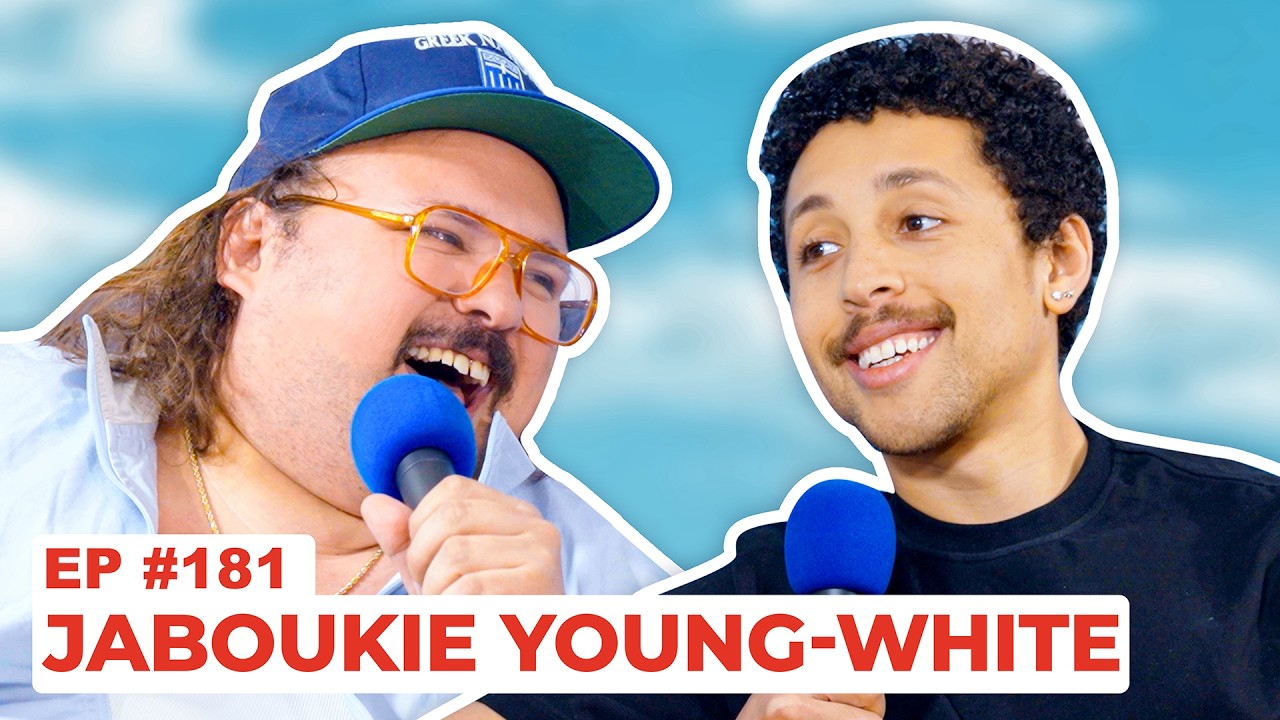
Stavvy's World #181 - Jaboukie Young-White | Full Episode
"Stavros Halkias and Jaboukie Young-White dive into chaotic family histories, modern relationship dilemmas, and the absurdities of celebrity culture, offering unfiltered comedic takes and unconventional advice to callers."
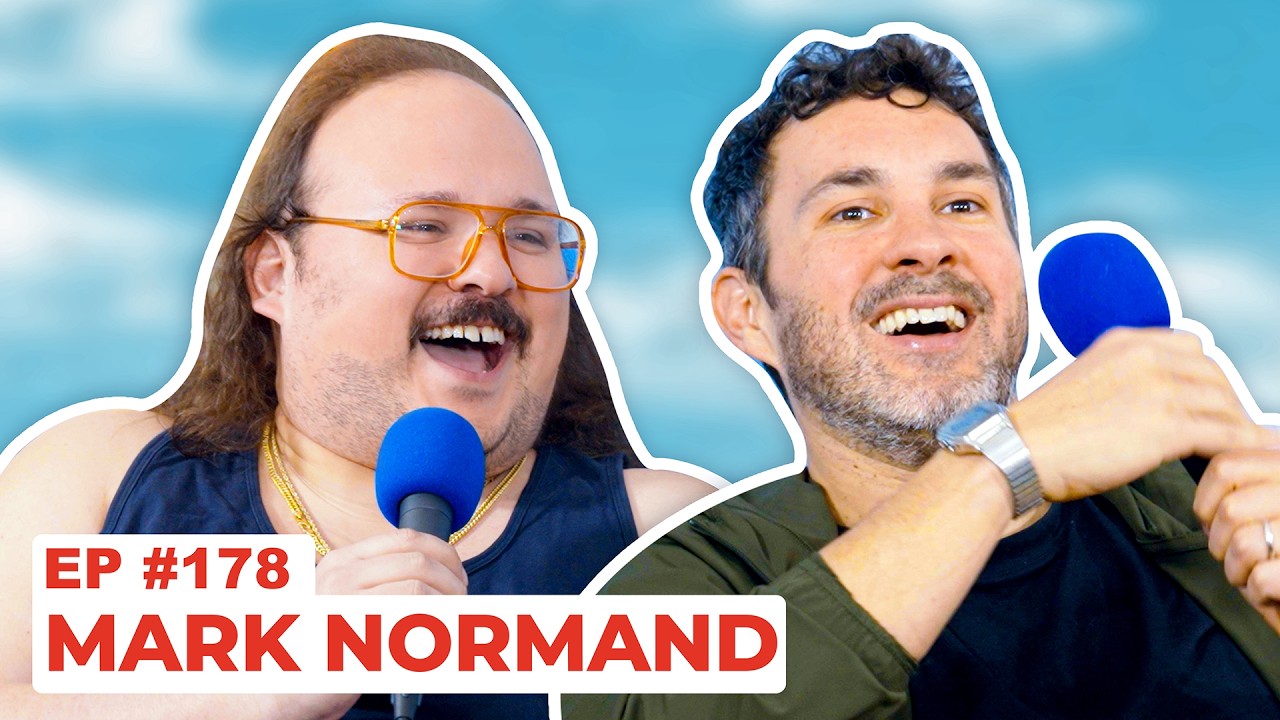
Stavvy's World #178 - Mark Normand | Full Episode
"Comedians Stavros Halkias and Mark Normand reminisce about their early careers, discuss personal struggles with addiction and mortality, and offer unfiltered advice on navigating complex relationships and business partnerships."

STILL SIPPIN W/ POUR MINDS, KARLOUS MILLER & MONEYBAG MAFIA | 85 SOUTH SHOW
"The 85 South Show hosts and guests Poor Minds and Moneybag Mafia engage in a hilariously unfiltered discussion covering relationship dynamics, unexpected business ventures, and the pervasive influence of TikTok, all while sharing their unique perspectives on life's absurdities."