
Alex Krainer: This MILITARY COMEBACK Works, NOTHING Will Be the Same
YouTube · D2fqzEwqeMw
Quick Read
Summary
Takeaways
- ❖The US/Israeli attack on Iran was a strategic miscalculation, underestimating Iran's preparedness and capacity for a long war of attrition.
- ❖Iran possesses significant advantages in a protracted conflict, including domestic supply chains and vast missile/drone stockpiles, unlike the US which faces logistical fragilities and dwindling resources.
- ❖The closure of key maritime chokepoints like the Strait of Hormuz and Bab el-Mandeb is causing a severe global energy crisis, particularly impacting Europe's economy.
- ❖US President Trump's decision to attack Iran contradicts his previous anti-globalist stance and promises of 'no more wars,' suggesting he was either deceived or coerced.
- ❖European nations are being drawn into the conflict, exacerbating their existing energy predicaments and risking social unrest due to rising costs.
- ❖The justifications for the war from US officials are inconsistent and constantly shifting, indicating a lack of clear strategic objectives.
- ❖Russia has shifted its stance from mild disapproval to strong commitment to defend Iran, signaling a potential irreversible collision course between superpowers.
- ❖The conflict is likely to result in a strategic defeat for the US/Israel, potentially leading to a one-state solution in the region and a re-evaluation of Israel's existence.
Bottom Line
Israel may conduct false flag operations targeting desalination plants in Arab countries to blame Iran and galvanize a broader coalition against it.
This tactic would escalate regional tensions, further destabilize Gulf states dependent on desalination, and potentially draw more Arab nations into direct conflict, complicating any future peace efforts.
Intelligence agencies and independent media should monitor for such operations to prevent further regional destabilization and expose potential deception.
The US political system appears 'hardwired' to initiate wars, irrespective of presidential promises or public mandates, suggesting a deep-seated institutional drive for military intervention.
This implies that even leaders who campaign on non-interventionist platforms can be maneuvered or coerced into conflict, highlighting the immense power of entrenched interests (e.g., banking establishment, donor class) over elected officials.
Investigate and expose the mechanisms by which these systemic pressures override democratic mandates, fostering greater public awareness and accountability for foreign policy decisions.
The 'fanatical theocracy' (Israel) perceives the world as an existential danger and seeks to 'burn everything to the ground to feel safe,' leading to an endless cycle of conflict.
This perspective suggests that Israel's actions are driven by an extreme, self-perpetuating sense of threat, making de-escalation or diplomatic solutions difficult until this underlying ideology is addressed or defeated.
Promote and support voices within Israel and internationally that advocate for a more inclusive, less confrontational approach to regional security, challenging the 'burn everything' mentality.
Notable Moments
The host notes the US/Israeli attack on Iran began with the assassination of Iran's Supreme Leader and schoolgirls, followed by Iranian retaliation against US bases and Israel.
This sets the context for the conflict's brutal and escalatory nature, highlighting specific, high-stakes initial actions that triggered the broader war.
Alex Krainer expresses disbelief that the US would attack Iran, calling it 'so stupid, so off the charts idiotic,' because Iran had too many advantages.
This underscores the guest's core argument that the war was a monumental strategic blunder, setting the tone for his critical analysis of US decision-making.
Trump's administration declared against globalization and for multipolar integrations in Davos and Munich, only to initiate a war with Iran days later, aligning with globalist forces.
This highlights a perceived radical contradiction in US foreign policy, suggesting either a profound shift in Trump's stance or an external force overriding his stated intentions.
The host points out Marco Rubio's shifting justifications for the war, initially citing an Israeli strike and then claiming a pre-determined US decision to attack Iran's missile capabilities.
This illustrates the lack of a coherent and consistent narrative from US officials regarding the war's origins and objectives, fueling skepticism about the true motivations.
Sergey Lavrov, Russia's Foreign Minister, publicly stated Russia would do 'everything that we can to defend Iran and to disable US-Israeli aggression,' marking a significant shift in Russian policy.
This signals an end to previous US-Russia cooperation (e.g., 'Spirit of Alaska') and indicates a potential irreversible collision course between the two superpowers, escalating the global stakes of the conflict.
Quotes
"The whole thing is so stupid, so off the charts idiotic that I thought nobody could possibly be that dumb. They just won't do it."
"Iran is for millennia is and has been the graveyard of empires."
"It seems that the system is so powerful and so entrenched and so ruthless that it doesn't matter what you want."
"I'm afraid that we're moving towards a strategic defeat of Israel."
"End times means not that the world ends, is that a system ends."
Q&A
Recent Questions
Related Episodes
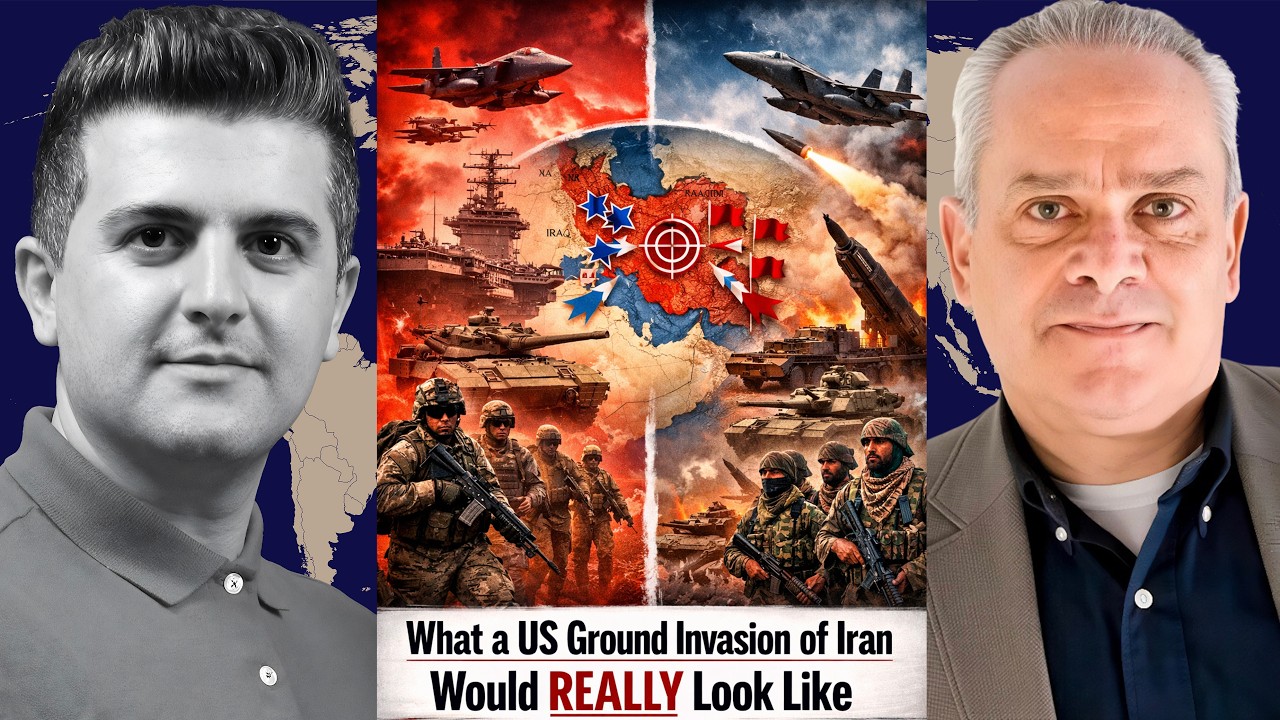
Col. Jacques Baud: What a US Ground Invasion of Iran Would REALLY Look Like
"Colonel Jacques Baud dissects the strategic futility of a US ground invasion of Iran, arguing that current troop levels are insufficient and such an action would backfire, exposing US allies and potentially leading to Iran's nuclearization."
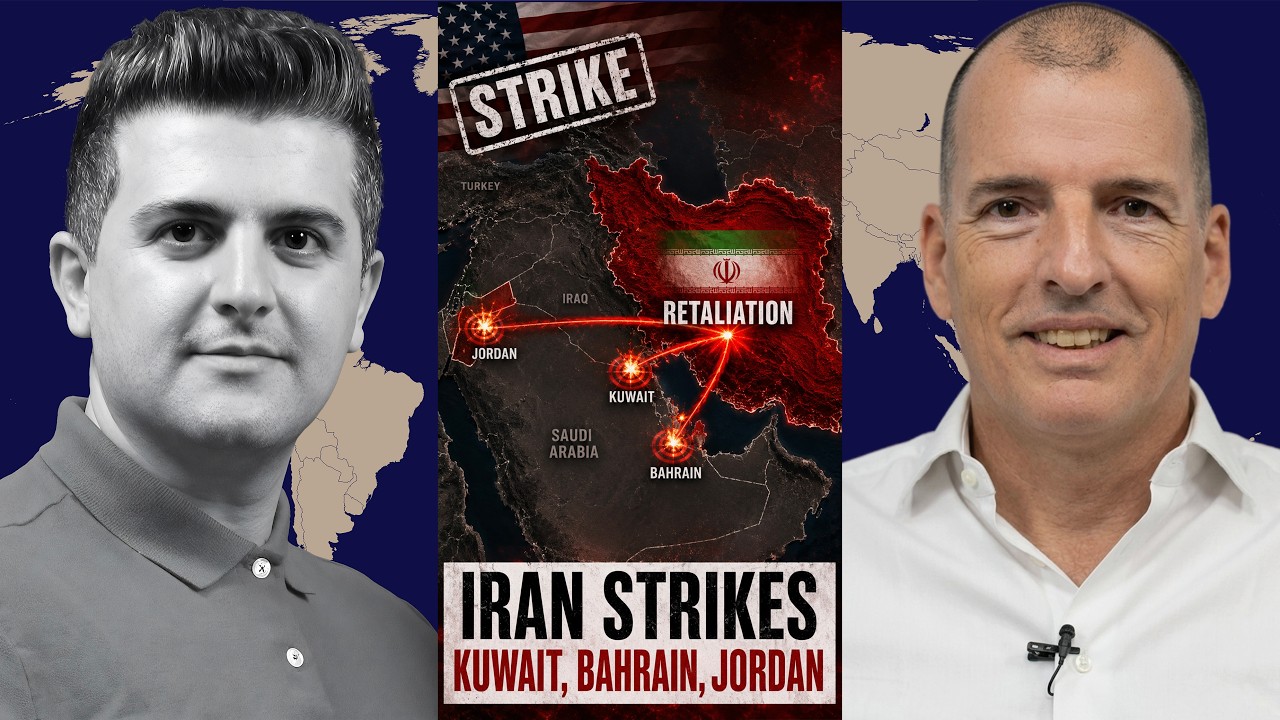
Alex Krainer: US STRIKES Iran – Iran RETALIATES Against Kuwait, Bahrain & Jordan!
"Amidst escalating US-Iran conflict and Iranian retaliation against regional US allies, this episode argues that US foreign policy is deeply controlled by an 'Anglo-Zionist conspiracy' led by the Rothschild banking dynasty, prioritizing Israeli interests over American ones."

Patrick Henningsen: Hezbollah JUST Fired Back at Israel - Iran Vows to “Crush” All Attacks
"Patrick Henningsen argues that the US and Israel initiated an illegal war against Iran, driven by Trump's incompetence and Israeli influence, leading to an inevitable escalation with severe global economic repercussions."

LIVE: Trump HIDES FROM PUBLIC as US SOLDIER KILLED!!! 6/2/2026
"The host exposes alleged government cover-ups regarding military casualties, Trump's unexplained public absence, and questionable political appointments, arguing these reflect a 'regime of loser babies' and a failing foreign policy."