Israel Panicking Over Iran War Already?
YouTube · DGBlTrvlbsQ
Quick Read
Summary
Takeaways
- ❖Senior Israeli officials are reportedly leaking concerns to the press about the escalating, open-ended attack on Iran and are suggesting possible exit ramps.
- ❖Israel may favor a 'mow the lawn' strategy, similar to its approach in Gaza, involving periodic destabilization and withdrawal when costs become too high.
- ❖Iran appears to have learned from past ceasefires, regretting agreements that allowed the US and Israel to rebuild and re-equip.
- ❖The conflict has widened, with strikes across Israel, Israeli soldiers killed by Hezbollah, and the war impacting at least 20 countries directly or indirectly.
- ❖Gulf allies, including the UAE and Saudi Arabia, are actively signaling their desire to avoid further involvement, with the UAE reaffirming it won't allow its territory for military actions against Iran.
- ❖A prominent UAE billionaire publicly criticized the US for dragging the region into war, a statement likely greenlit by the government.
- ❖US Senator Lindsey Graham is identified as a key influencer pushing for the war, openly declaring unwavering support for Israel and even offering defense agreements to Saudi Arabia.
- ❖The US burned through $5.6 billion in munitions in the first two days of the war, leading to the redeployment of THAAD and Patriot interceptors from South Korea to the Middle East.
- ❖The war is causing irreparable brand damage and economic disruption in places like Dubai, leading wealthy expats to flee.
Insights
1Israel's Search for an Exit Strategy Amidst Escalation
Senior Israeli officials are reportedly expressing concern about the open-ended nature of the Iran war and are exploring 'exit ramps' to halt the conflict. This contrasts with President Trump's stated goal of 'all-out victory.' The hosts suggest Israel might prefer a 'mow the lawn' strategy, involving periodic strikes and withdrawals, but note Iran's reluctance to agree to a ceasefire that would allow US and Israeli forces to regroup.
David Ignatius's reporting in the Washington Post, citing anonymous senior Israeli officials (, , ). Host analysis of Israel's historical 'mow the lawn' strategy in Gaza ().
2Gulf Allies Distancing from US War Efforts
The United Arab Emirates and Saudi Arabia are actively signaling their unwillingness to be further drawn into the US-led conflict against Iran. The UAE has publicly committed not to allow its territory to be used for military actions against Iran, and a prominent UAE billionaire criticized US involvement, indicating a coordinated government stance. This shift suggests a re-evaluation of US defense partnerships in the region, as Gulf states feel exposed and targeted rather than protected.
UAE statement reaffirming commitment not to allow airspace/territory for military actions against Iran (). Public criticism by a UAE billionaire of US war involvement (). Host interpretation of these actions as government-sanctioned signaling (, ).
3Rapid Depletion of US Munitions and Strategic Readiness Concerns
The war has led to an unprecedented rate of US munitions expenditure, with $5.6 billion spent in the first two days alone. This rapid depletion has necessitated the relocation of critical THAAD and Patriot interceptor batteries from South Korea and other Indo-Pacific regions to the Middle East. This raises serious questions about US defense readiness for other potential conflicts, such as with China, and indicates a severe strain on military stockpiles.
Confirmation from South Korea and the US about relocating THAAD and Patriot batteries (). Stated expenditure of $5.6 billion in munitions in the first two days of the war ().
4Lindsey Graham's Influence and Unwavering Support for Israel
US Senator Lindsey Graham is highlighted as a highly influential figure in pushing for the war with Iran, driven by a 'lifelong dream' and 'bloodthirsty' commitment to Israel. He publicly declares his allegiance to Israel, even offering mutual defense agreements to Saudi Arabia without presidential authority, demonstrating his significant role in shaping US foreign policy in the region.
Graham's Fox News appearance stating, 'I'm with Israel. I will be with Israel to our dying day' (). Host commentary on his influence and 'blood pact' with Israel (, ). Graham's offer of a mutual defense agreement to Saudi Arabia ().
Bottom Line
The US's perceived protection of Gulf allies has transformed into making them targets, fundamentally altering their calculus regarding US defense partnerships.
This shift could lead to a significant realignment of power in the Middle East, with Gulf states seeking alternative security arrangements or greater autonomy from US influence, potentially weakening US regional hegemony.
For non-US defense contractors or geopolitical rivals, this creates an opening to forge new security relationships and offer defense solutions to Gulf nations seeking to diversify their alliances.
The rapid and unsustainable rate of US munitions expenditure in the Iran war is forcing the redeployment of critical defense assets from other strategic theaters, like the Indo-Pacific.
This compromises US readiness for potential conflicts in other regions, particularly with major powers like China, by depleting stockpiles and thinning out defensive capabilities globally.
Nations in regions like the Indo-Pacific may accelerate their own indigenous defense production or seek diversified defense partnerships to compensate for potential US resource constraints.
Lessons
- Monitor statements and actions from Gulf states for further signs of disengagement from US-led military initiatives, as this indicates a significant geopolitical shift.
- Analyze the long-term implications of rapid US munitions depletion on global defense posture and the capacity to sustain multiple high-intensity conflicts.
- Observe the influence of individual politicians like Lindsey Graham on US foreign policy decisions, particularly concerning military engagements, as their personal ideologies can drive national actions.
Quotes
"Israeli officials are growing concerned. The bombing campaign nearing its military goals in Iran leaves the hardest questions unanswered. A few senior officials in Israel are starting to voice concern about the escalating open-ended attack on Iran and suggesting possible exit ramps that might halt the war before it further damages the region and the global economy."
"I'm not sure how much we are able or willing to sustain. So they may be, you know, it reportedly after the 12-day war, it was really the Israelis who were the ones who said, 'Let's call this quits for now.'"
"To all the anti-semites, to all the isolationists, I don't... Forget it. I'm not with you. I'm with Israel. I will be with Israel to our dying day. They're the best ally we could hope for. So we have a commander-in-chief in President Trump who I think is Ronald Reagan plus plus. God bless Israel. We should move all our stuff to Israel. Thank you."
"The Emirates reaffirms their commitment not to allow their airspace, territory, waters to be used for any military actions against Iran."
"We have burned through 5.6 billion in munitions in two days, the first two days of the war. 5.6 billion. The munitions disaster."
Q&A
Recent Questions
Related Episodes
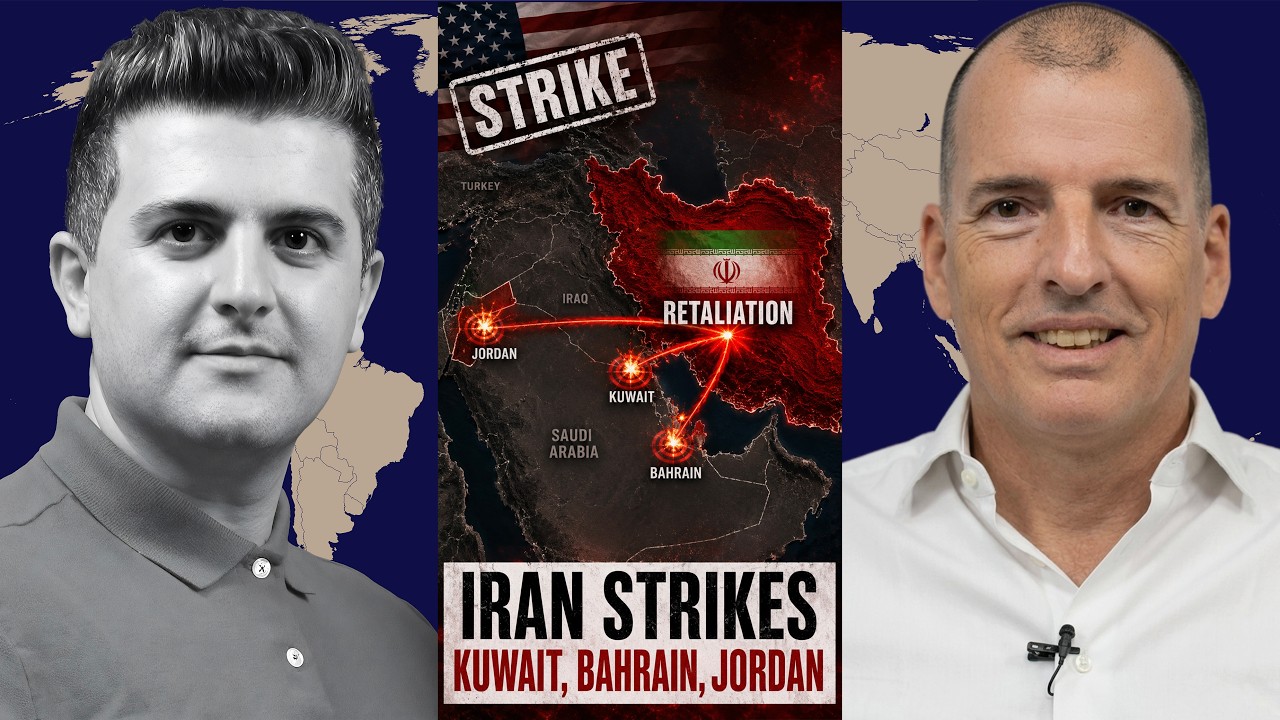
Alex Krainer: US STRIKES Iran – Iran RETALIATES Against Kuwait, Bahrain & Jordan!
"Amidst escalating US-Iran conflict and Iranian retaliation against regional US allies, this episode argues that US foreign policy is deeply controlled by an 'Anglo-Zionist conspiracy' led by the Rothschild banking dynasty, prioritizing Israeli interests over American ones."

Patrick Henningsen: Hezbollah JUST Fired Back at Israel - Iran Vows to “Crush” All Attacks
"Patrick Henningsen argues that the US and Israel initiated an illegal war against Iran, driven by Trump's incompetence and Israeli influence, leading to an inevitable escalation with severe global economic repercussions."
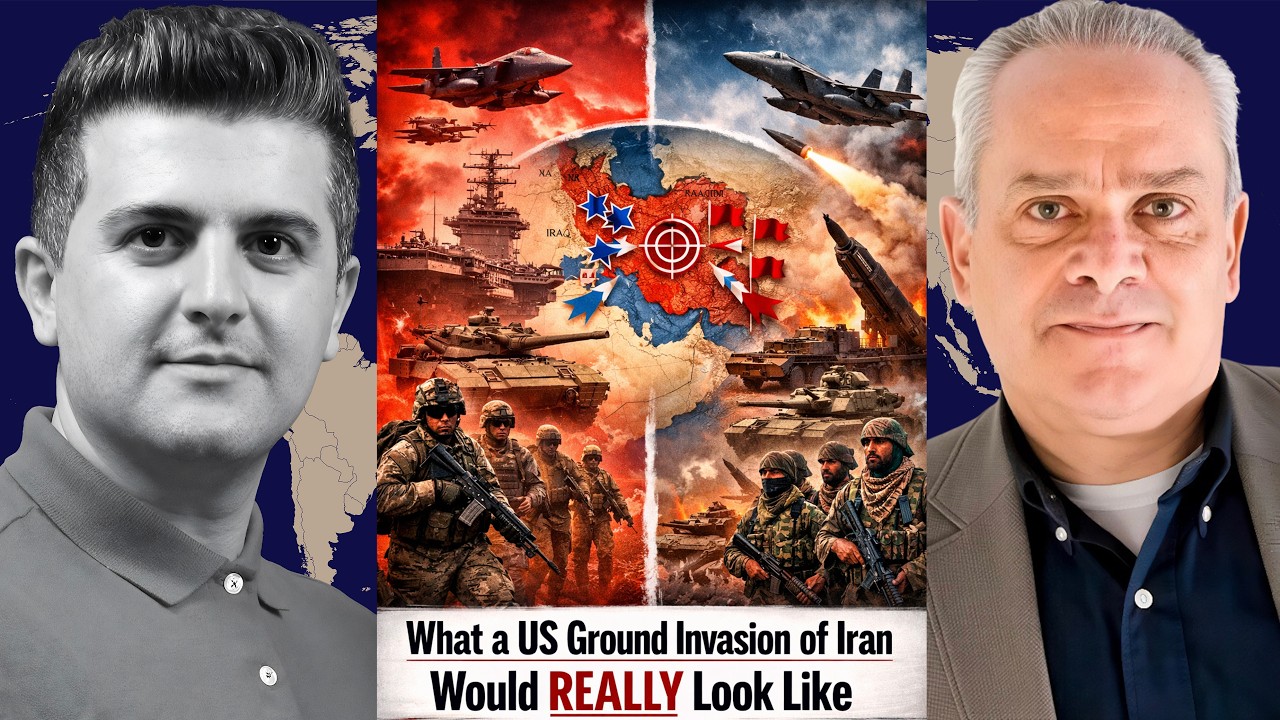
Col. Jacques Baud: What a US Ground Invasion of Iran Would REALLY Look Like
"Colonel Jacques Baud dissects the strategic futility of a US ground invasion of Iran, arguing that current troop levels are insufficient and such an action would backfire, exposing US allies and potentially leading to Iran's nuclearization."

LIVE: Trump HIDES FROM PUBLIC as US SOLDIER KILLED!!! 6/2/2026
"The host exposes alleged government cover-ups regarding military casualties, Trump's unexplained public absence, and questionable political appointments, arguing these reflect a 'regime of loser babies' and a failing foreign policy."