
Labor Icon Dolores Huerta, 95, Reveals She, Too, Was Raped by Cesar Chavez; Speaks to Maria Hinojosa
YouTube · Dmcajab4wlw
Quick Read
Summary
Takeaways
- ❖Cesar Chavez, a revered civil rights leader, was exposed by a New York Times report for abusing and raping multiple women and girls, including United Farm Workers co-founder Dolores Huerta.
- ❖Dolores Huerta, 95, revealed Chavez raped her in 1960 and 1966, resulting in two pregnancies, and explained her silence as a sacrifice to protect the farmworker movement's integrity.
- ❖The revelations highlight the strategic nature of Chavez's abuse, the societal tendency to blame survivors, and the ongoing struggle to reconcile a leader's positive public impact with their private atrocities.
Insights
1Cesar Chavez's Pattern of Abuse and Dolores Huerta's Revelation
A New York Times expose detailed Cesar Chavez's abuse and rape of multiple women and girls, including Anna Morgia (assaulted at 13) and Deborah Roas (raped at 15). Dolores Huerta, co-founder of the United Farm Workers, also revealed to the Times that Chavez raped her in 1960 and 1966, both incidents resulting in pregnancies. Huerta concealed these pregnancies and arranged for other families to raise the girls.
NYT expose, Dolores Huerta's interview with Maria Hinojosa. (, , , )
2The Strategic Nature of Chavez's Abuse
Maria Hinojosa emphasized that Chavez was not only a strategic leader in building the farmworker movement but also strategic in how he abused girls, teens, and women. He would groom victims from a young age (e.g., 8 or 9 years old) and then exploit their admiration and trust, isolating them in situations where abuse could occur.
Hinojosa states, 'The horror Amy is to realize that this man was also very strategic in how he was setting out to abuse girls, teens, and women.' ()
3Dolores Huerta's Silence to Protect the Movement
Huerta explained that she remained silent about Chavez's actions because she believed coming forward would have 'hurt the movement.' She prioritized the accomplishments for farmworkers—securing basic human needs like bathrooms, drinking water, and rest periods—over her personal justice, believing her silence contributed to the movement's success.
Huerta states, 'I felt that my coming out and saying that would have hurt... would have hurt the movement.' ()
4Societal Blame and the Difficulty for Survivors to Come Forward
Both Dolores Huerta and Maria Hinojosa discussed the common societal reaction of blaming survivors. Huerta anticipated being attacked or disbelieved, while Hinojosa noted that people are now criticizing Huerta for not speaking up sooner, even suggesting she carries the burden of Chavez's actions. Hinojosa, a rape survivor herself, stressed that non-survivors cannot comprehend the difficulty of coming forward.
Huerta: 'Women when they do come forward with their stories... instead of getting the kind of support that they need, they get attacked or they're not believed.' () Hinojosa: 'If you're not a rape survivor, you do not know how difficult it is to come forward.' ()
5Re-evaluating Cesar Chavez's Legacy and the Movement's Future
The revelations have prompted an immediate public response, with marches and celebrations around Chavez's birthday cancelled, and calls to rename streets and remove statues. While acknowledging Chavez's 'dark side,' Huerta maintains the movement's accomplishments for millions of farmworkers, achieved through collective action, should still be recognized. Hinojosa suggests this crisis presents an 'opportunity to organize' against sexual assault and re-shape the narrative.
Hinojosa: 'Marches, celebrations all over Texas and Arizona, California have been cancelled around his birthday.' () Huerta: 'We can't say well [Chavez] did it all because many people that volunteered are the ones that made it happen.' () Hinojosa: 'Every crisis is an opportunity to organize.' ()
Lessons
- Actively challenge victim-blaming narratives and support survivors who come forward, recognizing the immense difficulty and courage required to speak out against powerful figures.
- Engage in critical re-evaluation of historical figures and movements, acknowledging that significant public achievements do not negate private abuses of power, and seek to understand the full, complex truth.
- Advocate for systemic changes that address the lack of respect for women and girls in society, ensuring that men who commit sexual assault are held accountable and that support systems for survivors are robust.
Notable Moments
Dolores Huerta, 95, reveals to the New York Times that Cesar Chavez raped her twice, resulting in two pregnancies.
This personal disclosure from a co-founder of the United Farm Workers adds a profound layer to the expose, directly linking a revered civil rights icon to severe personal abuse against his closest associates.
Maria Hinojosa describes Dolores Huerta's emotional distress and crying after reading the NYT expose, contrasting it with Huerta's typically energetic and resilient personality.
This highlights the deep personal toll and trauma the revelations inflicted on Huerta, even decades later, underscoring the enduring impact of such experiences.
Maria Hinojosa shares her own experience as a rape survivor during her interview with Dolores Huerta, creating a shared bond and emphasizing the universal difficulty of coming forward.
This moment personalizes the issue, showing solidarity with Huerta and reinforcing the message that the struggle to speak out is a common, profound experience for survivors.
The immediate public reaction to the expose, including the cancellation of Cesar Chavez Day celebrations and calls to remove statues and rename streets.
This demonstrates the swift and significant impact of the revelations on Chavez's public legacy and the broader cultural conversation about how society honors figures with problematic pasts.
Quotes
"I think that women when they do come forward with their stories instead of getting the kind of support that they need, they get attacked or they're not believed."
"To think that somebody that we everybody admired and respected and thought so highly of that he would, you know, do anything like that that was just very really hard to take. And it's still very hard to process."
"I felt like I was kind of trapped, you might say. And I was not expecting those incidents to happen. I felt I was alone. I didn't really have anybody close by that I could have called for help or reached out to. And the way he set that up, it was to make sure that we were isolated pretty much."
"I never did [confront Cesar Chavez]. And I guess that's the one thing that I'm sorry about because God knows had I done that, maybe in some way it would have prevented other women and and and girls."
"The horror Amy is to realize that this man was also very strategic in how he was setting out to abuse girls, teens, and women."
"I felt that my coming out and saying that would have hurt... would have hurt the movement."
"If you're not a rape survivor, you do not know how difficult it is to come forward. This is exactly why."
Q&A
Recent Questions
Related Episodes

2 More Duggars from "19 Kids & Counting" Arrested for Crimes Against Children
"Uncover the shocking truth behind the Duggar family's wholesome facade, revealing a multi-generational pattern of child abuse, cover-ups, and the insidious influence of a fundamentalist religious organization."
Celebrating the Legacy of the Rev. Dr. Bernard Lafayette, Jr.
"This memorial service celebrates the life and enduring legacy of Rev. Dr. Bernard Lafayette, Jr., a pivotal civil rights leader, nonviolence strategist, and educator whose teachings transformed movements globally."

Georgia Fort Pleads Not Guilty. Paralyzed Man Case Charges Dropped. Roy Cooper Senate Bid
"This episode delivers a powerful, multi-faceted tribute to Reverend Jesse Jackson Sr., highlighting his unparalleled impact on civil rights, economic empowerment, political strategy, and global diplomacy, emphasizing his role as an irreplaceable force for justice."
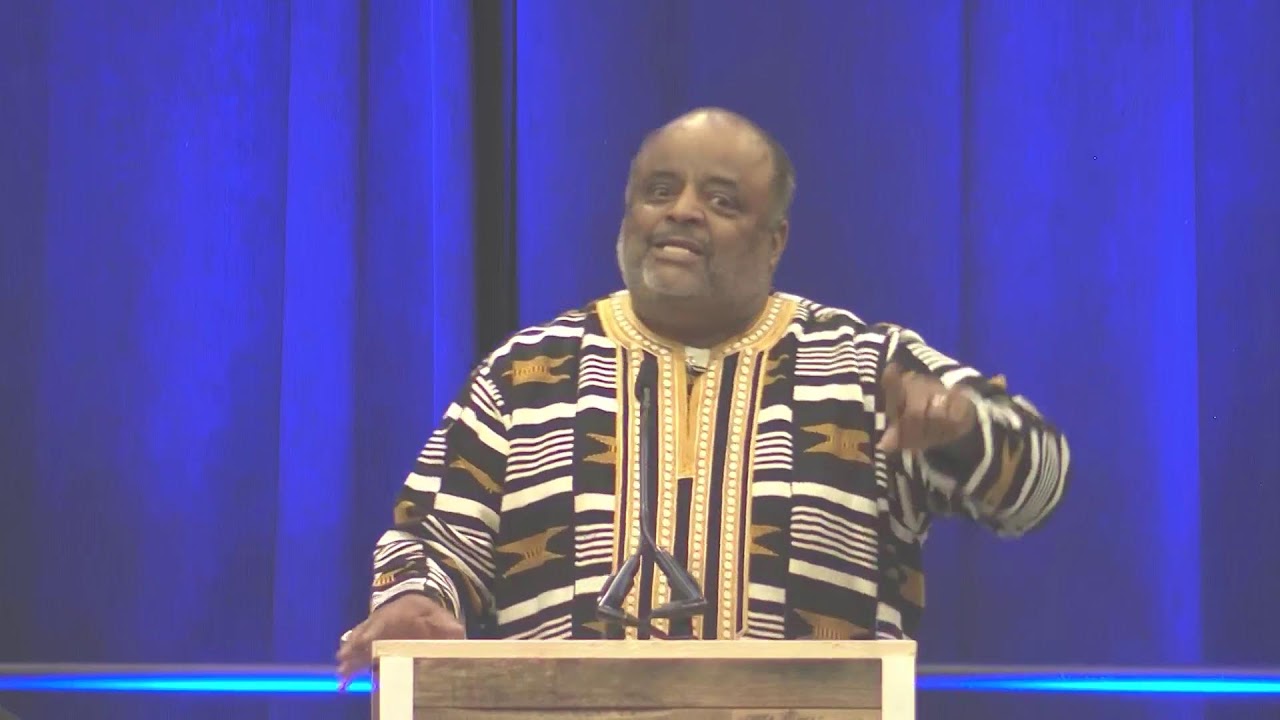
Roland speaks at Columbus Educ. Assoc. MLK Dinner
"Roland Martin challenges the audience at an MLK dinner to move beyond passive celebration and engage in active, sustained political and economic struggle, emphasizing that 'rest time is over' for those seeking real societal change."