Quick Read
Summary
Takeaways
- ❖Dropside News reported that the Trump administration, through third countries and Steve Wickoff, attempted to initiate back-channel talks with Iran after three days of bombing.
- ❖Iran's political leadership decided not to engage in talks, aiming to establish deterrence against repeated US-Israeli bombings.
- ❖Iran's demands, communicated via third parties, included a ceasefire for Iran, Lebanon, and Iraq, reparations, and a UN Security Council resolution.
- ❖The White House issued an unusually aggressive, 'Trump-dictated' denial of Dropside's reporting, calling it 'abhorrent' and 'America last behavior'.
- ❖The assassination of Ali Larjani, a key moderate Iranian figure, is seen as an Israeli effort to remove voices that might negotiate an end to the war.
- ❖Steve Wickoff, initially perceived as diplomatic, is now described as 'radicalized' into a 'fanatical Zionist' due to influence from the 'Netanyahu wing' of the MAGA movement.
- ❖Trump's efforts to convince US allies to help reopen the Strait of Hormuz have failed, with nations like Germany refusing involvement.
- ❖Iran has been wargaming the closure of the Strait of Hormuz for years and has demonstrated control over which vessels pass through.
- ❖The potential deployment of Marine Expeditionary Units and contemplation of ground troops in the Strait of Hormuz region risk significant American casualties.
Insights
1White House Covertly Sought Talks with Iran Amidst Public Denials
Dropside News reported that the Trump administration, through third-party countries and direct WhatsApp messages from Steve Wickoff, attempted to open back-channel negotiations with Iran. This occurred shortly after US-Israeli bombing commenced, contradicting public statements and leading to an aggressive denial from the White House when the reporting surfaced.
Jeremy Scill states Iranian officials told him 'third countries have been sending messages to Iran saying that the Trump administration wants to start back-end talks.' Later, a senior Iranian official told him 'Steve Witoff had sent WhatsApp messages to Iranian officials, including Abasarachi, the country's foreign minister.' The White House's response to Dropside's inquiry was a 'Trump-dictated' denial, calling the report 'abhorrent' and 'America last behavior.'
2Iran's Strategic Refusal to Negotiate Under Duress
Iran's political leadership made a conscious decision not to engage in talks with the US, believing that their primary goal was to establish deterrence and demonstrate that the US and Israel could not bomb Iran and then immediately seek negotiations. They communicated specific demands for a ceasefire and reparations through third parties, but maintained a stance of non-engagement until deterrence was firmly established.
Scill reports, 'Iran's political leadership had made a decision that they were not going to talk... they felt that they need that the primary goal in this war was to send a message that the US and Israel can't just bomb Iran every four months and pretend to be engaging in negotiations.' Iran's demands included 'a ceasefire that would apply to not only Iran but to Lebanon and Iraq as well,' 'reparations for the damage,' and 'a UN Security Council resolution.'
3Assassination of Moderate Iranian Voices to Harden Stance
The reported assassinations of Ali Larjani, a significant moderate figure in Iran's security apparatus, and Gulluma Solommani, are interpreted as a strategic move by Israel. The removal of such figures is likely to result in their replacement by harder-line individuals, thereby reducing the possibility of future diplomatic solutions and potentially fueling internal unrest.
Scill notes, 'if confirmed, what this means is that the Israelis have assassinated one of the figures that would have been a more moderate voice in any discussions that lead to the end of this war.' He adds, 'when figures like Larani or more or others who are considered in a in a in a more moderate camp... when they're taken out, the people that replace them tend to be to take a much harder line.'
4US Allies Refuse to Join Strait of Hormuz Reopening Efforts
Despite Trump's 'desperate efforts,' US allies, including Germany, have refused to join a coalition to reopen the Strait of Hormuz. These nations cited a lack of prior consultation and the unilateral nature of the US-Israeli actions, highlighting a significant lack of international support for potential military escalation in the region.
Scill states, 'Trump's having an enormous uh difficult time getting any nations to agree to deploy.' He cites the German chancellor and multiple German officials saying, 'we're not going to get involved with this. They said the Americans and Israelis didn't tell us about this beforehand.'
Bottom Line
The 'Netanyahu wing of the MAGA movement has literally purchased this part of American foreign policy,' influencing Trump's non-ideological stance and radicalizing key figures like Steve Wickoff.
This suggests that US foreign policy in the Middle East is not solely driven by traditional strategic interests but is heavily swayed by specific, well-funded ideological factions, potentially leading to decisions that serve external interests over broader American ones.
Investigate the financial and political mechanisms through which specific foreign policy agendas are 'purchased' or influenced within US administrations, potentially revealing new avenues for accountability or policy reform.
Iran has been 'wargaming' the closure and control of the Strait of Hormuz for many years, including operations to shut it down or attack 'enemy vessels,' demonstrating a long-term, pre-planned strategy for this critical choke point.
This indicates that Iran's current control over the Strait is not an improvised response but a calculated and rehearsed capability, challenging the US assumption that such a move would be 'very damaging to them as well' and highlighting a significant strategic miscalculation by US war planners.
Re-evaluate the effectiveness of US intelligence and strategic planning regarding Iran's military capabilities and intentions, particularly concerning critical maritime routes, to avoid future misjudgments and better anticipate Iranian responses.
Key Concepts
The Denial-Confirmation Loop
In journalism, an aggressive official denial often serves as an indirect confirmation of a story's truth, especially when specific evidence to refute it is withheld. The host notes, 'you never know that a story is true until it's officially denied.'
Radicalization by Proximity/Influence
Individuals in positions of power can have their pre-existing convictions amplified and transformed into more extreme ideological stances when exposed to intense, ideologically driven environments or powerful external influences. Steve Wickoff's shift from a perceived diplomat to a 'fanatical Zionist' is attributed to the 'meat grinder of ideology' and the influence of figures like Jared Kushner and the 'Netanyahu wing' of the MAGA movement.
Lessons
- Scrutinize official government denials, especially when they are unusually aggressive or lack specific counter-evidence, as they may signal an attempt to conceal uncomfortable truths.
- Recognize that the removal of moderate political figures in conflict zones often leads to a hardening of positions and prolonged conflict, making future de-escalation more difficult.
- Assess the influence of ideological factions and external interests on foreign policy decisions, as these can diverge from stated national objectives and lead to unpredictable outcomes.
The Israeli Strategy of Eliminating Moderate Voices in Adversary States
Identify key moderate figures within an adversary's political or security apparatus who might be open to negotiation or de-escalation.
Execute targeted assassinations or removals of these moderate figures.
Anticipate that these removals will lead to their replacement by harder-line individuals, thereby reducing the likelihood of future diplomatic solutions and potentially fueling internal instability or prolonged conflict.
Notable Moments
The White House's 'Trump-dictated' denial of Dropside News's reporting, which called the outlet 'abhorrent' and accused it of 'America last behavior,' stood out due to its unusual aggression and tone.
This highly unusual and personalized response from the White House, rather than a standard diplomatic denial, strongly suggested that Dropside's reporting had hit a nerve and was likely accurate, humiliating the administration.
Quotes
"You never know that a story is true until it's officially denied."
"If confirmed, what this means is that the Israelis have assassinated one of the figures that would have been a more moderate voice in any discussions that lead to the end of this war."
"The Netanyahu wing of the MAGA movement that has literally purchased this part of American foreign policy."
"He was sort of radicalized to become a fanatical Zionist Israel first."
Q&A
Recent Questions
Related Episodes

PBS News Hour full episode, May 8, 2026
"This episode unpacks escalating US-Iran military actions in the Strait of Hormuz, a resilient yet divergent US jobs market, the ongoing political battle over congressional redistricting, and the controversial new US counterterrorism strategy."
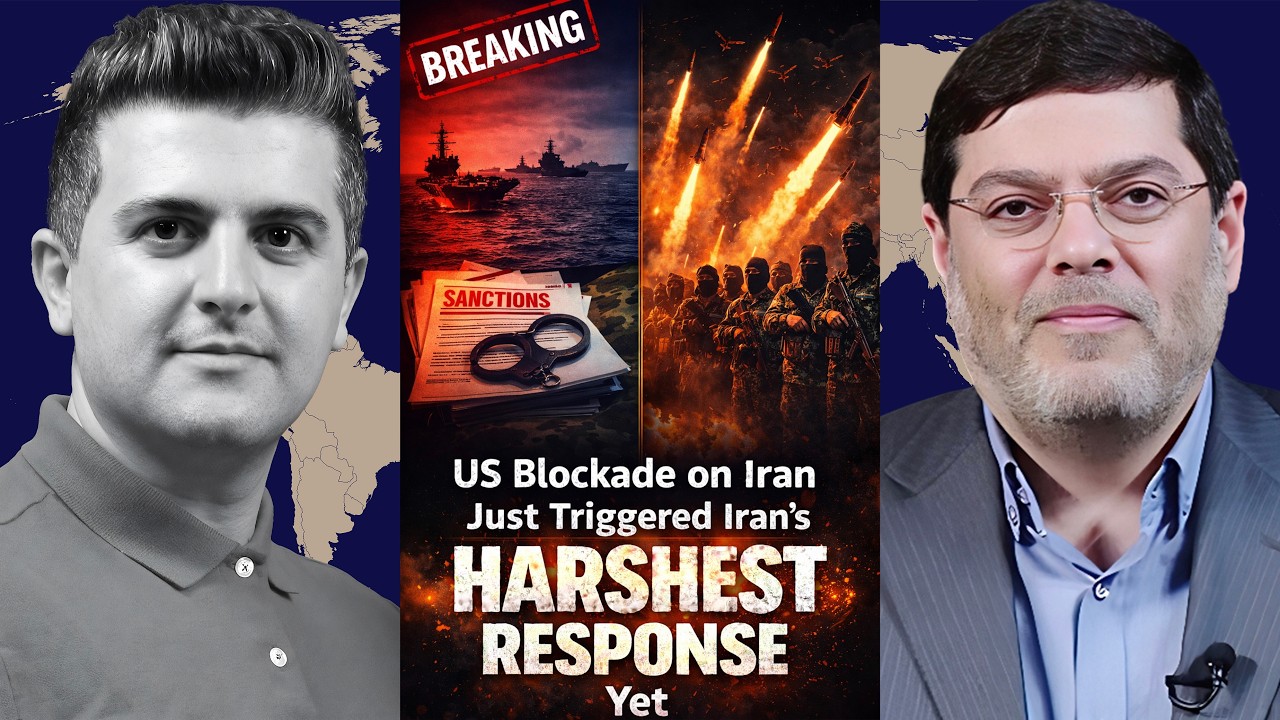
Seyed M. Marandi: US Blockade on Iran Just Triggered Iran’s HARSHEST Response Yet
"An Iranian professor details how US demands and an imposed blockade triggered Iran's harshest response, exposing American strategic missteps and the vulnerability of Gulf Arab states."
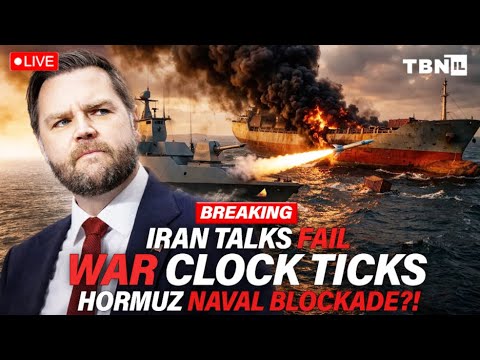
BREAKING: U.S.-Iran Talks COLLAPSE; Hormuz Standoff Deepens; Hezbollah Fire | TBN Israel
"US-Iran negotiations in Islamabad collapsed over the nuclear issue and control of the Strait of Hormuz, leading to heightened tensions and a potential US naval blockade strategy."

Mohammad Marandi & Larry C. Johnson: U.S. & Iran on the Brink as Critical Negotiations Unfold LIVE
"Two geopolitical analysts argue that the US and Israel are on the brink of a catastrophic war with Iran, driven by irrationality and miscalculation, which would lead to global economic collapse and US instability."