BREAKING: Iran Plays DOUBLE Game; Hormuz Crisis Deepens; Hezbollah Attacks North | TBN Israel
YouTube · EKvCXQyYzZo
Quick Read
Summary
Takeaways
- ❖The 'ceasefire' between the US and Iran is an 'interim period' or 'game of attrition,' not a true peace agreement, with both sides continuing military actions.
- ❖Iran utilizes the Caspian Sea as a strategic bypass route to circumvent US naval blockades in the Strait of Hormuz, importing food, essential supplies, and Russian drone components.
- ❖Hezbollah's attacks on Israel's northern border are framed as Iran's tactic to exert pressure and remind the US and Israel that any agreement in Hormuz can be destabilized in other fronts.
- ❖The Iranian regime faces internal pressure, deploying foreign militias (from Iraq and Afghanistan) in Tehran to suppress potential protests, indicating fear of its own citizens.
- ❖Israel reportedly operated a secret forward operating base in the Iraqi desert to support air campaigns against Iran and serve as a rescue point for pilots, revealing deep preparation for conflict.
- ❖Iran's leadership, particularly Muchame, operates with extreme secrecy, avoiding electronic communications, which complicates intelligence gathering and highlights a sense of siege.
- ❖The US is employing a two-track response: military interceptions and enforcement of blockades, alongside economic sanctions targeting Iran's procurement networks globally.
Insights
1Caspian Sea as Iran's Strategic Bypass
Iran is actively using the Caspian Sea, a closed body of water inaccessible to the US Navy, as a critical northern bypass route. This allows them to import essential goods like wheat, corn, and, crucially, Russian drone components, circumventing American naval blockades in the Strait of Hormuz. This route is described as Iran's 'strategic oxygen pipeline,' enabling it to sustain itself and rebuild military capabilities despite sanctions.
Four Iranian ports on the Caspian Sea are working around the clock, receiving millions of tons of Russian wheat and, according to American officials, Russian drone components. Israel struck the Iranian naval command center in Bandar Anzali on the Caspian Sea during 'Operation Roaring Lion' to disrupt this route.
2Israeli Forward Operating Base in Iraq
Israel reportedly established a secret forward operating base (FOB) in the Iraqi desert prior to the current conflict. This base served as a logistical hub for the Israeli Air Force and special forces, intended for supporting air campaigns against Iran and as a rescue point for downed pilots. The existence of such a base underscores the depth of Israeli preparation for a potential war with Iran.
The Wall Street Journal reported that Israeli forces operated in Iraq, using a site as a logistical base for the air force and special forces. The site was almost exposed by a local shepherd and subsequently attacked by Iranian-identified militias, which was repelled with American assistance.
3Iran's Internal Security and Fragmented Leadership
The Iranian regime is deploying foreign militias, including members of Iraq's Hashd al-Shaabi and Afghanistan's Fatemiyoun Division, in Tehran and other cities to enforce laws and suppress potential internal protests. This indicates a deep-seated fear of its own citizens and a reliance on external forces for internal security. Furthermore, Iran's leadership is fragmented, with various power centers (Muchame, Revolutionary Guards, Parliament, Foreign Ministry) pulling in different directions, making a unified decision-making process for an agreement highly challenging.
Reports from Britain described the deployment of foreign militias in Tehran, with armed men who do not speak Persian seen at checkpoints. American intelligence assesses that Muchame avoids electronic means of communication, using messengers or face-to-face meetings, indicating a leadership under siege.
4Hezbollah as Iranian Leverage in Negotiations
Hezbollah's ongoing attacks on Israel's northern border, including explosive drones, are not isolated incidents but are part of Iran's broader strategy. These actions serve to remind the US and Israel that any diplomatic agreement concerning the Strait of Hormuz or Iran's nuclear program can be destabilized by escalating conflicts on other fronts, particularly in the Galilee region.
Three Israeli reserve soldiers were wounded by Hezbollah explosive drones. The host explicitly asks, 'Isbar acting alone or is Iran activating the northern front to remind America and Isan that any agreement in Homus can also explode in the galley.'
Bottom Line
The Caspian Sea route, while crucial for Iran's sustenance and military resupply, does not solve its primary oil export problem, as it cannot handle the millions of barrels per day needed for substantial revenue. This limits its effectiveness as a complete bypass of the Hormuz blockade.
Despite Iran's efforts to circumvent sanctions, the core economic pressure point (oil exports) remains largely unaffected by the Caspian Sea route, implying that the US blockade on Hormuz still holds significant leverage.
Focusing intelligence and interdiction efforts on the specific types of goods and components that *can* be moved via the Caspian Sea (e.g., drone parts, specialized raw materials) could further cripple Iran's military rebuilding, rather than solely focusing on oil exports.
The deployment of foreign militias for internal security in Iran, particularly those who don't speak Persian, signals a profound lack of trust between the regime and its own populace, and a potential overextension of its proxy network.
This internal vulnerability could be a critical pressure point. A regime that relies on foreign forces to control its own streets is inherently unstable, potentially leading to future internal unrest that could divert resources from external conflicts.
External actors could explore strategies to support internal dissent or leverage this internal fragility, rather than solely focusing on military or diplomatic pressure, to accelerate regime change or policy shifts.
Key Concepts
Game of Attrition
A military strategy where opposing forces attempt to wear down each other's strength by continuous losses in personnel and materiel, rather than seeking decisive battles. Applied here to describe the ongoing US-Iran conflict despite a supposed ceasefire.
Gray Zone Warfare
Conflict that falls between traditional war and peace, characterized by actions that are coercive and aggressive but intentionally fall below the threshold of conventional armed conflict. Iran's use of proxies, cyberattacks, and economic pressure while engaging in diplomacy exemplifies this model.
Lessons
- Recognize that declared 'ceasefires' in the Middle East, particularly with Iran, may function as periods of attrition and strategic maneuvering rather than genuine peace.
- Monitor Iran's northern supply routes via the Caspian Sea, as this region is a critical, less-scrutinized channel for circumventing sanctions and rebuilding military capabilities.
- Understand that Iran's use of proxies like Hezbollah is a deliberate tactic to create leverage and complicate negotiations on other fronts, requiring a holistic response that addresses all elements of Iran's 'axis of evil'.
Notable Moments
The hosts explicitly state that the current situation is not a full-scale war, but also not a ceasefire, framing it as an 'interim period' or 'game of attrition' where both sides continue to fight without a formal agreement.
This reframes the entire conflict, moving away from binary 'war/peace' definitions to a more nuanced understanding of ongoing, low-intensity conflict and strategic maneuvering.
The discussion of the Caspian Sea as Iran's 'strategic oxygen pipeline' and a 'geopolitical black hole for the West,' highlighting its role in sanctions evasion and military resupply.
This reveals a critical, less-publicized dimension of Iran's resilience against blockades and sanctions, indicating a significant blind spot or challenge for Western enforcement efforts.
The report of Israel operating a secret forward base in the Iraqi desert for air support and pilot rescue during the war against Iran.
This demonstrates the deep, covert preparations and logistical complexity involved in potential military actions against Iran, far beyond publicly acknowledged operations.
The deployment of foreign militias in Tehran to enforce laws and suppress protests, with residents reporting armed men who do not speak Persian.
This is a powerful indicator of the Iranian regime's internal insecurity and its reliance on external forces to maintain control over its own population, suggesting significant domestic fragility.
Quotes
"What it seems like we're at is more of a interim period. the full-on scale war has ended because it achieved the attainable goals that existed back then and the ceasefire has ended because it too achieved its goals."
"The only thing that will really end the war is a long-term agreement. But that at the moment is not in the best interest. Not of the United States, not of the Iranians because both sides are too far apart when it comes to the negotiation."
"The Caspian Sea closed off in northern Iran became a strategic route that allows Thran to bypass the American naval blockade."
"A calm regime does not bring foreign militias to checkpoints in Tehran. A regime that is confident in itself, does not need armed men who do not speak the language of the citizens. This does not look like security. It looks like fear that is arranged in uniforms."
Q&A
Recent Questions
Related Episodes

BREAKING: Trump REJECTS Iran Deal - Panic In IRGC - U.S. Military & IDF Plan War
"President Trump rejected Iran's latest deal proposal, labeling it 'unacceptable,' while the US and Israel reportedly planned military strikes and Saudi Arabia urged the US to 'destroy the regime,' signaling a major escalation in Middle East tensions."
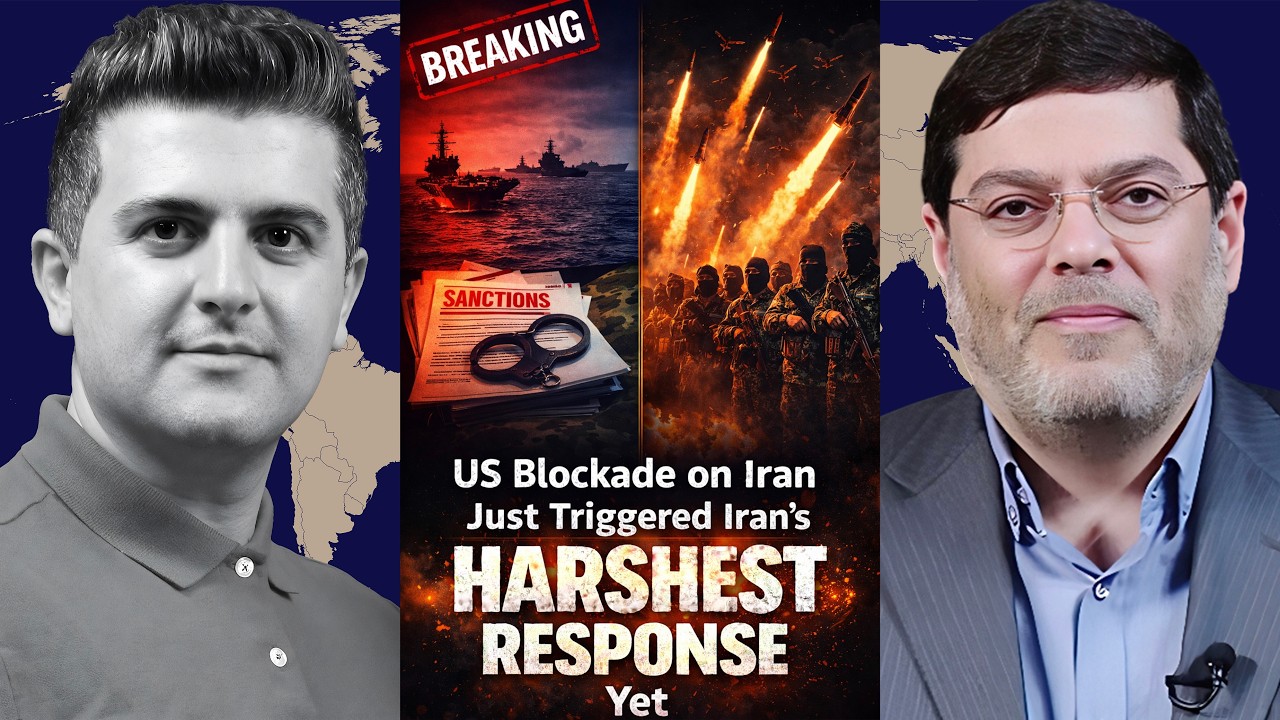
Seyed M. Marandi: US Blockade on Iran Just Triggered Iran’s HARSHEST Response Yet
"An Iranian professor details how US demands and an imposed blockade triggered Iran's harshest response, exposing American strategic missteps and the vulnerability of Gulf Arab states."
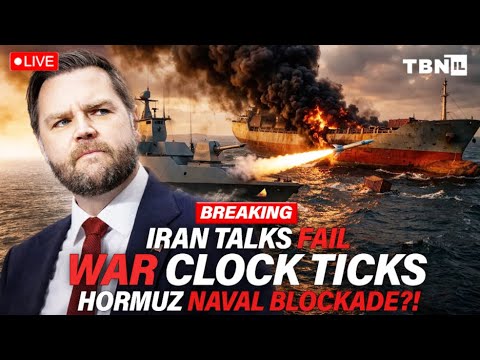
BREAKING: U.S.-Iran Talks COLLAPSE; Hormuz Standoff Deepens; Hezbollah Fire | TBN Israel
"US-Iran negotiations in Islamabad collapsed over the nuclear issue and control of the Strait of Hormuz, leading to heightened tensions and a potential US naval blockade strategy."
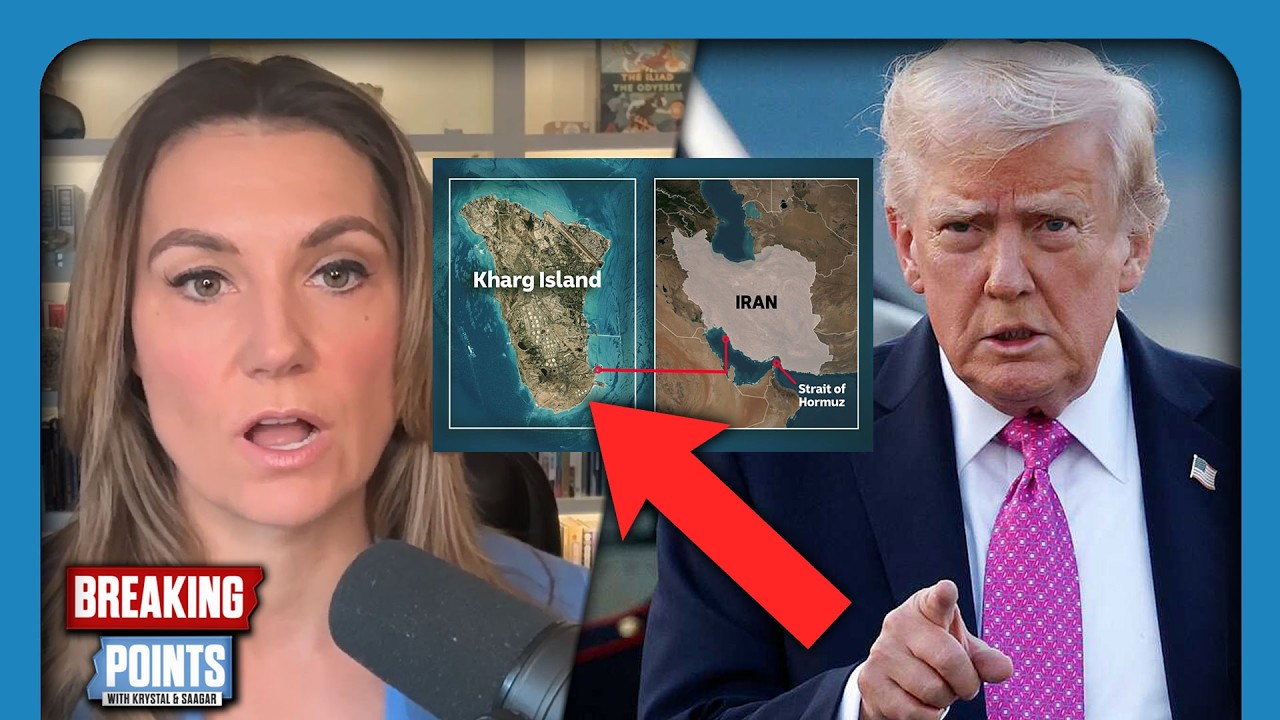
BREAKING: TRUMP ATTACKS OIL ISLAND, MARINES CALLED IN, 5 US PLANES HIT
"The US-Iran conflict escalates with a Trump-ordered strike on Iran's Karg Island, triggering Iranian retaliation against UAE oil facilities and US military assets, while the US deploys Marines and Israel plans a ground invasion of Lebanon."