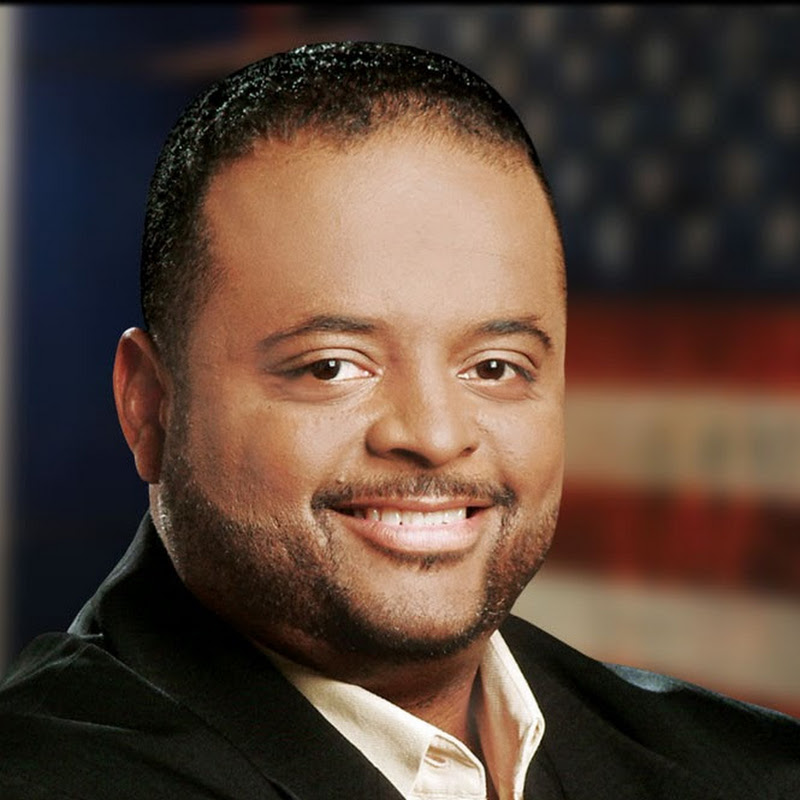
Elie Mystal Exposes Supreme Court Case as a Threat to Early and Mail-In Voting
YouTube · Eili1w3eu0Y
Quick Read
Summary
Takeaways
- ❖The Supreme Court case regarding Mississippi's mail-in voting is a 'straw man' argument orchestrated by the Republican National Committee to challenge early and mail-in voting nationwide.
- ❖Justice Gorsuch's hypothetical about recalling ballots post-election is criticized as nonsensical and a diversion from the core intent to restrict voting.
- ❖The 1845 federal statute defining Election Day is being reinterpreted to argue that votes must be cast and received on that specific day, invalidating all forms of early voting.
- ❖The same Supreme Court justices who deemed the Post Office unreliable for delivering mail in a prior case are now questioning its reliability for ballots, while it remains acceptable for tax returns.
- ❖Republicans' efforts to restrict voting are attributed to the increased turnout of Black and Latino voters since the 2008 election, aiming to suppress non-white votes.
- ❖Overwhelming voter turnout, especially from minority groups, is presented as the only effective counter to these voter suppression tactics.
Insights
1Supreme Court Case as a National Voting Rights Attack
The Supreme Court case, ostensibly about Mississippi's law allowing mail-in ballots postmarked by Election Day to be counted, is framed as a strategic 'straw man' argument by the Republican National Committee. The true objective is to establish a legal precedent that 'Election Day' means votes must be cast and received on the same day, thereby invalidating all early voting and mail-in voting across over 30 states.
The guest, Elie Mystal, states, 'This is going after all of mail and voting and potentially all of early voting... Mississippi Republicans don't actually agree with that law anymore. And part of the reasons why it's still on the books is so the Supreme Court can knock down the law, not just in Mississippi, but in the over 30 other states where it happens.' He adds that the argument is about whether Election Day is 'the only day that votes can be cast or received.'
2Justice Gorsuch's 'Provably Dumb' Hypothetical
Justice Gorsuch presented a hypothetical scenario where a candidate's scandal breaks after Election Day, leading voters to recall their ballots via common carriers like FedEx. This hypothetical is heavily criticized as unrealistic and a distraction, used to justify restricting mail-in voting by implying it allows for post-election manipulation.
Gorsuch's hypothetical () is directly called 'ridiculous, stupid, nonsensical' and 'provably dumb' by Elie Mystal, who states, 'It has never ever happened and never will happen.'
3Hypocrisy in Post Office Reliability for Voting vs. Taxes
The Supreme Court's conservative justices are accused of hypocrisy for questioning the Post Office's reliability in handling ballots while accepting its reliability for tax returns. A recent ruling by the same court stated the Post Office is not liable for intentionally not delivering mail, which is then used to argue it's not a reliable 'government official' for sensitive voting documents.
Elie Mystal highlights, 'The question is whether or not the post office is a government official capable of receiving votes... just a couple of weeks ago, Neil Gorsuch and the rest of the Republicans said that the post office could intentionally not deliver mail... The IRS is not going to say, 'Oh, well, you know, I didn't receive your your your your taxes... your taxes don't count.'... Post office fine for taxes, not fine for voting.'
4Voter Suppression as a Response to Demographic Shifts
The overarching Republican strategy to restrict voting, including the current Supreme Court case, is attributed to the increased turnout and political power of Black and Latino voters, particularly since the 2008 election. This is framed as a 'nightmare for white supremacists' who seek to maintain power by limiting the electorate rather than appealing to a broader base.
Roland Martin states, 'Everything that we're talking about... goes back to 2008... when the 2008 election was the first time in American history that black people voted at a higher percentage than white people.' Elie Mystal adds, 'The idea that black people got together enough voting power... to elect a black president is a nightmare for the white supremacists... What if we just didn't let those people vote?'
Bottom Line
The Supreme Court's prior ruling that the Post Office cannot be sued for intentionally failing to deliver mail (as seen in a Texas case involving a Black landlady) directly undermines the argument for mail-in ballot unreliability. This creates a legal paradox where the Post Office is deemed unreliable for voting but reliable for critical financial documents like tax returns.
This inconsistency highlights a perceived political motivation behind the challenges to mail-in voting, suggesting the unreliability argument is selectively applied. It also implies a broader vulnerability for citizens if the Post Office can act with impunity regarding mail delivery, impacting not just voting but essential services.
Advocacy groups could leverage this perceived hypocrisy to challenge the legal basis of arguments against mail-in voting, emphasizing the double standard applied to the Post Office's role in different governmental functions.
Key Concepts
Straw Man Argument
The guest describes the Supreme Court case as a 'straw man' where the Republican National Committee is challenging Mississippi's mail-in voting law, not because Mississippi Republicans truly oppose it, but to create a legal precedent that can be applied to over 30 other states, effectively gutting mail-in and early voting nationally.
Historical Context Fallacy
The argument that the 1845 federal statute on Election Day should be interpreted literally (votes cast and received on the same day) ignores the historical evolution of voting methods (paper ballots, mail-in, machines) that developed after 1845, when voting was often instantaneous public declarations. This selective historical interpretation is used to justify modern voting restrictions.
Lessons
- Recognize that challenges to mail-in and early voting are part of a broader, coordinated strategy to suppress voter turnout, especially among minority groups.
- Engage in overwhelming voter turnout, as this is presented as the only way to overcome gerrymandering and voter suppression tactics.
- Educate others on the historical context and logical inconsistencies of arguments against modern voting methods, such as the selective interpretation of the 1845 Election Day statute and the Post Office's role.
Notable Moments
Justice Gorsuch's hypothetical about recalling ballots after election day due to a scandal, which was immediately dismissed as 'provably dumb' by the guest.
This hypothetical is presented as a transparent attempt to create a false premise for restricting mail-in voting, highlighting the perceived bad faith of the argument.
The RNC lawyer, Paul Clement, laughing when asked by Chief Justice Roberts if they were coming after early voting next, implying it was a future target.
This moment is cited as clear evidence of the long-term strategic goal to eliminate all voting that doesn't occur in person on Election Day.
Quotes
"No, Neil, your hypothetical is provably dumb. It has never ever happened and never will happen."
"If election day as federally mandated on is the only day that votes can be cast and received, then that means that any votes that are cast prior to election day are just as invalid as any votes that are received after election day. And that is the crux of the argument that the Republicans are really making."
"The post office is apparently okay to handle the tax budget of the United States of America, but it's not good enough to vote. That is the that is the level of hypocrisy that the Supreme Court is running with today."
"If your vote didn't matter, why are they going through all of these various different things in order to try to rob you of your vote?"
"If everybody who is eligible to vote votes and everybody who votes has their vote counted, Republicans can't win nationally."
Q&A
Recent Questions
Related Episodes

GOP Plots New Trump Supreme Court Pick Before Midterms | Elie Mystal | TMR
"Elie Mystal and Sam Seder discuss the Republican strategy to pressure Justice Samuel Alito into retiring before the midterms to allow Donald Trump to appoint a new, younger conservative justice, and the origins of the Supreme Court's 'shadow docket'."

Trump PANICS at SCOTUS as He Gets BRUTALLY REBUKED | Unprecedented
"The Supreme Court's recent rulings and upcoming hearings signal a significant shift in election law, civil rights for transgender individuals, and the independence of the Federal Reserve, with profound implications for American democracy and economic stability."

NC Targets DEI. Trump Blocks Housing Bill. Minority Banks Face New Rules. Kohen Wiley Protests
"This episode exposes how current political actions, from changes in minority bank definitions to attempts to regulate college athlete earnings and block foreign aid, are systematically undermining Black economic power, voting rights, and social justice."

HOT TOPICS | WARNING: Donald Trump's Iran War Chaos Has Hit the Point of No Return!
"Don Lemon delivers a scathing critique of Donald Trump's recent actions, framing them as desperate, unconstitutional attempts to consolidate power, undermine democracy, and distract from economic and foreign policy failures, all while questioning his mental stability."