Top U.S. & World Headlines — March 16, 2026
YouTube · FxUlL63gEhc
Quick Read
Summary
Takeaways
- ❖The US-Israeli war on Iran has entered its third week, with US strikes on Kharg Island (90% of Iran's oil exports) and major Iranian cities.
- ❖President Trump stated US strikes 'totally demolished' Kharg Island and warned of more, while Iran denies seeking a ceasefire.
- ❖Over 1,348 Iranian civilians have been killed, and 56 cultural sites damaged since the war began on February 28th.
- ❖Iran has launched retaliatory ballistic missile strikes on Israel, injuring at least eight people.
- ❖Six US service members died in an Iraq plane crash during Iran war operations, bringing the total US casualties to 12.
- ❖Brent crude oil is trading near $105 a barrel, and US gas prices have risen to $3.70/gallon due to the conflict.
- ❖FCC Chair Brentton Carr threatened to revoke broadcast licenses over 'hoaxes and news distortions' regarding the Iran war.
- ❖Israeli forces continue to violate a Gaza ceasefire, killing 12 people, and killed a Palestinian family in the occupied West Bank.
- ❖Eight anti-ICE protesters in Texas were convicted on terrorism charges, marking a significant legal precedent against activists.
Insights
1Escalation of US-Israeli War on Iran
The US-Israeli war on Iran has intensified, entering its third week with direct US strikes on critical Iranian infrastructure and cities. President Trump's statements indicate a strategy of severe economic and military pressure, while Iran maintains a defiant stance against negotiations.
President Trump ordered strikes on Kharg Island, which handles 90% of Iran's crude oil exports, claiming US strikes 'totally demolished' much of the island and warning of more 'just for fun.' Iranian Foreign Minister Abbas Arashi flatly denied seeking a ceasefire or negotiations. US and Israeli forces continued to bombard cities like Tehran, Hamadan, and Isfahan, with 1,348 civilian deaths reported and 56 cultural sites damaged.
2Global Economic and Geopolitical Repercussions
The conflict is having immediate and significant global economic impacts, particularly on oil markets, and is drawing in regional actors through drone attacks and calls for international naval intervention.
Brent crude oil is trading near $105 a barrel, and the average price for a gallon of gas in the US hit $3.70. President Trump called for a coalition to secure the Strait of Hormuz, responsible for 20% of the world's oil supply. Drone attacks occurred on the Ali al-S Salam air base in Kuwait and near Dubai and Fujairah airports in the UAE, disrupting infrastructure.
3Threats to Press Freedom and Civil Liberties in the US
The Trump administration is escalating its pressure on domestic institutions, threatening media outlets over war coverage and using terrorism charges against activists, signaling a crackdown on dissent and free speech.
FCC Chair Brentton Carr threatened to revoke broadcasters' licenses for 'hoaxes and news distortions' regarding the Iran war, citing President Trump's criticism of US media. In Texas, a federal jury convicted eight anti-ICE protesters on terrorism charges, the first time such charges were successfully brought against activists by the Justice Department, raising fears over First Amendment rights.
4Ongoing Humanitarian Crises in the Middle East
Beyond the Iran war, other conflicts in the Middle East continue to result in severe civilian casualties and displacement, with international agreements failing to protect populations.
Israel began ground operations in southern Lebanon, with Israeli attacks killing at least 850 people, including 107 children, and displacing nearly 1 million. In Gaza, Israeli forces violated a US-brokered ceasefire, killing 12 people, including children and a pregnant woman. In the occupied West Bank, Israeli forces killed a Palestinian father, mother, and two children in their car.
Notable Moments
FCC Chair Brentton Carr threatened to revoke broadcast licenses for 'hoaxes and news distortions' regarding the US-Israeli war on Iran, echoing President Trump's criticism of media coverage.
This represents a direct threat from a federal regulator to press freedom, potentially chilling critical reporting on government actions and setting a dangerous precedent for censorship under the guise of 'public interest' operation.
A Palestinian child recounted how Israeli soldiers shot his family in their car in the occupied West Bank, then beat him and his brother while calling them 'dogs.'
This provides a harrowing, first-hand account of extreme violence against civilians, highlighting the brutal reality of the conflict and the dehumanization of victims, directly contradicting any narrative of targeted military action.
Quotes
"We may hit it a few more times just for fun."
"No, we never asked for a ceasefire and we have never asked even for negotiation. We are ready to defend ourselves as long as it takes."
"Broadcasters that are running hoaxes and news distortions, also known as the fake news, have a chance now to correct course before their license renewals come up. The law is clear. Broadcasters must operate in the public interest, and they will lose their licenses if they do not."
"This is the federal government telling news stations to provide favorable coverage of the war or their licenses will be pulled. A truly extraordinary moment. We aren't on the verge of a total takeover. We are in the middle of it."
"Everyone in the car was martyred except for my brother Mustafa and me. A soldier came and pulled me out of the car. They started beating me. They pulled out my brother Mustafa. They tried to beat him, but I stood in front of them. They pushed me to the ground and started beating me on the back with their boots. The Israeli soldiers started to say, 'We killed dogs.'"
Q&A
Recent Questions
Related Episodes

Mamdani CELEBRATES NYC Rent Freeze, This Will DESTROY The City | Timcast IRL
"New York City's rent freeze, celebrated by Mandami, is framed as a socialist 'land grab' that will devastate the city's housing market and economy, while a FIFA Pride Match in Seattle sparks outrage from conservative nations."

🚨 THEY F*CKED AROUND FOR THE LAST TIME 😭😭😭
"This episode unleashes a torrent of highly opinionated commentary on the US-Iran deal, Israel's role, and a scathing critique of 'leftist' policies and immigration, particularly highlighting the UK grooming gang report as evidence of Western societal decay."
BREAKING: Protests ERUPT In Iran Over IRGC Surrendering To Trump - Infighting Clashes In Tehran
"Iran is experiencing severe internal infighting and protests as hardline IRGC elements clash with government figures over a perceived 'surrender' to the US, while mainstream Western media misrepresents the situation."
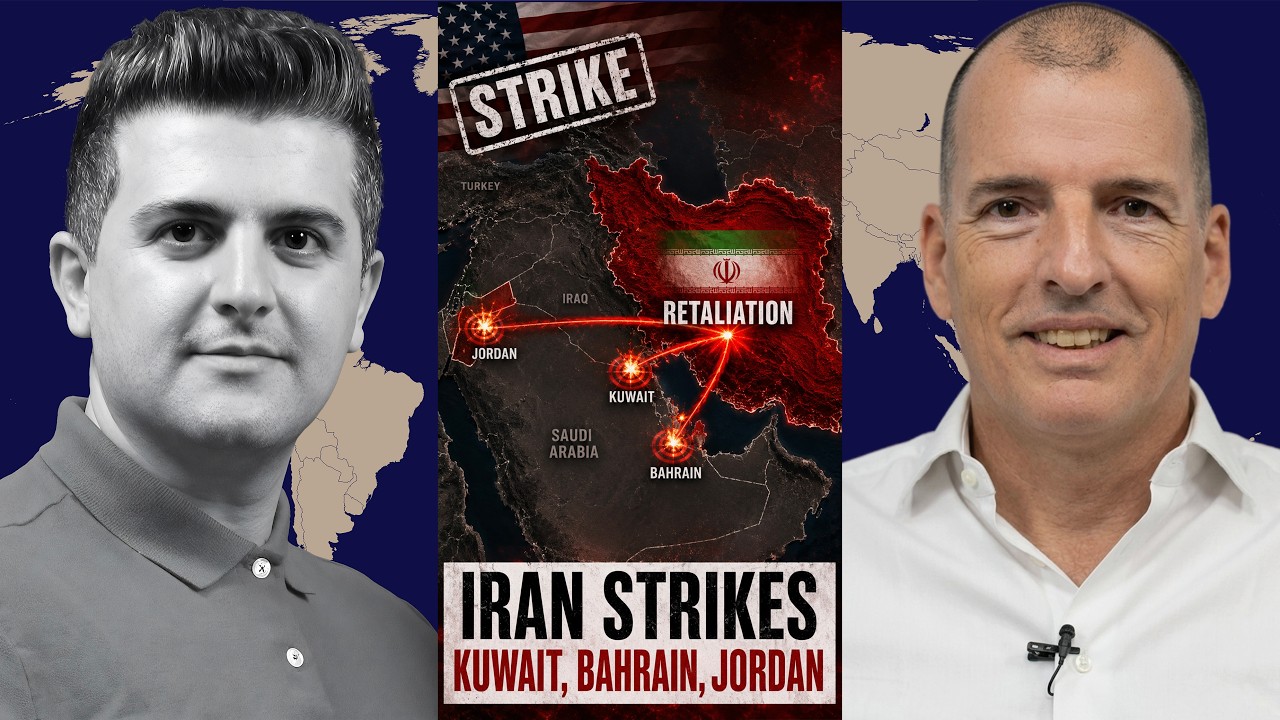
Alex Krainer: US STRIKES Iran – Iran RETALIATES Against Kuwait, Bahrain & Jordan!
"Amidst escalating US-Iran conflict and Iranian retaliation against regional US allies, this episode argues that US foreign policy is deeply controlled by an 'Anglo-Zionist conspiracy' led by the Rothschild banking dynasty, prioritizing Israeli interests over American ones."