Former General Gives Brutally Honest Iran War Assessment | Command Post
YouTube · H5eTqVcBnvc
Quick Read
Summary
Takeaways
- ❖The US military's strategic goals in the Iran war focus on destroying specific military capabilities, while Iran's goals are asymmetric, aiming for regime survival, economic disruption, and political pressure.
- ❖Iran exploits US democratic weaknesses by imposing political and economic costs, making it harder for the US government to sustain public support for the war.
- ❖Iran targets US military assets stationed in Gulf states to pressure US allies into advocating for an end to the conflict.
- ❖The US administration's approach to the war has fractured alliances, as allies were not privy to the war plan and are now reluctant to commit resources.
- ❖NATO allies specialize in different military contributions (e.g., Estonia with special operations, UK/Germany with naval assets), making a broad coalition essential for complex operations.
- ❖Russia and China likely provide intelligence to Iran as a quid pro quo for support, enabling Iran to strike high-value US targets effectively.
- ❖The absence of a clear political end state for the US campaign renders tactical military successes potentially irrelevant in the long term.
Insights
1Mismatch in Strategic Objectives
The US focuses on kinetic destruction of Iran's military capabilities (missiles, nuclear infrastructure, proxy networks), while Iran's goals are asymmetric: imposing costs on the US, disrupting global energy markets, mobilizing regional proxies, and ensuring regime survival. This fundamental difference means tactical US military successes do not necessarily translate into strategic Iranian failures.
General Hertling outlines US goals (destroy missiles/drones, neutralize infrastructure, protect shipping) and Iran's goals (impose costs, disrupt energy, mobilize proxies, regime survival). Ben Parker elaborates on Iran's non-military approach (political pressure, economic impact via Hormuz).
2Iran's Asymmetric Counter-Strategy
Iran's primary method of fighting back against US military action is not direct military confrontation, but rather exploiting US vulnerabilities. This includes generating political pressure within the US (as a democracy), disrupting global oil prices via the Strait of Hormuz, and influencing US allies in the region by targeting US assets on their soil.
Ben Parker discusses Iran hitting the US 'where we are relatively weak,' mentioning democratic fatigue with war () and economic impact via oil prices and the Strait of Hormuz (). General Hertling adds that Iran targets US assets in Gulf states to pressure allies ().
3Alliance Fracturing and its Strategic Cost
The US administration's unilateral approach to the war, coupled with public criticism of NATO and other allies, has severely damaged its ability to form broad coalitions. This isolation weakens US global influence and its capacity to manage complex international crises, as allies are unwilling to contribute resources to a conflict they weren't consulted on.
Ben Parker notes 'America alone is not nearly as threatening as America with all of our allies and partners' (). General Hertling explains NATO allies were 'not privy to the plan beforehand' () and highlights the US decommissioning mine sweepers while criticizing allies for not providing them ().
4The Irrelevance of Tactical Victory Without an End State
Despite significant military achievements in destroying Iranian capabilities, the US campaign lacks a clear political end state. This absence means that even overwhelming tactical success can be strategically irrelevant if it does not lead to a desired long-term outcome, potentially resulting in a prolonged conflict or an unstable post-conflict environment.
General Hertling cites Colonel Harry Summers' quote about Vietnam: 'You never defeated us on the battlefield' and the reply 'That may be true, Colonel, but it also is irrelevant' (). He states, 'if it's not aimed at something that the politicians want as an endstate... it doesn't matter how much ammunition you spent' ().
5Intelligence Sharing and Iranian Strike Capabilities
Russia and China are likely providing high-quality targeting intelligence to Iran as a reciprocal gesture for past support (e.g., Iranian drones for Ukraine). This intelligence, combined with Iran's existing weapon systems, enables Iran to conduct precise strikes against high-value US military targets, demonstrating its continued capability to inflict damage despite US bombing campaigns.
General Hertling confirms Russia and China have the capability and are likely sharing intelligence as a 'quid pro quo' for Iran's Shahed drones (). He details Iranian strikes on US radar sites, an airfield damaging four refueling aircraft, and a logistics base causing six US deaths ().
Key Concepts
Asymmetric Warfare
Iran's strategy of countering US military superiority by leveraging non-military means, such as economic disruption (Straits of Hormuz), political pressure on US allies, and internal regime stability, rather than direct military confrontation.
The 'End State' Problem
The critical importance of defining clear political objectives and a desired post-conflict scenario before initiating military action. Without a defined end state, even successful tactical military operations can be strategically meaningless or lead to prolonged, unresolved conflicts.
Alliance Management
The diplomatic and strategic effort required to maintain strong international coalitions. The US administration's failure to involve allies in war planning and its public criticism of NATO members have weakened its ability to garner international support and resources.
Iran Gets a Vote
A concept emphasizing that in any conflict, the adversary is an active participant with its own goals and means, and their actions must be considered. Military plans cannot succeed if they ignore the enemy's ability to react, adapt, and pursue alternative strategies.
Lessons
- Policymakers must define clear, achievable political end states before initiating military campaigns to ensure tactical successes contribute to strategic objectives.
- Military strategists should anticipate and plan for asymmetric responses from adversaries, recognizing that kinetic superiority does not guarantee victory against non-military tactics.
- Leaders should prioritize robust alliance management, ensuring allies are consulted and integrated into strategic planning to maintain coalition strength and burden-sharing.
- Analysts should evaluate conflict outcomes not solely on military destruction, but also on the adversary's ability to achieve its asymmetric goals (e.g., economic disruption, political pressure).
- Governments need to be transparent with their populace about the costs and objectives of military engagements to build and sustain public support.
Notable Moments
General Hertling recounts a 60-second situation report test from Secretary Rumsfeld after 9/11, setting the tone for concise, high-signal communication.
This anecdote highlights the demand for succinct, impactful intelligence in high-stakes environments and frames the hosts' approach to analyzing the Iran conflict.
Ben Parker's 'devil's advocate' brief on why the war is going well, followed by General Hertling's critique on the lack of an end state.
This segment effectively illustrates the core argument that tactical military successes can be misleading without a clear strategic purpose, making the 'Iran gets a vote' concept tangible.
Quotes
"There's only one thing worse than fighting with allies, and it's fighting without them."
"You never defeated us on the battlefield. That may be true, Colonel, but it also is irrelevant."
"Is it okay for another country to get intelligence from Russia and then launch a strike on Alibaba and kill six Americans in one strike? I don't think so. I think that runs contrary to what we believe."
Q&A
Recent Questions
Related Episodes
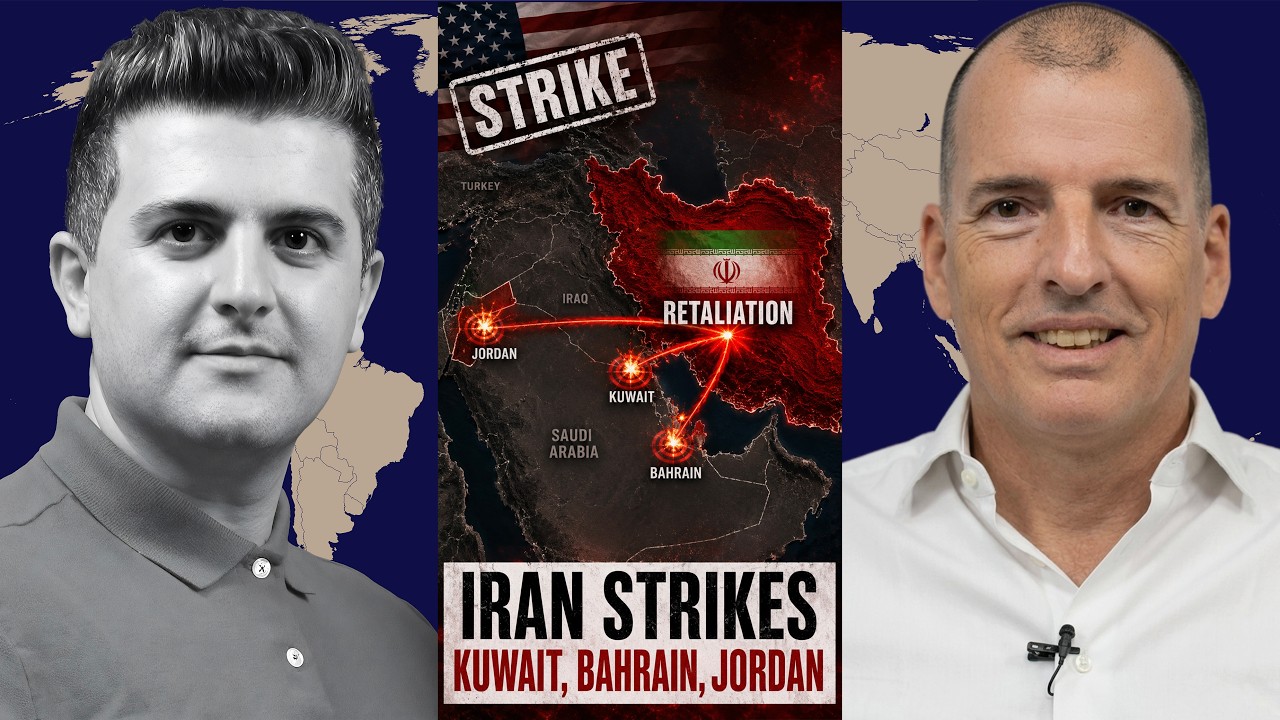
Alex Krainer: US STRIKES Iran – Iran RETALIATES Against Kuwait, Bahrain & Jordan!
"Amidst escalating US-Iran conflict and Iranian retaliation against regional US allies, this episode argues that US foreign policy is deeply controlled by an 'Anglo-Zionist conspiracy' led by the Rothschild banking dynasty, prioritizing Israeli interests over American ones."

Patrick Henningsen: Hezbollah JUST Fired Back at Israel - Iran Vows to “Crush” All Attacks
"Patrick Henningsen argues that the US and Israel initiated an illegal war against Iran, driven by Trump's incompetence and Israeli influence, leading to an inevitable escalation with severe global economic repercussions."

The Fat Electrician Vs Tactically Acquired | Unsubscribe Podcast 267
"This episode features military content creators discussing current geopolitical hotspots, advanced weaponry, and the surprising psychological warfare tactics of modern conflict, alongside their personal journeys building online communities."

LIVE: Trump HIDES FROM PUBLIC as US SOLDIER KILLED!!! 6/2/2026
"The host exposes alleged government cover-ups regarding military casualties, Trump's unexplained public absence, and questionable political appointments, arguing these reflect a 'regime of loser babies' and a failing foreign policy."