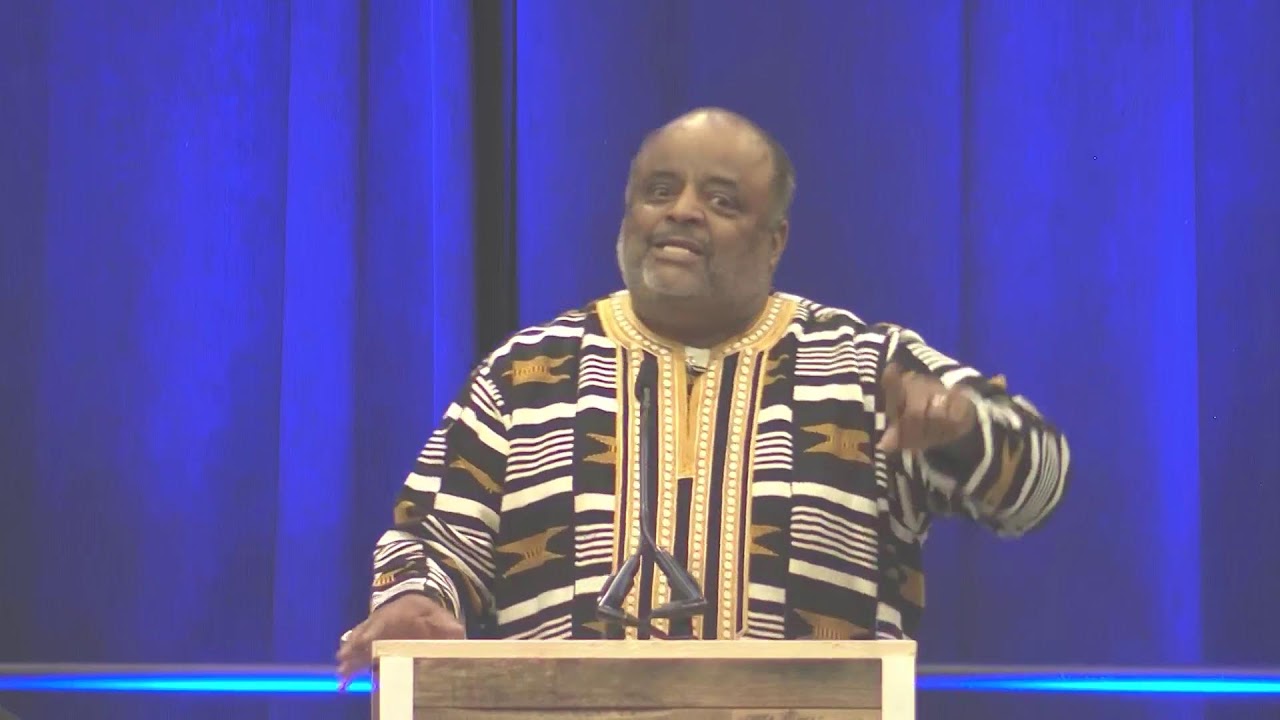
Roland speaks at Columbus Educ. Assoc. MLK Dinner
YouTube · H6pQYYex0NU
Quick Read
Summary
Takeaways
- ❖The 'rest time is over' for those complacent in the fight for justice; active engagement is paramount.
- ❖Coretta Scott King's pivotal role in driving Dr. King's positions, especially on the Vietnam War, is often overlooked.
- ❖The 1968 funeral of Dr. King had an all-white press pool until Coretta Scott King insisted on Black media inclusion.
- ❖Black-owned media receives a disproportionately small share (0.5-1%) of the $350 billion annual advertising spend, despite significant Black market share.
- ❖Historical Jim Crow laws, like felony disenfranchisement in Virginia, continue to govern in the 21st century.
- ❖Home appraisals have withheld over $100 billion from Black families due to discriminatory practices.
- ❖Hitler studied American Jim Crow laws to implement discrimination in Germany.
- ❖The 1964 Civil Rights Act and Title IX disproportionately benefited white women, who must now actively combat systemic attacks.
- ❖Project 2025's agenda aims to restrict women's roles to domesticity, impacting all women.
- ❖True respect for Dr. King means acting on his full message, including economic boycotts and collective action, not just quoting the 'mountaintop' speech.
- ❖Annual MLK dinners should serve as 'annual reports' on tangible progress made in the past year.
Bottom Line
White women have been the primary beneficiaries of affirmative action and civil rights legislation (e.g., Title IX, 1964 Civil Rights Act), yet their silence on current attacks against marginalized communities is a significant barrier to collective progress.
This historical context reframes the responsibility of white women in contemporary social justice movements, highlighting their vested interest and moral obligation to actively participate in challenging discriminatory policies.
Mobilize white women by educating them on their historical benefits from civil rights, framing current attacks as threats to their own gains, and calling them to specific actions against policies like Project 2025.
The current federal government is willingly allowing individuals who admit to being Nazis or have been convicted of seditious conspiracy (e.g., Oathkeepers, Proud Boys) to hold positions or be celebrated within its ranks (e.g., ICE, GSA).
This indicates a systemic embrace of extremist ideologies within government, directly threatening democratic institutions and civil liberties, and signaling future policy directions that will be hostile to marginalized groups.
Expose and challenge these appointments and hires through investigative journalism, political pressure, and organized public outcry, linking them directly to the erosion of civil rights and democratic norms.
Opportunities
Leverage Black-owned media for corporate advertising spend.
Challenge corporations with significant Black market share to allocate a fair percentage of their $350 billion annual advertising budget (currently 0.5-1%) to Black-owned media outlets. This requires direct advocacy and potentially consumer pressure.
Transform churches into community-wide tutoring centers.
Churches should map a 0.1-0.5 mile radius around their location, survey for K-12 children, and enlist retired educators to offer free tutoring services Monday-Friday, utilizing existing church facilities (lights, heat, Wi-Fi). This provides educational support and can attract new members.
Lessons
- Demand accountability from political leaders (city council, school board, state legislature) on issues like education funding, police accountability, and voting rights, making annual MLK events an 'annual report' on progress.
- Organize collective action through established Black organizations (D9 fraternities/sororities, Prince Hall Masons, Lynx, Eastern Star) by 'descending upon' city hall, county commissioners, and school boards with specific agendas monthly.
- Practice economic withdrawal and boycotts against companies that do not invest in Black communities or support discriminatory practices, leveraging collective economic power as Dr. King advocated.
Collective Power Mobilization for Local Change
Identify 12 key Black organizations (e.g., D9 fraternities/sororities, Prince Hall Masons, Lynx, Eastern Star) in a city or region.
Assign each organization a specific month to 'descend upon' a local government body (City Council, County Commissioners, School Board) with a unified, pre-determined agenda.
Leverage the visible presence of hundreds of members in organizational colors to demand attention and action from elected officials.
Rotate targets monthly to maintain consistent pressure across all levels of local governance, ensuring their responsiveness to community needs.
Notable Moments
Roland Martin challenges the audience to repeat 'rest time is over' to each other, creating a powerful, interactive call to action.
This rhetorical device immediately establishes the urgent, no-nonsense tone of his speech, directly engaging the audience and setting the stage for his critique of complacency.
Martin recounts Coretta Scott King's insistence on Black media inclusion at Dr. King's funeral, forcing an all-white press pool to integrate.
This anecdote powerfully illustrates the historical fight for media representation and the courage required to challenge institutionalized racism, even in moments of profound grief, directly linking to his later points about Black-owned media.
Martin's direct confrontation with a 28-year-old who claimed to be 'tired,' asking 'How the hell are you 28 and tired?'
This moment encapsulates his central argument against generational complacency, using a provocative personal anecdote to drive home the urgency and historical burden carried by older generations, while challenging younger ones to step up.
Quotes
"Don't get caught up on all the negative and the bad because there's so much that's good. Those young people who are here tonight and stood up that we are fighting and we have a superintendent who understands the value of education and supporting our children."
"You don't remember what people say. You don't always remember what people do, but you remember how people make you feel. And so tonight, I hope you remember that we are trying to make you feel that you are empowered, to make you feel that you are important, to make you feel that you have value, and if we stand together, if we link and latch ourselves together and get out the vote, we can change this world."
"We make it about him and not about the people. We make it about him and not the movement."
"We have made withdrawals from the bank of justice. The folk who did all the work and we are living on what they did... But you now have to ask the question, what will they say about this generation at this dinner 30 years from today?"
"Hitler sent his emissaries to the United States to study American Jim Crow to get some pointers to bring it back to Germany in order to discriminate against folk there."
"Ain't nobody benefited more than white women from affirmative action in the United States."
"Let's stop making Dr. King a civil rights bobblehead. Let's stop just putting him on a mantle where we could not touch him and reach him. Let's commit ourselves to say, 'No, we got to be about King's business and not just his quotes.'"
"If you do good, I will talk about you. If you do bad, I will talk about you. At the end of the day, I'mma talk about you."
Q&A
Recent Questions
Related Episodes
Roland speaks at Columbus Educ. Assoc. MLK Dinner
"Roland Martin challenges the audience at an MLK dinner to move beyond passive celebration and engage in active, sustained political and economic struggle, emphasizing that 'rest time is over' for those seeking real societal change."

Georgia Fort Pleads Not Guilty. Paralyzed Man Case Charges Dropped. Roy Cooper Senate Bid
"This episode delivers a powerful, multi-faceted tribute to Reverend Jesse Jackson Sr., highlighting his unparalleled impact on civil rights, economic empowerment, political strategy, and global diplomacy, emphasizing his role as an irreplaceable force for justice."

Black Men Created America’s First Paramedics. Freedom House’s Hidden History
"Discover the untold history of Freedom House, where Black men in Pittsburgh founded America's first paramedic service in 1966, revolutionizing emergency medicine despite facing pervasive systemic racism and institutional sabotage."
Moral Monday at BLM Plaza. Cleo Fields Sounds Alarm on Louisiana & Gary Chambers Pushes Turnout
"Activists and faith leaders gathered at Moral Monday to denounce 'policy violence' in various forms, from war and budget cuts to voter suppression and healthcare denial, urging sustained mobilization against a 'hijacked' democracy."