
Matthew Hoh: The End of US Air Power Advantage
YouTube · Hg-vaxlflSw
Quick Read
Summary
Takeaways
- ❖Matthew Hoh is highly skeptical of Middle East ceasefires, believing Israel only agrees after achieving strategic objectives, such as isolating southern Lebanon.
- ❖Donald Trump's decision-making is characterized as highly unstable and easily swayed, particularly by figures like Netanyahu, impacting US foreign policy.
- ❖The US economy is in poor health, facing potential stagflation due to the war's economic fallout (e.g., energy shocks, supply chain disruptions).
- ❖US military leadership, exemplified by figures like Pete Hegseth, is criticized for 'woodenheaded' thinking and incompetence, leading to preventable troop deaths.
- ❖Iran has strategically leveraged the conflict to become a world power, capable of reordering Middle Eastern economics and challenging US guarantees of energy transit.
- ❖US allies (e.g., Japan, South Korea, Spain) are increasingly questioning their reliance on the American Empire, recognizing its diminished capacity to protect them.
- ❖The US has 'clearly lost' the war against Iran, failing to achieve objectives like regime change or destruction of Iran's military programs, while Iran achieved its own strategic goals.
Insights
1US Military Incompetence and Preventable Deaths
The US military demonstrated significant incompetence during the conflict, leading to preventable casualties. A CBS News report detailed a soldier's account of being stationed in an unprotected, known drone target area in Kuwait, resulting in six deaths. Hoh corroborates this, calling it 'irresponsibility' and 'criminality.' He notes the US military was seeking concrete bunkers weeks into the war, despite extensive prior experience in conflict zones like Iraq and Afghanistan and observing the Ukraine-Russia war.
CBS News report on a US soldier's account of a drone strike in Kuwait; US Central Command putting out tenders for concrete bunkers weeks after the war started.
2Iran's Emergence as a World Power and Regional Reordering
Iran's actions during the conflict have solidified its status as a world power, capable of significantly reordering the Middle East. Hoh states that Iran has achieved its objectives, including causing economic harm and political stress globally. He predicts that Gulf States will now effectively pay a 'tax' to Iran for oil and natural gas transit through the Strait of Hormuz, fundamentally altering regional economic dynamics and challenging the US as the guarantor of energy supplies.
Iran's ability to cause global economic and political stress; predicted 'tax' on Gulf States for Strait of Hormuz transit.
3Decline of the American Empire and Allied Reassessment
The conflict has served as a 'catalyst' making the decline of the American Empire undeniable, forcing US allies to reconsider their strategic alignment. Hoh compares the diminishing support for US military actions from the Gulf War (dozens of countries) to the current conflict (primarily US and Israel). Nations like Spain, Japan, and South Korea are now questioning their reliance on the US, especially given US military failures against the Houthis and Iran, and the energy shock they experienced. Taiwan, in particular, must reassess its defense strategy against China, recognizing the US's inability to project power effectively near hostile coastlines.
Comparison of US coalition support across three wars (1991, 2003, current); US failures against Houthis and Iran; energy shock experienced by allies; Taiwan's geographical proximity to China vs. US military reach.
4Trump's Fragility and External Influence on US Policy
Donald Trump's decision-making is characterized by extreme fragility and susceptibility to external influence, particularly from Benjamin Netanyahu. Hoh cites reports that Trump's stance on the Lebanon ceasefire was reversed after a phone call from Netanyahu. John Kerry's reported statement that Netanyahu asked every US president to attack Iran, but only succeeded with Trump, further underscores this vulnerability. This dynamic highlights how US foreign policy can be swayed by personal relationships and external pressures, rather than consistent strategic interests.
CBS News reporting on Netanyahu's phone call influencing Trump's ceasefire decision; John Kerry's reported statement about Netanyahu's consistent requests to US presidents.
Bottom Line
The US military's 'woodenheaded' thinking, characterized by simple-minded, inaccurate worldviews (e.g., all Shia as an Iranian conspiracy), is institutionalized within the Pentagon and leads to counterproductive military actions globally.
This institutionalized cognitive bias means US military strategy is often based on flawed assumptions, leading to repeated failures and exacerbating conflicts rather than resolving them. It suggests a deep-seated problem beyond individual leaders.
For analysts and policymakers, understanding this 'woodenheadedness' is key to predicting US military responses and identifying areas where alternative, more nuanced diplomatic or strategic approaches could be more effective.
The administration's desperation to distract from the war's failures was so profound that the First Lady made an unscheduled, impromptu statement about the Epstein investigation, pushing a major scandal back into headlines during an international armed conflict.
This reveals the extreme political pressure and perceived catastrophe within the US administration regarding the war, indicating a severe loss of control over narrative and policy, even resorting to highly unusual and potentially damaging distractions.
This incident serves as a case study in crisis communication and political desperation, offering insights into how governments might attempt to deflect attention from significant failures, even at the cost of resurfacing other controversies.
Israel's long-term future is precarious, with internal civil strife and external conflicts potentially leading to its downfall years from now, driven by an insatiable desire for 'never enough' expansion and security.
This suggests that Israel's current aggressive policies, particularly in Gaza and the West Bank, are unsustainable and will ultimately lead to its collapse, rather than securing its long-term survival. It challenges the notion of Israel's perpetual military strength.
This perspective offers a framework for understanding the potential trajectory of the Israeli-Palestinian conflict beyond immediate events, highlighting the importance of internal societal cohesion and the limits of military solutions for long-term stability.
Lessons
- Re-evaluate investment strategies in the Middle East and global energy markets, considering Iran's enhanced regional influence and the potential for new transit 'taxes' or disruptions.
- Assess the reliability of US security guarantees and alliances, particularly for nations in contested regions like Taiwan, given the demonstrated limitations of US power projection.
- Scrutinize official narratives and media reporting on conflicts, recognizing the potential for 'establishment narratives' and political distractions, as highlighted by the Epstein files incident.
Quotes
"The United States is child killers. And little girls will stand out and defy American aircraft under the open skies while their fathers shoot hunting rifles at those planes because that's who we are. We're child killers and we're invading their country."
"The American Empire represents the 20th century. That's the American century and it's ending. It didn't happen on the exact calendar uh end of the century, but you know, this this is where it is really clearly ending."
"Iran is a world power. What it has accomplished in the last six weeks, it is a world power. The fact that it was able to have these effects throughout the world that it is it is changing the economic reality of countries..."
Q&A
Recent Questions
Related Episodes
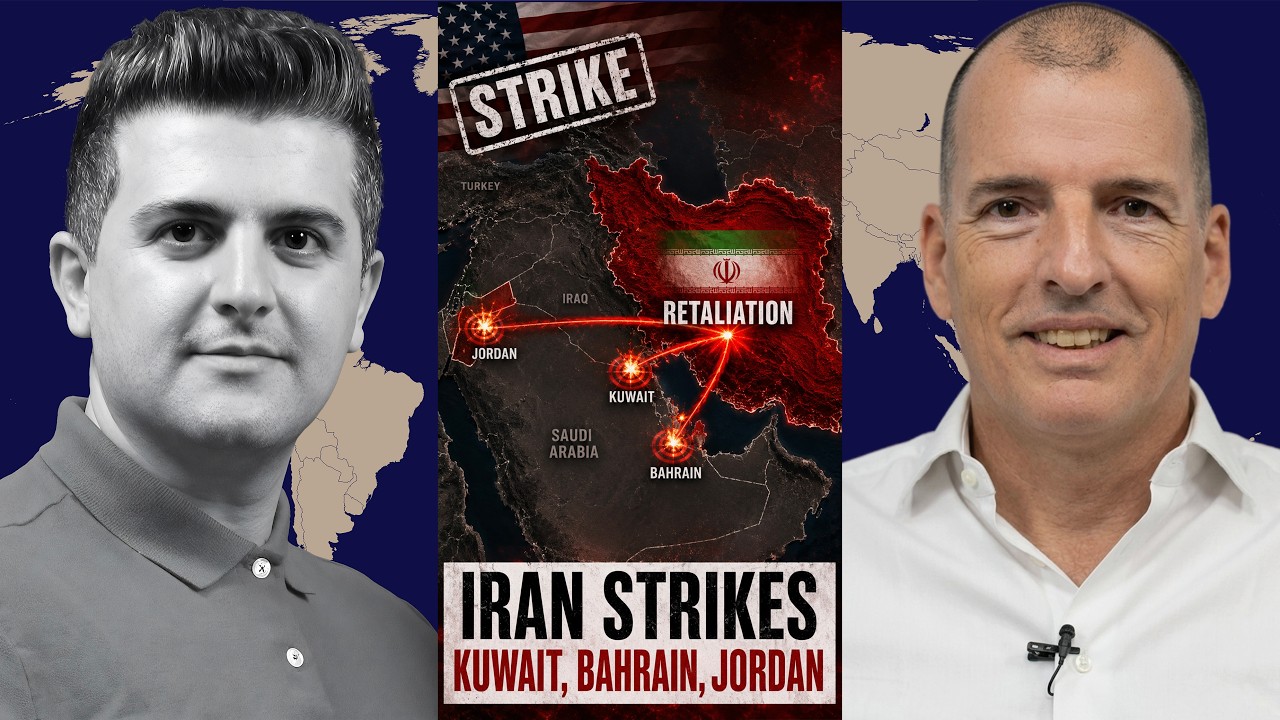
Alex Krainer: US STRIKES Iran – Iran RETALIATES Against Kuwait, Bahrain & Jordan!
"Amidst escalating US-Iran conflict and Iranian retaliation against regional US allies, this episode argues that US foreign policy is deeply controlled by an 'Anglo-Zionist conspiracy' led by the Rothschild banking dynasty, prioritizing Israeli interests over American ones."

Patrick Henningsen: Hezbollah JUST Fired Back at Israel - Iran Vows to “Crush” All Attacks
"Patrick Henningsen argues that the US and Israel initiated an illegal war against Iran, driven by Trump's incompetence and Israeli influence, leading to an inevitable escalation with severe global economic repercussions."
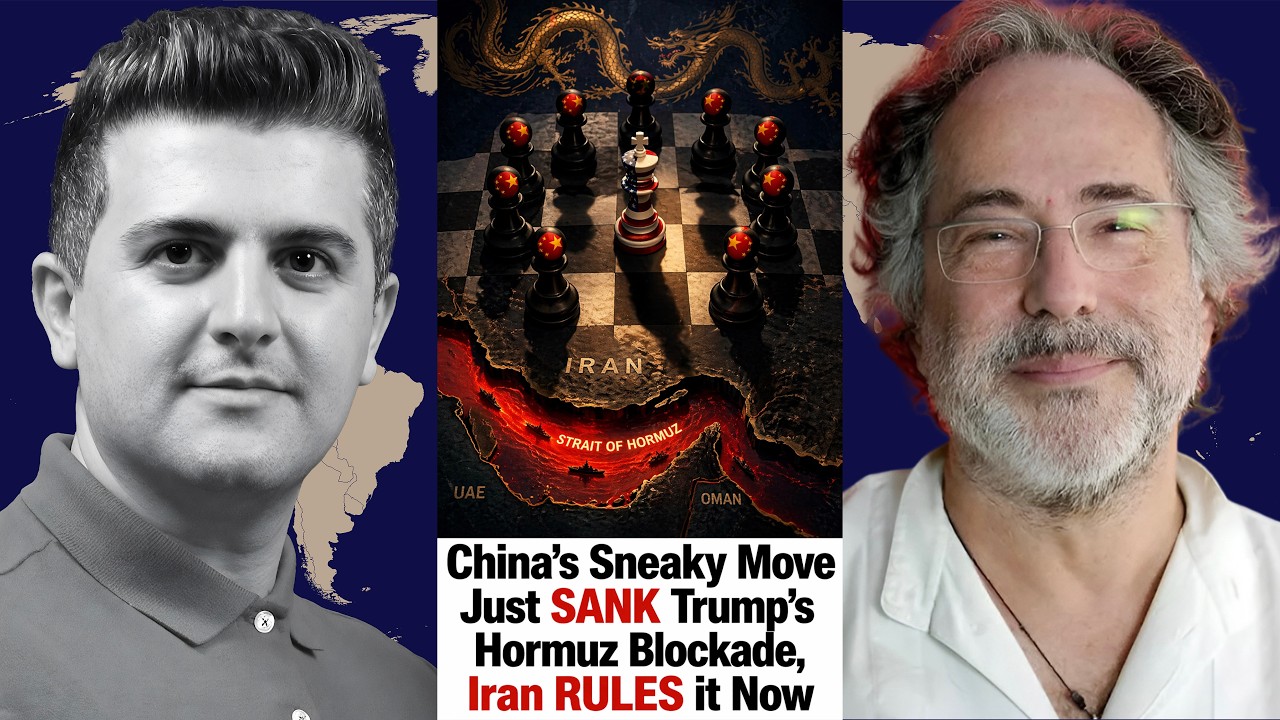
Pepe Escobar: “Total Failure”: Trump’s Blockade Just Backfired Disastrously
"Pepe Escobar argues that the US blockade against Iran, spearheaded by Donald Trump, has utterly failed and backfired, accelerating global economic chaos and challenging US geopolitical dominance."
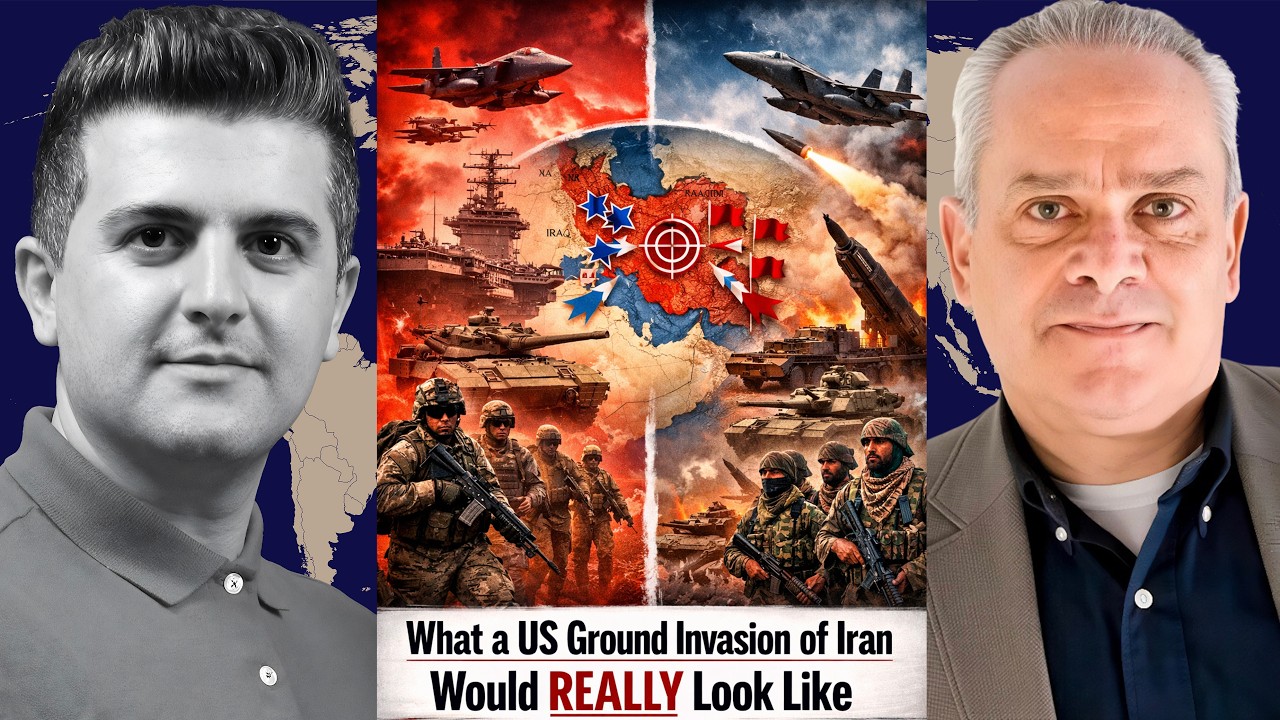
Col. Jacques Baud: What a US Ground Invasion of Iran Would REALLY Look Like
"Colonel Jacques Baud dissects the strategic futility of a US ground invasion of Iran, arguing that current troop levels are insufficient and such an action would backfire, exposing US allies and potentially leading to Iran's nuclearization."