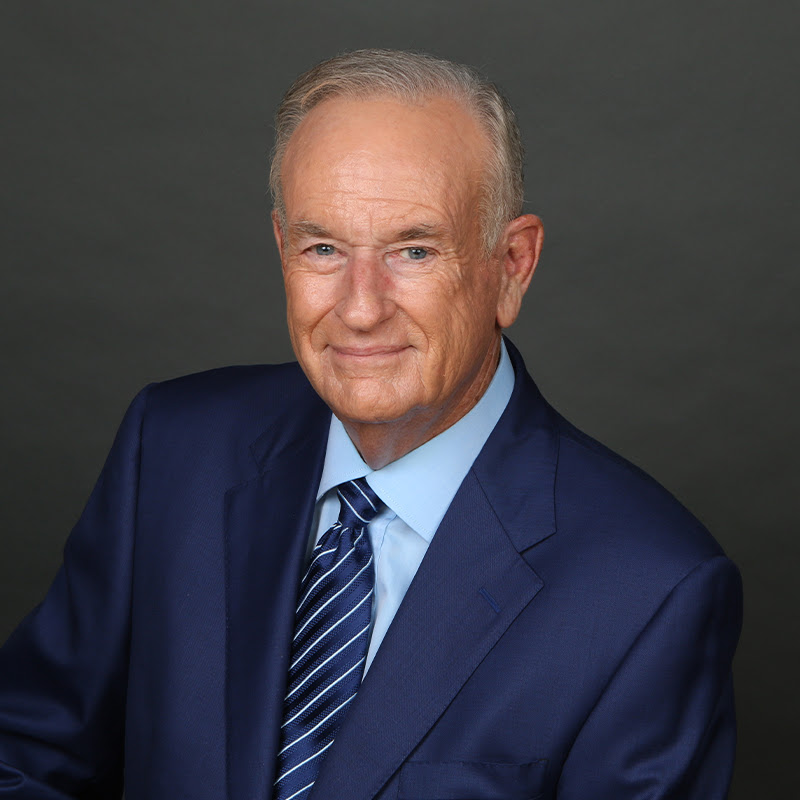
Are U.S. Troops Heading to Greenland? & 60 Minutes Controversial El Salvador Story | Jan. 19, 2026
YouTube · IE2rmWub3xY
Quick Read
Summary
Takeaways
- ❖The New York socialist movement is mobilizing 4,000 anti-ICE activists to impede federal apprehensions in New York City, mirroring organized efforts in Minnesota.
- ❖The Pentagon alerted 1,500 soldiers for potential deployment to Minneapolis due to local police refusal to protect federal ICE agents, which O'Reilly considers an act of rebellion.
- ❖A CBS poll indicates 61% of Americans believe ICE operations are 'too tough,' while 15% say 'not tough enough,' and 24% 'about right.'
- ❖Virginia's new governor, Abigail Spanberger, immediately reversed the previous administration's policy, instructing local authorities not to cooperate with federal immigration enforcement, classifying Virginia as a sanctuary state.
- ❖Bill O'Reilly and Hugo Gerardon agree on the strategic importance of a US military presence in the Arctic/Greenland but debate Trump's provocative negotiation style, which Gerardon views as potentially damaging to alliances.
- ❖Both O'Reilly and Gerardon anticipate a high likelihood of US military involvement in Iran, focusing on non-ground troop actions like disrupting communications or targeting Revolutionary Guard headquarters, while acknowledging concerns about a fundamentalist backlash.
Insights
1Organized Resistance to Federal Immigration Enforcement
Bill O'Reilly asserts that anti-ICE demonstrations in Minnesota and other cities are not spontaneous but are highly organized by 'far left people' and 'socialist movements' aiming to destabilize the federal government. He cites the New York socialist movement mobilizing 4,000 activists and notes similar organized efforts in Minneapolis, Broadview (Illinois), Denver, and Portland (Maine).
The New York Post reported on the mobilization of 4,000 anti-ICE activists in New York City by the Democratic Socialists of America. O'Reilly states, 'the Minnesota demonstrations are not organic. They're organized by far left people who are using the immigration and the ICE roundup to try to destabilize America.'
2State and Local Non-Cooperation with Federal Law Enforcement
O'Reilly highlights a critical breakdown in cooperation where Minnesota state and Minneapolis local police refuse to protect federal ICE agents. He also notes that Virginia's new governor, Abigail Spanberger, immediately reversed the previous administration's policy, instructing local authorities not to cooperate with federal immigration enforcement, effectively making Virginia a sanctuary state. He frames these actions as 'totally illegal' and states 'the state of Minnesota is in rebellion to the United States.'
O'Reilly quotes the Mayor of Minneapolis stating, 'we will not be intimidated by the actions of this federal government' and mentions Minneapolis has a 'separation ordinance' that is 'totally illegal.' He also details Governor Spanberger's immediate policy change in Virginia.
3Trump's 'Hand Grenade' Negotiation Tactic
O'Reilly describes President Trump's negotiation style as throwing a 'hand grenade' to create chaos and keep people 'on edge,' only to then 'walk in and get the best possible deal.' Hugo Gerardon acknowledges this tactic, noting Trump's ability to create 'mayhem' and 'extraordinary circumstances' to achieve his original intentions, even if it leads to temporary international disdain.
O'Reilly explains, 'he likes to throw the hand grenade in and it blows up and then from that swirl of smoke and everything, then he walks in and gets the best possible deal.' Gerardon concurs, 'he will go in there and you know create a kind of mayhem or extraordinary circumstances which everybody's hair is on fire and then when they settle for 60% of what he's asked for or they they rush to make a deal he's actually getting what he originally intended to get.'
4High Likelihood of US Military Involvement in Iran
Both O'Reilly and Hugo Gerardon believe there is a high likelihood of US military involvement in Iran, not necessarily with ground troops, but through actions like cutting off communication for the Republican Guard or flattening their headquarters. They discuss the timing of such intervention, considering the potential for the Ayatollah to use it as a religious fundamentalist rallying cry.
Gerardon states, 'I think there's quite a high likelihood, even if if not very very soon, but pretty high likelihood of American military involvement over there.' O'Reilly adds, 'they'll flatten the Revolutionary Guard headquarters. That's what I think will happen.'
Bottom Line
The Democratic Party, despite not openly admitting it, effectively supports open borders by not opposing Biden's immigration policies and by not proposing new, clear immigration legislation.
This suggests a strategic silence within the Democratic Party on immigration reform, potentially leveraging the status quo for political gain or avoiding internal divisions, rather than engaging in a direct legislative debate.
For political strategists, this highlights an area where clear policy proposals could either unify or further divide the party, and offers an opportunity for opposing parties to frame the Democrats' stance as implicitly pro-open borders.
The debate over the percentage of criminals among ICE detainees (70% claimed by Homeland Security Director Kristi Noem vs. 40% suggested by CBS's Margaret Brennan) reflects a significant information gap and media distrust.
This discrepancy undermines public confidence in official figures and fuels partisan narratives, making it difficult for the American public to form an informed opinion on immigration enforcement effectiveness and fairness.
There is an opportunity for independent fact-checking organizations or non-partisan government bodies to provide transparent, verifiable data on detainee criminal records to bridge the trust gap and inform public discourse more accurately.
Lessons
- Monitor local and state government actions regarding cooperation with federal law enforcement, particularly concerning immigration, as these can indicate broader political shifts and potential legal conflicts.
- When evaluating claims about immigration enforcement, seek out multiple data sources and be aware of potential partisan framing, especially regarding statistics on criminal activity among detainees.
- Understand that provocative diplomatic tactics, while controversial, can be a deliberate strategy to achieve specific foreign policy outcomes, and their long-term costs and benefits should be critically assessed.
Quotes
"Minnesota state police and Minneapolis local police will not protect federal agents. That's pretty startling, pretty stunning."
"What's ridiculous is you, Mr. Mayor, uh telling your police department not to protect federal agents from harm. I mean, that's just disgraceful."
"The Democratic Party does not oppose open borders. If it did, it would have screamed when Biden was doing that."
"He likes to throw the hand grenade in and it blows up and then from that swirl of smoke and everything, then he walks in and gets the best possible deal."
"He will he will go in there and you know create a kind of mayhem or extraordinary circumstances which everybody's hair is on fire and then when they settle for 60% of what he's asked for or they they rush to make a deal he's actually getting what he originally intended to get."
Q&A
Recent Questions
Related Episodes

Iran Update: Israel’s Newest Bombing Campaign, the Oncoming War With China and How to Avoid It
"Colonel Wilerson reveals how the US and Israel are actively bombing China's strategic infrastructure in Iran, escalating a covert economic war that Beijing intends to win without direct military conflict by dismantling the dollar's global dominance."

Bibi DEMANDS Ground Troops As Marines Rushed to Iran
"Benjamin Netanyahu is pushing for US ground troops in Iran, framing air strikes as insufficient, while the US rushes Marines to the region and struggles to secure the Strait of Hormuz against surprisingly capable Iranian defenses."

A Whistleblower Running For Congress?!
"The Young Turks expose alleged government and media complicity in covering up critical information, from the push for war with Iran and DHS surveillance of activists to shocking revelations from the Epstein files and the suppression of dissent against Israeli influence."

Judge REJECTS DESPERATE Democrat STUNT As Trump Threatens To INVOKE Insurrection Act In Minneapolis!
"A Minnesota judge rejected a Democratic lawsuit to block ICE operations, while former President Trump threatened to invoke the Insurrection Act in Minneapolis amid escalating protests against federal immigration enforcement, sparking debate on state vs. federal authority and de-escalation tactics."