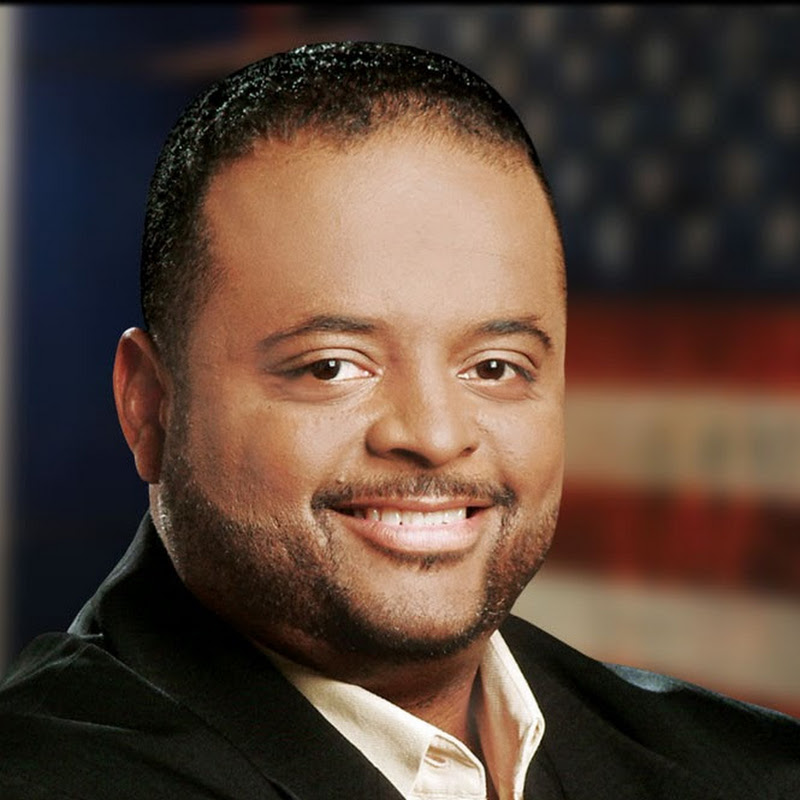
Roland, Howard Bryant talk "Kings and Pawns: Jackie Robinson and Paul Robeson in America"
YouTube · ISP-_kh0qXM
Quick Read
Summary
Takeaways
- ❖Paul Robeson, a singer, athlete, lawyer, actor, and activist, was once the most prominent Black voice in America but has been largely erased from both American and Black history.
- ❖His erasure was intentional, a 'massive campaign' driven by his unabashed progressive, anti-capitalist, and pro-Communist views during the Cold War.
- ❖Jackie Robinson was strategically used by Branch Rickey and the House Un-American Activities Committee (HUAC) to publicly testify against Robeson, positioning him as the 'black anti-communist' voice.
- ❖Branch Rickey's integration of baseball was not purely progressive; he initially sought non-American Black players to avoid disrupting US segregation and only turned to American Negro League players when he realized they were the best talent.
- ❖The baseball owners viewed Robinson's integration as an 'existential crisis,' fearing Black fans would drive away white patrons, demonstrating that financial gain was often secondary to maintaining racial comfort.
- ❖The historical pattern of Black leaders being pressured to prioritize 'national unity' over racial justice, especially when criticizing US foreign policy, is a recurring theme from Robeson to MLK.
- ❖The concept of 'illusion of merit' highlights how white institutions prioritize 'comfort' over actual talent or qualifications when hiring or promoting, particularly concerning Black individuals.
- ❖Robeson and Robinson, despite their opposing public roles, never met, with Robeson Jr. suggesting it was to protect Jackie from the toxicity surrounding Paul.
- ❖The episode underscores the critical importance of Black-controlled media and institutions to ensure Black stories are told authentically and in their full dimension, rather than being co-opted or erased by mainstream narratives.
Insights
1The Deliberate Erasure of Paul Robeson
Paul Robeson, a multi-talented Renaissance man (singer, athlete, lawyer, actor, activist) and once the most influential Black voice in America, was systematically written out of American and Black history. This erasure was not accidental but an intentional 'massive campaign' orchestrated due to his unabashed progressive, anti-capitalist, and pro-Communist views during the Red Scare.
The host and guest discuss how 'many people have no clue how huge Paul Robeson was' () and that he was 'essentially written out not only American history but black history' (). Bryant states, 'You can't erase somebody like that by accident. Time didn't just erase him.' (). Robeson was denied a passport for eight years, preventing him from earning a living or speaking abroad (, ).
2Branch Rickey's Complex Motivations for Baseball Integration
Branch Rickey, often celebrated as a progressive figure for integrating baseball, had complex and self-serving motivations. He initially had 'no intention of integrating' with American Black players, 'hated black baseball,' and sought to sign Latino players from Mexico, Venezuela, Cuba, or the Dominican Republic to get credit for integration without upsetting American segregation. He only turned to American Negro League players, like Jackie Robinson, after spending $25,000 and realizing they were the superior talent.
Bryant reveals that Rickey 'had no intention of integrating. He hated black baseball.' (). Rickey 'spent $25,000 scouring Mexico and Venezuela in Cuba in the Dominican Republic looking for the right player to integrate.' (). He 'would have signed a Mexican player. He would have signed a Dominican player.' ().
3The Strategic Use of Jackie Robinson Against Paul Robeson
Jackie Robinson was strategically positioned by Branch Rickey and the US government to publicly testify against Paul Robeson before the House Un-American Activities Committee (HUAC) in 1949. This move created the 'black anti-communist' figure needed to counter Robeson, who was then the 'number one black voice in America' and a vocal critic of American capitalism and racial injustice. Robinson, who had no prior national political track record, was leveraged for his loyalty to Rickey and his perceived patriotism.
The host notes, 'In 1949, Jackie Robinson testified against Paul Robeson in front of the House on American Activities Committee' (). Bryant explains that to counter Robeson's 'big' voice, they went to 'Jackie Robinson... whose black voice is big enough to counter Robeson?' (). He adds, 'Robinson's voice was so big that he was targeted... Jackie Robinson wasn't even really a political figure at that time.' ().
4The 'Illusion of Merit' and Prioritization of 'Comfort' in White Institutions
White-dominated institutions often operate on an 'illusion of merit,' where they claim to value talent and qualifications but, in practice, prioritize 'comfort' and maintaining the racial status quo. This leads to the exclusion of Black talent, even at a financial cost. Baseball owners, for example, feared that Black fans would drive away white fans and ruin franchise values, demonstrating a willingness to forego profit to preserve 'whiteness.'
Bryant states, 'We spend a lot of our time trying to prove merit, they hire for comfort. We talk about merit. They talk about comfort.' (). He explains that baseball owners believed Robinson's integration was 'the greatest betrayal of their business' and 'an existential crisis financially' because 'white fans wouldn't want to sit next to them' (, ).
5The Recurring Tactic of Silencing Black Voices on Foreign Policy
A consistent historical pattern reveals that when prominent Black figures 'step outside of their accepted lane' to challenge American foreign policy or connect domestic racial struggles with international anti-colonial movements, they are met with fierce opposition. This tactic involves accusing them of being 'unpatriotic' or 'communist' and pressuring other Black leaders to disavow them, as seen with Robeson, W.E.B. Du Bois, and later Martin Luther King Jr.'s stance on the Vietnam War.
Bryant notes, 'the moment they begin to talk about American foreign policy is when America says oh no we can't have these negro leaders going there' (). He draws parallels to MLK's opposition to the Vietnam War, where other Black leaders 'opposed him. How dare you? What are you doing? You're hurting the movement.' ().
Bottom Line
The 'pylon' strategy by Black leadership: Instead of merely remaining silent, some prominent Black leaders (like Walter White, A. Philip Randolph, Bayard Rustin, and Roy Wilkins of the NAACP) actively strategized to isolate and abandon Paul Robeson, fearing that his perceived communist ties would jeopardize civil rights gains and alienate white allies.
This reveals the immense pressure and difficult choices faced by Black leaders during periods of intense political repression, where self-preservation and tactical compromises could lead to the sacrifice of other influential figures. It complicates the narrative of unified Black resistance.
Further research into the internal debates and ethical dilemmas within Black leadership during the Cold War could provide a more nuanced understanding of strategic alliances and betrayals, offering lessons for contemporary movements facing similar pressures to conform.
Branch Rickey's 'obsession' with Paul Robeson predated Jackie Robinson's integration, with Rickey actively looking for 'his Robeson' to counter the progressive movement for baseball integration.
This suggests that Rickey's actions were not solely about integrating baseball for moral reasons, but also a calculated response to external pressures and a desire to control the narrative. His 'progressive' image was intertwined with a desire to manage and neutralize radical Black voices.
Re-evaluating historical figures like Rickey through a lens of power dynamics and strategic self-interest, rather than purely altruistic motives, can provide a more accurate and critical understanding of historical events and their lasting impacts.
Key Concepts
Illusion of Merit vs. Comfort
This model explains how institutions, particularly white-dominated ones, often prioritize the 'comfort' of existing power structures and demographics over the actual 'merit' of individuals. This leads to the exclusion or marginalization of highly qualified Black individuals, even when it means foregoing potential financial or performance benefits, as seen in baseball integration and corporate DEI initiatives.
The Black Anti-Communist Gambit
This describes the strategic tactic employed by the US government and other powerful entities during the Cold War to identify and elevate Black figures who would publicly denounce communism and other 'un-American' ideologies. This was used to counter influential Black progressives like Paul Robeson, creating internal divisions within Black leadership and leveraging patriotism to suppress radical calls for racial and economic justice.
The Continuum of Black Struggle and Erasure
This model posits that the challenges faced by Black leaders (e.g., W.E.B. Du Bois, Paul Robeson, Malcolm X, MLK, Colin Kaepernick) are part of a continuous historical pattern. This includes being ostracized, silenced, or having their contributions minimized when they challenge systemic racism, capitalism, or US foreign policy, demonstrating that the fight for Black liberation is an ongoing, interconnected struggle across generations.
Lessons
- Challenge romanticized historical narratives by seeking out diverse sources and perspectives, especially those from marginalized communities, to uncover the full complexity and often uncomfortable truths.
- Support and invest in Black-controlled media, educational institutions, and cultural platforms to ensure that Black stories are told by and for Black people, preserving agency and preventing historical erasure.
- Recognize and critically analyze the 'illusion of merit' in professional and social contexts, advocating for systems that genuinely prioritize talent and equity over comfort and maintaining the status quo, even when it involves challenging established power structures.
Notable Moments
Howard Bryant's 'wow moment' during research was realizing Branch Rickey's true intentions for baseball integration: he initially sought Latino players to avoid upsetting American segregation and only turned to American Black players because they were demonstrably better.
This revelation fundamentally alters the widely accepted heroic narrative of Branch Rickey, exposing a more calculated and less altruistic motivation behind one of America's most celebrated civil rights advancements in sports. It highlights how historical figures can be lauded for outcomes that were not their primary intention.
The hosts' 'wow moment' was learning that Paul Robeson and Jackie Robinson, two titanic Black figures in 20th-century America, never met, despite living in the same era and both being prominent in Harlem.
This fact underscores the profound political chasm created between them by external forces. Paul Robeson Jr.'s explanation—that Paul deliberately avoided Jackie to protect him from the 'toxic' association—reveals the immense personal cost and strategic sacrifices made by Black leaders during the McCarthy era.
Quotes
"It is crazy to me that this Renaissance man who singer, athlete, lawyer, actor, activist, all of this is essentially written out not only American history but black history."
"How was it possible to erase Paul Robeson? And one of the places where I go with this is it was the same thing with Malcolm X... Paul Robeson has never gotten that type of reappraisal."
"You can't erase somebody like that by accident. Time didn't just erase him."
"The black man who is willing to criticize another black person publicly will have a job for life."
"Branch Rickey had no intention of integrating. He hated black baseball."
"We spend a lot of our time trying to prove merit, they hire for comfort. We talk about merit. They talk about comfort."
"The reason why I did this, I testified against Robeson, was because I didn't want white people to view us as unpatriotic."
"We are Americans and we love this country, but we are reminded in so many heartbreaking ways that it does not love us."
Q&A
Recent Questions
Related Episodes

Roland, Howard Bryant talk "Kings and Pawns: Jackie Robinson and Paul Robeson in America"
"Howard Bryant's book "Kings and Pawns" uncovers the intentional erasure of Paul Robeson from American history and re-examines Branch Rickey's complex, self-serving motives behind Jackie Robinson's integration of baseball."
Celebrating the Legacy of the Rev. Dr. Bernard Lafayette, Jr.
"This memorial service celebrates the life and enduring legacy of Rev. Dr. Bernard Lafayette, Jr., a pivotal civil rights leader, nonviolence strategist, and educator whose teachings transformed movements globally."
Celebrating the Life and Legacy of Rev. Jesse Jackson Sr.
"This episode unpacks the unparalleled impact of Reverend Jesse Jackson Sr., a towering figure who reshaped American politics, economics, and civil rights through audacious leadership and unwavering commitment to the marginalized."

Xernona Clayton talks about working with MLK and Coretta Scott King #MLKDay2026
"Civil Rights icon Xernona Clayton recounts her defining moments fighting racism, her intimate work with Martin Luther King Jr. and Coretta Scott King, and her unexpected role in changing a KKK Grand Dragon's heart."