
🚨 BREAKING: Huge CLASHES In Iran - Nuclear Talks FAIL - IRGC Target Protesters
YouTube · Jd6qOHWUJZI
Quick Read
Summary
Takeaways
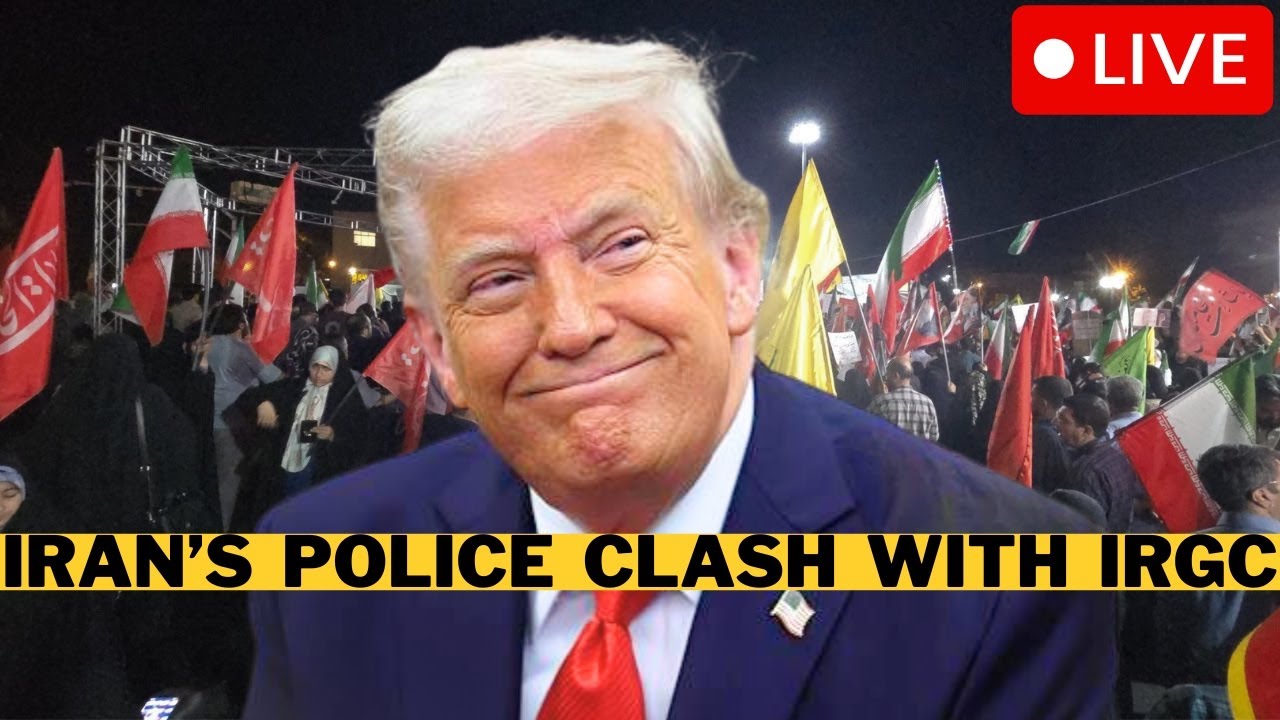
- ❖Protests have re-erupted across multiple Iranian cities, including Abadan, Mashhad, Sanandaj, and Tehran, coinciding with 40th-day memorials for regime victims.
- ❖The IRGC has deployed military vehicles and machine guns against unarmed civilians, with reports of direct shooting at protesters.
- ❖Iranian authorities are using foreign Arab proxy forces to suppress protests, as these forces lack loyalty to the local population.
- ❖Internet disruptions are widespread, particularly in cities like Zanjan and Ahvaz, to hinder communication and information sharing by protesters.
- ❖The second round of nuclear negotiations between the US and Iran in Geneva failed, as Iran's proposal to pause uranium enrichment for three years and send 'some' enriched uranium to Russia was deemed insufficient.
- ❖The US demands for dismantling the nuclear program, limiting ballistic missiles, and ending regional proxy support were not met by Iran.
- ❖The IRGC has temporarily closed the Strait of Hormuz for 'live fire naval drills,' issuing warnings to foreign vessels.
- ❖The US has significantly mobilized military assets to the Middle East, including 36 F-16s, 12 F-22s, and a third of its Navy, with early warning aircraft already landed in the UK en route.
- ❖Iranian leaders, including Ali Khamenei and IRGC General Mohammad Reza Naghdi, issued defiant statements, threatening to sink US aircraft carriers and declaring America 'finished.'
Insights
1IRGC Deploys Military and Foreign Proxies Against Protesters
The Iranian regime has escalated its response to protests by deploying IRGC military forces, complete with military vehicles and machine guns, against unarmed civilians. The host highlights the use of foreign Arab proxy forces, suggesting this is an 'ingenious' but 'evil' tactic because these non-Iranian forces lack ethnic or national loyalty to the protesters, making them more willing to follow orders to kill.
IRGC militants deployed in multiple cities (Abadan, Mashhad, Sanandaj, Tehran); military vehicles positioned at cemeteries; IRGC bringing in machine guns (, , , )
2Nuclear Talks Fail Amidst Unacceptable Iranian Offers
A second attempt at nuclear negotiations between the US and the Islamic Republic failed. Iran's proposal included pausing uranium enrichment for three years (coinciding with the end of a US presidential term), sending 'some' enriched uranium to a third country like Russia, and discussing business deals if sanctions were lifted. However, Iran refused to dismantle its nuclear program or discuss ballistic missile limitations, which were key US demands.
Negotiations failed; Iran's proposal to pause enrichment for 3 years, send 'some' uranium to Russia; refusal to dismantle program or discuss ballistic missiles (, )
3US Military Mobilization and Strait of Hormuz Closure
The US has significantly increased its military presence in the Middle East, deploying numerous F-16 and F-22 fighter jets, and positioning one-third of its Navy in the region. Simultaneously, the Islamic Republic announced the temporary closure of the Strait of Hormuz for 'live fire naval drills,' warning foreign vessels against approaching, creating a highly sensitive and potentially dangerous situation.
36 F-16s, 12 F-22s, 48 US Air Force fighter jets, one-third of US Navy moving to Middle East; Iran officially closed Strait of Hormuz for live fire naval drills (, , )
4Internet Blackouts and Protester Resilience
Significant internet disruptions are occurring across Iran, particularly in cities experiencing early protests, indicating a deliberate effort by the regime to control information. Despite these measures and the heavy military presence, protesters continue to gather, chant anti-regime slogans, and even include school children, demonstrating persistent defiance.
Significant internet disruptions across Iran, especially in Zanjan and Ahvaz (); protesters gathering despite checkpoints and martial law (); school children protesting in Lahijan ()
Lessons
- Monitor independent news sources for real-time updates on the escalating situation in Iran, as internet blackouts and state media narratives can obscure events.
- Understand the dual pressure points on the Iranian regime: internal civil unrest driven by public discontent and external geopolitical pressure from failed nuclear talks and US military buildup.
- Recognize the tactical use of foreign proxy forces by the IRGC to suppress domestic protests, highlighting a lack of trust in their own national forces to commit violence against fellow citizens.
Notable Moments
Protests erupt on 40th-day memorials for those killed by the regime, signaling a sustained and organized resistance.
The timing of the protests on memorial days indicates a deliberate act of defiance and a collective memory of grievances, fueling the ongoing uprising.
Protesters in Mashhad chant 'Long live the King' and 'We will kill whoever killed our brother,' directly challenging the regime's legitimacy and vowing revenge.
These chants are highly illegal and dangerous, demonstrating the protesters' extreme courage and their clear rejection of the current Islamic Republic in favor of a return to monarchy or a new system.
Ali Khamenei, the Supreme Leader, makes a public appearance to rant against the US, threatening to sink aircraft carriers, shortly after President Trump's warning about knowing his hiding place.
This public display of defiance, despite apparent health issues and security concerns, indicates the regime's attempt to project strength and rally supporters amidst internal and external pressures, while also escalating rhetoric against the US.
School children in Lahijan are shown protesting and chanting for Crown Prince Reza Pahlavi.
The involvement of school children signifies the widespread and generational nature of the discontent, extending beyond adult activists and indicating a deep-seated desire for fundamental change, potentially including a return to the Pahlavi dynasty.
Quotes
"This is a civil war. The issue with this civil war is that one side is fully armed and the other side is barely armed. But people are not giving up because they know that this is the final battle."
"If you bring in foreigners, they don't really care about the people that they they are told to target. They will just actually follow the orders."
"Aircraft carriers are dangerous, but what's more dangerous is the weapons that we're going to use to sink them."
"The US is incapable of doing a damn thing even if it deploys 12 aircraft carriers."
Q&A
Recent Questions
Related Episodes
BREAKING: Protests ERUPT In Iran Over IRGC Surrendering To Trump - Infighting Clashes In Tehran
"Iran is experiencing severe internal infighting and protests as hardline IRGC elements clash with government figures over a perceived 'surrender' to the US, while mainstream Western media misrepresents the situation."

BREAKING: Iran Threatens To END Talks; U.S. Vows Retaliation; Hezbollah Collapsing? | TBN Israel
"Iran is leveraging Hezbollah and the Strait of Hormuz to manipulate US negotiations, while Israel asserts its right to dismantle Hezbollah's eroding but still dangerous infrastructure in Lebanon, independent of international talks."

Seyed M. Marandi: Iran Drops a New Equation on the Face of War – Israel Goes Against, Trump Escapes
"Iran has established a new deterrence equation in the Middle East, directly retaliating against Israeli aggression and exposing the vulnerabilities of both Israel and its Western allies, including the US."
The Global Shipping Crisis: 14 Weeks of the Persian Gulf Blockade
"The ongoing 14-week blockade in the Persian Gulf has severely disrupted global shipping, causing massive spikes in freight rates, collapsing Iranian oil exports, and creating a precarious global energy supply chain."