
Racist Conservatives Attack On The Second Founding of America | Adam Serwer | TMR
YouTube · JfzkYP6Nlq4
Quick Read
Summary
Takeaways
- ❖The Supreme Court's interpretation of the 15th Amendment today is an inversion of its original purpose to enfranchise Black people.
- ❖Post-Reconstruction courts allowed superficially race-neutral laws (like literacy tests, poll taxes) that explicitly aimed to disenfranchise Black voters.
- ❖The 15th Amendment was a partisan cause, as Republicans understood Black suffrage was vital for their political project in the South.
- ❖Justice Roberts's ideology, rooted in the Reagan administration's opposition to the Voting Rights Act, sees efforts to alleviate racism as worse than racism itself.
- ❖The conservative legal movement views the Civil War amendments as illegitimate, believing they 'ruin' the original antebellum constitution.
- ❖The 'reactionary colorblindness' ideology equates affirmative action with Jim Crow, justifying the dismantling of civil rights protections.
- ❖The backlash to Barack Obama's presidency provided momentum for the argument that 'racism is solved,' despite ongoing racial discrimination.
- ❖Recent rulings on gerrymandering are likely to result in a less diverse Congress, particularly impacting Black representation in the South.
- ❖The 'culture war' over representation in media and elite professions has economic undertones, reflecting a desire to maintain white men's unquestioned status.
Insights
1Inversion of 15th Amendment's Original Intent
The 15th Amendment was explicitly designed to enfranchise Black people and was both racial and partisan in its intent, aiming to prevent racially and politically motivated disenfranchisement. Post-Reconstruction Supreme Courts, however, allowed 'race-neutral' devices like poll taxes and literacy tests to circumvent the amendment, effectively re-establishing white supremacy.
Guest Adam Serwer details how the 15th Amendment was created to ensure Black suffrage, countering efforts by 'racist Democrats' to deny votes. He explains that early Supreme Court rulings allowed 'superficially race-neutral' laws like grandfather clauses and literacy tests, which explicitly aimed to disenfranchise Black people, to pass constitutional muster.
2Conservative Legal Movement's Ideological Rejection of Civil War Amendments
A core tenet of the modern conservative legal movement, particularly among Supreme Court justices like Roberts and Alito, is the belief that the Civil War amendments (13th, 14th, 15th) are illegitimate. This perspective holds that these amendments 'ruined' the original antebellum constitution by granting the federal government too much power and interfering with 'states' rights.' This leads to a 'reactionary colorblindness' that equates efforts to address racism with racism itself.
Serwer states, 'some of the justices on the court have this idea that the Civil War amendments to the Constitution are sort of illegitimate and that they ruin the real antibellum constitution that was written by the founders.' He cites Justice Roberts's view that the Voting Rights Act interfered with 'equal sovereignty of the states' and Professor Ian Haney Lopez's term 'reactionary colorblindness' to describe this ideology, which sees affirmative action as equivalent to Jim Crow.
3The 'Second Founding' Under Attack
The Civil War amendments and Reconstruction are considered the 'Second Founding' of America, an effort to fulfill the Declaration of Independence's promise of equality by correcting the original Constitution's flaw of implicitly protecting slavery. Current conservative legal actions, by narrowing these amendments, are seen as an attempt to revert to a 'white man's country' where status is explicitly class-based on race.
Serwer references historian Eric Foner's concept of the Civil War amendments and Reconstruction as 'the second founding,' which aimed to ensure America was 'not a white man's government.' He argues that a 'big chunk of the country' immediately rejected this, desiring an 'explicitly class-based' society based on race, a sentiment echoed in current legal and political battles.
4Elite Resegregation as a Backlash to Obama-Era Diversity
The perceived increase in diversity in elite public-facing jobs (media, entertainment, Congress) during the Obama era, while not fully reflective of broader societal integration, triggered a significant reactionary backlash. This backlash manifests as an agenda of 'elite resegregation,' aiming to reduce the presence of Black people in positions of power and influence, often disguised as 'culture war' issues.
Serwer notes that the Obama era saw a 'massive cultural impact' leading to more diverse representation in media, entertainment, and Congress. He argues this created a 'perception of a more integrated America that didn't really exist' and spurred a 'reactionary backlash.' He connects complaints about Black actors in roles like the Little Mermaid to an underlying sentiment that 'black people shouldn't have those jobs,' and describes recent voting decisions as part of a 'broader agenda of elite resegregation.'
Lessons
- Pass a new Voting Rights Act that addresses current challenges and explicitly counters the Supreme Court's narrow interpretations.
- Strip the Supreme Court of jurisdiction to hear cases related to the new Voting Rights Act, leveraging Congress's constitutional authority.
- Consider adding seats to the Supreme Court ('court packing') to rebalance its ideological composition and prevent its interference with the American people's ability to govern themselves.
Quotes
"The 15th Amendment says um it establishes the right to vote can't be denied on account of race, color, or previous conditions of servitude. and then um uh grants Congress power to um enforce uh through uh legislation. Um and so um but the the explicit idea of uh of the 15th amendment is to infranchise black people. In other words, that it was racial in its intent."
"Roberts has always seen efforts to alleviate racism as worse than racism itself, especially because and you could see this every time they gut a piece of the Voting Rights Act, they congratulate themselves on how not racist the country is anymore."
"The Civil War amendments were explicitly meant to, you know, make sure that America was not a white man's government. That was their purpose. I know that sounds like quote unquote woke, but this is what the guys who wrote these amendments thought. They were trying to correct the original flaw of the Constitution, which was that it made it possible for there to be, you know, an overclass as a result of its implicit protections for slavery."
"It's it's explicit racism. It's like this is our stuff. This belongs to us and you shouldn't be a part of it."
"Black people are never going to stop fighting for their right to be free and equal. And so, you know, the idea this is the fight is just simply not over. It's just it's it's just not the end."
Q&A
Recent Questions
Related Episodes
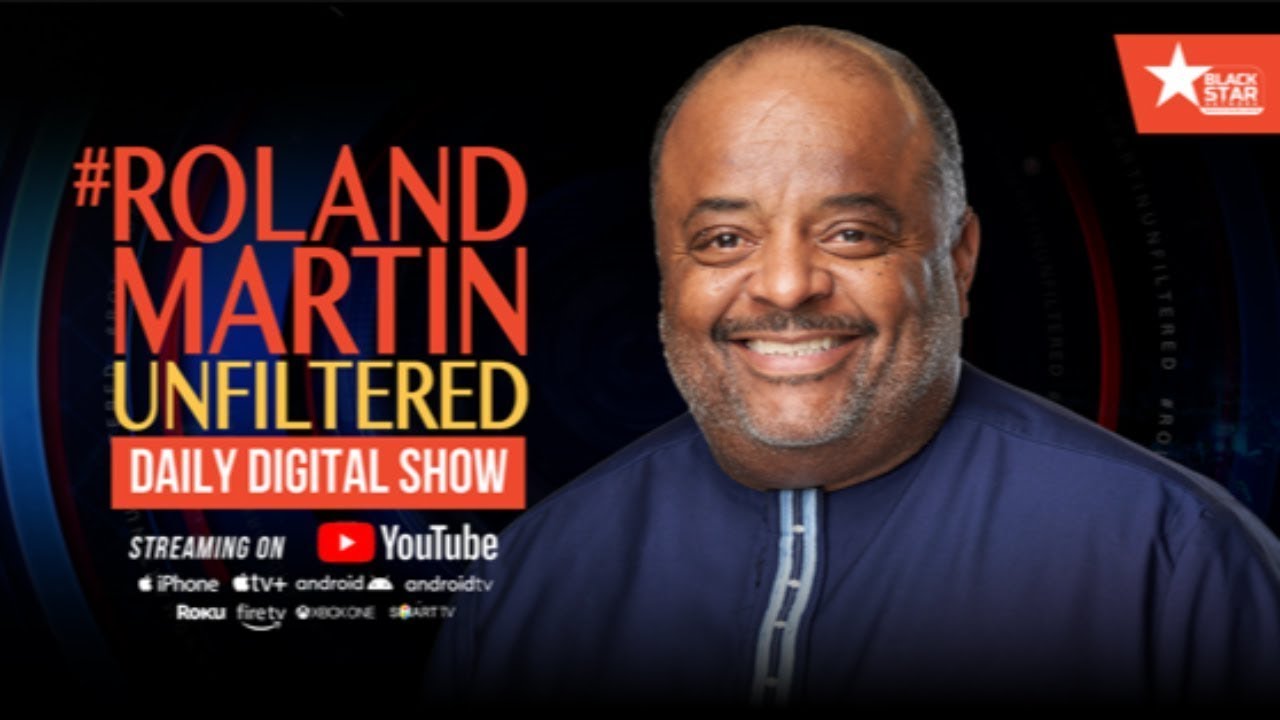
George Floyd 6 Years Later. Redistricting War in The South. Talarico Senate Campaign
"This episode exposes the ongoing legislative battles and strategic resistance against efforts to diminish Black political power, from federal policing reform to state-level gerrymandering and calls for economic boycotts by Black athletes."

All Roads Lead To the South: Nat’l Day Of Action For Voting Rights | Mass Rally | Montgomery, AL
"A mass rally in Montgomery, Alabama, ignites 'Freedom Summer 2026' to combat the Supreme Court's decimation of Black political power and demand unprecedented voter mobilization across the South."

The Immortal Jim Crow. 'Goon Squad' Defamation Suit. Google Race Discrimination Case. #TheBreakdown
"This episode exposes the enduring grip of systemic racism through a Mississippi defamation suit, Google's racial discrimination settlement, and a deep dive into how Jim Crow's legacy still shapes Black America today."

Trump RUSHES Election Scheme as Midterms HAUNT HIM
"The hosts and guest expose the SAVE Act as a deceptive voter suppression tactic, drawing a stark contrast between the protection of gun rights and the erosion of voting rights."