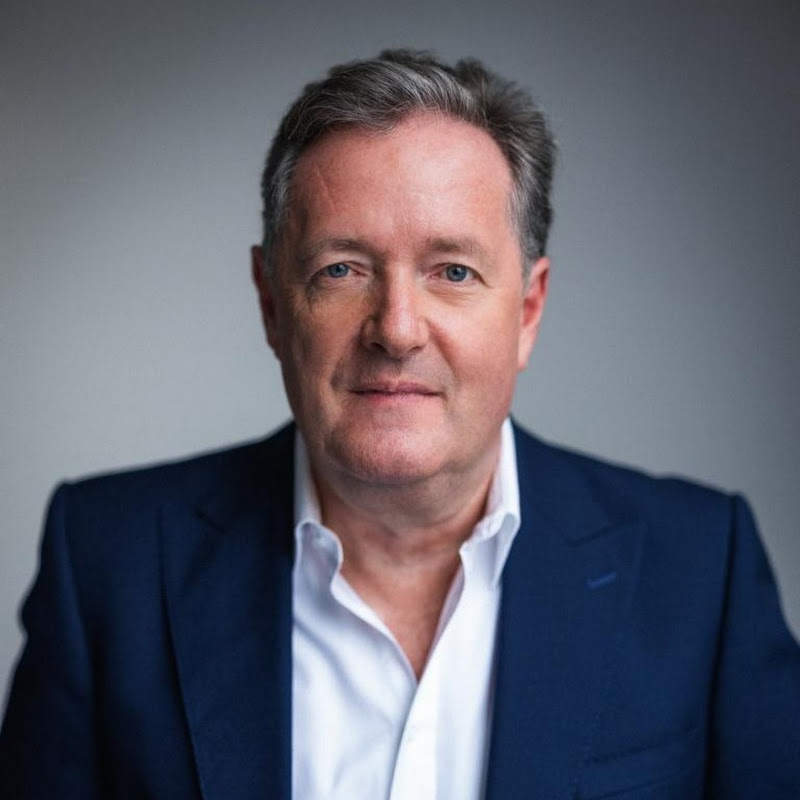
“Will End In DISASTER!” Will Trump Strike Iran? With Mohammad Marandi & Mike Huckabee
YouTube · KwDWoYcmpxs
Quick Read
Summary
Takeaways
- ❖Mike Huckabee suggests Trump's 'all options on the table' for Iran could include military action, viewing it as support for an organic popular uprising.
- ❖Cenk Uygur warns that bombing Iran would be a 'disaster,' rallying support for the regime and leading to a puppet government, similar to the Iraq War.
- ❖Goldie Gamari, an Iranian-born former MP, asserts the current protests are different and are a 'final battle' for liberty, advocating for the return of the Shah in exile.
- ❖Mohammad Marandi, a regime supporter, claims protests are foreign-instigated violence, citing currency manipulation and Mossad involvement, and presents footage of pro-regime rallies disputed by other panelists.
- ❖The internet shutdown in Iran is framed by the host as an attempt to hide regime violence against protestors, while Marandi claims it stopped foreign-directed violence.
- ❖Rob O'Neal emphasizes the military risks of intervention, highlighting the fine line between tactical success and strategic disaster, and the need to avoid 'boots on the ground' scenarios.
- ❖Omid Djalili criticizes Hollywood's silence on Iranian protests, attributing it to a 'misinformed, patronizing narrative' that links support for Iranians to Zionist agendas.
Insights
1Trump's Stance on Iran: 'All Options on the Table'
Mike Huckabee, close to President Trump, interprets Trump's public statements ('Help is on its way,' 'Make Iran Great Again') as strong encouragement for Iranian protestors. He suggests that 'all options' are being considered, ranging from economic aid to military intervention, to support the Iranian people in overthrowing the Ayatollah's regime. This is framed as a response to an internally driven, desperate uprising against a government that funds terrorism and neglects its own population.
Mike Huckabee: 'President Trump is monitoring this situation very carefully. He's very admiring of the fact that the Iranian people are taking their country into their own hands.' () 'All options are on the table.' ()
2Warning Against Military Intervention: 'Will End in Disaster'
Cenk Uygur vehemently argues against any US military intervention in Iran, stating it would be 'disastrous.' He contends that bombing would cause the Iranian people to 'rally around the flag,' empowering the regime and leading to a puppet leader, not true democracy. Uygur draws parallels to the Iraq War, asserting that such interventions are often driven by Israeli interests for regime change, not genuine American or Iranian benefit.
Cenk Uygur: 'If you bomb them, like all countries, they will rally around the flag.' () 'I guarantee you this will end in disaster if Israel forces us to get involved.' () 'Every time we interfere with Iran, it creates massive blowback.' ()
3The Iranian Protests: Organic Uprising vs. Foreign Instigation
There is a stark disagreement on the nature and scale of the Iranian protests. Goldie Gamari and Mike Huckabee describe them as an organic, unprecedented movement driven by deep desperation and a desire for liberty, with protestors actively calling for the return of the Shah in exile. Mohammad Marandi, however, claims the protests are small, peaceful business demonstrations that were infiltrated by 'violent rioters' directed by foreign entities like Mossad, citing currency manipulation as a trigger and presenting counter-footage of pro-regime rallies (which was challenged by other panelists).
Goldie Gamari: 'Iranians right now are literally risking their lives out there and they are saying this is the final battle. Pah levi will return.' () Mohammad Marandi: 'We had infiltration and we had violent rioters and that was the beginning of extreme violence... Pompeo... said that Musad is on the ground with the riers.' ()
4The 'Gorbachov Figure' Hypothesis within the Iranian Regime
Chuck Todd introduces a piece of reporting suggesting that the current Iranian president, Peskian, might be more moderate than expected and could potentially act as an 'Iranian Gorbachov.' This implies a possibility of internal reform or a managed transition away from the current regime, rather than a violent external overthrow. Todd suggests the US intelligence community should explore such internal avenues for change.
Chuck Todd: 'I had a source who's said somebody close to him indicating he thinks he can be the Iranian Gorbachoff.' () 'Can it start to find people that are within the regime who want to help um get rid of the regime?' ()
5Military Intervention Risks and Nuance
Rob O'Neal, a former US Navy Seal, acknowledges the tactical successes of US operations (e.g., in Venezuela) but warns against the significant strategic risks of military intervention in Iran. He highlights the potential for casualties, unintended escalation, and the complexities of operating in a foreign country without local support, emphasizing the need for a nuanced approach that prioritizes the Iranian people's well-being over 'boots on the ground' scenarios.
Rob O'Neal: 'If one goes down, like you said, Yes. We'll probably lose people if one of the birds that got hit like in Venezuela goes down.' () 'My like my biggest concern with Iran is I don't want the United States of Hallebertton to get their boots on the ground again.' ()
Lessons
- Critically evaluate sources of information regarding geopolitical conflicts, especially when internet blackouts or state-sponsored media are involved, as narratives can be heavily manipulated.
- Consider the historical context of foreign interventions and their unintended consequences when assessing calls for regime change, particularly the risk of empowering new dictators or fueling prolonged conflict.
- Recognize the complexity of 'support' for protest movements; what one actor sees as liberation, another may view as destabilizing interference, requiring careful consideration of methods and objectives.
- Be aware of the 'othering' phenomenon in media and public discourse, where certain populations or conflicts receive less attention or are framed in ways that dismiss their agency or suffering.
Notable Moments
Heated exchange over footage veracity and internet shutdown.
Mohammad Marandi presents footage he claims shows massive pro-regime rallies, which Goldie Gamari immediately disputes as old footage from a funeral. This highlights the intense information warfare and challenges in verifying events on the ground, especially with the internet shutdown, which Piers Morgan frames as the regime hiding its atrocities.
Cenk Uygur's accusation of Israeli propaganda and 'suckers' falling for pro-war rhetoric.
Uygur's aggressive stance directly challenges the motives behind calls for intervention, accusing pro-intervention voices of being 'suckers' for Israeli-driven war propaganda, drawing a strong parallel to the lead-up to the Iraq War. This reflects a deep skepticism about foreign policy motivations.
Quotes
"Everything he just said to you was propaganda for Israel. They wanted this regime changed forever."
"I guarantee you this will end in disaster if Israel forces us to get involved. If you care about the Iranian people, we should not bomb them. It will be greatly counterproductive."
"You do not get to talk over me or interrupt me when I'm speaking on behalf of 90 million Iranians who are out in the streets right now fighting for their lives."
"This is not a limited issue with a few university students who are yelling and screaming and carrying signs. These are people who are now engaging in physically challenging uh the oppressive police and military."
"If Trump carries out an attack on Iran, the Iranian retaliation will be massive."
"I was here listening. I wanted to tear my own arm off so I could had something to throw at the screen. He's obviously never been punched in the face."
"The best way to clear this up is to allow journalists to do their job freely in Iran, turn the internet back on, let everybody work out for themselves what is really happening."
"This is the moment of history where if something changes here, it could change the whole landscape."
Q&A
Recent Questions
Related Episodes

Patrick Henningsen: Hezbollah JUST Fired Back at Israel - Iran Vows to “Crush” All Attacks
"Patrick Henningsen argues that the US and Israel initiated an illegal war against Iran, driven by Trump's incompetence and Israeli influence, leading to an inevitable escalation with severe global economic repercussions."

Will Venezuela Be Trump's Vietnam?
"An expert breaks down three perilous pathways for Venezuela under potential US intervention, from a 'Panamanian model' to a 'Libyan-style civil war,' and the broader geopolitical fallout for Latin America."
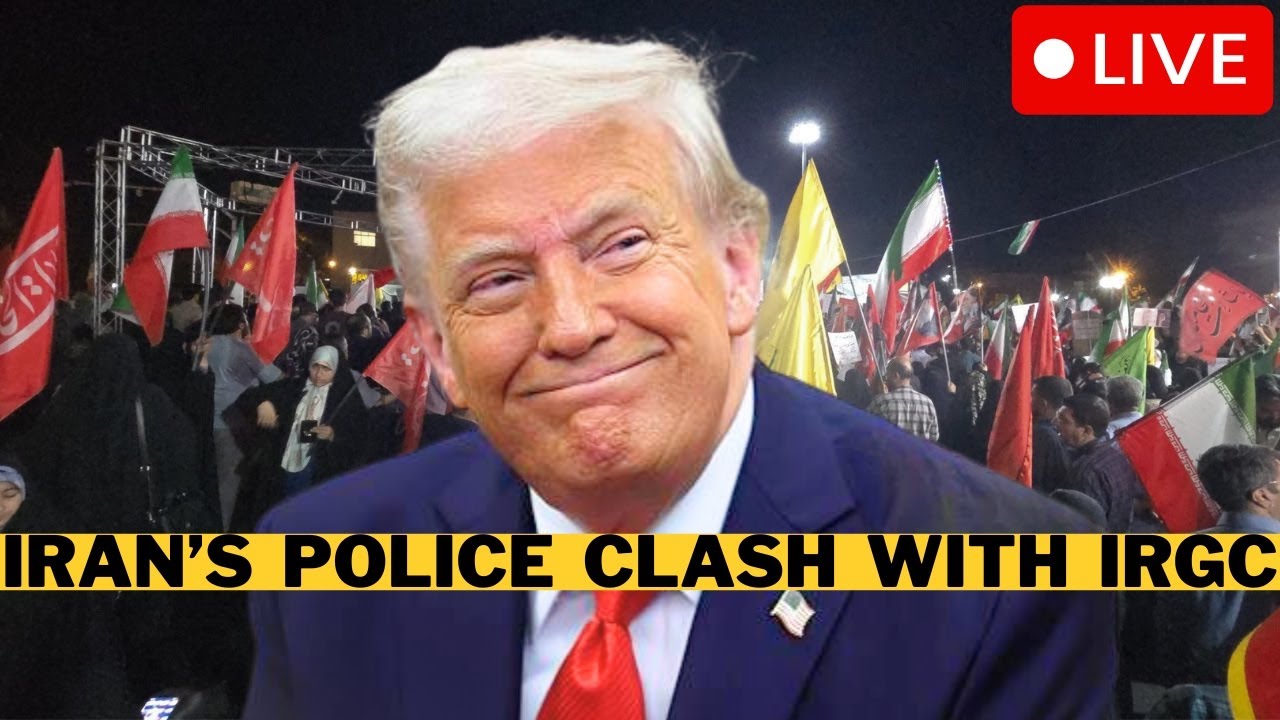
BREAKING: Protests ERUPT In Iran Over IRGC Surrendering To Trump - Infighting Clashes In Tehran
"Iran is experiencing severe internal infighting and protests as hardline IRGC elements clash with government figures over a perceived 'surrender' to the US, while mainstream Western media misrepresents the situation."
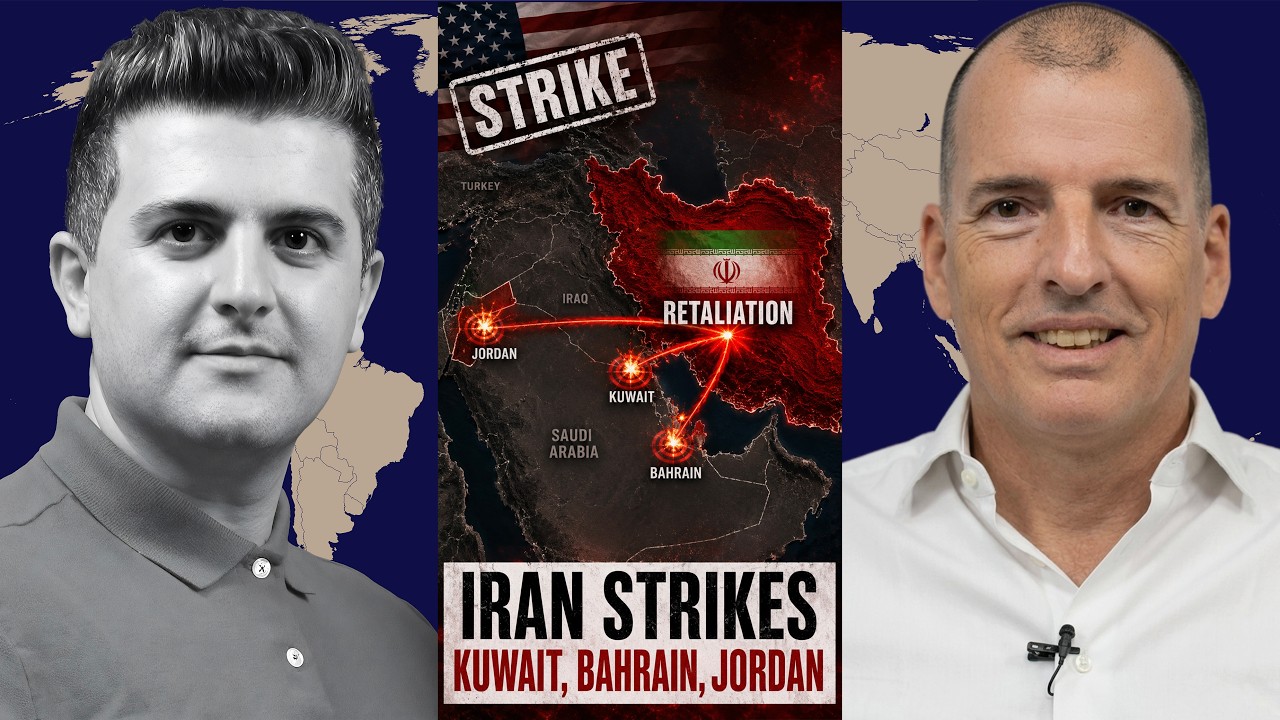
Alex Krainer: US STRIKES Iran – Iran RETALIATES Against Kuwait, Bahrain & Jordan!
"Amidst escalating US-Iran conflict and Iranian retaliation against regional US allies, this episode argues that US foreign policy is deeply controlled by an 'Anglo-Zionist conspiracy' led by the Rothschild banking dynasty, prioritizing Israeli interests over American ones."