
This is Beyond Mere Incompetence (w/ Robert Kagan) | The Bulwark Podcast
YouTube · M5Yi3B8T1GE
Quick Read
Summary
Takeaways
- ❖The US military campaign in Iran, relying solely on air power, is proving ineffective in achieving strategic goals and is leading to widespread civilian suffering.
- ❖The host and guest argue that the US is committing potential war crimes by intentionally targeting civilian infrastructure in Iran, mirroring Russia's tactics in Ukraine.
- ❖This unilateral US action has severely damaged its credibility and alliances, pushing European and Asian partners to reconsider their dependence on the US.
- ❖Allies like South Korea and Japan are contemplating nuclear armament and closer ties with China due to perceived US unreliability.
- ❖The 'Iran war' is seen as a strategic gift to Russia, aiding its war in Ukraine, and strengthening China's economic and geopolitical influence, particularly in the Persian Gulf.
- ❖The US is rapidly transitioning from a dominant global player to an isolated nation with few reliable allies, a shift that could lead to increased global instability and major power conflicts.
- ❖The Republican foreign policy establishment, once committed to alliances, is abandoning core principles to align with Trump's 'America First' isolationism.
Insights
1Air Power Alone is Insufficient for Strategic Objectives
Robert Kagan asserts that the US has repeatedly learned (e.g., 1990s Iraq, 1999 Kosovo) that bombing alone cannot solve complex geopolitical problems. The ongoing Iran conflict is presented as the 'most abject demonstration' of this, where despite open skies and precision bombing, the US is 'more losing this war than winning it' because it lacks the ground invasion capabilities or willingness to commit necessary to achieve its stated goals.
We have learned before that bombing alone wasn't going to do it. And now we've had the most abject demonstration possible because it has been a a free fly pretty much... We've been able to bomb Iran at will... And yet here we are and I think we're, you know, we are still more losing this war than winning it because we can't finish it off with what is going to be required if we want to, which is a full-scale ground invasion of Iran.
2US 'America First' Policy is Dismantling Global Alliances
The guest argues that the US's current foreign policy, characterized by unilateral action and a transactional approach, is actively destroying its alliance system. This is evident in the strained relationships with NATO allies and Asian partners. The US is seen as unreliable and self-interested, abandoning its historical role as a global protector, which forces allies to seek alternative security arrangements or align with rivals. The US did not consult NATO allies on the Iran operation, and then blames them for not participating.
we are uh we've basically ended the alliance with our NATO allies and therefore we will not be engaged I presume in the defense of Europe anymore... Our Asian allies are now basically deciding that they also have to go it alone. the the relationship with South Korea is is a is a total disaster... at the end of the day, we are going to be a very very very lonely very lonely country without without allies.
3The Iran Conflict is a Strategic Boon for China and Russia
Kagan highlights that the US's actions in Iran are inadvertently strengthening its primary geopolitical rivals. China gains influence in the Persian Gulf, potentially undermining the petrodollar, while Russia benefits from a weakened NATO and US distraction. As the US withdraws or acts unilaterally, a power vacuum is created, which China is eager to fill, especially in critical energy regions. The destruction of NATO, a long-standing goal for Putin, is seen as a direct consequence of US unreliability and internal divisions.
we've given Putin the greatest prize that he could possibly have which is the destruction of NATO... The Chinese are uh improving their position globally at our expense... Iran is already talking about asking uh people to pay other countries to pay for transit through the strait in yuan in Chinese yuan which will basically you know strengthen the Chinese yuan against uh the American dollar and and undermine the petro dollar system.
4US Actions in Iran are Leading to State Failure and Potential War Crimes
The host and guest discuss the shift in US targeting strategy in Iran, moving from military facilities to civilian infrastructure, which they equate to war crimes. The intentional targeting of energy, water, and transportation infrastructure aims to make the Iranian people suffer to force government capitulation, a tactic similar to Russia's in Ukraine. This strategy seeks 'state failure' rather than traditional regime change, resulting in widespread humanitarian catastrophe.
the first attack on a major civilian infrastructure target intentionally uh was yesterday uh which was an attack on the B1 bridge near Thran... when you start going after the energy grid of a country that is a clear civilian uh that's an attack on a civilian target. This is what Putin is doing in Ukraine... we will go sailing off into the sunset having turned Iran into a smoking ruin where people are dying of starvation and disease and lack of access to water.
5The US's Historical Rationale for Middle East Involvement is Undermined by 'America First'
Kagan argues that US involvement in the Middle East was never primarily for direct US homeland security or oil, but to defend a global order and protect allies. The current 'America First' stance negates this historical rationale, making current interventions counterproductive. From WWII through the Cold War, US presence secured vital regions for allies and countered adversaries. The support for Israel, for example, was based on moral reasons and global responsibility, not direct national security. If the US no longer cares about global order or allies, its presence in the Middle East becomes a liability.
our involvement in the Middle East was entirely a consequence of the decision... to engage in World War II... it was a project of defending the world order... no one in the region... ever posed a direct threat to the security of the American homeland... If we're not interested in Europe... and if we're not interested in our Asian allies, what are we doing it for?
Bottom Line
The US's perceived unreliability is forcing long-standing allies like South Korea and Japan to consider developing independent nuclear capabilities and aligning more closely with China.
This marks a significant unraveling of the post-WWII non-proliferation regime and US-led security architecture in Asia, leading to a more multipolar and potentially unstable nuclear landscape.
For China, this presents an opportunity to expand its sphere of influence and challenge US dominance in the Indo-Pacific without direct military confrontation.
The 'Iran war' is revealing the fundamental shift in the Republican foreign policy establishment, with former 'Reaganites' abandoning core principles of alliances and global engagement to align with Trump's isolationist agenda.
This indicates a deeper, potentially irreversible ideological transformation within one of the two major US political parties, making a return to traditional US foreign policy difficult even if Trump leaves office.
For populist and nationalist movements globally, this provides a template for dismantling international commitments and alliances, legitimizing 'America First' type policies elsewhere.
The US's current strategy in Iran aims for 'state failure' rather than traditional regime change, by systematically destroying civilian infrastructure.
This represents a brutal and potentially illegal shift in warfare, setting a dangerous precedent for future conflicts and leading to immense human suffering and regional instability without clear political objectives.
For adversaries, this demonstrates a US willingness to inflict severe damage without committing to long-term stabilization, potentially encouraging proxy conflicts or asymmetric responses.
Notable Moments
Host Tim Miller recounts a past conversation with Robert Kagan where Kagan warned against Trump's 'adventurism' in the Middle East, specifically regarding bombing Iranian nuclear facilities, which Kagan predicted would be a disaster.
This establishes Kagan's prescience and credibility on the topic, framing the current discussion as a validation of his earlier warnings about Trump's foreign policy.
The discussion of an F-15 being downed over Iran and the intentional targeting of the B1 bridge near Tehran, a major civilian infrastructure target.
These events serve as concrete examples of the escalating conflict and the shift towards targeting civilian infrastructure, which the guests argue constitutes war crimes and signals a brutal new phase of the conflict.
The host plays an audio clip of 'Sneo,' a far-right reactionary broadcaster, calling for Trump's impeachment over the Iran war, citing his incompetence and senility.
This moment highlights the extreme and unexpected criticism of Trump's foreign policy from within his own ideological orbit, underscoring the perceived obviousness of his failures even to 'smooth brains,' contrasting with the silence or support from traditional Republican foreign policy figures.
Quotes
"We started this war and we are unable to win it. And we are unable to win it at a cost that is acceptable to us and to many of our allies."
"I did not believe that bombing alone was going to solve our problem with Iran... we have learned before that bombing alone wasn't going to do it. And now we've had the most abject demonstration possible."
"Donald Trump is not the person to deliver them uh from that. And now he is talking about uh sending not just the Mullers, but the Iranian people back to the Stone Age where they belong."
"when you start going after the energy grid of a country that is a clear civilian uh that's an attack on a civilian target. This is what Putin is doing in Ukraine."
"Our strategy in so far as we seem to have a strategy now is is sort of beyond regime change or it's regime change accomplished only through the utter destruction of Iran... only through state failure."
"we've given Putin the greatest prize that he could possibly have which is the destruction of NATO."
"The Chinese see that when the Americans have a free target against a deeply dis decimated country like Iran. We will blow them up for as long as we possibly can. Does that tell the Chinese anything about what we would do in the event of a of a crisis in the Taiwan Strait other than not wanting to send our ships into harm's way?"
"I'm actually more worried today than I had been before... the Democratic Party is not the party of Harry Truman and Dean Aerson... but now the Republican party is not the Republican party anymore."
"I just don't see how you we could go back to the way things were... I'm not even sure I would advise the Europeans to accept the level of dependence on the United States that they did accept for, you know, so many decades because we just are unreliable."
"If your goal was to make sure that the United States would no longer be a global power and would be fundamentally policing uh the Western Hemisphere and basically bringing us back to where we were a circa like 1840. Uh that goal is well on its way to accomplishment."
"I would say probably Donald Trump is most likely to use a nuke and maybe BB is second."
Q&A
Recent Questions
Related Episodes

Patrick Henningsen: Hezbollah JUST Fired Back at Israel - Iran Vows to “Crush” All Attacks
"Patrick Henningsen argues that the US and Israel initiated an illegal war against Iran, driven by Trump's incompetence and Israeli influence, leading to an inevitable escalation with severe global economic repercussions."
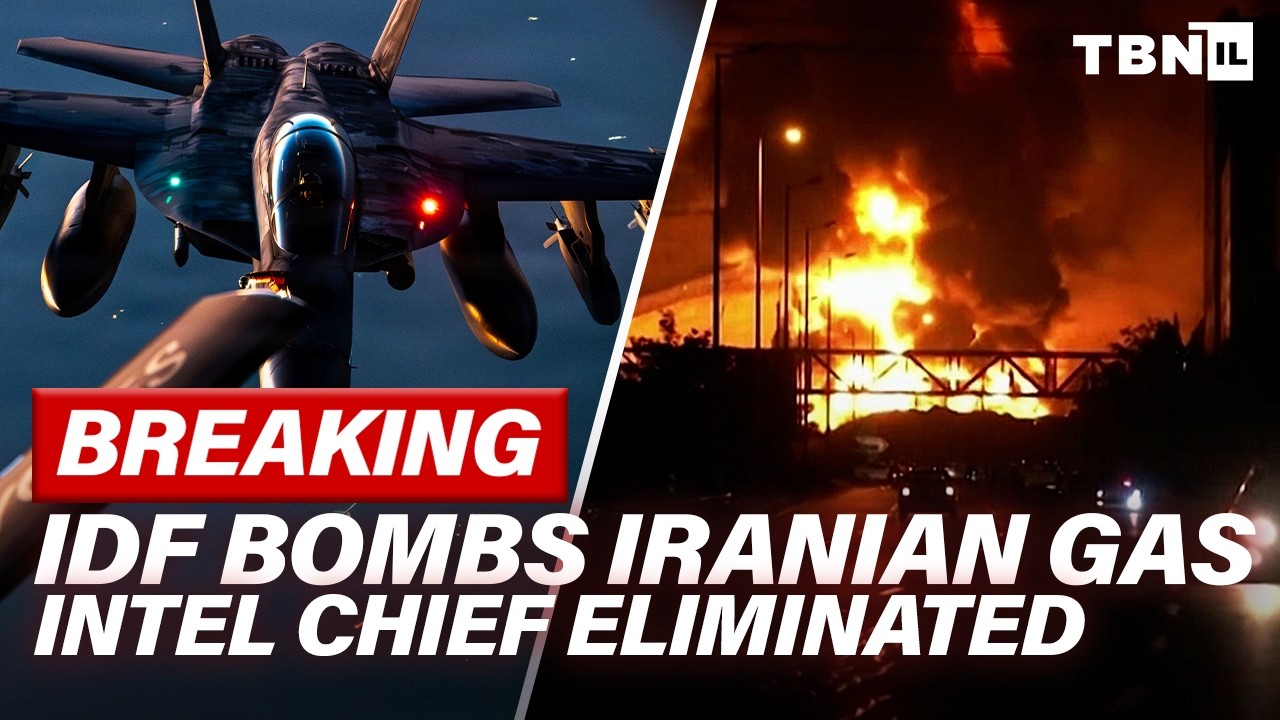
BREAKING: Israel BOMBS Major Iran Gas Site; Top Mullah ELIMINATED; Iran Vows VENGEACE | TBN Israel
"Israel and the United States have escalated their 'Roaring Lion War' against Iran, striking its largest gas facilities, eliminating key intelligence and military figures, and disrupting missile production, while Iran threatens a broader energy war in the Gulf."

Will Venezuela Be Trump's Vietnam?
"An expert breaks down three perilous pathways for Venezuela under potential US intervention, from a 'Panamanian model' to a 'Libyan-style civil war,' and the broader geopolitical fallout for Latin America."

Alex Krainer: US STRIKES Iran – Iran RETALIATES Against Kuwait, Bahrain & Jordan!
"Amidst escalating US-Iran conflict and Iranian retaliation against regional US allies, this episode argues that US foreign policy is deeply controlled by an 'Anglo-Zionist conspiracy' led by the Rothschild banking dynasty, prioritizing Israeli interests over American ones."