Iran Picks New Supreme Leader; Toxic Black Rain Falls After Israeli Strikes on Iranian Oil Depots
YouTube · MUjCiwCxSD8
Quick Read
Summary
Takeaways
- ❖Iran's Assembly of Experts selected Mojtaba Khamenei as the new Supreme Leader, succeeding his assassinated father, Ayatollah Ali Khamenei, in defiance of US President Trump's public statements.
- ❖Mojtaba Khamenei is known as a hardliner with close connections to the IRGC, and his appointment during wartime projects strength and defiance.
- ❖Israeli airstrikes on Iranian fuel depots led to toxic black rain, described by Iran as 'intentional chemical warfare.'
- ❖Iranian drones retaliated by striking a major oil refinery in Bahrain and other US allied targets in the Gulf.
- ❖A US Tomahawk missile hit a girls' school in Minab, killing 175 people, mostly girls, an event Amnesty International, the New York Times, and Human Rights Watch attribute to the US.
- ❖Amnesty International calls for the school bombing to be independently investigated as a war crime, asserting the continued importance and eventual accountability of international law.
- ❖Homan Majd notes that the Iranian population is unlikely to rise up against the government due to the ongoing war's impact on infrastructure and daily life.
Insights
1Defiant Selection of New Supreme Leader
Iran's Assembly of Experts selected Mojtaba Khamenei to succeed his assassinated father, Ayatollah Ali Khamenei. This decision was a direct reaction against President Trump's public statements claiming he could choose Iran's next leader. Mojtaba is a known hardliner with strong ties to the IRGC, and his appointment during wartime was seen as a projection of strength and defiance.
On Sunday, Iran's assembly of experts selected Muttba Hami to succeed his slain father to become Iran's third supreme leader. His father, the 86-year-old Ayatollah Ali Hami, was assassinated... Iran selected MJI in defiance of President Trump, who's repeatedly claimed he can choose Iran's next leader. (, , )
2US Missile Strike on Girls' School Deemed War Crime
A US Tomahawk missile struck a girls' school in the southern city of Minab on the first day of the US-Israeli attacks, killing 175 people, predominantly girls. Despite President Trump's denial and claims that Iran was responsible, investigations by the New York Times, Human Rights Watch, and Amnesty International confirm direct video evidence of a US Tomahawk missile damaging the school adjacent to a US attack on a naval base. Amnesty International's Secretary General, Anes Kalamar, unequivocally called for this incident to be investigated as a war crime.
Among the dead in Iran are 175 people at least, most of them girls killed when bomb struck a school in the southern city of Minab... A New York Times investigation which found direct video evidence contradicting Trump's claims. The video shows a US tomahawk missile damaged the school at the same time as a US attack on an adjacent naval base... 'Absolutely. It has to be independently investigated as a war crime.' (, , )
3Iran's 'Existential War' Strategy
Iran views the current conflict as an 'existential war' and has adopted a strategy of attacking 'anybody and everybody' in the region who has ties with the US or Israel. This includes striking economic targets like the Bahrain Bapco plant and aiming to cause economic pain (e.g., rising oil prices, impacting tourism in the Emirates) to make the US and Israel tire of the war. This approach follows Iran's prior warnings that it would not show restraint if attacked again.
Iran said this I I don't know why anybody is really surprised. They said this after the 12-day war in June of 2025. They said you know next time no more Mr. nice guy and they're just doing that no more Mr. Nice Guy... they're seeing this war as existential and they didn't see the 12-day war in June as existential. And as an existential war, they will do everything to survive. And everything means attacking anybody and everybody in the region who has any relationship with the US or with Israel. (, )
Bottom Line
The rapid, wartime succession of a hardline leader in Iran, despite the previous leader's historical opposition to dynastic succession, indicates a strategic consolidation of power and a heightened state of internal unity in response to external aggression.
This suggests that external pressure, particularly military strikes and leadership targeting, may paradoxically strengthen the regime's internal cohesion and hardline elements, rather than fostering regime change or internal dissent. It complicates future diplomatic efforts and increases the likelihood of sustained, aggressive responses from Iran.
International actors seeking de-escalation must understand that direct threats to leadership or state integrity may backfire, reinforcing the very elements they seek to undermine. Strategies should consider indirect approaches that do not inadvertently legitimize hardliners or rally popular support around the regime in times of perceived national threat.
The documented US strike on a girls' school, resulting in mass civilian casualties, and the subsequent official denials, highlight a significant erosion of accountability and adherence to international humanitarian law by powerful states.
This incident, if not thoroughly investigated and addressed as a war crime, further undermines the credibility of international law and institutions. It sets a dangerous precedent, potentially emboldening other actors to disregard civilian protection and deny responsibility for unlawful acts, leading to increased civilian suffering in future conflicts.
Human rights organizations and international legal bodies have a critical opportunity to rigorously document these violations and push for independent investigations and accountability, regardless of the perpetrator's power. This is essential to uphold the principles of international law and prevent further erosion of civilian protections in armed conflicts.
Notable Moments
Iran's Assembly of Experts selected Mojtaba Khamenei as the new Supreme Leader, succeeding his assassinated father, Ayatollah Ali Khamenei, in a move described as defiant against US influence.
This swift, wartime succession of a hardline figure with strong IRGC ties signals Iran's resolve and internal unity in the face of external aggression, potentially hardening its stance in the ongoing conflict.
Toxic black rain fell over Iran after Israeli strikes on over two dozen Iranian fuel depots, which Iran's foreign ministry called 'intentional chemical warfare'.
This event demonstrates the severe environmental and health consequences of the conflict for the civilian population, escalating the humanitarian crisis and potentially constituting a war crime due to the nature of the attacks.
A US Tomahawk missile struck a girls' school in Minab, killing 175 people, mostly children, despite US denials.
This incident represents a grave violation of international humanitarian law, causing mass civilian casualties and highlighting the devastating impact of the war on non-combatants, while also raising serious questions about accountability for powerful state actors.
Quotes
"If he doesn't get approval from us, he's not going to last long."
"Nothing less than intentional chemical warfare against the Iranian citizens."
"Absolutely. It has to be independently investigated as a war crime."
Q&A
Recent Questions
Related Episodes

Patrick Henningsen: Hezbollah JUST Fired Back at Israel - Iran Vows to “Crush” All Attacks
"Patrick Henningsen argues that the US and Israel initiated an illegal war against Iran, driven by Trump's incompetence and Israeli influence, leading to an inevitable escalation with severe global economic repercussions."
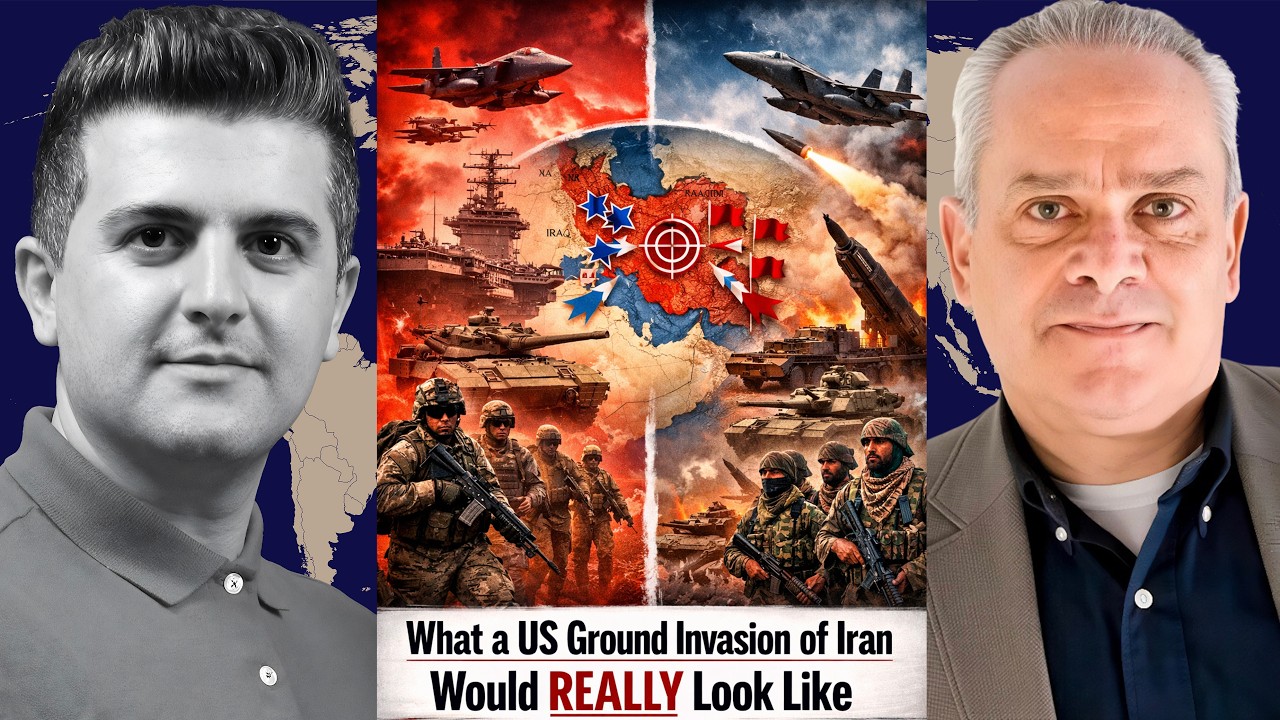
Col. Jacques Baud: What a US Ground Invasion of Iran Would REALLY Look Like
"Colonel Jacques Baud dissects the strategic futility of a US ground invasion of Iran, arguing that current troop levels are insufficient and such an action would backfire, exposing US allies and potentially leading to Iran's nuclearization."

🚨 THEY F*CKED AROUND FOR THE LAST TIME 😭😭😭
"This episode unleashes a torrent of highly opinionated commentary on the US-Iran deal, Israel's role, and a scathing critique of 'leftist' policies and immigration, particularly highlighting the UK grooming gang report as evidence of Western societal decay."
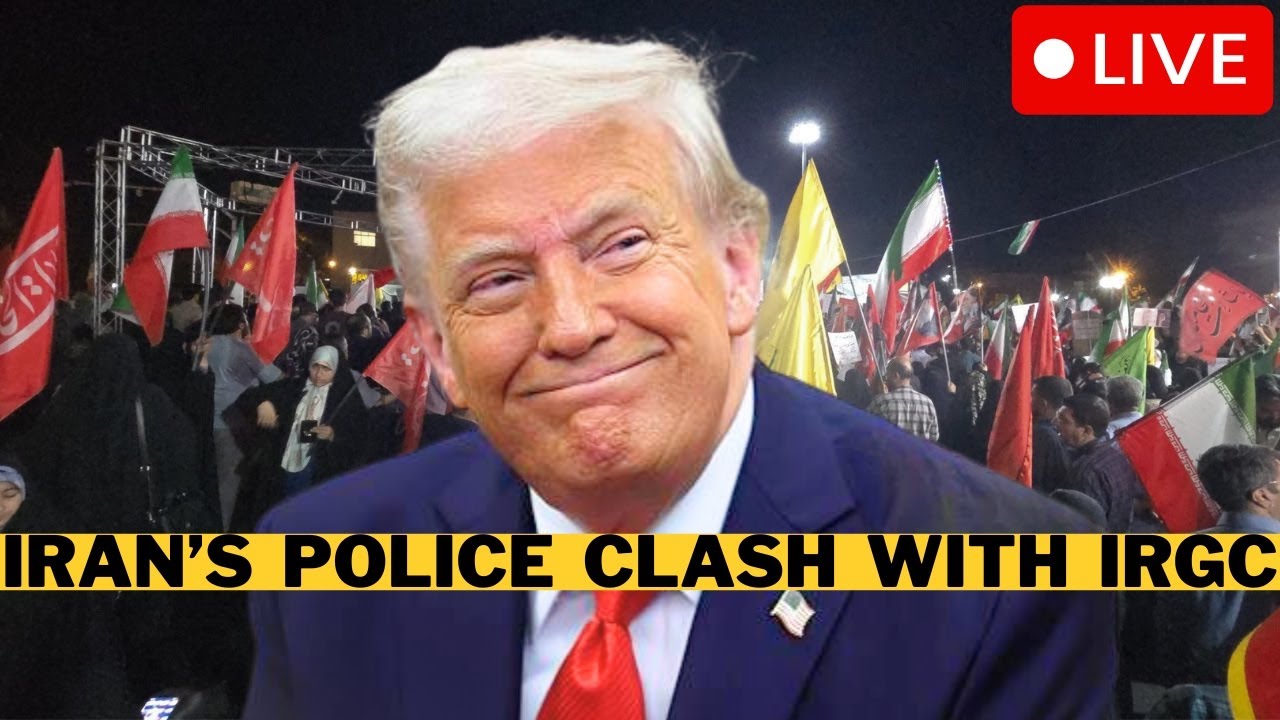
BREAKING: Protests ERUPT In Iran Over IRGC Surrendering To Trump - Infighting Clashes In Tehran
"Iran is experiencing severe internal infighting and protests as hardline IRGC elements clash with government figures over a perceived 'surrender' to the US, while mainstream Western media misrepresents the situation."