
"A CATASTROPHIC Failure!" Trump Lashes NATO on Iran War | Feat. Robert Pape
YouTube · MrzbaZpVMgM
Quick Read
Summary
Takeaways
- ❖The US and Israel have achieved tactical military successes against Iran, but critics argue this masks a profound strategic failure.
- ❖Iran has reportedly gained control of the Straits of Hormuz, a long-standing US strategic objective to prevent.
- ❖The conflict has led to significant global economic disruption, including attacks on Gulf States and threats to oil passage.
- ❖President Trump is perceived by some as having miscalculated the ease of the conflict, potentially leading to further escalation.
- ❖Some analysts contend that Iran's military capabilities are substantially reduced, and economic impacts are currently overstated.
- ❖The Gulf States, while angered by Iranian attacks, are reportedly pressuring the US to 'finish the job' rather than withdraw immediately.
Insights
1Strategic Failure Despite Tactical Success in Iran Conflict
Robert Pape, a professor of political science, argues that while the US military performs superbly at the tactical level (e.g., precision bombing destroying targets), this has not translated into strategic success. The goal was to take down the Iranian regime and weaken its power, but after 17 days, the regime is more resilient and dangerous. Critically, Iran has achieved control of the Straits of Hormuz, which was the number one goal of American grand strategy in the Middle East for 50 years to prevent. This represents a 'catastrophic failure' and an 'escalation trap' where the US is mesmerized by its military power, believing it's omnipotent.
Pape's analysis of the conflict's outcome after 17 days, citing Iran's increased power and control over the Straits of Hormuz, a long-held US strategic concern. He notes that General Kaine had warned President Trump about Iran taking the Straits, but it was dismissed.
2Iran's Economic Warfare and Global Disruption
Piers Morgan and Robert Pape highlight that Iran is fighting an economic war, effectively closing the Straits of Hormuz (through which 20% of the world's oil flows daily) and systematically targeting neighboring Gulf States to deter tourism and expats. This combined effect is having a significant dramatic impact on the global economy. Ian Bremmer clarifies that while the Straits are not fully closed, Iran's ability to cause enough disruption deters tankers, and the US has chosen not to interdict Iranian tankers going to China to avoid annoying China and raising oil prices further.
Observations of the Straits of Hormuz's status, attacks on Gulf States, and the resulting economic impact. Bremmer notes Iranian tankers are still getting through to China, with the US choosing not to intervene.
3Trump's Miscalculation and Escalation Risk
Piers Morgan and Ian Bremmer suggest President Trump miscalculated the conflict, believing it would be an easy victory akin to Venezuela or previous limited engagements with Iran. Bremmer states that when Trump cannot frame a win and has no clear off-ramp, he tends to escalate. The deployment of 5,000 American troops to the Persian Gulf and potential postponement of a summit with China's Xi Jinping are cited as indicators of this escalation.
Trump's past actions in Venezuela and previous Iran engagements, current troop deployments, and the host's and Bremmer's assessment of Trump's likely response to an inability to declare victory.
4Gulf States' Pressure to 'Finish the Job'
Ian Bremmer reveals that despite being severely rattled and angered by Iranian attacks, Gulf leaders are not pushing for an immediate US withdrawal. Instead, they are expressing 'enormous anger, particularly at Israel,' but want the United States to 'finish the job' against a 'wounded but capable Islamic republic.' This suggests an escalatory or continuation impulse from the Gulf States, as they feel 'damned if they do, damned if they don't.'
Bremmer's direct reporting from Gulf leaders, indicating their desire for the US to continue military action against Iran, even while criticizing Israel.
Bottom Line
The US's need for Ukrainian drone technology and interceptors in the Middle East, after previously rejecting a deal and selling weapons to Ukraine that are now being used against US interests, highlights a significant strategic misstep and dependency shift.
This creates a paradoxical situation where the US is indirectly funding Russia (by lifting oil sanctions) to produce weapons that Iran uses against US-supplied weapons, while simultaneously relying on Ukraine for critical defense technology in a separate conflict. It exposes a lack of cohesive long-term strategy.
For Ukraine, this creates an unexpected leverage point with the US, potentially leading to increased military and technological cooperation beyond the immediate conflict with Russia. For other nations, it demonstrates the value of indigenous defense technology development and strategic foresight in arms deals.
The potential for radiological bombs in Tel Aviv due to the dispersal of enriched uranium from Iranian sites, rather than conventional nuclear weapons, represents a distinct and under-discussed escalation risk.
This shifts the focus from a 'nuclear bomb' scenario to a 'dirty bomb' scenario, which could have devastating, widespread, and long-lasting effects without requiring a full nuclear detonation. It suggests a different type of WMD threat that may be more achievable and harder to contain.
This insight calls for a re-evaluation of counter-proliferation strategies to specifically address radiological dispersal devices and their potential for regional blowback, requiring different defensive and containment measures than traditional nuclear war scenarios. It also highlights the need for robust intelligence on Iran's uranium storage and dispersal plans.
Lessons
- Leaders should critically evaluate military interventions beyond tactical successes, focusing on long-term strategic outcomes and potential unintended consequences like economic warfare or shifts in regional power dynamics.
- Policymakers must consider the 'escalation trap' where reliance on overwhelming military force can lead to deeper, more complex conflicts without achieving initial objectives.
- Governments should develop comprehensive strategies for managing global supply chain vulnerabilities, especially those reliant on critical chokepoints like the Straits of Hormuz, to mitigate the economic fallout of regional conflicts.
Notable Moments
Piers Morgan's heated exchange with Masud Shajera, an Iranian expat, over the Iranian regime's killing of protesters in January.
This exchange highlights the deep ideological divisions and conflicting narratives surrounding the Iranian regime's actions, even among those who claim to oppose war. Shajera's justification of the regime's violence against protesters by blaming the victims underscores the difficulty in finding common ground in such debates.
Max Abrams' contrarian stance that Iranian military capabilities are substantially reduced and economic costs are overstated, citing S&P and Israeli stock market performance.
This challenges the prevailing narrative of strategic failure and economic catastrophe, offering an alternative, more optimistic assessment of the conflict's impact. It suggests that the perception of the war's success or failure is highly dependent on the metrics and perspectives used.
Quotes
"What we see after 17 days of war is the regime is now more powerful than it was. In fact, Iran has just achieved control of the Straits of Hormuz. This is a catastrophic failure."
"The US is sending multi-billion dollar naval vessels to fire $3 million missiles at $300 Iranian drones. And the US is now asking Ukraine for help with those drones after earlier rejecting a deal to buy their drone technology."
"In over a hundred years, air power alone has never, and I'm choosing my words carefully here, never toppled a government."
"If regime change is not plausible... then I think the best thing for Trump to do is declare victory and stop. Stop now."
"The United States has in a short amount of time substantially reduced Iranian military capability. So I do not see escalation in that sense."
"You're not going to liberate the people by bombing them. When has that does that work in Iraq?"
Q&A
Recent Questions
Related Episodes
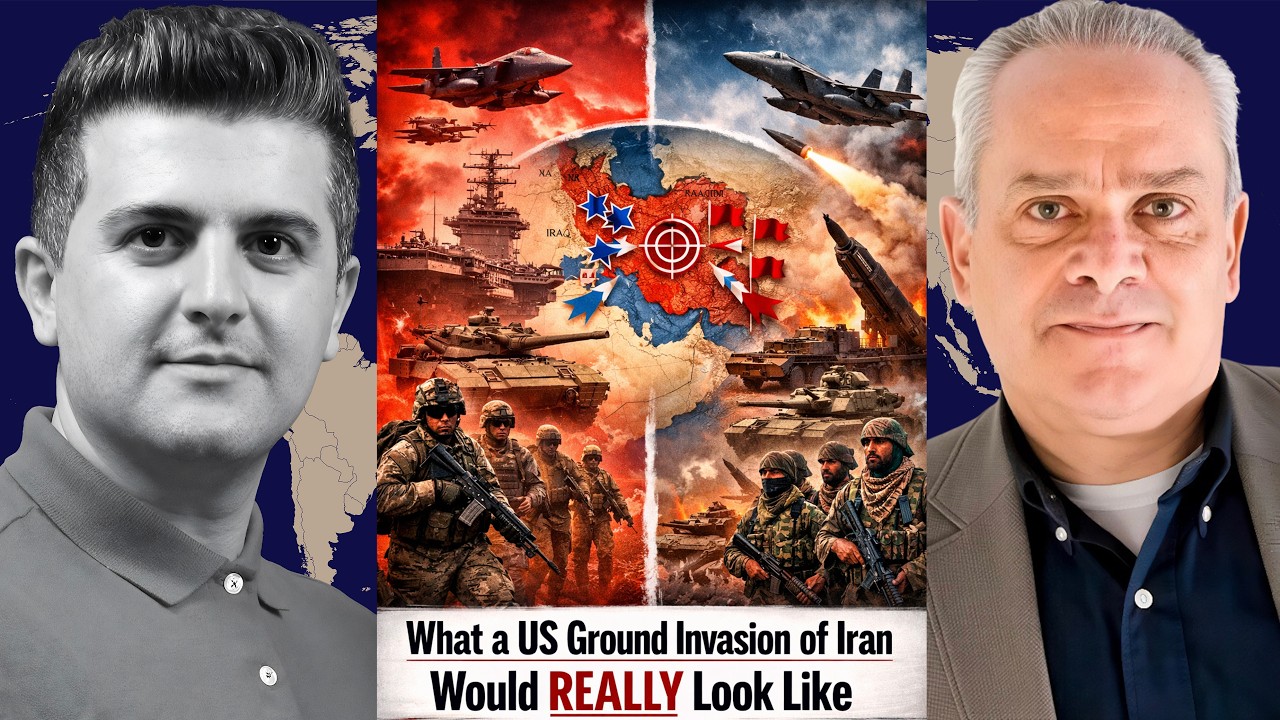
Col. Jacques Baud: What a US Ground Invasion of Iran Would REALLY Look Like
"Colonel Jacques Baud dissects the strategic futility of a US ground invasion of Iran, arguing that current troop levels are insufficient and such an action would backfire, exposing US allies and potentially leading to Iran's nuclearization."

Bibi DEMANDS Ground Troops As Marines Rushed to Iran
"Benjamin Netanyahu is pushing for US ground troops in Iran, framing air strikes as insufficient, while the US rushes Marines to the region and struggles to secure the Strait of Hormuz against surprisingly capable Iranian defenses."
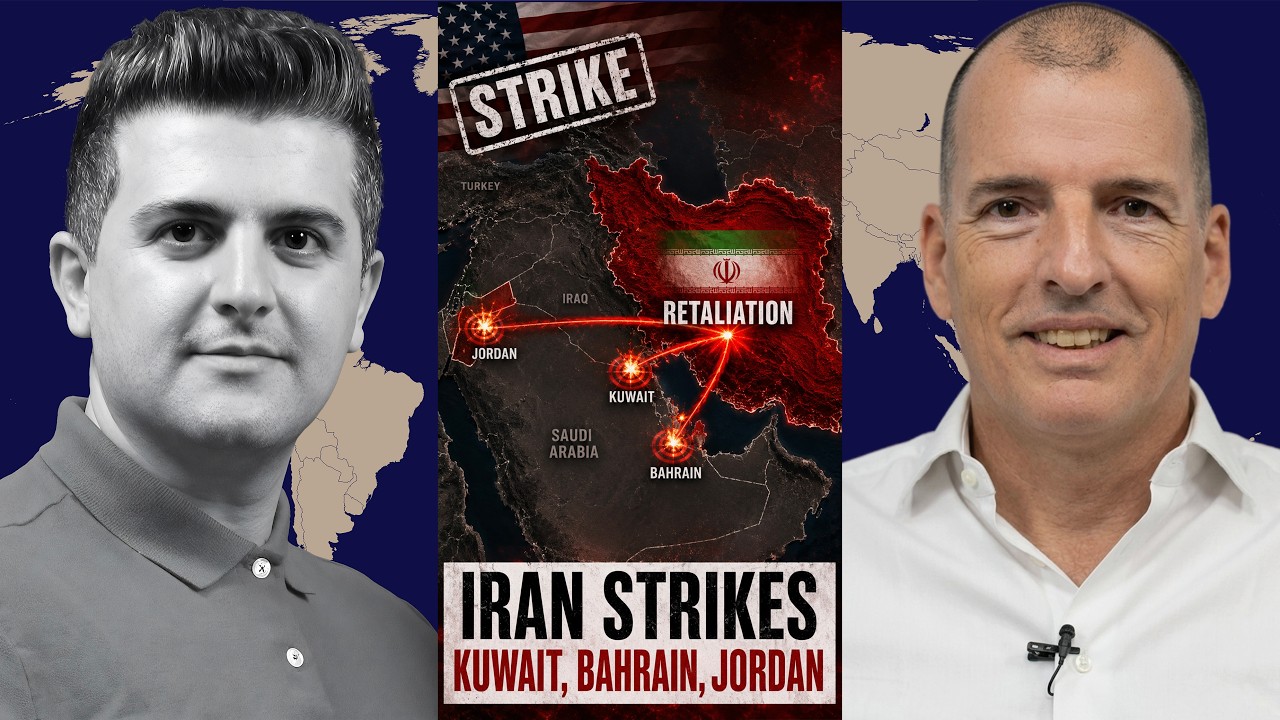
Alex Krainer: US STRIKES Iran – Iran RETALIATES Against Kuwait, Bahrain & Jordan!
"Amidst escalating US-Iran conflict and Iranian retaliation against regional US allies, this episode argues that US foreign policy is deeply controlled by an 'Anglo-Zionist conspiracy' led by the Rothschild banking dynasty, prioritizing Israeli interests over American ones."

Iran Update: Israel’s Newest Bombing Campaign, the Oncoming War With China and How to Avoid It
"Colonel Wilerson reveals how the US and Israel are actively bombing China's strategic infrastructure in Iran, escalating a covert economic war that Beijing intends to win without direct military conflict by dismantling the dollar's global dominance."