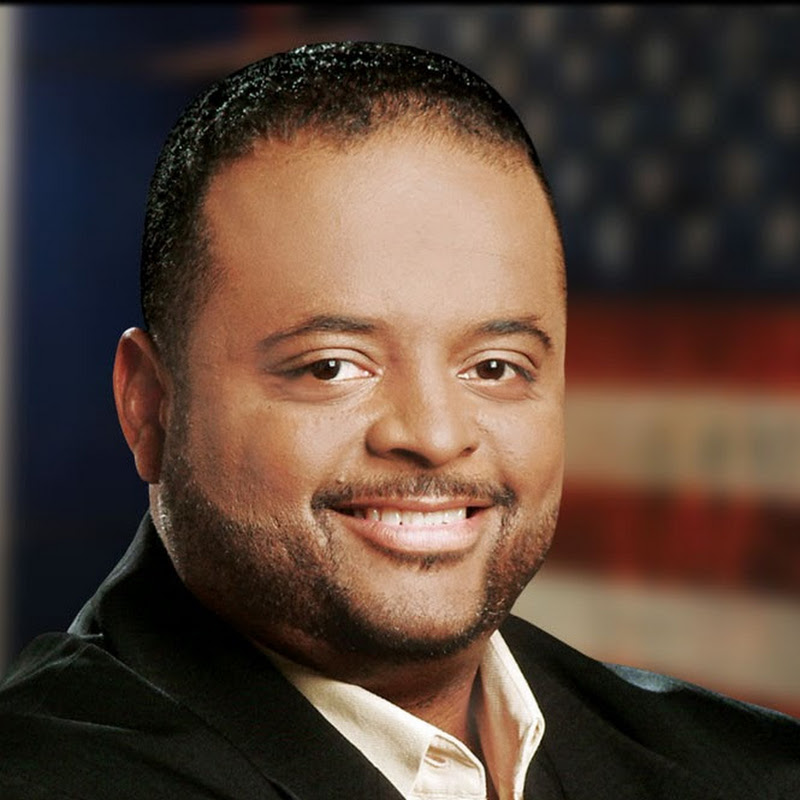
SAVE Act Scam Exposed. Clyburn House Bid. Black Woman Dragged From Car. Trump Targets Haitians
YouTube · MuBN-uniyj4
Quick Read
Summary
Takeaways
- ❖The 'Save America Act' is a 'sham' designed to suppress votes by requiring new, costly IDs and proof of citizenship, despite existing laws.
- ❖Republicans use 'voter ID' as a smokescreen, selectively disallowing certain IDs (e.g., student IDs) while permitting others (e.g., gun permits) to target specific demographics.
- ❖The cost of obtaining new birth certificates ($23+) or passports ($130+) under proposed voter ID laws acts as a modern-day poll tax.
- ❖Experienced politicians like Jim Clyburn offer irreplaceable institutional memory and relationships crucial for effective governance.
- ❖Donald Trump's administration attempted to rename the Kennedy Center and close it for two years, prompting a lawsuit by Congresswoman Joyce Batty.
- ❖The Trump administration is targeting Diversity, Equity, and Inclusion (DEI) initiatives in universities, requiring extensive data and penalizing institutions for mentioning DEI in student essays.
- ❖The ongoing conflict in Iran, initiated by the Trump administration, is causing significant economic damage, including rising oil and fertilizer prices.
Insights
1The 'Save America Act' as a Voter Suppression Mechanism
The proposed 'Save America Act' is framed as a voter ID bill but is a deliberate attempt at voter suppression. It mandates new forms of identification, such as birth certificates or passports, even for already registered citizens. This creates a financial burden (e.g., $23 for a birth certificate, $130 for a passport) and logistical hurdles, particularly for low-income individuals and communities of color who may lack these documents or face difficulties acquiring them. The act also seeks to ban mail-in voting except in extreme cases, despite its proven safety and utility in states like Oregon and Colorado. Republicans are accused of gaslighting by claiming Democrats oppose voter ID, when the core issue is the discriminatory nature and cost of the specific ID requirements and the broader restrictions.
Congressman Al Green details how his Congressional ID is insufficient, and his personal experience of needing a birth certificate years ago, which he never received. He highlights issues for women with name changes and the cost burden. Roland Martin points out Texas's law disallowing student IDs but allowing gun permits for voting. Nola Haynes and Win Cooney discuss the targeting of vulnerable populations and the historical echoes of 'freedom papers.' Roland Martin calculates the costs of birth certificates and passports.
2The Value of Seniority and Institutional Knowledge in Congress
The re-election bid of Congressman Jim Clyburn sparks a debate on the role of older politicians. Roland Martin argues that while some older members may be infirm and should retire, effective and able-bodied seniors bring invaluable institutional memory, experience in negotiations, and established relationships that youth cannot replace. This knowledge is critical for navigating complex legislative processes, understanding historical contexts of bills, and engaging with lobbyists and international counterparts. The host emphasizes that voters should decide based on a politician's effectiveness, not solely on age, and challenges critics to actively run against incumbents if they believe they are better candidates.
Clyburn's account of his vigorous travel and work schedule (). Roland Martin cites the 24 members of Congress aged 80 or older () and gives examples of those who should retire due to health (David Scott) versus those who remain effective (Maxine Waters). Nola Haynes highlights the value of institutional knowledge in diplomatic negotiations (). Roland Martin uses his own experience on the NABJ board to illustrate the power of established connections ().
3Trump's Attempts to Undermine the Kennedy Center and DEI Initiatives
Donald Trump attempted to rename the John F. Kennedy Center for the Performing Arts to the 'Trump Center' and close it for two years for 'renovations.' This move was challenged by Congresswoman Joyce Batty, a trustee, who filed a lawsuit arguing that only Congress can rename the center and that the closure would irreparably harm the institution, particularly impacting Black artists and cultural productions. This action is framed as part of a broader pattern by the Trump administration to dismantle cultural institutions and attack Diversity, Equity, and Inclusion (DEI) initiatives in universities. The Department of Education under Trump reportedly imposed requirements on universities to provide extensive data on DEI efforts, penalizing institutions for even mentioning DEI in student essays, which is seen as structural racism.
Congresswoman Joyce Batty recounts being muted during a board meeting when she tried to cast a dissenting vote on renaming the Kennedy Center (). She details the lawsuit and the potential loss of jobs and cancellation of long-standing Black performances (). Nola Haynes discusses the cancellation of her 'international relations and race' class and the broader targeting of professors and grant funding related to race and gender (). Win Cooney notes the targeting of progressive areas and the goal of making schools 'white and homogeneous' ().
Opportunities
The Original Unbraider & Untangler
A specialized tool and detangler spray designed to significantly reduce the time and effort required to remove braids and detangle natural hair or locks. The tool features multiple columns for different braid sizes and is made for durability, addressing common frustrations with existing methods like rat tail combs or manual detangling. The accompanying Untangler spray is formulated specifically for synthetic braiding fibers, which traditional detanglers are not designed for.
Lessons
- Educate yourself on legislative proposals like the 'Save America Act' beyond their stated intentions, understanding their potential for voter suppression and discriminatory impacts.
- Support and vote for politicians based on their effectiveness, institutional knowledge, and ability to serve, rather than solely on age, while also advocating for healthy transitions of power.
- Engage in local and national political processes to protect cultural institutions and educational equity from politically motivated attacks, such as those targeting the Kennedy Center or DEI initiatives.
Quotes
"The reality is that the Save America Act is trash and has no business being made law."
"We are fighting a fight that doesn't exist, but we're creating a fight such that people will have to fight their way into the polls to vote."
"Youth cannot replace institutional memory. Youth cannot replace the debates and the negotiations that went on in a certain bill at this particular time, the last time it came up."
"I want people to stop dying in office because then we get a situation like the one that we're seeing in Texas right now, right? And all that does is disenfranchise the communities that these people represent."
"It's all designed to be complicated on purpose... It is designed to be challenging for the voter to just say, you know what, f it. I'm going home."
"If you let someone like Donald Trump get by with one thing, then we we're going to war. He wakes up in the middle of the night and he wants to go to war without authority."
"This is racism in plain view. This is the perfect example of structural racism. This is how it works and this is how it's insidious."
"When people can't put food on their table, when they can't put when they can't put uh gas in their car, when they can't get from point A to point B. I think that might be how bad it has to get before anybody cares."
Q&A
Recent Questions
Related Episodes

NC Targets DEI. Trump Blocks Housing Bill. Minority Banks Face New Rules. Kohen Wiley Protests
"This episode exposes systemic attacks on Black America's economic, political, and social infrastructure, from changes in minority bank definitions and college athlete exploitation to foreign aid cuts and voter suppression tactics."

NC Targets DEI. Trump Blocks Housing Bill. Minority Banks Face New Rules. Kohen Wiley Protests
"This episode exposes how current political actions, from changes in minority bank definitions to attempts to regulate college athlete earnings and block foreign aid, are systematically undermining Black economic power, voting rights, and social justice."

Talarico vs Paxton | David Griscom | TMR
"David Griscom breaks down the shifting landscape of Texas Republican politics after John Cornyn's humiliating loss, the Democratic strategy of James Talarico, and the critical role of economic populism over culture wars in the state's future."

MAGA Voting Rights Power Grab. Stacey Abrams Dire Warning. Justin Jones Stripped of All Committees.
"Roland Martin and guests expose a coordinated Republican effort to dismantle Black political power across the South through aggressive gerrymandering, voter suppression, and economic attacks, urging a unified, immediate, and sustained counter-mobilization."