BREAKING: Iran REFUSES Nuclear Inspections; US Amps Hezbollah Pressure; IDF Entrenches | TBN Israel
YouTube · N2x5WKi0jNU
Quick Read
Summary
Takeaways
- ❖Iran has officially refused IAEA inspectors access to its 'damaged' nuclear facilities, contradicting US statements.
- ❖Iran asserts its ballistic missile program will never be part of any agreement with the United States.
- ❖The US Senate passed a resolution to block American military action against Iran, highlighting internal political division.
- ❖Iran is collecting 'protection money' in the Strait of Hormuz, charging $2 million for a single passage.
- ❖Iran, China, and Russia are developing an alternative financial system using the Chinese yuan and barter trade to bypass US dollar-based sanctions.
- ❖Iran is attempting to connect the conflicts in Lebanon and Gaza to its nuclear negotiations with the US, seeking broader diplomatic influence.
- ❖Israel is proposing 'pilot zones' in southern Lebanon, where the Lebanese army would take over from the IDF, to test its ability to dismantle Hezbollah infrastructure.
- ❖A proposed US-Iran-Lebanon deconfliction cell raises concerns in Jerusalem and Beirut about legitimizing Iran's role in Lebanon.
Insights
1Iran's Defiance on Nuclear Inspections and Ballistic Missiles
Despite US claims of an agreement, Iran's Foreign Ministry explicitly stated it would not allow IAEA inspectors to visit 'damaged' nuclear facilities and affirmed that its ballistic missile program is non-negotiable. This creates a significant gap between US and Iranian narratives, raising doubts about the effectiveness of any 'peace agreement'.
The head of the IAEA confirmed the American version that Iran's nuclear sites would be inspected, but Iran responded officially, 'we will not allow IAEA inspectors to visit the nuclear facilities that were damaged.' Additionally, Iranian President Masoud Pezeshkian stated the missile program was not and will never be included in the agreement.
2Iran's Strategy to Link Regional Conflicts to US Negotiations
Iran is actively attempting to expand the scope of its negotiations with the US by linking regional conflicts in Lebanon and Gaza to the nuclear talks. This strategy aims to elevate Iran's diplomatic standing and force the US to acknowledge its influence over these proxy groups.
After successfully inserting Lebanon into the understandings with the United States, Iran is now trying to insert Hamas and Gaza as well into the same game. Iranian Foreign Minister Abbas Araqchi spoke with a senior Hamas official, claiming the Israeli strikes in Gaza would be discussed during talks with the US.
3US Internal Division on Military Action Against Iran
The US Senate approved a resolution to block American military action against Iran, with a bipartisan vote. While largely symbolic, this sends a message of internal disagreement to Iran, potentially weakening America's negotiating posture and pressure tactics.
The United States Senate approved today, on Tuesday, for the first time a resolution intended to block American military action against Iran by a majority of 50 against 48. Trump reacted sharply, stating, 'Four loser Republicans voted with the stupid Democrats.'
4Emergence of an Alternative Financial System Bypassing US Sanctions
Iran, in collaboration with China and Russia, is actively building a bypass trade network and alternative financial system, primarily using the Chinese yuan and barter trade, to circumvent US dollar-based sanctions. This reduces Washington's ability to dictate foreign policy through economic pressure.
The growing use of the Chinese yen allows rivals of the United States to carry out international transactions outside the supervised Western banking system. Iran brought in about $43 billion from oil in 2024, most of it paid in yuan, often through intermediary entities or barter trade.
5Lebanon 'Pilot Zones' as a Test for Lebanese Army Sovereignty
Israel is proposing a 'pilot zones' plan in southern Lebanon, where the IDF would conduct limited withdrawals, allowing the Lebanese army to take over. This is framed as a 'weapons test' to determine if the Lebanese army has the resolve and capability to dismantle Hezbollah's infrastructure and prevent its return, thereby proving Lebanon's sovereignty.
Israel will be willing to evacuate several limited areas in southern Lebanon... In return, the Lebanese army will enter those areas under American supervision and will be required to prove that it can prevent Hezbollah from returning. From the IDF's point of view, this is not a photo test... It is a weapons test.
6Concerns Over US-Iran-Lebanon Deconfliction Cell
The establishment of a deconfliction cell in Lebanon involving the US, Iran, and Lebanon (excluding Israel and Hezbollah) has raised significant concerns in Jerusalem and Beirut. Israel views Iran as the 'root of the problem' in Lebanon, fearing that this mechanism could inadvertently grant Iran diplomatic status and legitimacy in the Lebanese arena.
At the end of the talks between the United States and Iran in Switzerland, the establishment of a deconfliction cell in Lebanon was announced. The partners in this mechanism are the United States, Iran, and Lebanon. Israel was not mentioned. In Israel, we say that Iran is not part of the solution in Lebanon. It is the root of the problem.
Bottom Line
The US's traditional leverage through economic sanctions is being systematically undermined by a burgeoning China-Iran-Russia financial alliance, which prioritizes de-dollarization and alternative payment systems.
This shift means that future US foreign policy, heavily reliant on economic pressure, will become less effective. It could lead to a multipolar financial world where rogue states can operate with greater impunity, complicating international efforts to enforce norms and prevent proliferation.
Businesses and financial institutions should explore opportunities in developing and securing alternative, non-dollar-centric payment systems and trade networks, anticipating a future where global commerce is less reliant on Western financial infrastructure. This also presents an opportunity for nations to diversify their reserve currencies and trade partners to reduce exposure to geopolitical weaponization of the dollar.
Key Concepts
Bait and Switch Negotiation Tactic
Iran employs a 'bait and switch' tactic in negotiations by constantly changing the parameters and introducing irrelevant topics (like Lebanon and Gaza) to distract, waste time, and prevent the US from reaching conclusions on core issues like the nuclear program or ballistic missiles. This prevents consistent discussion and consumes negotiation resources.
Proxy Leverage
Iran uses its proxy organizations (Hezbollah, Hamas, Houthis) as 'cards' in diplomatic negotiations. By linking the cessation of their activities to broader agreements, Iran elevates its own diplomatic status and forces the US to negotiate on a wider range of issues, thereby gaining recognition for its regional power.
Lessons
- Recognize that Iran's negotiation strategy involves constantly shifting parameters and linking disparate regional conflicts to gain leverage and diplomatic status.
- Understand that US economic sanctions are becoming less effective due to the emergence of alternative financial systems and de-dollarization efforts, particularly involving China and Russia.
- Monitor the 'pilot zones' initiative in Lebanon as a critical test of the Lebanese army's capacity to assert sovereignty against Hezbollah, which will determine future stability in the region.
Notable Moments
Iran's Foreign Ministry spokesman, Ismail Baghaei, explicitly states that Tehran has no plan to allow IAEA inspectors to visit nuclear sites attacked during the war.
This directly contradicts US President Trump's assertion that inspectors would be 'underground in Iran at the appropriate time,' highlighting a fundamental disagreement and potential breakdown in the 'peace agreement' narrative.
Hezbollah Secretary General Naim Qassem thanks Iran for linking the end of the war against it with the end of the war in Lebanon.
This public statement from Hezbollah openly admits the direct connection between the Lebanese arena and Iran's broader geopolitical strategy, undermining US attempts to treat Lebanon as a separate file and confirming Iran's control over its proxy.
Quotes
"If Iran wants trouble, let it try to get a nuclear weapon."
"It is impossible to bring regional calm while Iran's proxies continue to fire."
"Lebanon is not exactly a separate file as long as Iran decides when the file stops and when it starts again."
"The US to reestablish itself as the victor that it actually was in this entire conflict with Iran needs to do the following. One, assure the Gulf states that they will not pay a single dollar for the for the compensation to the Iranians. In fact, it should be on the opposite. The Iranians should pay for the damages caused to those countries. Two, the US needs to reaffirm their commitment to defend those countries."
"Israel is not in conflict with Lebanon. The problem is Hezbollah. Hezbollah must be defeated and removed from this equation."
Q&A
Recent Questions
Related Episodes

BREAKING: Iran Threatens To END Talks; U.S. Vows Retaliation; Hezbollah Collapsing? | TBN Israel
"Iran is leveraging Hezbollah and the Strait of Hormuz to manipulate US negotiations, while Israel asserts its right to dismantle Hezbollah's eroding but still dangerous infrastructure in Lebanon, independent of international talks."

BREAKING: U.S. SINKS Iranian Boats; Iran Talks Stall; Israel Hits Beirut | TBN Israel
"The U.S. and Israel escalate military actions against Iran and its proxies, while diplomatic talks stall over Iran's nuclear program, Strait of Hormuz fees, and the future of Hezbollah."
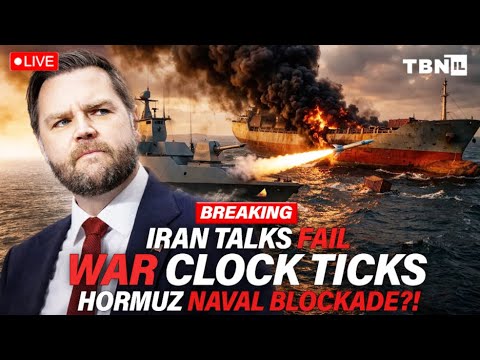
BREAKING: U.S.-Iran Talks COLLAPSE; Hormuz Standoff Deepens; Hezbollah Fire | TBN Israel
"US-Iran negotiations in Islamabad collapsed over the nuclear issue and control of the Strait of Hormuz, leading to heightened tensions and a potential US naval blockade strategy."

PBS News Hour full episode, May 8, 2026
"This episode unpacks escalating US-Iran military actions in the Strait of Hormuz, a resilient yet divergent US jobs market, the ongoing political battle over congressional redistricting, and the controversial new US counterterrorism strategy."