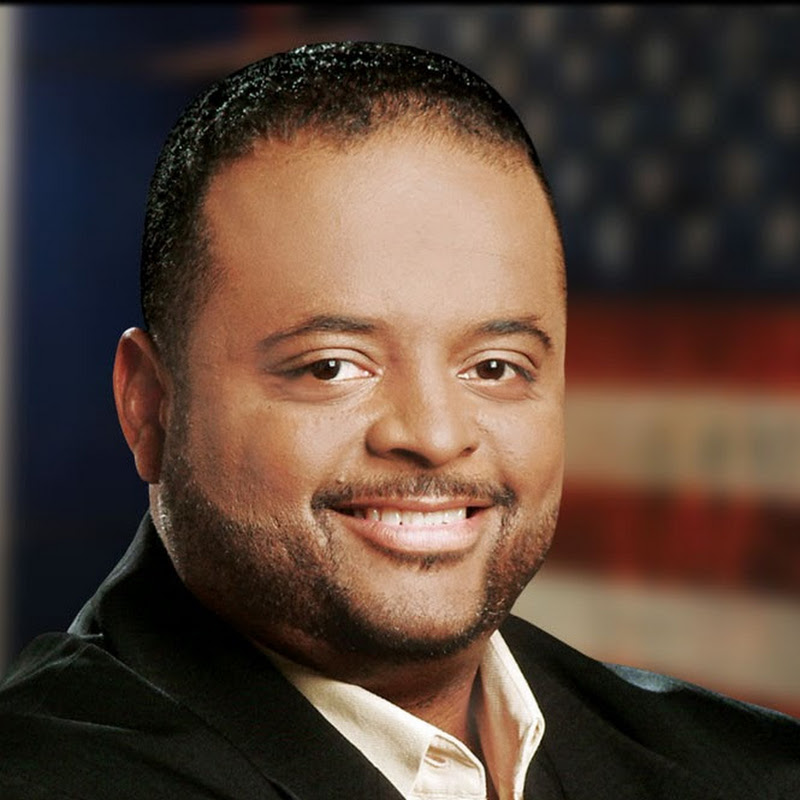
GOP War on Black America | #RolandMartinUnfiltered #BlackStarNetwork Presentation
YouTube · NR6iAQTOj2k
Quick Read
Summary
Takeaways
- ❖The Republican Party is actively working to limit Black political power through voter ID laws, polling closures, voter purges, and aggressive redistricting.
- ❖Recent Supreme Court decisions, like the Louisiana v. ruling, are seen as enabling state Republicans to justify gerrymandering under the guise of partisan, rather than racial, redistricting.
- ❖Mississippi Republicans aim to eliminate Congressman Benny Thompson's seat and numerous state legislative seats, mirroring 1890 constitutional convention efforts to suppress Black power.
- ❖Tennessee's Governor Bill Lee called a special session to redraw Memphis's congressional district, intending to turn a traditionally blue, Black-majority area into a red seat.
- ❖Florida Governor Ron DeSantis unilaterally drew congressional maps in 2022 and again this year, violating the state's Fair District Amendment by using partisan data to increase white voter power over Black and Hispanic voters.
- ❖Trump's administration and proposed budgets systematically target Black America by defunding programs related to education, economics, health, and civil rights, including the $37 billion federal DBA program and offices of civil rights within agencies.
- ❖Historically, Black Americans have strategically shifted their political allegiance from Republicans (post-Civil War) to Democrats (post-1936) based on which party better supported Black interests.
- ❖Low Black voter turnout in key states like Georgia (900,000-1.1 million non-voters) and North Carolina (600,000 non-voters) directly contributes to the erosion of Black political influence.
- ❖State Supreme Court races are critical, as these courts often make final decisions on issues like gerrymandering and voting rights, especially when federal courts defer to states.
Insights
1GOP's Post-Obama Strategy: Limiting Black Power
Roland Martin asserts that the Republican Party's current actions are a direct response to the high Black voter turnout during Barack Obama's 2008 and 2012 elections. He argues that Republicans became 'angry' and have since systematically targeted Black communities through voter ID laws, closing polling locations, and purging voters, all aimed at limiting Black political power.
Martin states, 'What we have seen over the past decade as a Republican party angry that black people were voting in huge numbers when Obama was elected in 2008 and 2012. And what they have done is target black folks since then. We have seen voter ID shutting down of uh various polling locations. We have seen them purging voters.'
2Supreme Court as an Enabler of White Power
The host and guests contend that the conservative-leaning Supreme Court, particularly through decisions like Louisiana v., has provided a legal pretext for Republican state legislatures to decimate Black political power. This is framed as allowing states to prioritize partisan gerrymandering, which disproportionately affects Black voters, under the guise of 'race-neutral' policies.
Martin highlights, 'The Supreme Court decision, the Louis Louisiana vers decision shows us this. Not even 24 hours after that decision came down, we saw Republican state legislators all across the South announce special sessions.' Representative Kareem adds, 'This Supreme Court with this Louisiana vers decision has now given these Republicans the power to say, 'Oh no, we're not sitting here creating districts by race. We're creating this because we can do partisan.''
3Economic Impact of Lost Black Representation
The loss of Black political power at all levels of government—federal, state, and local—is directly linked to a significant reduction in economic resources for Black communities. Black elected officials are crucial conduits for ensuring Black interests are represented in legislative processes that allocate billions of dollars.
Naen Smith, CEO of Color of Change, states, 'We're now talking about potentially billions of dollars being lost from black communities by not having black representation.' Martin reiterates, 'When you wipe out black political power, you're wiping out access to billions of dollars in the legislative process when it comes to the city, the county, the school board, the state, uh the federal as well.'
4Trump Administration's Targeted Removal of Black Appointees
The Trump administration is accused of systematically removing qualified Black appointees from federal positions, replacing them predominantly with white males. This pattern is seen as part of a broader discriminatory agenda that labels Black competence as 'DEI hires' and 'unqualified.'
Alvin Brown, a former appointee, notes, 'over 75% of those who were fired were African-Americans.' Robert Primis, another former appointee, adds, 'I was doing my job while I was black and that's one of the reasons why I was removed.'
5Historical Context of Black Voting Patterns
Roland Martin refutes Stephen A. Smith's argument for Black people to vote Republican to gain attention, by detailing the historical evolution of Black voting. He explains that Black Americans have always voted based on their interests, initially aligning with Republicans post-Civil War, and shifting to Democrats when that party began to embrace civil rights and Black agendas, demonstrating strategic, not blind, political engagement.
Martin explains, 'Black people were hardcore Republican voters after the Emancipation Proclamation and the end of the Civil War... Black people have made the decision that white people have not weighed... Black people have always been smart with our vote because you know what we said? We said, 'Okay, who is fighting for our best interest from 1865 through 1960?' It was Republicans.'
Bottom Line
The current Republican strategy of 'partisan' gerrymandering, enabled by Supreme Court rulings, is a thinly veiled method to achieve racial disenfranchisement, as voting patterns are inherently linked to race.
This legal loophole allows states to dismantle Black-majority districts without explicitly citing race, making it harder to challenge in court and effectively cementing white political dominance.
Legal challenges must focus on exposing the racial impact of 'partisan' gerrymandering, using data and historical context to demonstrate discriminatory intent, even if not explicitly stated.
The host suggests that if Southern Republicans use 'state is red, so delegation must be red' logic, then blue states like Maryland, Illinois, New York, and California should apply the same logic to eliminate their few Republican districts.
This 'fight fire with fire' approach could escalate political polarization but might force a re-evaluation of gerrymandering practices if both sides face similar consequences.
Progressive political strategists could explore aggressive counter-gerrymandering in blue states to highlight the hypocrisy of the Republican argument and potentially create leverage for national voting rights reform.
The Trump administration's budget proposals systematically defund programs beneficial to Black communities, from agricultural aid for Black farmers to maternal health initiatives and civil rights offices across federal agencies.
This demonstrates a comprehensive, 'anti-Black' agenda beyond just voting rights, aiming to dismantle economic and social support structures for Black Americans through budgetary means.
Advocacy groups need to analyze and publicize the granular details of proposed budgets, educating the public on how seemingly neutral cuts disproportionately harm Black communities, and mobilizing opposition to these specific legislative proposals.
Lessons
- Participate in a 'Freedom Summer 2.0' by actively engaging in voter education, registration, and mobilization campaigns, aiming for maximum Black voter turnout (70-85%) in all elections.
- Flood state capitols with protests and advocacy during special legislative sessions called for redistricting, making it 'loud' and visible that these efforts to dilute Black votes are unacceptable.
- Support and amplify legal challenges against discriminatory redistricting and politically motivated removals of Black appointees, recognizing lawsuits as a critical component of the multi-pronged fight for justice.
Freedom Summer 2.0: Black Voter Mobilization Strategy
**Educate & Inform:** Conduct weekly forums and town halls in every city, explaining the electoral process from local to federal levels and how it impacts daily life. Emphasize civic and cultural literacy.
**Organize & Mobilize:** Build grassroots networks, connecting with individuals who have lost faith in the system. Prepare people to run for local offices (city council, school board, county commissioner).
**Register & Turn Out:** Launch the largest mass Black voter registration campaign since the Civil Rights Movement. Maximize voter turnout for early voting and election day, aiming to exceed 2008 Obama election numbers.
**Strategic Pressure:** After elections, maintain engagement to pressure elected officials to deliver on Black agendas. Utilize legal strategies to challenge discriminatory practices and budgetary attacks.
Notable Moments
Discussion of Mississippi's 1890 Constitutional Convention as a historical parallel to current efforts to decimate Black political power.
This historical reference highlights the deep-rooted nature of systemic efforts to disenfranchise Black voters and provides context for the severity of current actions.
The host's detailed historical rebuttal to Stephen A. Smith's suggestion for Black people to vote Republican.
This segment educates listeners on the strategic history of Black voting patterns, debunking the myth of 'giving votes away' and reinforcing the principle of voting for Black interests.
Highlighting the low Black voter turnout in Georgia (900,000-1.1 million) and North Carolina (600,000) in recent elections.
These statistics underscore the immense untapped political power within the Black community and the direct link between non-participation and the erosion of Black political influence.
Quotes
"The reality is today's Republican party doesn't give a damn about black folks. This is not the 1800s. This is not the early 1900s. What this party stands for today is to limit black people's political power."
"We are in the civil war. We are not doing it with bullets. We are doing it with the ballot at this point."
"This is a constructed attack financially on the black community. It's not an accident that they went after teaching certificates and nursing uh the parent plus scholarships, the graduate schol plus scholarships. Project 2025 is a systematic uh reverse engineering of the progress that has been made in this country when it comes to to black people."
"I was doing my job while I was black and that's one of the reasons why I was removed."
"I wish for one election that every black person would vote Republican... What I want is to put ourselves as a community in a position where both parties have to work to get our vote."
"Black people ain't dumb. Black people have not given our vote away. Black people have made the decision that white people have not weighed."
Q&A
Recent Questions
Related Episodes

All Roads Lead To the South: Nat’l Day Of Action For Voting Rights | Mass Rally | Montgomery, AL
"A mass rally in Montgomery, Alabama, ignites 'Freedom Summer 2026' to combat the Supreme Court's decimation of Black political power and demand unprecedented voter mobilization across the South."

LIVE: Ex-TOP Prosecutor BREAKS SILENCE On Trump Election Scheme | The Weekend Show
"Former Assistant Attorney General for Civil Rights, Kristen Clark, details how a recent Supreme Court ruling delivered a 'death nail' to the Voting Rights Act, exposing a coordinated agenda to dismantle civil rights and consolidate white political power."

George Floyd 6 Years Later. Redistricting War in The South. Talarico Senate Campaign
"This episode exposes the ongoing legislative battles and strategic resistance against efforts to diminish Black political power, from federal policing reform to state-level gerrymandering and calls for economic boycotts by Black athletes."
NC Mom Sues Hospital For Negligence. Black NFL Coaches Win Major Ruling. Drug Test Scandal Exposed
"This episode exposes systemic failures and racial disparities across healthcare, professional sports, and politics, featuring a mother's harrowing hospital negligence lawsuit, a landmark NFL discrimination ruling, and alarming findings on flawed drug tests criminalizing new mothers."