
Paul Craig Roberts: How the Iran War is Making Trump Lose EVERYTHING
YouTube · NkJlGpTbIcQ
Quick Read
Summary
Takeaways
- ❖Donald Trump's extensive 'bravado' during a press conference about an Iran operation raised suspicions of a cover-up for a military failure.
- ❖The official explanation for destroyed US aircraft (stuck in 'wet sand') is deemed implausible and 'nonsensical.'
- ❖Iran's military strategy of waiting to be attacked before retaliating is criticized as 'mindless' and a failure to fight for its existence.
- ❖The 'Zionist agenda of greater Israel' is presented as the unacknowledged, long-term driver of conflicts in the Middle East, with the US acting in lockstep.
- ❖Censorship of war information, including pressuring global positioning firms not to release data, indicates official narratives may be false.
- ❖Trump's claims about Iranian public sentiment (begging for US bombs) are dismissed as 'nonsensical propaganda' designed to overshadow events in Gaza.
Insights
1Skepticism Towards Official Narratives of Iran Operation
Paul Craig Roberts and the host express strong doubts about the official White House account of a US military operation in Iran. Trump's 'extraordinary bravado' and the implausible explanation that US planes and helicopters were destroyed because they got 'stuck in wet sand' are seen as indicators of a cover-up for a failure, rather than a successful rescue operation.
Trump's 'extraordinary bravado' and the official story of planes and helicopters being destroyed because they were 'stuck in the wet sand' and couldn't lift off, leading to their destruction to prevent technology capture by Iranians. Roberts questions why small helicopters also couldn't lift off and the range limitations for such an operation.
2Critique of Iran's Reactive Military Strategy
The guest criticizes Iran's 'reactive' approach to conflict, where it waits to be attacked before responding. He argues that this strategy is 'mindless' and unsustainable for a country facing an existential threat, comparing it to Vladimir Putin's perceived refusal to win decisively in Ukraine. Instead, Iran should take the initiative, strike first, and neutralize US and Israeli bases and assets.
Roberts states, 'If you're told you're going to be attacked tomorrow evening... why in the world do you sit there and wait on it to happen?' and 'countries that never take the initiative never win.' He suggests Iran 'should have already hit Deona' and sunk aircraft carriers.
3The 'Zionist Agenda of Greater Israel' as a Core Driver
Roberts frames the ongoing conflicts in the Middle East, including the pressure on Iran, as being driven by the 'Zionist agenda of greater Israel.' He asserts that the United States is in 'lock step' with this agenda, and Iran's proposed peace terms are 'nonsensical' because they fail to address this fundamental reality. He argues that the destruction of countries like Libya, Iraq, and Syria, and the current targeting of Iran, are all part of this larger plan.
Roberts states, 'The reality is the Zionist agenda of greater Israel. And the reality is the United States is in lock step with that agenda.' He adds, 'We are being attacked because we're in the way of greater Israel. So that's the problem. We have to negotiate that agenda.'
4Censorship Indicates Discrepancy in Official Narratives
The hosts highlight that the White House pressured a global positioning system firm (Palantir) not to release any 'signs of the war.' This censorship is presented as evidence that the official story of a successful operation is likely false, as a true victory would be openly publicized.
Roberts notes the announcement that 'the White House pressured them [Palantir] not to release any signs of the war.' He concludes, 'If you're winning, you would want them released... it must not be consistent with what we're being told.'
Bottom Line
Iran's failure to take pre-emptive military action, despite facing an existential threat, is a critical strategic misstep that could have averted or significantly altered the conflict's trajectory.
This suggests that even with significant military capabilities, a lack of strategic initiative can lead to prolonged conflict and greater losses. It implies that a bold, early strike could have been a more effective deterrent than a reactive defense.
For strategists, this highlights the importance of understanding an adversary's perceived 'red lines' and willingness to act decisively. For nations facing overwhelming power, a 'first strike' doctrine, if credible, might be the only path to survival, challenging conventional notions of escalation control.
Key Concepts
Bravado as Cover-Up
Excessive public confidence and boasting, especially from political or military leaders, can be a tactic to mask underlying failures or weaknesses, diverting attention from inconvenient truths.
Initiative Wins Wars
In military conflict, the side that consistently takes the offensive, dictates the terms of engagement, and acts pre-emptively often gains a decisive advantage, while a purely reactive stance leads to cumulative losses.
Propaganda of Demonization
The systematic portrayal of an adversary as 'evil' or 'terrorist' serves to justify aggressive actions, rally domestic support, and prevent critical questioning of official narratives, often by fabricating or exaggerating claims.
Lessons
- Maintain skepticism towards official government narratives, especially during military operations, and cross-reference information from diverse sources.
- Analyze the motivations and long-term geopolitical agendas of major powers to understand the underlying drivers of conflict, beyond immediate events.
- Consider the strategic implications of 'reactive' versus 'proactive' military postures, recognizing how a lack of initiative can prolong or worsen conflicts for the defensive party.
Quotes
"It was so much bravado that I had to wonder about it. Was it a cover up for a failure?"
"If you're fighting for your survival, you have to do that. You have to fight. And tit for tat's not fighting."
"The reality is the Zionist agenda of greater Israel. And the reality is the United States is in lock step with that agenda."
"If you're winning, you would want them released. And so I can't understand how Trump can make the claims he's made but feels he has to impose censorship so that no one can see what's actually happening."
Q&A
Recent Questions
Related Episodes

Patrick Henningsen: Hezbollah JUST Fired Back at Israel - Iran Vows to “Crush” All Attacks
"Patrick Henningsen argues that the US and Israel initiated an illegal war against Iran, driven by Trump's incompetence and Israeli influence, leading to an inevitable escalation with severe global economic repercussions."

Alex Krainer: US STRIKES Iran – Iran RETALIATES Against Kuwait, Bahrain & Jordan!
"Amidst escalating US-Iran conflict and Iranian retaliation against regional US allies, this episode argues that US foreign policy is deeply controlled by an 'Anglo-Zionist conspiracy' led by the Rothschild banking dynasty, prioritizing Israeli interests over American ones."
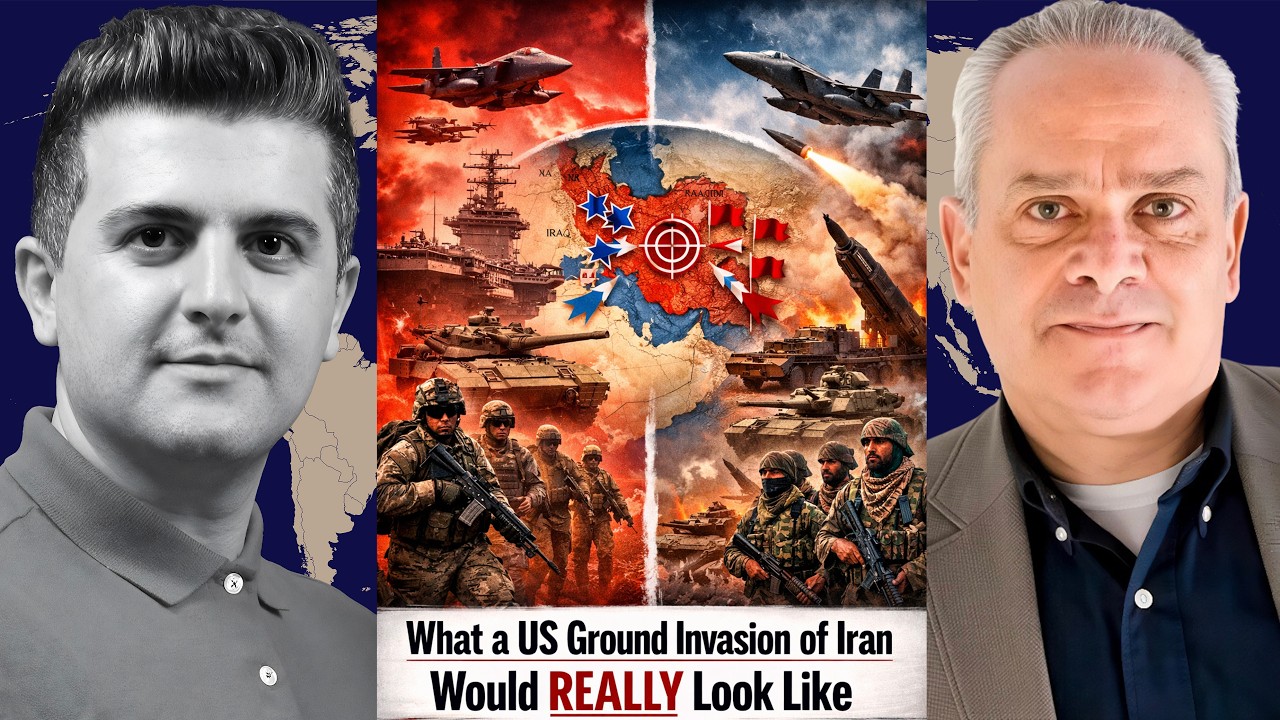
Col. Jacques Baud: What a US Ground Invasion of Iran Would REALLY Look Like
"Colonel Jacques Baud dissects the strategic futility of a US ground invasion of Iran, arguing that current troop levels are insufficient and such an action would backfire, exposing US allies and potentially leading to Iran's nuclearization."

LIVE: Trump HIDES FROM PUBLIC as US SOLDIER KILLED!!! 6/2/2026
"The host exposes alleged government cover-ups regarding military casualties, Trump's unexplained public absence, and questionable political appointments, arguing these reflect a 'regime of loser babies' and a failing foreign policy."