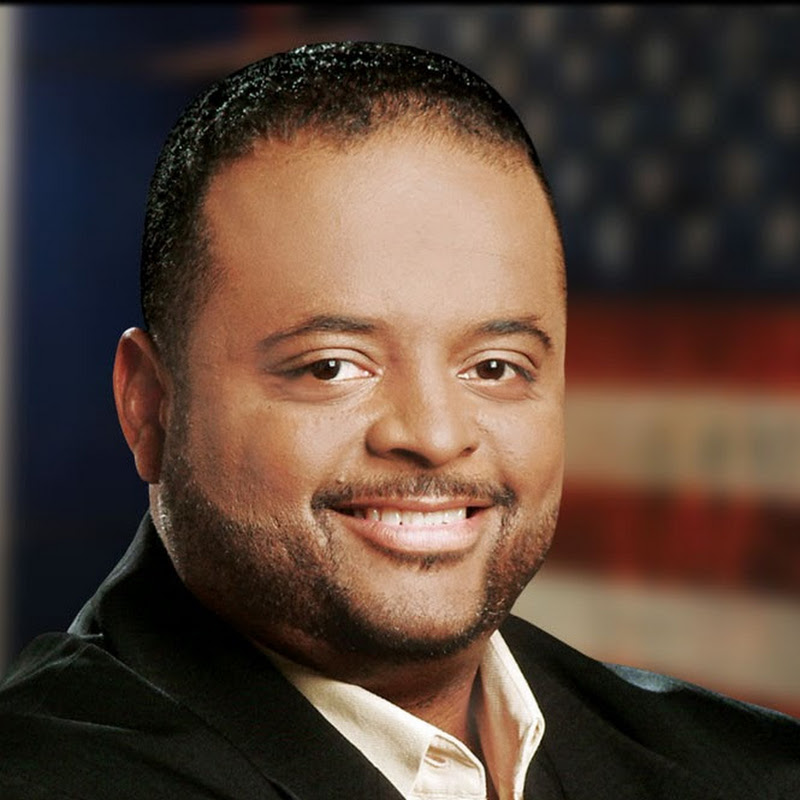
#RolandMartinUnfiltered Presents: “April 4, 1968"
YouTube · NnqLk0ql9ZM
Quick Read
Summary
Takeaways
- ❖Bernice King, MLK's daughter, recounts the confusion of her father's funeral as a child, hearing his voice but being told he couldn't speak, and the subsequent trauma of losing her father, uncle, and grandmother within six years.
- ❖Coretta Scott King, despite immense personal grief, immediately shifted into a leadership role, building the King Center and ensuring the continuation of her husband's legacy.
- ❖Robert Kennedy provided concrete, actionable support to Coretta Scott King immediately after MLK's death, arranging phone lines, a private plane, and hotel accommodations for dignitaries, demonstrating a unique understanding of her practical needs.
- ❖Richard Nixon, then a Republican candidate, privately offered a personal check sufficient to cover the education of all four King children, an act largely unknown to the public.
- ❖Jackie Kennedy and Coretta Scott King shared a profound, silent embrace, communicating mutual understanding of their shared widowhood without words.
- ❖Many close to MLK, including himself, had premonitions of his assassination, viewing it as an inevitable outcome of his escalating activism against war and poverty.
- ❖The immediate aftermath of the assassination saw many movement leaders, like Jim Lawson, suppress their grief to continue the work, recognizing the fragility of the movement and the need for immediate action.
- ❖The mortician struggled to reconstruct MLK's face due to the severity of his injury, requiring personal intervention from a family friend to make him presentable for viewing.
- ❖Clarence Jones believes MLK's assassination was a "cold, calculated, premeditated conspiracy" beyond James Earl Ray, citing his conversation with former FBI Director James Comey.
- ❖Former FBI Director James Comey used a memo authorizing MLK's wiretap as a cautionary tale for new agents, emphasizing the FBI should "never become that agency again."
Insights
1Childhood Trauma and Lasting Grief
Bernice King, MLK's youngest daughter, vividly recalls the confusion and trauma surrounding her father's funeral at age five, particularly hearing his recorded voice after being told he couldn't speak. This initial loss was compounded by the mysterious death of her uncle and the assassination of her grandmother within six years, leading to a prolonged, unprocessed grief that resurfaced decades later.
the day I remember is the funeral... they end up playing the uh piece where my father talks about his own eulogy... she told me your when you see your father... he won't be able to talk to you... suddenly here's daddy's voice... that was very confusing for me that day. [] I went through my cycle of hating, anger, and still struggle a little bit with anger... my uncle the next year being found in his pool mysteriously... Then my grandmother gets shot... in a matter of six years as a child, I'm trying to sort through all this. [] I've had a lot of emotional moments. It's almost like I'm not reliving. It's like to a certain extent I'm going through it fresh because I didn't get a chance as a child to really go through it in a way that I could process different stuff. []
2Coretta Scott King's Immediate Strength and Private Grief
Coretta Scott King, despite her profound personal loss, immediately assumed a public role, demonstrating immense strength and focusing on continuing her husband's legacy, including establishing the King Center. Her private moments of grief were carefully managed, with one friend noting she only truly broke down when trying on her funeral headdress.
she had to go into mommy role. She had to go into carrying the legacy role building the King Center and all the work that she was doing. And I never saw my mother really cry cry. She was just this strong figure. [] She didn't know. And it wasn't until she got to the airport that she got the call that and I think the mayor got the call that he is gone. [] she came in telling her staff and everybody... but she said to her staff do not tell my children I'll do that myself. [] when she tried on the headdress, then she looked in the mirror and I'm sure she's saying there, 'This is what I'm wearing to my husband's funeral.' And she broke down that time. But those only time she cried the whole time in that whole long week. []
3Robert Kennedy's Practical Empathy vs. Generic Condolences
In the immediate aftermath of MLK's assassination, Robert Kennedy stood out by offering concrete, actionable support to Coretta Scott King, arranging practical logistics like phone lines and a private plane, rather than just offering generic condolences like other political figures.
Everybody had the same message except one call... Robert Kennedy... He said Mrs. King. It's obvious now... you need more telephone lines because I've been trying to get you ever since the news broke... Mr. John Jones is in route to Atlanta now to install nine telephone lines for you... We've dispatched a plane. It's already there in Atlanta... Whenever you want to go, all you have to do is make this call. [] He said, 'We know how we've got experience in this. We know what we're doing.' []
4Nixon's Private Financial Support for MLK's Children
Richard Nixon, then a Republican presidential candidate, privately offered Coretta Scott King a personal check to cover the education of all four King children, an act of sympathy kept largely out of the public eye.
He said, 'I have brought with me a check, a personal check that we are feeling um the grief and because we are Americans, we have to take some responsibility for this.' So, as our personal expression of sympathy, we want to educate all four of your children. And this check that we have here will cover their expenses wherever they go... Nobody knows that story because I haven't told it for a few times. []
5The Silent Empathy of Jackie Kennedy
Jacqueline Kennedy, having recently experienced her own husband's assassination, shared a profoundly poignant, silent embrace with Coretta Scott King, communicating deep, shared grief and understanding without a single spoken word.
those two women didn't say one word to each other verbal word... They embraced... for an endless period of time. But you don't have to be smart to read their lips and their hearts. The heart was saying, 'We know what what you're feeling. You know, I know. We know.' That was the most poignant moment. And it was the one time that I cried because I was feeling their language. []
6MLK's Premonition of Death
Martin Luther King Jr. and those close to him had a strong sense that his assassination was not a matter of if, but when, particularly after John F. Kennedy's death and as his activism expanded to include the Vietnam War and the Poor People's Campaign.
Martin King always talked about the fact that he would be shot down in the streets of the nation in the midst of this campaign. He he he started talking to us about that actually with the assassination of John F. Kennedy in 60 November 63. [] I had come to the conclusion that was not a question of whether Martin King would be assassinated. Uh it was only when. [] it was one of those things that we always knew and he always knew even as early as the bus boycott... that there was a possibility of losing our lives in the movement. []
7The Mortician's Struggle and Personal Intervention
The severe nature of Martin Luther King Jr.'s facial injury made his body difficult to prepare for viewing, requiring a family friend to personally apply makeup to make him presentable, highlighting the brutal reality of his death.
When I walked up to the beer, he looked awful. It looked as if someone had gone and just dug up a big glob of clay and slapped it upside his face. I was horrified... his jaw was blown up. 'That's the best I could do.' [] So I took the two and stood over the casket, looking at Martin's face, and making myself a little r of a mixture... trying to match the other side of his face to get a balance to it. And I finally got it. []
8Belief in a Conspiracy Behind MLK's Assassination
Clarence Jones, a close advisor to MLK, firmly believes that James Earl Ray did not act alone, asserting that MLK's assassination was a "cold, calculated, premeditated conspiracy" involving figures like the Hunt brothers in Texas.
I believe that James Ray pulled the trigger... But James Oay did not wake up in the early morning of April 4th, 1968, all by himself and say, 'Today is the day I'm going to kill that king nigger.' No, no, no, no, no, no. Martin Luther King Jr's assassination was a result of a cold, calculated, premeditated conspiracy to kill him. And I believe that conspiracy goes right to the feet of of the Hunt brothers in Texas. []
9FBI's Wiretapping of MLK as a Cautionary Tale
Former FBI Director James Comey displayed a memo authorizing the wiretapping of Martin Luther King Jr. in his office, using it to teach new agents that the FBI should "never become that agency again," acknowledging past abuses.
Under the corner of the glass top is a photoatic copy of the memo of the memo from Robert F. Kennedy from J. Edoover to Robert F. Kennedy asking the authority to wire T Martin Luther King Jr... The reason I'm showing you Mr. Jones is every time there's a meeting of agents in my office, particularly a new agent, before they leave, I make them look at this and I says, 'The FBI can never become that agency again.' []
Lessons
- Reflect on the profound personal and societal impact of historical tragedies, recognizing that grief and trauma can manifest and resurface decades later.
- Embrace practical support and concrete action when responding to crises, learning from Robert Kennedy's example of providing specific assistance rather than generic condolences.
- Commit to continuing the work for justice and equality, understanding that movements often demand sustained effort and resilience even in the face of immense loss.
Quotes
"He conquered the love of wealth and the fear of death. Now understand when you don't really care about money, you you know things are going to be all right and you're not afraid to die. You're unstoppable."
"You can slay the dreamer but we will keep the dream alive."
Q&A
Recent Questions
Related Episodes
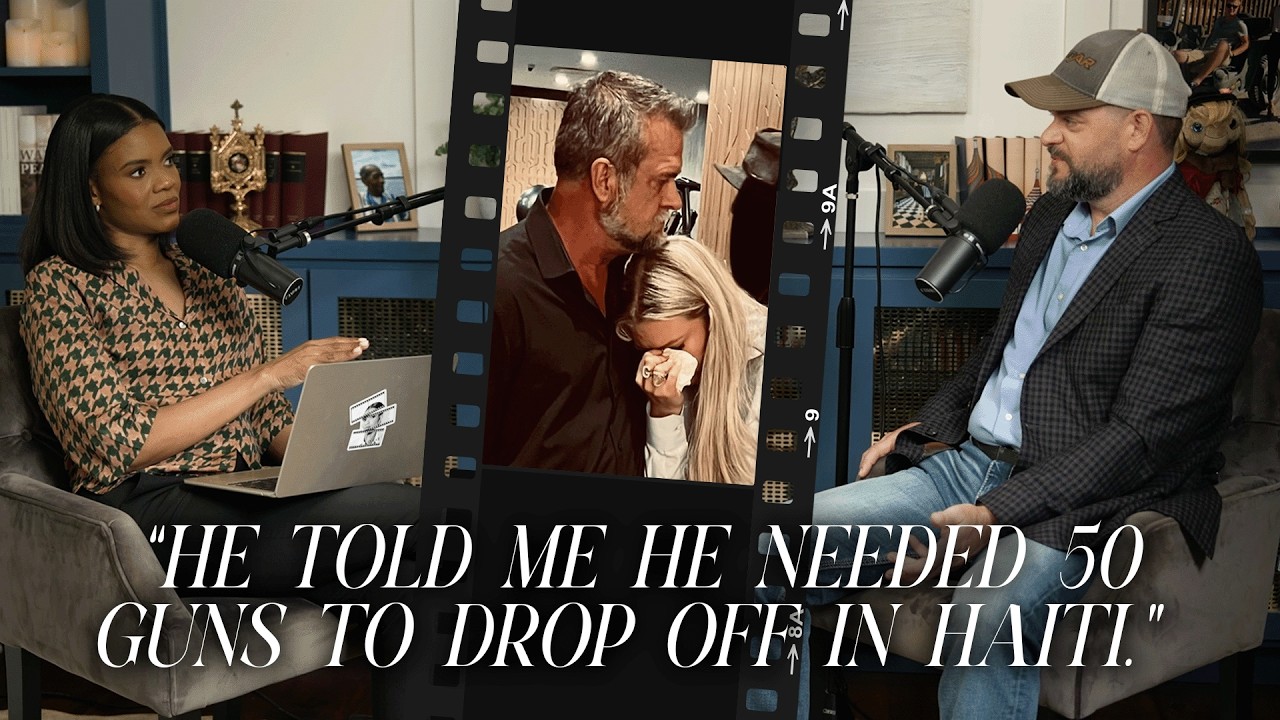
Victor Marx: The Man Who Weaponized Faith. | Candace Ep 329
"Corby Hall, inventor of the Fold AR, details his unsettling encounters with self-proclaimed pastor Victor Marx, exposing alleged spiritual and financial manipulation, including requests for guns for Haiti and attempts to control his business, which the host frames as 'dark psychiatry' and a microcosm of broader societal deception."
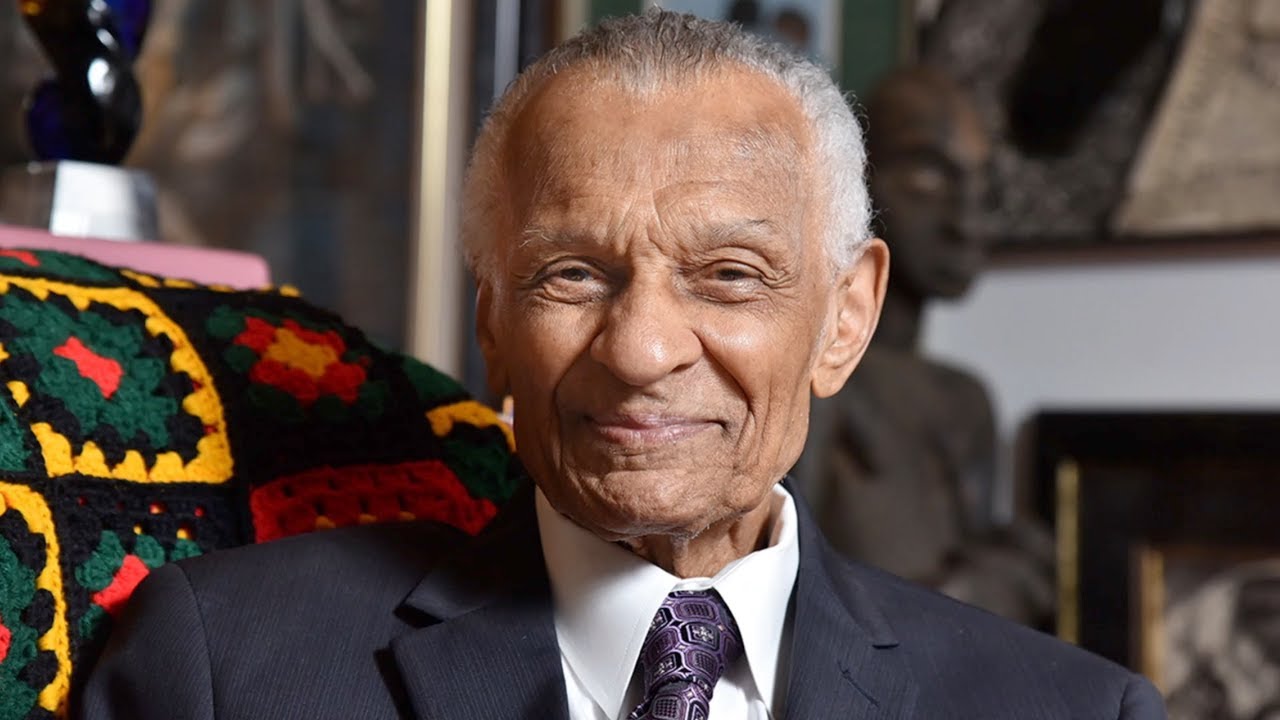
Rev. C.T. Vivian talks MLK and staring death in the face. #MLKDay2026
"Civil Rights icon Rev. C.T. Vivian reflects on a lifetime of struggle, from facing childhood bullies to confronting Jim Clark, and shares his profound insights on the continuous fight for freedom and the true cost of a movement."

Sadhguru - Stop Letting Your Mind DESTROY You | SRS #315
"Sadhguru challenges conventional wisdom on 'being in the moment' and stress, arguing that mastering the mind requires understanding its sophisticated design and consciously directing one's internal chemistry for profound well-being."

Crooners Welcome | This Past Weekend w/ Theo Von #664
"Theo Von shares raw, unfiltered opinions on life's 'greasy' moments, from his unexpected Stagecoach performance as a 'crooner' to his strong stance against AI data centers and candid advice on relationships and fatherhood."