
BROKEN PLAY | NAVV GREENE FT. JOJO ALONSO, & REGGIE BALL | S04 | EP 30
YouTube · QKm5EFHxM0s
Quick Read
Summary
Takeaways
- ❖Duke's March Madness exit was attributed to poor coaching decisions, specifically the failure to call a timeout in critical late-game situations.
- ❖The age gap in college basketball significantly impacts game outcomes, with older, more experienced players often outperforming younger freshmen.
- ❖The Big 10 conference is currently dominating both college football and basketball, showcasing a clear separation from other conferences like the SEC in terms of consistent performance.
- ❖HBCU sports are celebrated for their cultural events like homecomings and marching bands, but the hosts argue they lack competitive relevance in major tournaments like March Madness.
- ❖NBA player Jalen Ivey's release by the Bulls after anti-LGBTQ comments sparked a debate on freedom of speech versus an athlete's responsibility to their organization and diverse fanbase.
- ❖Nikola Jokic is hailed as the best player in the NBA, with his unique skill set and consistent performance making him 'unstoppable'.
- ❖The hosts advocate for a rebuild strategy for the Golden State Warriors, suggesting Steve Kerr's coaching run is over and the team needs fresh talent.
- ❖Aaron Rodgers' rumored $30 million contract demand from the Steelers is seen as reasonable given current NFL quarterback salaries and his resume, despite recent performance.
- ❖Athletes face significant challenges transitioning out of their careers, often struggling with identity and purpose after decades of playing.
- ❖The podcast promotes a culture of loyalty and support for athletes, regardless of their performance, contrasting with the conditional 'fake love' from mainstream sports media.
Insights
1Duke's Coaching Blunder in March Madness
The hosts critically analyzed Duke's loss, specifically pointing to the coach's failure to call a timeout during the final seconds of a close game. They argue that with a 10-second backcourt rule in college, the coach should have instructed players to hold the ball and force a foul, rather than allowing a rushed, contested shot.
Discussion around Duke blowing a 19-point lead and the coach being 'out-coached' (, ). Specific debate on why a timeout wasn't called before the inbound pass in the last seconds (-). Reference to the 10-second college backcourt rule and the strategy of holding the ball (-).
2The Impact of Player Age in College Basketball
A significant factor in college basketball outcomes is the age and experience gap between players. The hosts highlighted that Duke's freshmen were playing against older, more seasoned college athletes, which contributes to 'freshman mistakes' in high-pressure situations. This age disparity (e.g., 19-year-olds vs. 23-year-olds) is argued to be a major determinant of maturity and decision-making on the court.
Comment that Duke's players 'are really freshmen' making 'freshman mistakes' against '40-year-old men' (exaggerated) (-). Specific comparison of a 19-year-old Duke player against Yukon's 23-year-old Cariban (-).
3HBCU Sports: Cultural Hubs, Not Competitive Powerhouses (Opinion)
The hosts express a strong opinion that while Historically Black Colleges and Universities (HBCUs) are invaluable for education, culture, homecomings, and marching bands, their sports programs currently lack the competitive edge to be discussed seriously in mainstream sports tournaments like March Madness. They argue that the focus on HBCU sports is often misplaced when compared to Power Five conferences.
Host states, 'I am not talking about a HBCU doing March Madness' (-). Emphasizes 'education,' 'homecomings,' and 'the best bands' as HBCU strengths (-). Explicitly says, 'when it come to sports, don't nobody give a shit about a Alabama State and an Alabama A&M turkey classic' (-).
4Freedom of Speech vs. Organizational Loyalty in Professional Sports
The discussion around NBA player Jalen Ivey being waived by the Bulls for anti-LGBTQ comments highlights the tension between an athlete's personal beliefs and their contractual obligations to an organization. The hosts argue that while players have freedom of speech, they are paid by an organization that has its own brand, values, and diverse fanbase, and therefore must abide by certain conduct rules. This is contrasted with players who might make similar comments but are deemed 'untouchable' due to their star power.
Discussion of Jalen Ivey's comments and subsequent waving by the Bulls (-). Host states, 'If them shits paying you, they going, 'Hey, man.' You for organization' (-). Mentions 'you might not know you got gay fans' (-).
5The 'Broken Play' Ethos: Loyalty Over Analytics
The podcast positions itself as an antithesis to traditional, analytical sports commentary. Its core philosophy is to 'rock with' athletes and guests 'whether you do good or bad,' fostering a sense of unconditional loyalty and authentic connection. This contrasts with mainstream media, which they perceive as offering 'fake love' that disappears when an athlete's performance declines.
Introductory disclaimer: 'personal takes, rumors, not so accurate stats' (-). Host states, 'If you want to go talk to shits who going to rock with you whether you do good or bad, you come on this show' (-). 'Athletes don't realize when you take that helmet off, when you take that jersey off, shits stop showing your love' (-).
Bottom Line
The perceived lack of competitive parity in HBCU sports is directly linked to a lack of mainstream media coverage and fan engagement beyond cultural events like homecomings.
This creates a self-reinforcing cycle where limited exposure means less funding and talent attraction, further widening the gap with Power Five conferences. It also means a significant cultural phenomenon is largely ignored by the broader sports world.
Investing in HBCU sports infrastructure, coaching, and marketing could tap into a passionate, underserved fanbase and potentially elevate the competitive profile, attracting more talent and media attention. This could be a unique niche for sports media or NIL collectives.
The difficulty for professional athletes to transition out of their careers is a significant, often overlooked, mental and emotional challenge, driven by a loss of identity and purpose.
Many athletes struggle with mental health, financial instability, and a sense of void after retirement, even those who achieved high levels of success. This impacts their long-term well-being and can lead to negative outcomes.
There's a need for more robust, personalized support systems for athletes transitioning out of professional sports, focusing on mental health, career development, and identity reconstruction. This could involve specialized coaching, community programs, or financial literacy initiatives tailored to their unique experiences.
Opportunities
Athlete-Focused Post-Career Transition Coaching
Develop a specialized coaching and support program for professional athletes to navigate the mental, emotional, and financial challenges of transitioning out of their playing careers. This would address the 'what do I do after 30 years' dilemma, helping them find new purpose and manage identity shifts.
Authenticity-Driven Sports Commentary Platform
Create a digital platform or network that prioritizes raw, unfiltered, and personality-driven sports commentary, directly challenging the 'politically correct' and 'analytical' mainstream. This would cater to audiences who value genuine, passionate takes and loyalty over sanitized, corporate-approved narratives.
Hyper-Local Sports & Culture Media Network
Establish a media network that deeply integrates local sports commentary with community culture, focusing on specific cities or regions. This would tap into the strong local identities and 'don't give a shit what other cities think about us' mentality, similar to how Memphis, Houston, and Dallas are described.
Lessons
- For sports coaches, critically evaluate late-game timeout strategies, especially in college basketball where rules like the 10-second backcourt violation can be exploited to force fouls and preserve possessions.
- Athletes and public figures should understand the fine line between personal expression and professional representation, as controversial social media posts can lead to severe career repercussions, even if rooted in personal beliefs.
- When evaluating college basketball talent, consider the significant impact of player age and experience, as older, more mature players often possess a competitive edge and better decision-making skills than freshmen.
Notable Moments
The hosts' humorous and nostalgic recollection of the 'candy lady' as their first math teacher, calculating change and making purchasing decisions based on limited funds.
This moment highlights a relatable cultural experience for many, emphasizing how informal community figures can play unexpected educational roles and shaping early financial literacy in a practical, memorable way.
Dominique Smith hitting a grand slam in his Braves debut, just 13 days after his mother's passing from cancer, and expressing he felt her spirit in the stadium.
This emotional and poignant moment showcases the powerful intersection of personal tragedy, athletic performance, and spiritual belief, resonating deeply with themes of resilience and dedication beyond the game itself.
The hosts' humorous and self-deprecating descriptions of their podcast production team (Miles, Jav, DJ Blue, Greg), highlighting their quirks and unconventional work styles.
This segment reinforces the podcast's core identity of authenticity and embracing individuality, showing that success can come from diverse, non-traditional teams who 'rock with' each other, rather than conforming to corporate norms.
Quotes
"If you're a person who takes sports to heart, this might not be for your [__] ass. However, if you a player and this is where you need to be, we have a little saying here called KIN. And if you know, you know, and that's how we like to keep it."
"Coaching matters. You Yukon, they coach was was coaching. Duke Duke coach got out coach."
"If you got a [__] who is 19, that's why you got to call a timeout cuz he's a true freshman. You got true freshman playing against [__] who been playing basketball for 10 years in college."
"I am not talking about a H.B.C.U doing March Madness."
"If them [__] paying you, they going, 'Hey, man.' You for organization. Goddamn simple. And I to be honest, you might not know you got gay fans."
"Athletes don't realize when you take that helmet off, when you take that jersey off, [__] stop showing your love."
Q&A
Recent Questions
Related Episodes

Shannon Shape reacts to LeBron saying Memphis is SO BAD they need to move to Nashville! | Nightcap
"LeBron James's blunt critique of Memphis as an NBA city sparks a debate among hosts about player expectations, team amenities, and the future of franchises."
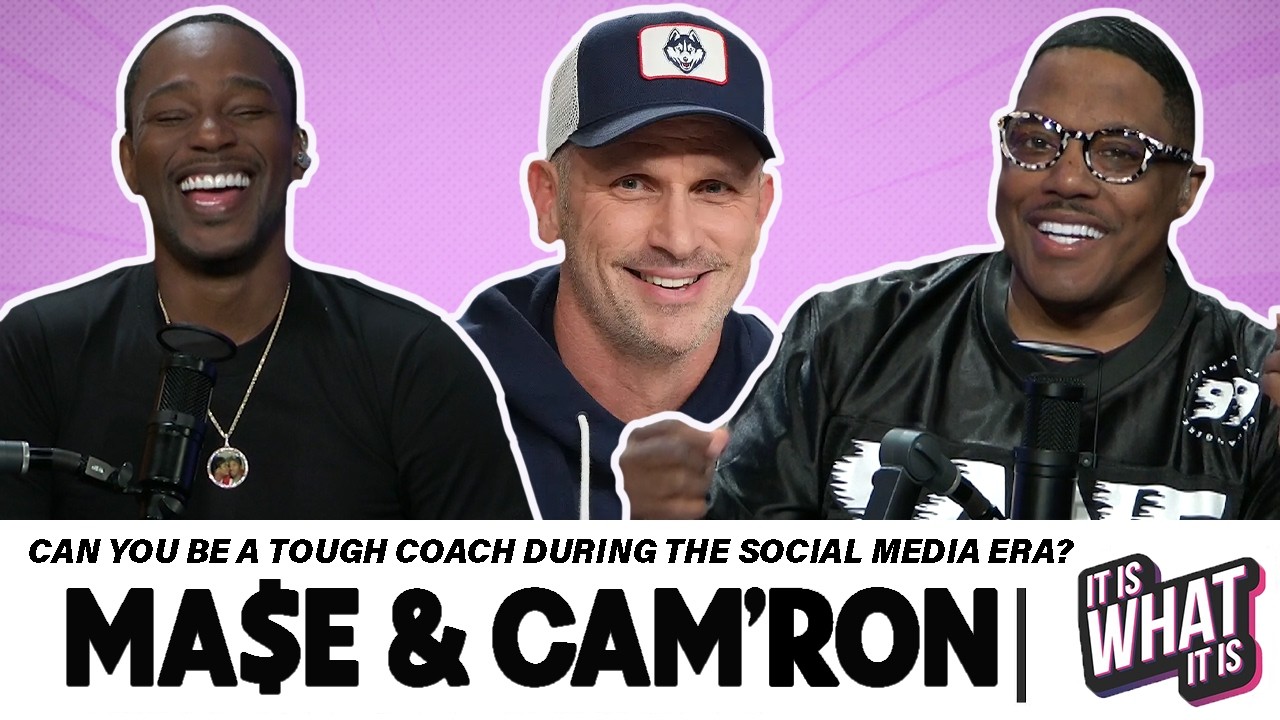
ARE YOU ALLOWED TO BE A TOUGH COACH & MA$E EXPLAINS THE DIFFERENCE BETWEEN A RAP LEGEND & ICON!
"This episode dissects the Lakers' future with Austin Reaves, debates the ethics of 'tough coaching' exemplified by Dan Hurley, and distinguishes between rap legends and icons."

Big Cat Got Bullied By A Random 6 Year Old At The Arcade | The Yak 3-16-26
"Big Cat recounts an emasculating encounter with a demanding 6-year-old at an arcade, while the crew discusses St. Patrick's Day chaos, Joey Chestnut's legendary eating feats, and the viral 'Borg' drinking trend."

The Pat McAfee Show Live | Tuesday June 23rd 2026
"Pat McAfee and guests dissect the seismic Giannis trade to Miami, the NFL's firm stance on gambling, Windham Clark's US Open triumph, and the USMNT's World Cup momentum, all while celebrating the Kachuk brothers' reunion."