Ex-CIA Officer John Kiriakou on the Truth About Iran, False Flags, and What’s Really Happening in DC
YouTube · S3aYb4j6XAc
Quick Read
Summary
Takeaways
- ❖The U.S. decision to engage Iran was not supported by American intelligence, which found no Iranian nuclear weapons program.
- ❖Kiriakou believes the U.S. prioritized Israeli interests over its own in the Iran conflict, a departure from past U.S. foreign policy.
- ❖The U.S. government, post-2001, allegedly allowed and even encouraged poppy cultivation in Afghanistan to weaken Iran and Russia.
- ❖U.S. intelligence agencies, particularly the CIA, are criticized for being politicized and for neglecting threats like drug cartels in favor of traditional 'boogeymen.'
- ❖The lack of consultation with European and Gulf allies before the Iran conflict led to resentment and economic hardship for those nations.
- ❖Iran is not a 'house of cards' and attacking it has galvanized its public, pushing the country into closer alliances with China, Russia, and India.
- ❖The U.S. government's failure to investigate assassination attempts against its own former president suggests a deeper systemic issue or weakness.
- ❖AIPAC should be forced to register as a foreign agent, similar to other entities representing foreign policy interests.
Insights
1U.S. Foreign Policy Prioritized Israeli Interests in Iran Conflict
John Kiriakou asserts that the U.S. decision to engage in conflict with Iran was not in American national interests, but rather aligned with Israeli priorities. He notes that U.S. intelligence, including two National Intelligence Estimates, unanimously concluded Iran had no nuclear weapons program. Despite this, the U.S. proceeded, alienating traditional European and Arab Gulf allies who were not consulted, while Israel actively pushed for the action.
Kiriakou states, 'I fully understand how this was in Israel's interest and the Israelis have long wanted us to attack Iran and to overthrow the regime in Tehran. I get that it's in their interests, but I've never believed... that the Iranians were anywhere near a nuclear weapon.' He adds that allies 'were not consulted as allies' and 'the only apparent consultation... was with the Israelis, and the Israelis really, really wanted this to get done.'
2U.S. Government Allegedly Allowed Afghan Poppy Production to Weaken Adversaries
Kiriakou recounts his experience as a Senate investigator in Afghanistan, where a poppy farmer claimed Americans told him he could grow poppy if he revealed Arab locations. A DEA friend later explained that the U.S. allowed 93% of the world's heroin production in Afghanistan (which went to Iran and Russia) to weaken their societies. This policy contrasts sharply with the Taliban's zero poppy production in 2000.
Kiriakou states, 'The Americans told me in 2001, that if I told them where the Arabs were, I could grow all the poppy I wanted.' His DEA friend later said, 'Almost all of that heroin goes to Iran and Russia, and we want them to be addicted to heroin, it weakens their societies.' He contrasts this with 'Zero' heroin production in Afghanistan in the last year of Taliban rule (2000).
3Politicization and Misdirection within U.S. Intelligence Agencies
Kiriakou criticizes the politicization of the CIA, noting a shift from a non-political culture (where a Bob Dole bumper sticker was reprimanded) to one where senior officers openly lied about the Hunter Biden laptop. He also highlights the CIA's historical and ongoing disinterest in combating drug cartels, prioritizing 'boogeymen' like communism or Islamism, even when cartels pose a direct threat to American society.
He describes a CIA where 'everybody was in bed with Obama. Everybody was in bad with Biden. How did that happen? How did we get there so quickly?' He also notes the CIA 'doesn't care about stopping the flow of drugs' and historically 'cared only about communism... if the drug cartels were going to tell the CIA where the communists were hiding, then the CIA was a okay with the drug cartels.'
4U.S. Actions Strengthen Adversaries and Undermine Global Standing
The U.S. conflict with Iran has inadvertently pushed Iran into closer alliances with China, Russia, and India, potentially accelerating the decline of American economic hegemony (petrodollar). Furthermore, the lack of consultation with traditional allies like the UK and Canada has strained relationships, making the U.S. appear unreliable and isolated.
Kiriakou states, 'We have forced the Iranians into the embrace of the Chinese and the Russians and the Indians.' He predicts a future where BRICS countries use a unified currency, marking 'the end of American hegemony in the region.' He also quotes an MI6 officer saying, 'We still love you. We just don't like you very much.'
Bottom Line
The U.S. government's failure to thoroughly investigate assassination attempts against its own former president and breaches of his security suggests a profound systemic weakness or hidden agenda within permanent Washington.
This raises serious questions about the integrity and accountability of U.S. security institutions, implying that certain events or individuals are deliberately shielded from scrutiny, potentially for political reasons or to maintain a specific narrative.
A deep, independent investigation into these unaddressed security failures could expose underlying power dynamics and corruption within the 'deep state,' potentially leading to significant reforms and a restoration of public trust.
The U.S. government's current foreign policy approach, driven by external interests and a lack of diplomatic engagement, is accelerating the formation of powerful anti-U.S. alliances (e.g., BRICS) and the erosion of the petrodollar's dominance.
This trajectory threatens long-term U.S. economic and geopolitical power, as global trade shifts away from the dollar and a formidable bloc of nations emerges to challenge American influence.
A strategic pivot towards genuine diplomacy, re-engagement with traditional allies, and a focus on core national interests could mitigate these risks, potentially disrupting the consolidation of anti-U.S. alliances and preserving a more balanced global order.
Key Concepts
Realpolitik
The idea that foreign policy should be based on practical considerations of national interest rather than on ideology or moral concerns. Kiriakou suggests the U.S. has moved away from this, to its detriment, by prioritizing external interests.
Institutional Self-Preservation
Organizations, including government agencies, tend to prioritize their own survival, budget, and established paradigms over adapting to new threats or serving their stated mission. This is cited in the CIA's focus on 'boogeymen' and neglect of drug cartels.
Blowback/Unintended Consequences
The unforeseen and often negative repercussions of a covert operation or foreign policy action. Kiriakou highlights how U.S. actions in Iran have strengthened its adversaries and alienated allies, creating a more challenging geopolitical landscape.
Lessons
- Question official government narratives, especially those concerning foreign conflicts, by seeking out diverse intelligence assessments and historical context.
- Recognize the potential for foreign lobbying and institutional self-interest to influence U.S. foreign policy decisions, sometimes at the expense of national interests.
- Advocate for greater accountability and transparency within U.S. intelligence agencies, pushing for reforms that depoliticize their operations and ensure adherence to constitutional principles.
Notable Moments
Kiriakou's anecdote about a poppy farmer in Afghanistan claiming Americans allowed poppy cultivation in exchange for intelligence on Arabs, later corroborated by a DEA contact who stated it was to weaken Iran and Russia.
This revelation suggests a deliberate, cynical U.S. policy to use narcotics as a weapon against adversaries, raising profound ethical questions about U.S. foreign policy conduct and its long-term consequences, including the current fentanyl crisis.
The discussion about the U.S. president's alleged belief of Iran being a 'house of cards' and his reliance on Israeli intelligence over his own agencies, particularly regarding Iran's nuclear program and the country's internal stability.
This highlights a critical breakdown in the intelligence-to-policy pipeline and suggests a dangerous level of deference to foreign interests, leading to misinformed and counterproductive military interventions.
The comparison of the U.S. president's inaction regarding assassination attempts and security breaches to how a foreign leader would be perceived (weak, afraid), and the lack of accountability within the Secret Service.
This moment underscores a perceived systemic failure at the highest levels of U.S. government, where self-preservation and accountability appear to be absent, leading to a 'mystery at the center of global events.'
Quotes
"I feel like sometimes we act in Israel's best interests rather than in our own best interests. I think this is one of those cases."
"Afghanistan produces 93% of the world's heroin. Almost all of that heroin goes to Iran and Russia, and we want them to be addicted to heroin, it weakens their societies."
"The CIA doesn't care about stopping the flow of drugs. They just don't care."
"The only conclusion that we can draw is that you're not really the great friends that we thought you were. We hate."
"If you coupled the two, if you said, yeah, we're going to draft your son, but you also get to decide whether to send him or not, that would seem like a democratic way to handle it. But this is a totalitarian way to deal with it."
Q&A
Recent Questions
Related Episodes
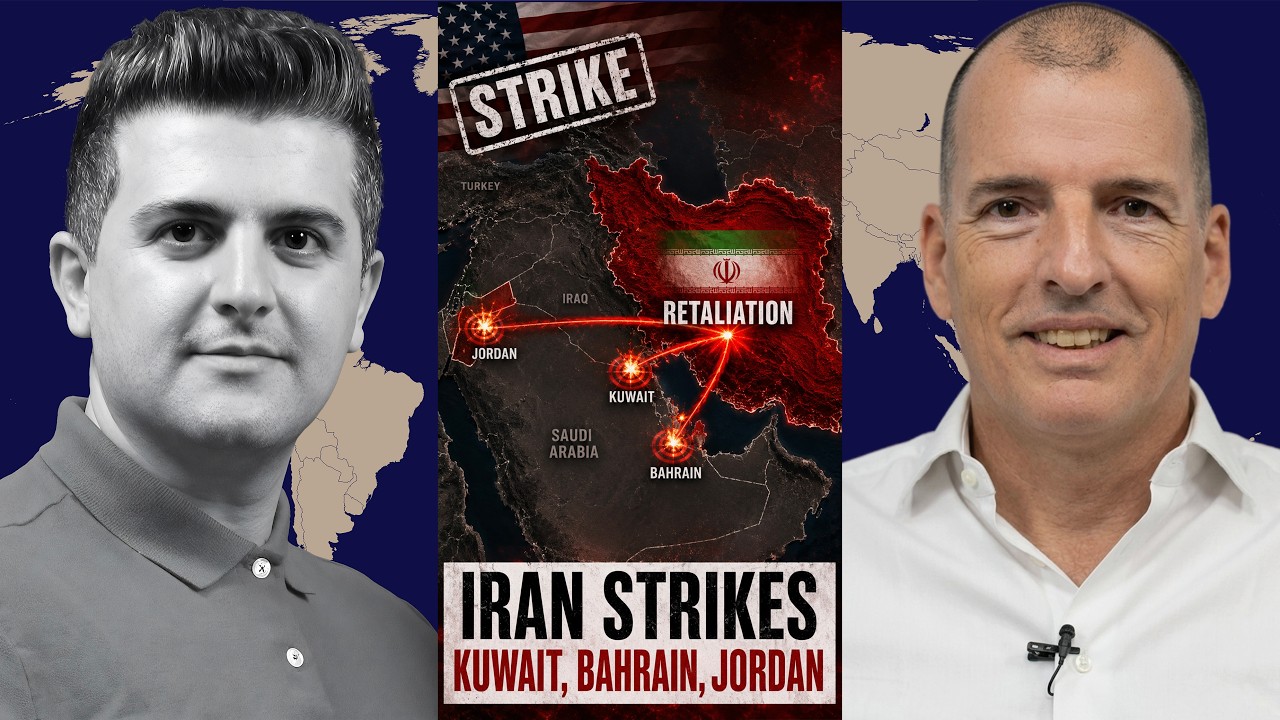
Alex Krainer: US STRIKES Iran – Iran RETALIATES Against Kuwait, Bahrain & Jordan!
"Amidst escalating US-Iran conflict and Iranian retaliation against regional US allies, this episode argues that US foreign policy is deeply controlled by an 'Anglo-Zionist conspiracy' led by the Rothschild banking dynasty, prioritizing Israeli interests over American ones."

Iran Update: Israel’s Newest Bombing Campaign, the Oncoming War With China and How to Avoid It
"Colonel Wilerson reveals how the US and Israel are actively bombing China's strategic infrastructure in Iran, escalating a covert economic war that Beijing intends to win without direct military conflict by dismantling the dollar's global dominance."

Bibi DEMANDS Ground Troops As Marines Rushed to Iran
"Benjamin Netanyahu is pushing for US ground troops in Iran, framing air strikes as insufficient, while the US rushes Marines to the region and struggles to secure the Strait of Hormuz against surprisingly capable Iranian defenses."

Col. Jacques Baud: The World Is Entering a Lawless Era
"Colonel Jacques Baud details his personal experience with arbitrary EU sanctions and argues that the world has shifted from a law-based international order to a dangerous, rules-based system dictated by powerful actors, exemplified by US actions in Venezuela and the EU's 'teenager decision-making'."