ULTIMATE TACO: Trump Caves On Greenland After Market Reaction
YouTube · T6231Z6nGR0
Quick Read
Summary
Takeaways
- ❖Trump's 'Greenland deal' was a 'taco' (a retreat from a bold stance) after market instability.
- ❖The 'deal' granted the US sovereignty over existing bases and involvement in mineral rights, which were largely already in place.
- ❖The incident was a 'wakeup call' for global leaders, prompting a re-evaluation of the US-led liberal international order.
- ❖Canadian Prime Minister Mark Carney's speech and China deal signify a move towards a 'new world order' less reliant on the US.
- ❖The US's extensive global military presence (800+ bases) is linked to a weak domestic social welfare state.
- ❖Greenlandic people prefer Danish rule due to universal healthcare, free education, and college stipends, rejecting American culture.
- ❖Market reactions, particularly in bonds, are the primary factor that pulls Trump back from aggressive foreign policy stances.
- ❖Other nations, including Canada, Japan, and South Korea, are increasingly considering reducing their reliance on US military presence.
Insights
1Trump's 'Greenland Deal' as a Geopolitical 'Taco'
The hosts characterize Trump's announced 'deal' on Greenland as a 'taco'—a term from Wall Street indicating a retreat or 'chickening out' from a confrontational stance. Despite Trump's claims of an 'ultimate long-term deal,' the agreement primarily formalized existing US military sovereignty over its bases and involvement in Greenland's mineral rights, offering no new substantial concessions. This retreat followed a modest stock market dip and European officials suspending a trade agreement amid tariff threats.
Trump's response to Caitlyn Collins (), details of the 'deal' (), market reaction (), EU suspending trade agreement ().
2Acceleration of a 'New World Order' Away from US Hegemony
The Greenland incident, alongside other US foreign policy actions, is framed as a catalyst for other nations to critically re-evaluate their reliance on the United States. The hosts cite Canadian Prime Minister Mark Carney's speech acknowledging the 'fiction' of the liberal international order and Canada's subsequent deal with China as evidence of this shift. They argue that this pushes Europe and Canada towards greater independence in defense and foreign policy, leading to a 'new world order' where the US is no longer the sole global policeman.
Mark Carney's speech (), Canada's deal with China (), host commentary on Europe and Canada becoming responsible for their own defense ().
3Economic Costs of US Global Military Presence
The hosts argue that the US's extensive global military footprint, with hundreds of bases worldwide, comes at a significant domestic cost. They draw a parallel with the British Empire's post-WWII shift, suggesting that the US's role as 'world's policeman' diverts resources that could otherwise fund a robust social welfare state, similar to those enjoyed by European nations whose defense is subsidized by the US.
Comparison to British Empire (), host statement on 800 bases and weak social welfare state vs. European universal healthcare ().
4Market Reaction as Trump's Primary Policy Constraint
A consistent pattern observed by the hosts is that market reactions are the primary factor that pulls Trump back from aggressive or potentially destabilizing foreign policy actions. While Trump's rhetoric often pushes situations to the brink (e.g., trade wars, military threats), a significant dip in the stock market or bond yields prompts him to 'taco' and walk back his threats. However, this creates an escalating 'resistance' where he must pursue increasingly extreme actions to trigger a market response.
Host observation of market influence (), specific market reactions to Greenland (, ), Canada's war games ().
Bottom Line
The Greenland incident highlights the growing assertiveness of smaller nations and autonomous regions in rejecting unwanted foreign influence, even from major powers.
This indicates a potential future where local populations and their self-determination play a more significant role in international relations, complicating traditional power dynamics and resource acquisition strategies.
Businesses and governments should prioritize local engagement and respect for self-determination in international ventures, rather than relying solely on agreements with central governments, to avoid public backlash and political instability.
The 'taco' pattern in US foreign policy, where threats are made and then walked back due to market pressure, creates a dangerous cycle of escalating brinkmanship.
This pattern increases the risk of miscalculation, where a threat is not walked back, or a market reaction is too slow, leading to actual conflict or severe economic disruption.
Analysts and investors should develop more sophisticated models for predicting US foreign policy outcomes, factoring in market sensitivity and the 'brinkmanship' dynamic, rather than assuming consistent rational action.
Lessons
- Re-evaluate investment strategies to account for increased geopolitical instability and the potential erosion of the dollar's reserve currency status as global alliances shift.
- For international businesses, assess the political risks associated with relying on historical alliances and consider diversifying partnerships as nations pursue more independent foreign policies.
- Understand that domestic social welfare priorities in the US are intrinsically linked to its global military commitments; advocating for one may require re-evaluating the other.
Quotes
"This whole liberal international order thing, we've been going along with it, even acknowledging that it's never really been real and that there is a giant distance between the principles and values of it and the reality of it. Like, you can't take that speech back."
"A Canada and a Europe which actually is responsible for its own defense is a world where the United States is no longer having to put hundreds of billions of dollars into Ukraine."
"The idea that NATO should have any say at all over our country and our mineral resources is completely absurd."
"We don't aspire to American culture. Look, we get free healthcare. We get free not just like you know through high school public education. We get free college. In fact, if we want to go and study in college, we get a stipend to support like our living needs."
"It's very clear with Trump what pulls him back from the brink. Um, it's the market."
Q&A
Recent Questions
Related Episodes

Patrick Henningsen: Hezbollah JUST Fired Back at Israel - Iran Vows to “Crush” All Attacks
"Patrick Henningsen argues that the US and Israel initiated an illegal war against Iran, driven by Trump's incompetence and Israeli influence, leading to an inevitable escalation with severe global economic repercussions."
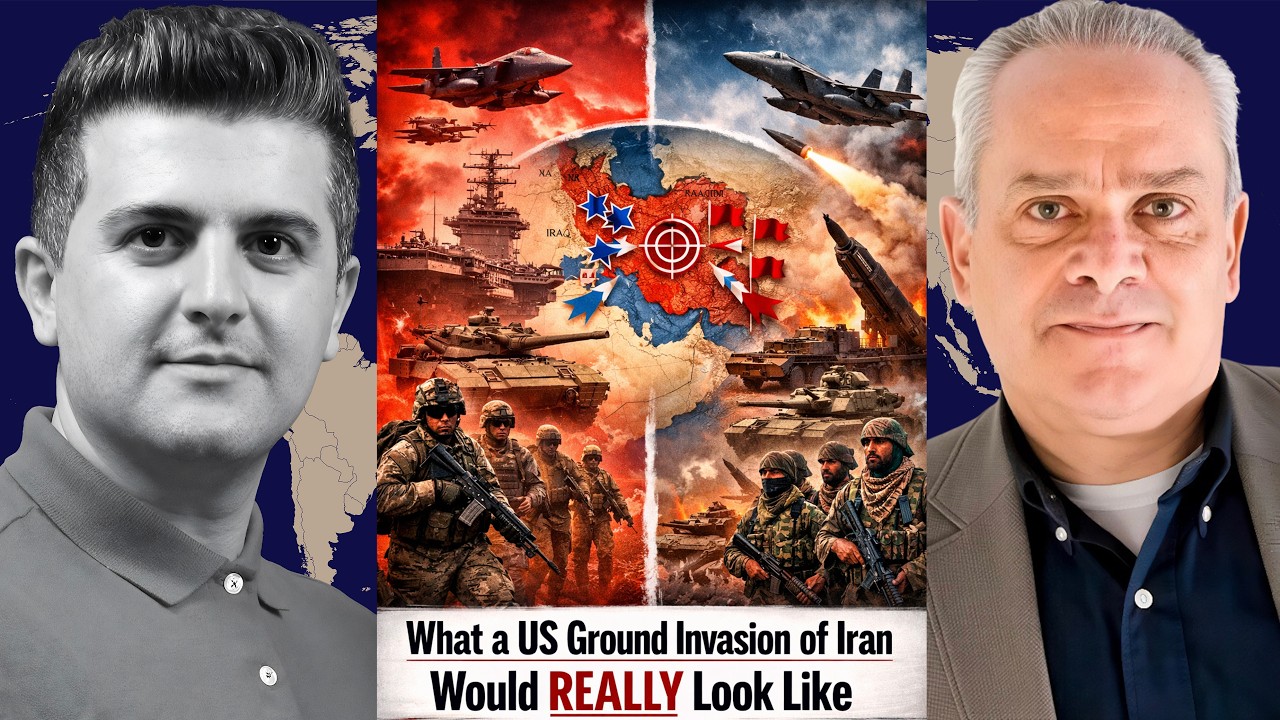
Col. Jacques Baud: What a US Ground Invasion of Iran Would REALLY Look Like
"Colonel Jacques Baud dissects the strategic futility of a US ground invasion of Iran, arguing that current troop levels are insufficient and such an action would backfire, exposing US allies and potentially leading to Iran's nuclearization."

LIVE: Trump HIDES FROM PUBLIC as US SOLDIER KILLED!!! 6/2/2026
"The host exposes alleged government cover-ups regarding military casualties, Trump's unexplained public absence, and questionable political appointments, arguing these reflect a 'regime of loser babies' and a failing foreign policy."
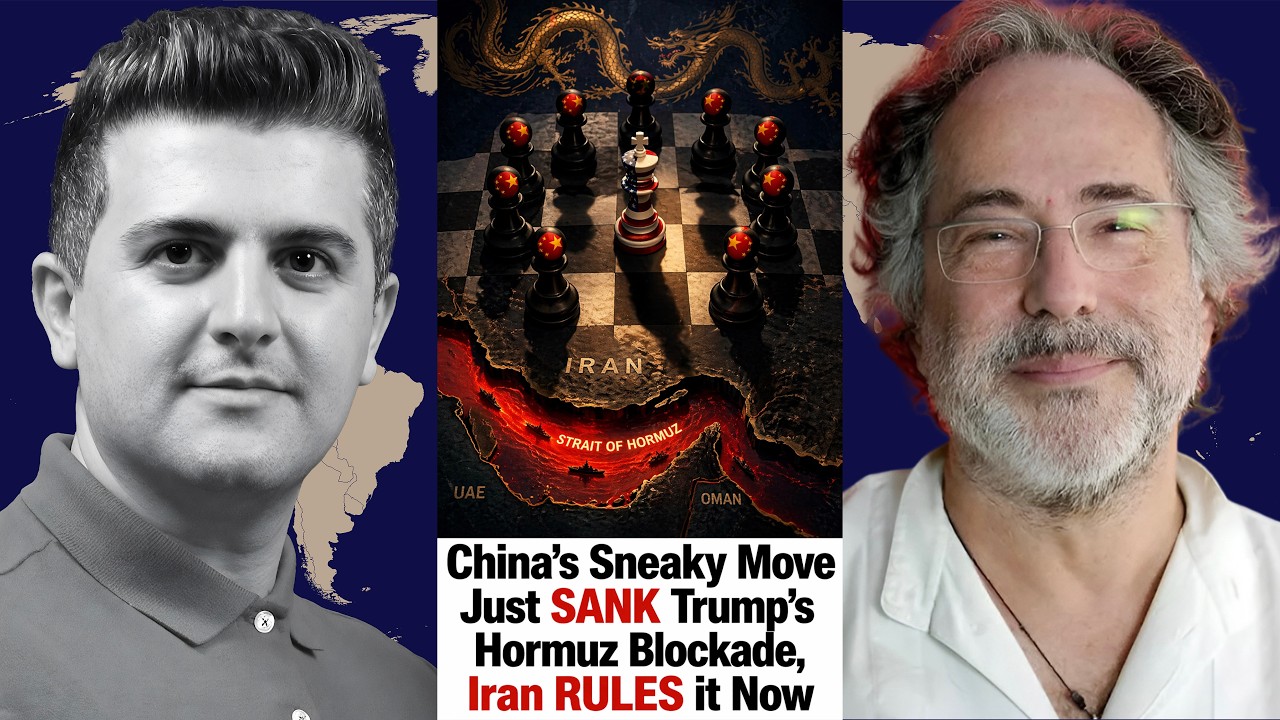
Pepe Escobar: “Total Failure”: Trump’s Blockade Just Backfired Disastrously
"Pepe Escobar argues that the US blockade against Iran, spearheaded by Donald Trump, has utterly failed and backfired, accelerating global economic chaos and challenging US geopolitical dominance."