
Lt. Col. Anthony Aguilar: Iran & US Just ATTACKED Each Other – FULL-SCALE WAR Next?
YouTube · TWAYQhgVMs0
Quick Read
Summary
Takeaways
- ❖The US military actions against Iran are part of a pre-planned 'Operation Sledgehammer,' with the Apache helicopter incident serving as a convenient pretext.
- ❖Iran has formally declared the Strait of Hormuz closed to all traffic, a strategic move to isolate US naval forces and enable direct engagement.
- ❖The US is executing a sustained assault with hundreds of targets, primarily concentrating fire on Iran's southern coastal areas and islands like Bandar Abbas, Sirri, Qeshm, and Bushehr.
- ❖Lt. Col. Aguilar predicts a three-pronged US operation: a limited assault on Kharg Island, a naval incursion through the Strait of Hormuz, and an airfield seizure on Qeshm Island.
- ❖The ultimate US objective, according to Aguilar, is a commando mission to seize Iranian uranium, which Donald Trump would frame as a 'win' to exit the conflict.
- ❖Donald Trump's claims of a ceasefire and direct negotiations with Iranian officials are dismissed as 'Kabuki theater' for domestic consumption, lacking any factual basis.
- ❖Iran's retaliatory strikes are consistently targeting US staging bases and command-and-control nodes in Saudi Arabia, Kuwait, and Bahrain, rather than just mainland US forces.
- ❖The US-Israel alliance is showing signs of fracturing, with both sides disavowing involvement in the other's strikes against Iran.
Insights
1Apache Helicopter Incident as Pretext for Pre-Planned US Offensive
The guest argues that the reported downing of a US Apache helicopter by an Iranian drone was a fabricated story, lacking credible details (e.g., no ejection seats, implausible drone boat rescue). This narrative served as the 'pretext' for a pre-planned, large-scale US military operation against Iran, which had been set in motion weeks prior.
The story's details don't make sense; if an Apache was hit by a Shahed 136, it would be destroyed. The rescue by a 'drone boat' is illogical, and no evidence (pilots, wreckage, film) was provided. The US quickly shifted focus from the incident to its retaliatory strikes.
2Iran's Strategic Closure of the Strait of Hormuz
Iran formally declared the Strait of Hormuz closed to all traffic, including oil tankers and commercial ships, threatening to target any vessel attempting passage. This move is seen as a strategic decision, likely coordinated with Russia and China, to isolate US naval forces entering the Strait and enable 'guns-free' engagement.
Iran's Khatam-ol-Anbiya's central headquarters announced the full closure due to US aggression. The host reports two ships were already targeted. Aguilar suggests this was communicated to Russia and China beforehand to secure their support.
3US Three-Pronged Strategy to Seize Iranian Uranium
The US is executing a multi-phase operation, not a simple retaliatory strike. Aguilar predicts a three-pronged approach: a naval assault and ground forces raid on Qeshm Island to secure an airfield, a limited amphibious assault to seize and isolate Kharg Island, and a strategic commando raid into mainland Iran to seize uranium. These actions are designed to set conditions for the uranium mission, which Donald Trump views as his 'ticket out' and a 'win'.
US Central Command announced 100 targets. US forces (Marines, Airborne, Special Forces, aircraft) were pre-positioned. Strikes are concentrated around Qeshm and Bushehr (near Kharg Island). The goal is to control key islands to facilitate deeper incursions.
4Trump's 'Ceasefire' Claims as Political Theater
Donald Trump's public statements about a ceasefire and direct negotiations with Iranian officials are dismissed as a deliberate fabrication. These claims serve as a 'pretense' for domestic audiences to justify continued and escalating military strikes, framing Iran as unwilling to negotiate and thus deserving of further attacks.
Trump claimed on Fox News to have called an Iranian official who asked him to stop bombing, and that he would bomb again if no deal was made. An Iranian source immediately denied any contact. Aguilar asserts there's no negotiation, only Trump's demand for unconditional surrender.
Bottom Line
The US is using the Strait of Hormuz closure and military escalation to manipulate global stock markets, particularly oil prices, by timing significant actions around weekends.
This suggests a cynical financial motive intertwined with geopolitical strategy, where military conflict is leveraged for economic gain or market control, potentially at the expense of global stability.
Investors and analysts should closely monitor military escalations and official statements regarding critical chokepoints like the Strait of Hormuz, especially around market closures, to anticipate market volatility and potential manipulation.
Iran's consistent targeting of US staging bases in Saudi Arabia, Kuwait, and Bahrain, rather than just direct US forces, indicates a sophisticated understanding of US logistics and a strategy to degrade future attack capabilities.
This reveals Iran's strategic depth in responding to aggression, aiming to disrupt the US's ability to project power from regional allies, rather than merely engaging in tit-for-tat strikes against frontline assets.
Military planners and intelligence analysts should re-evaluate the vulnerability of 'safe' staging areas and the effectiveness of current defense strategies against Iran's asymmetric responses. Businesses operating in these regions should assess increased risk to their infrastructure and supply chains.
Lessons
- Monitor global oil prices and shipping routes, especially through the Strait of Hormuz, as continued conflict will likely lead to significant market volatility and supply chain disruptions.
- Critically evaluate official statements from all parties involved in the US-Iran conflict, recognizing that narratives may be constructed for domestic political consumption or as pretexts for military action.
- Track the movement and positioning of US military assets in the Middle East, particularly around key islands like Qeshm and Kharg, to anticipate potential amphibious assaults or commando operations.
Predicted US Three-Pronged Military Operation Against Iran
**Phase 1: Condition Setting** - Conduct sustained aerial and naval strikes on Iranian coastal defenses, communications, and military assets, particularly around Qeshm Island and Bushehr (near Kharg Island).
**Phase 2: Island Seizure** - Execute a naval assault with ground forces to seize Qeshm Island, securing its airfield for use as a forward operating platform. Simultaneously, conduct an amphibious assault on Kharg Island to seize and isolate it, maintaining its infrastructure for future use.
**Phase 3: Strategic Raid** - Once conditions are set (air control, secure staging areas), launch a commando mission into mainland Iran to locate and seize uranium, aiming for a decisive 'win' for the US administration.
Notable Moments
US Central Command announces 100 targets for the next period of darkness in Iran.
This indicates a significant, sustained escalation of US military action, moving beyond isolated strikes to a broader offensive.
Iran formally declares the Strait of Hormuz closed to all traffic, threatening to target any vessel attempting passage.
This is a critical escalation, directly impacting global oil supply and marking a clear intent by Iran to control a vital chokepoint, potentially leading to direct naval confrontations.
Donald Trump claims on Fox News to have called an Iranian official who asked him to stop bombing, and that he would stop soon but resume if no deal was made.
This statement is immediately debunked by Iranian sources and framed by the analyst as a deliberate fabrication for domestic political purposes, highlighting a significant disconnect between official rhetoric and reality.
CENTCOM denies any US warship in the Strait of Hormuz was struck by Iran, despite Israeli media reports of a hypersonic missile hit.
This reflects a pattern of official denial from CENTCOM regarding US casualties or damage, contrasting with their quick acceptance of the Apache helicopter incident, suggesting selective information dissemination.
Quotes
"The attack on the Apache was pretense. The plan that we're executing now... was all pre-planned. This was all already set in motion. All the administration was looking for was the pretense."
"Iran has made a formal declaration that the Strait of Hormuz is closed to all traffic... anything that goes in is going to be considered hostile."
"Donald Trump's continued rhetoric, a lot of what he's saying, it is for domestic consumption. It's for the It's for the for the US population, it's for the US Congress, it's for US consumption, really."
"Iran will respond decisively to US military aggression and will never give in to American military threats and foolishness."
"Donald Trump has turned into the weekend warrior to manipulate the stock markets on Fridays and Mondays."
Q&A
Recent Questions
Related Episodes
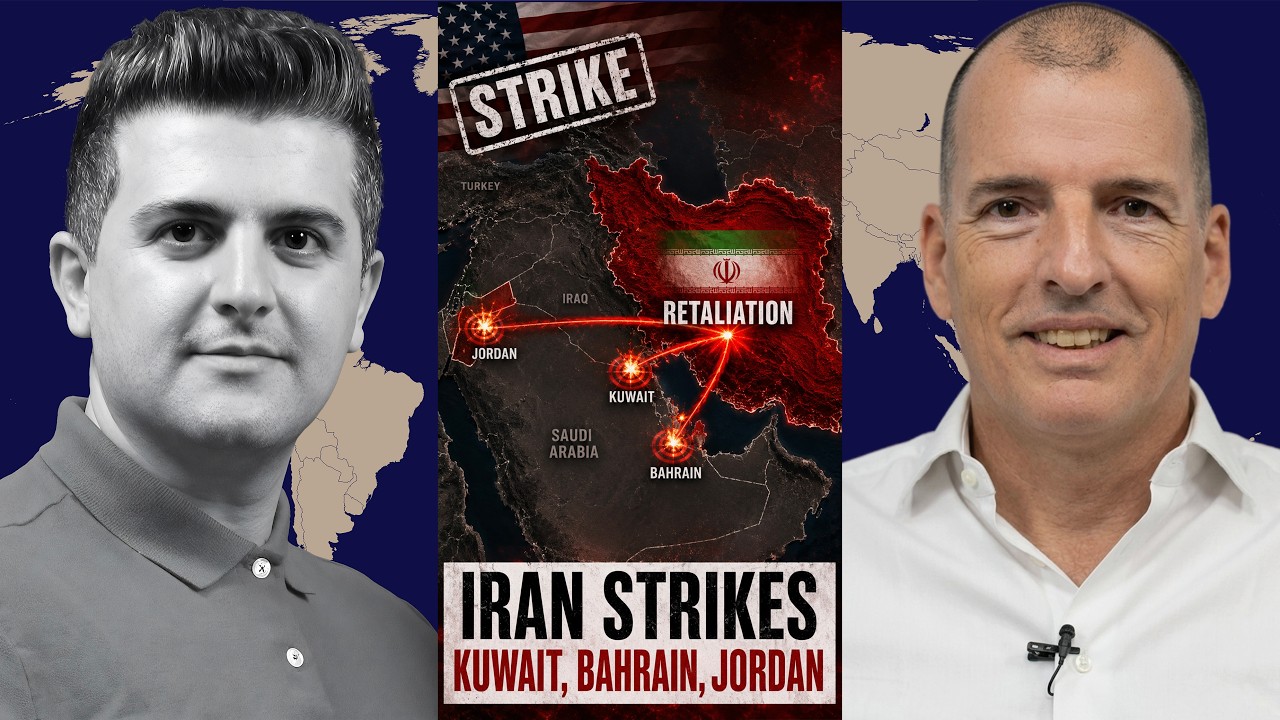
Alex Krainer: US STRIKES Iran – Iran RETALIATES Against Kuwait, Bahrain & Jordan!
"Amidst escalating US-Iran conflict and Iranian retaliation against regional US allies, this episode argues that US foreign policy is deeply controlled by an 'Anglo-Zionist conspiracy' led by the Rothschild banking dynasty, prioritizing Israeli interests over American ones."

Patrick Henningsen: Hezbollah JUST Fired Back at Israel - Iran Vows to “Crush” All Attacks
"Patrick Henningsen argues that the US and Israel initiated an illegal war against Iran, driven by Trump's incompetence and Israeli influence, leading to an inevitable escalation with severe global economic repercussions."
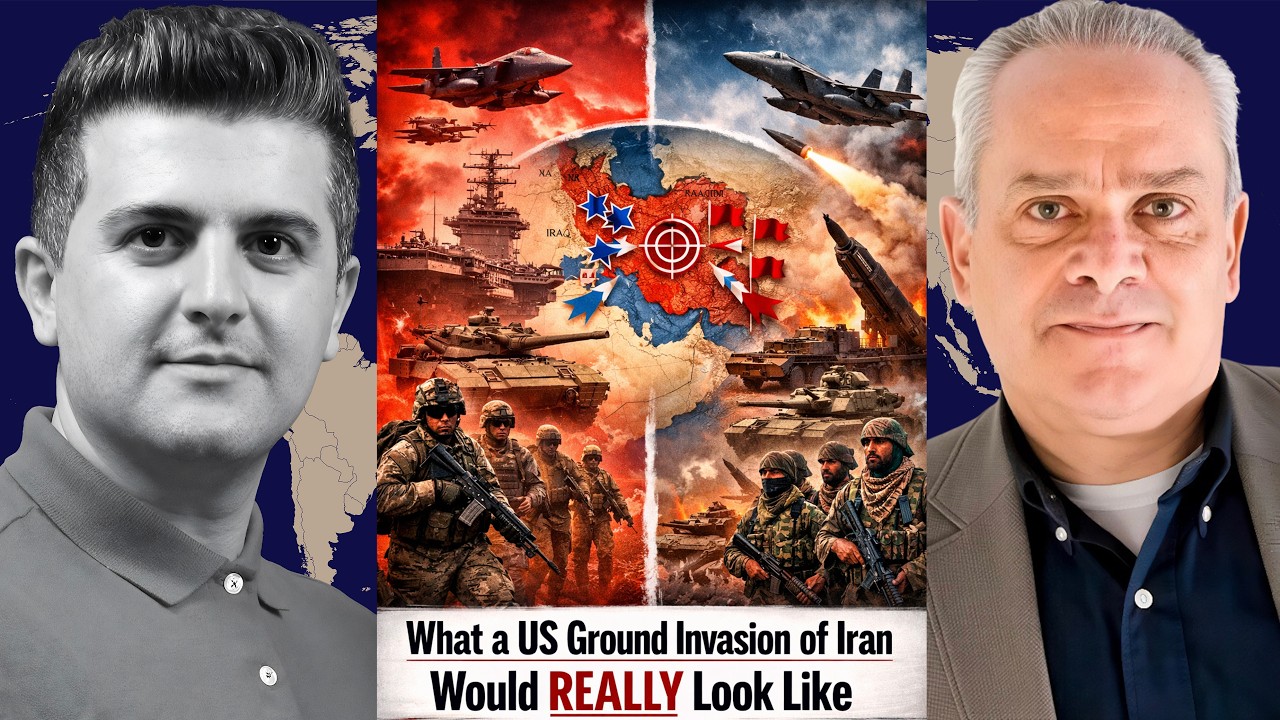
Col. Jacques Baud: What a US Ground Invasion of Iran Would REALLY Look Like
"Colonel Jacques Baud dissects the strategic futility of a US ground invasion of Iran, arguing that current troop levels are insufficient and such an action would backfire, exposing US allies and potentially leading to Iran's nuclearization."

Bibi DEMANDS Ground Troops As Marines Rushed to Iran
"Benjamin Netanyahu is pushing for US ground troops in Iran, framing air strikes as insufficient, while the US rushes Marines to the region and struggles to secure the Strait of Hormuz against surprisingly capable Iranian defenses."