
BREAKING: IRGC Launch WAR On UAE - Missiles From Iran Target Dubai - U.S. Navy Enter Hormuz
YouTube · U3jvyA37jJk
Quick Read
Summary
Takeaways
- ❖The Islamic Revolutionary Guard Corps (IRGC) launched a major preemptive attack on the United Arab Emirates and international vessels, including British cargo ships, from locations like Esfahan, Bushehr, and Bandar Abbas.
- ❖The UAE Ministry of Defense confirmed four cruise missiles in the first wave, successfully intercepting three, with one falling into the sea. Subsequent waves targeted an oil facility in Fujairah and other industrial zones.
- ❖The IRGC declared the Strait of Hormuz 'completely closed,' threatening to destroy any vessel attempting to pass without permission, escalating tensions over a critical international trade corridor.
- ❖The United States military, engaged in 'Project Freedom' to secure the Strait of Hormuz, destroyed at least six Iranian naval boats attempting to disrupt commercial shipping and target US vessels.
- ❖Brent crude oil prices rose by 5% immediately following the attacks, reflecting the significant impact on global energy markets.
- ❖Despite launching multiple waves of attacks, a senior Iranian military official paradoxically claimed that Iran had 'no plans to target the UAE,' a statement the host dismisses as gaslighting.
- ❖The UAE government is preparing a 'severe retaliation response,' with expectations of coordinated military action from the US and Israel, and potentially an official declaration of war from an Arab coalition including Saudi Arabia.
- ❖The host interprets the IRGC's strategy as a desperate attempt to unify internal factions and survive by prolonging conflict, rather than facing internal collapse or an 'unconditional surrender' deal.
Bottom Line
The potential formation of an official Arab coalition (including Saudi Arabia and the UAE) to declare war on Iran could significantly alter the international narrative and garner support from European globalists, who might otherwise oppose US/Israeli military action, due to Europe's economic dependence on Arab nations.
This coalition would provide geopolitical legitimacy and economic leverage, making it difficult for critics to dismiss the conflict as solely a US/Israeli agenda, thus potentially broadening international acceptance and support for military intervention against Iran.
For nations and political actors, understanding this dynamic allows for strategic alignment or opposition, leveraging the economic and moral weight of an Arab coalition to influence global opinion and policy regarding the Middle East conflict.
Lessons
- Monitor Brent crude oil prices and global energy markets closely, as ongoing conflict in the Strait of Hormuz and surrounding regions will likely continue to cause volatility and potential price increases.
- Analyze official statements from the US, UAE, and Israeli governments for indications of coordinated military responses, as a multi-national strike against Iran is anticipated following the IRGC's attacks.
- Observe the formation and rhetoric of any potential Arab coalition against Iran, as their involvement could significantly shift international political support and economic leverage in the conflict.
Quotes
"The Islamic Republic of Iran declares the Strait of Hormuz completely closed again. No vessel of any type or nationality is allowed to pass through the Strait of Hormuz. Any vessel intending to exit the Strait of that cross the red line between Henam Island and Minas airport and any vessel intending to enter the Strait of that cross the red line between Kubarak and Poor will be met with a severe response from the IRGC Navy and will be destroyed. This is Sepa Navy out."
"We strongly condemn the renewed treacherous Iranian aggression using missiles and drones. We reserve the full and legitimate right to respond to these attacks."
"The reality is that the Islamic Republic can't afford to sign the surrender deal... This is about survival and they realized the best way to do it is more conflict because during the last couple of weeks since the ceasefire started the damage in Iran has been huge."
Q&A
Recent Questions
Related Episodes

Patrick Henningsen: Hezbollah JUST Fired Back at Israel - Iran Vows to “Crush” All Attacks
"Patrick Henningsen argues that the US and Israel initiated an illegal war against Iran, driven by Trump's incompetence and Israeli influence, leading to an inevitable escalation with severe global economic repercussions."

Col. Jacques Baud: What a US Ground Invasion of Iran Would REALLY Look Like
"Colonel Jacques Baud dissects the strategic futility of a US ground invasion of Iran, arguing that current troop levels are insufficient and such an action would backfire, exposing US allies and potentially leading to Iran's nuclearization."
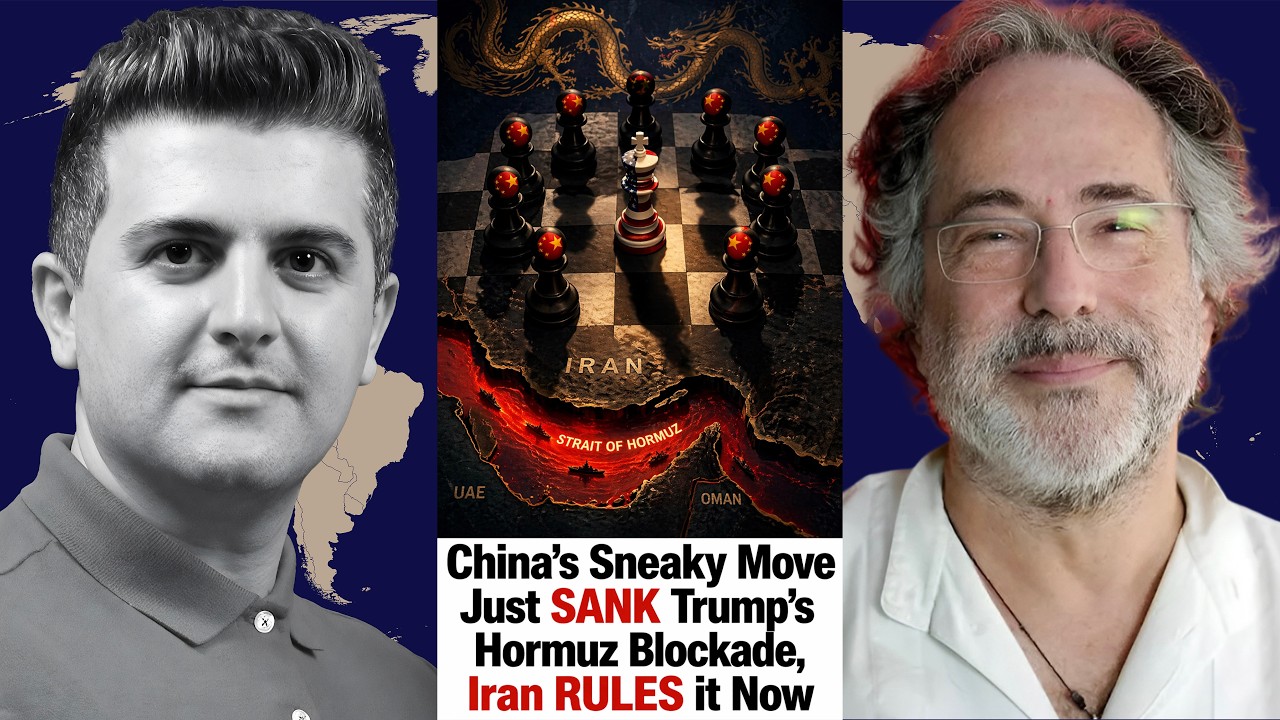
Pepe Escobar: “Total Failure”: Trump’s Blockade Just Backfired Disastrously
"Pepe Escobar argues that the US blockade against Iran, spearheaded by Donald Trump, has utterly failed and backfired, accelerating global economic chaos and challenging US geopolitical dominance."

Bibi DEMANDS Ground Troops As Marines Rushed to Iran
"Benjamin Netanyahu is pushing for US ground troops in Iran, framing air strikes as insufficient, while the US rushes Marines to the region and struggles to secure the Strait of Hormuz against surprisingly capable Iranian defenses."