
Nima R. Alkhorshid: Iran-US Double Ceasefire: What Just Happened?
YouTube · U_YpJENeAOM
Quick Read
Summary
Takeaways
- ❖US and Israeli military resources, including interceptors, cruise missiles (JASMs), and radars, were critically depleted, hindering offensive and defensive capabilities.
- ❖Iran presented a non-negotiable 10-point plan, demanding perpetual control of the Strait of Hormuz (with a $2M per tanker fee), lifting of all primary and secondary sanctions, and US military withdrawal from the region.
- ❖The US, after failed military operations and psychological pressure, accepted Iran's 10-point plan, leading to a two-week ceasefire and negotiations.
- ❖The speaker views this development as a strategic defeat for the United States and Israel, and a significant victory for Iran and the 'axis of resistance' in the region.
- ❖Future negotiations in Islamabad, with JD Vance as a key US negotiator, are seen as a critical moment for US foreign policy and a potential 'golden opportunity' for Vance.
Bottom Line
Iran's asserted control over the Strait of Hormuz, including charging $2 million per tanker, represents a novel form of war reparations and a permanent revenue stream.
This fundamentally alters global energy transit economics and Iran's economic leverage, effectively acting as an economic 'nuclear bomb' by controlling a vital chokepoint.
For Iran, a new, stable, and significant revenue source. For global shipping and energy, a new, unavoidable cost and geopolitical risk factor requiring re-evaluation of supply chain resilience.
The US's inability to effectively fight a 'war of attrition' is highlighted as a key strategic weakness, contrasted with Russia's perceived success in Ukraine using such a strategy.
This suggests a fundamental mismatch in modern warfare capabilities and strategic patience between the US and its adversaries, potentially making the US vulnerable to prolonged, resource-intensive conflicts.
For adversaries, exploiting this weakness through protracted engagements. For US defense strategists, a critical need to re-evaluate military doctrine, procurement, and logistical readiness for sustained conflicts.
Lessons
- Monitor the specifics of the Iran-US negotiations in Islamabad for confirmation of Iran's 10-point plan acceptance, especially regarding the Strait of Hormuz and sanctions.
- Assess the implications of Iran's asserted control over the Strait of Hormuz for global oil prices, shipping costs, and maritime security strategies.
- Evaluate the long-term impact of perceived US military depletion and withdrawal from the GCC on regional alliances and the balance of power in the Middle East.
Notable Moments
Announcement of a two-week ceasefire between Iran and the US, with negotiations starting on Friday in Islamabad, Pakistan.
This marks a sudden and unexpected de-escalation in a major geopolitical conflict, prompting questions about the underlying reasons for the shift.
The speaker's assertion that the US military and Israel faced critical depletion of interceptors, cruise missiles, and radar capabilities, forcing a strategic re-evaluation.
This claim, if accurate, indicates a significant vulnerability in US/Israeli defense systems and a potential miscalculation of their capacity for sustained conflict.
Revelation that Iran's 10-point plan, demanding significant concessions including control of the Strait of Hormuz and lifting of all sanctions, was accepted by the US.
This signifies a major diplomatic victory for Iran and a fundamental shift in regional power dynamics, potentially granting Iran unprecedented economic and strategic leverage.
Quotes
"Donald Trump himself today decided decided to capitulate by accepting that he's going to negotiate based on the plan that Iran presented Iran sent to the United States 10point plan."
"The straight of Hormos... it's going to be under the under the control of Iranian government forever... they're going to pay $2 million per tanker per vessel."
"The United States has been removed from GCC countries. They're not going to get back."
Q&A
Recent Questions
Related Episodes
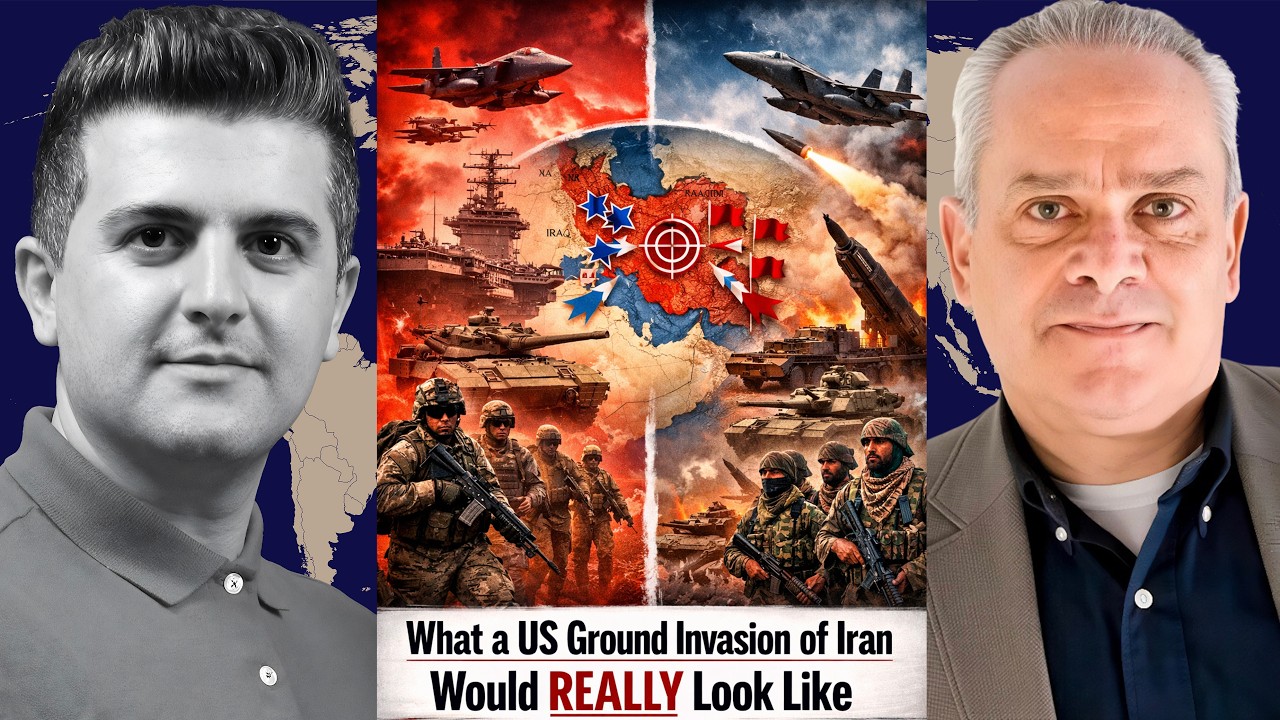
Col. Jacques Baud: What a US Ground Invasion of Iran Would REALLY Look Like
"Colonel Jacques Baud dissects the strategic futility of a US ground invasion of Iran, arguing that current troop levels are insufficient and such an action would backfire, exposing US allies and potentially leading to Iran's nuclearization."
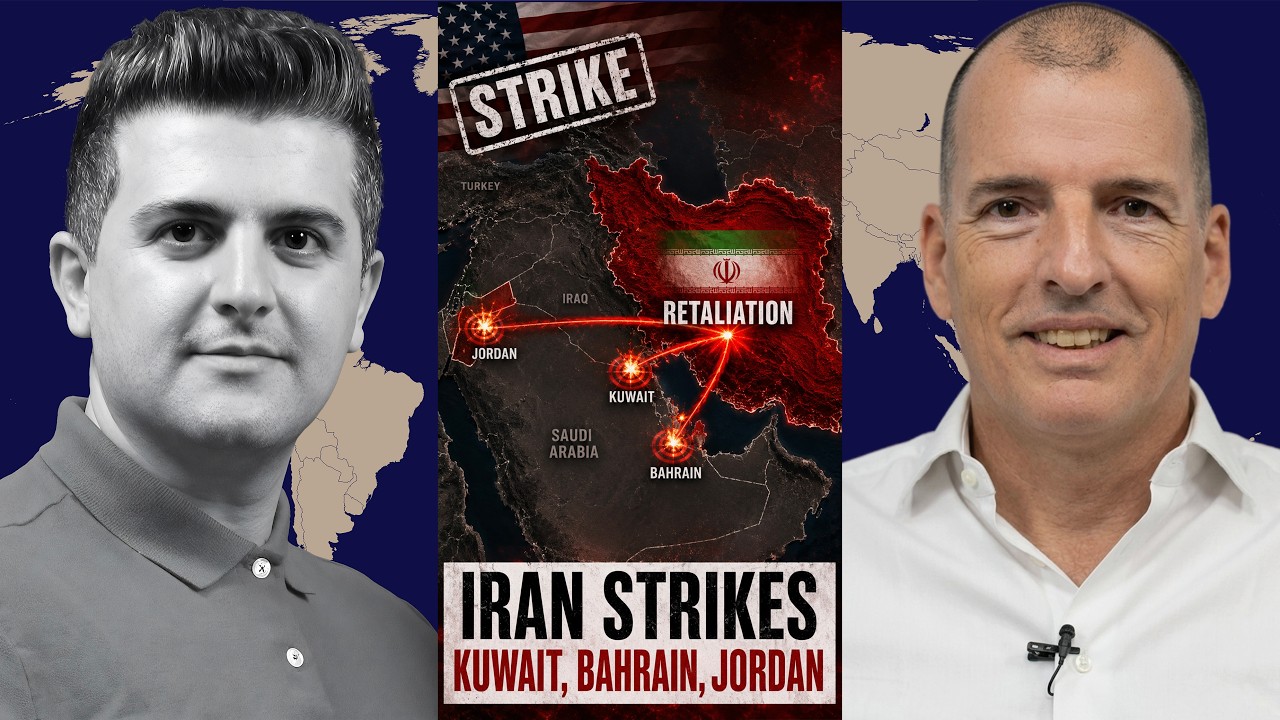
Alex Krainer: US STRIKES Iran – Iran RETALIATES Against Kuwait, Bahrain & Jordan!
"Amidst escalating US-Iran conflict and Iranian retaliation against regional US allies, this episode argues that US foreign policy is deeply controlled by an 'Anglo-Zionist conspiracy' led by the Rothschild banking dynasty, prioritizing Israeli interests over American ones."

Patrick Henningsen: Hezbollah JUST Fired Back at Israel - Iran Vows to “Crush” All Attacks
"Patrick Henningsen argues that the US and Israel initiated an illegal war against Iran, driven by Trump's incompetence and Israeli influence, leading to an inevitable escalation with severe global economic repercussions."

🚨 THEY F*CKED AROUND FOR THE LAST TIME 😭😭😭
"This episode unleashes a torrent of highly opinionated commentary on the US-Iran deal, Israel's role, and a scathing critique of 'leftist' policies and immigration, particularly highlighting the UK grooming gang report as evidence of Western societal decay."