
Col. Larry Wilkerson: US Warplanes Downed, Tel Aviv & U.S. Bases ROCKED by Missiles
YouTube · VSM5yjbYrbY
Quick Read
Summary
Takeaways
- ❖The US and Israel fundamentally misjudged the nature of the conflict with Iran, expecting a short war.
- ❖Iran's strategy involves inexpensive drone attacks, selective targeting of US assets in Arab states, and leveraging regional discontent.
- ❖The conflict is unifying Shia and Sunni populations against their US-backed autocratic leaders.
- ❖An alliance between China, Russia, and Iran poses a significant threat to global commerce, particularly through the Red Sea and Strait of Hormuz.
- ❖US allies in Asia (South Korea, Japan) are re-evaluating security agreements due to US actions in the Middle East.
- ❖The US is depleting expensive missile defense systems against Iran's cheaper, mass-produced munitions.
- ❖Netanyahu's 'decapitation strategy' has backfired, creating martyrs and unifying opposition.
- ❖The US administration failed to evacuate American civilians from the region, leaving many trapped.
- ❖The conflict is accelerating the decline of US global influence and the shift of power to the East.
Insights
1US/Israel Misjudged Iran's Resilience and Strategic Depth
Colonel Wilkerson argues that the US and Israel, particularly under Netanyahu's influence, fundamentally misunderstood Iran's nature as an ancient empire with deep historical resilience. They anticipated a short, decisive conflict, but Iran is prepared for a long war, unifying regional factions and employing asymmetric strategies.
Wilkerson states, 'They have totally misjudged the nature of this conflict... This is a long war, not a short war.' He contrasts Iran's '3,000-year empire' with the US's '250 to 300 year old entity,' suggesting a deep historical advantage for Iran. He also notes Netanyahu's 'decapitation strategy... has actually rebounded to their discredit and ultimately to their defeat in this conflict' by unifying Shia and Sunni against Israel.
2Iran's Astute Asymmetric Strategy and Regional Unification
Iran is employing a sophisticated strategy of using low-cost, high-volume drones and missiles to deplete expensive US/Israeli air defenses. Simultaneously, it is selectively targeting US military assets in Arab countries, knowing that local populations sympathize with Iran and are angered by their US-backed autocratic leaders, potentially leading to regional uprisings.
Wilkerson details, 'They fired their least expensive but deadly... drones and other things at Israel and at other targets and we are expending very expensive missiles... The Iranians are causing the Israelis in particular, but us too, to shoot all these sophisticated missiles that cost five, six times what they're shooting down.' He adds, 'They're attacking them because they know that... there's unity forming and shaping amongst these people because they don't like their leaders at all. And so when you start hitting Bahrain for example and having the Bahrainis cheer that you just struck the US fifth fleet headquarters cheering in the street, you notice that this strategy is beginning to work.'
3Emergence of a China-Russia-Iran Alliance Threatening Global Commerce
The conflict is solidifying a trilateral alliance between China (economic power), Russia (hardened military/industrial base), and Iran. This alliance is poised to leverage strategic chokepoints like the Red Sea (Babel Mandeb) and the Strait of Hormuz to disrupt global commerce, leading to instant and significant increases in oil and other commodity prices worldwide, benefiting Russia.
Wilkerson emphasizes, 'We haven't seen the impact of that really yet, but we're going to... especially when we start seeing the straits closed and the Chinese and the Russians backing that because we're looking at the Babel Mandeb, the Red Seas about 60 to 70% of the global commerce of the world.' He predicts this will 'raise prices around the world. It's enough to raise oil prices instantly.'
4Erosion of US Alliances and Hastened Demise of US Hegemony
The US's handling of the conflict and its demands on allies are alienating key partners in Asia (South Korea, Japan) and Europe (Spain). Allies are observing the US's strategic blunders and re-evaluating their security relationships, accelerating a global shift of power to the East and hastening America's decline as a dominant world power.
Wilkerson states, 'Our allies are watching this. Korea is not happy with our presence on the island... Japan... they are looking hard at the security agreement.' He concludes, 'this conflict and the nature of it is that it is going to sour our allies if not the entire world on the number one pariah state in the world after Israel. Us we are becoming an outcast empire... we're hastening our own demise.' He cites Trump's threats to Spain over base usage as an example of alienating allies.
Bottom Line
The US military's reliance on expensive, limited-stock interceptor missiles against Iran's mass-produced, cheaper drones and rockets creates an unsustainable economic and logistical disadvantage, leading to rapid depletion of US air defense capabilities.
This 'cost-exchange ratio' imbalance means that even if US defenses are technically superior, they are economically unsustainable in a prolonged conflict, making them vulnerable to saturation attacks and eventual failure.
Develop and deploy more cost-effective, high-volume counter-drone and missile defense systems, or invest in offensive capabilities that target the production and launch infrastructure of adversaries more efficiently than current interceptor-based defenses.
Iran's strategy of attacking US military facilities within allied Arab states is designed to expose the vulnerability of these host nations and their autocratic leaders, thereby galvanizing local populations against both the US presence and their own governments.
This approach turns US allies into liabilities, as their internal stability is undermined, and their populations are radicalized against US interests, potentially leading to widespread regional unrest and the collapse of US-backed regimes.
Re-evaluate the strategic value and risks of forward-deployed US military bases in politically volatile allied nations, considering alternative basing strategies (e.g., offshore, less politically sensitive locations) or significantly enhancing host-nation internal security and governance to prevent popular uprisings.
Lessons
- Re-evaluate current geopolitical risk assessments, particularly concerning the Middle East, considering the potential for prolonged conflict and global economic disruption.
- Diversify energy supply chains and investment portfolios to mitigate risks associated with potential closures of critical maritime chokepoints like the Red Sea and Strait of Hormuz.
- Monitor the stability of US alliances in Asia and Europe, as shifts in these relationships could have significant implications for global trade, security, and investment opportunities.
Notable Moments
Wilkerson details how the US administration failed to initiate non-combatant evacuation operations (NEOs) for American civilians in the region, leaving thousands trapped due to misjudging the war's duration and Iran's perseverance.
This highlights a critical failure in strategic planning and civilian protection, demonstrating a severe underestimation of the conflict's scope and consequences, potentially leading to mass casualties and a humanitarian crisis involving US citizens.
The discussion about the potential sinking of a US aircraft carrier, like the USS Abraham Lincoln, and the catastrophic loss of life (2,000+ personnel).
This moment underscores the extreme stakes of the conflict, illustrating the devastating human and military cost of a direct, high-intensity engagement with Iran, and the potential for such an event to dramatically escalate the war.
Quotes
"They have totally misjudged the nature of this conflict. And they partly have done so because BB Netanyahu has led them down the primrose path in interpreting that nature because he has grossly either misinterpreted it himself which I doubt but he has not understood the status of the empire if you will against that nature."
"This is a long war, not a short war. Donald Trump does not want a long war. his political apparatus does not long want a long war."
"Netanyahu's decapitation strategy, which hardly ever works... has actually rebounded to their discredit and ultimately to their defeat in this conflict. because what he's done is unified for the first time in a long time that I'm aware of. Really unified Shia and Sunni."
"We are becoming an outcast empire. We're becoming people whom no one is going to want to do business with... power is going to the east and we are fighting it tooth and nail in a manner that is actually accelerating that power leaving us and going there."
"You cannot deal with the duplicitous Israelis. You cannot deal with the duplicitous United States. Doesn't matter whether it's Joe Biden or Donald Trump."
Q&A
Recent Questions
Related Episodes
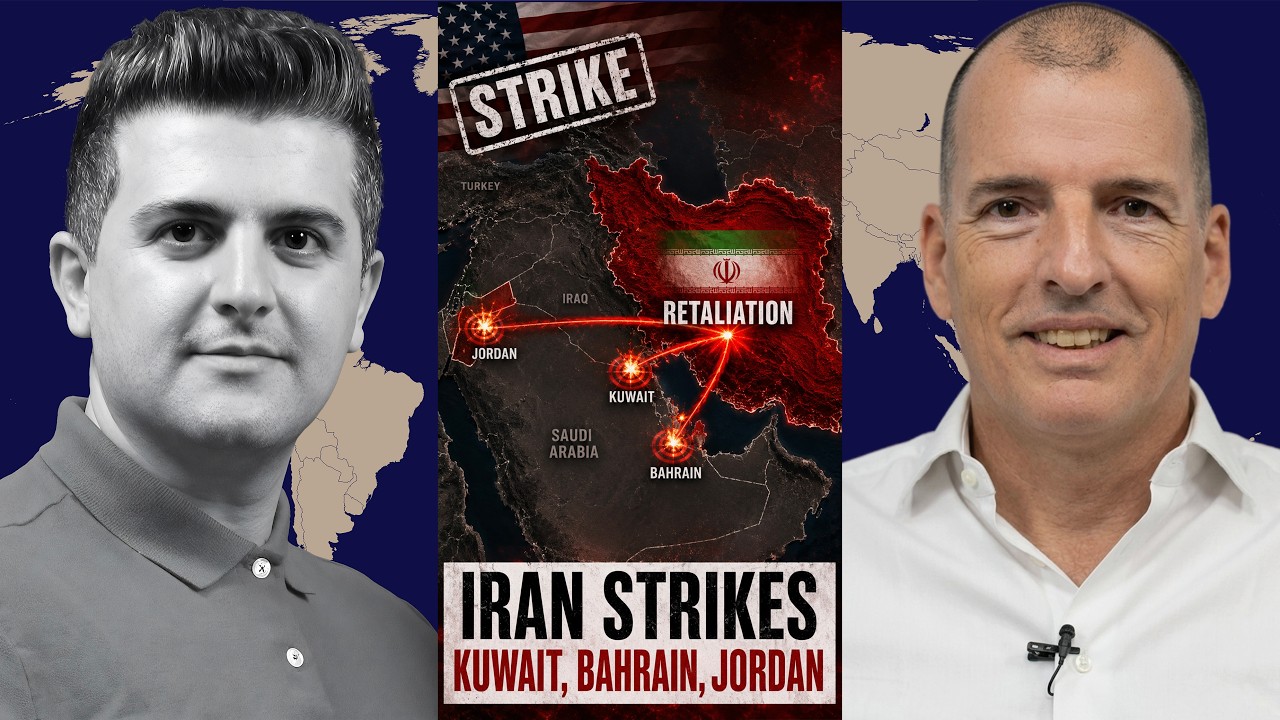
Alex Krainer: US STRIKES Iran – Iran RETALIATES Against Kuwait, Bahrain & Jordan!
"Amidst escalating US-Iran conflict and Iranian retaliation against regional US allies, this episode argues that US foreign policy is deeply controlled by an 'Anglo-Zionist conspiracy' led by the Rothschild banking dynasty, prioritizing Israeli interests over American ones."

Patrick Henningsen: Hezbollah JUST Fired Back at Israel - Iran Vows to “Crush” All Attacks
"Patrick Henningsen argues that the US and Israel initiated an illegal war against Iran, driven by Trump's incompetence and Israeli influence, leading to an inevitable escalation with severe global economic repercussions."
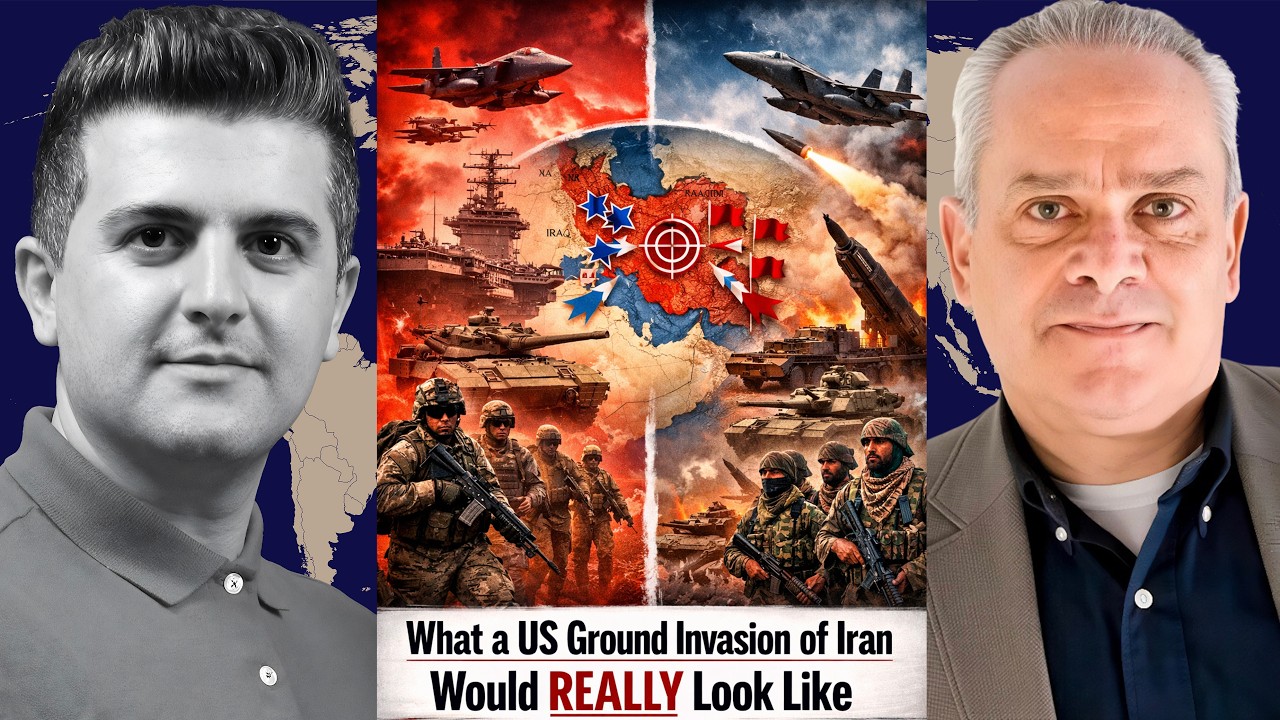
Col. Jacques Baud: What a US Ground Invasion of Iran Would REALLY Look Like
"Colonel Jacques Baud dissects the strategic futility of a US ground invasion of Iran, arguing that current troop levels are insufficient and such an action would backfire, exposing US allies and potentially leading to Iran's nuclearization."

🚨 TOTAL F*CKING CHECKMATE 😂😂😂
"The host argues that Trump's 'ceasefire' with Iran was a calculated '5D chess' move to orchestrate a global energy market reshuffle, while simultaneously lambasting 'woke' domestic policies and the 'freefall' of anti-Trump conservative figures."