
Seyed M. Marandi: The Strike That Wiped Out Trump’s Plan (It’s Over)
YouTube · WvNHRluUVjs
Quick Read
Summary
Takeaways
- ❖Trump's White House employs 'mafia-like' tactics, fabricating narratives of Iranian weakness or internal division to justify aggression or gain concessions.
- ❖Iran's leadership is unified, with clear decision-making processes, contrary to Western media propaganda.
- ❖The closure of the Strait of Hormuz for hostile-linked ships is a direct response to US/Israeli ceasefire violations and embargoes, intensifying global economic crisis.
- ❖Iran views control of the Strait of Hormuz as non-negotiable, essential for national security and as a means to demand reparations from complicit Gulf states.
- ❖Iran's preconditions for any future negotiations include an end to the US siege on its ports and the return of hijacked Iranian ships, emphasizing adherence to existing commitments.
- ❖Lebanon is a non-negotiable red line for Iran, treated with the same strategic importance as its nuclear program or national borders.
Insights
1Trump's Deceptive Diplomacy and War Justification
Professor Marandi asserts that the Trump White House's public statements about sending envoys like Jared Kushner to negotiate with Iran are disingenuous. These claims serve to portray Iran as weak and willing to capitulate, either to buy time for strategic repositioning or to create a pretext for military assault by claiming Iran broke promises.
The White House announced sending Steve Witkoff and Jared Kushner to talk with Iranians in Islamabad, despite Iran having no direct or indirect negotiations. Marandi states, 'The dishonesty of the Trump White House I think is clear for for everyone.'
2Iran's Unified Leadership and Decision-Making
Contrary to Western media narratives promoted by Trump, Marandi emphasizes that Iran's leadership is not fractured. He details a clear decision-making structure involving the Leader, the Supreme National Security Council (which includes heads of government branches and military leaders), and Dr. Walib as the designated negotiator operating within a defined framework.
Marandi states, 'No, there's no fracture in Iran.' He outlines the roles of the Leader, the Supreme National Security Council, and Dr. Walib, concluding, 'It's clear who the decision maker is. It's Dr. Walib.'
3Strait of Hormuz Closure as Economic Leverage
The closure of the Strait of Hormuz for ships linked to 'hostile countries' (UAE, Kuwait, Qatar, Bahrain, Saudi Arabia) is a direct Iranian response to Israeli ceasefire violations and subsequent US embargoes on Iranian ports. This action is designed to exacerbate the global economic crisis, pressuring the US to prioritize its own economic interests over those of the Israeli regime.
Marandi explains that after Netanyahu's ceasefire violation and Trump's embargo on Iranian ports, Iran maintained the closure, stating, 'What Netanyahu and Trump did through their violations was to increase the global economic crisis.' He adds, 'Iran is trying to force the United States to prioritize its interests over Israeli regime interests.'
4Iran's Non-Negotiable Stance on Sovereignty and Strait Control
Iran views its sovereignty and control over the Strait of Hormuz as non-negotiable. This control is not solely about revenue but primarily about national security, preventing the rebuilding of US military bases in the Persian Gulf, and holding complicit Gulf regimes accountable for their role in aggression against Iran.
Marandi states, 'Iran is not going to submit and to give up its sovereign rights.' Regarding the Strait, he says, 'The Iranians are not going to relinquish control of the state and it's not simply about money... a big part of it is security... a large part of this is also about reparations.'
5Preconditions for US-Iran Negotiations
Iran will not engage in further negotiations with the US until existing commitments, specifically the ceasefire agreement, are fully implemented. Key Iranian demands include an end to the US siege on Iranian ports and the return of any hijacked Iranian ships, as these are considered acts of war and violations of current agreements.
Marandi explains, 'The US violation of the ceasefire. The United States has has imposed a siege on Iranian ports. These are acts of war.' He suggests Iran would demand 'an end to the siege and the return of all of of the Iranian ships that have been hijacked.'
6Lebanon as a Strategic Red Line for Iran
Iran considers Lebanon a critical strategic asset and will not abandon it. Marandi emphasizes that Iran will treat Lebanon's security with the same importance as its nuclear program or its own borders, willing to make significant sacrifices for its ally.
Marandi states, 'The Iranians are not going to relinquish Lebanon at all.' He adds, 'Iran will treat Lebanon as it treats its nuclear program. It will treat Lebanon as it treats as it deals with its own borders. It will not allow Lebanon to be sacrificed.'
Bottom Line
The global economic crisis is being intentionally exacerbated by the US and Israel through actions like the Strait of Hormuz closure, serving as a pressure tactic rather than an unintended consequence of conflict.
This suggests that economic disruption is a deliberate weapon in geopolitical strategy, not merely collateral damage, indicating a willingness to inflict global pain for specific political leverage.
Analysts and policymakers should scrutinize economic disruptions in conflict zones not just as symptoms, but as calculated instruments of statecraft, potentially leading to new models for economic warfare and resilience.
The effectiveness of traditional Western propaganda, particularly against Iran, is diminishing due to increased global awareness and counter-narrative dissemination, especially concerning atrocities in Gaza.
This shift implies a weakening of the 'information control' aspect of Western foreign policy, making it harder to rally public support for interventions or demonize adversaries as effectively as in the past.
States and non-state actors can invest in decentralized information networks and citizen journalism to further challenge dominant narratives and foster a more informed global public opinion, impacting geopolitical outcomes.
Lessons
- Scrutinize official statements regarding US-Iran negotiations for underlying motives, as they may be part of psychological warfare rather than genuine diplomatic efforts.
- Recognize Iran's strategic use of economic leverage, such as control over the Strait of Hormuz, as a primary tool to influence US foreign policy and regional dynamics.
- Understand that Iran's commitment to its allies, particularly Lebanon, is a non-negotiable aspect of its foreign policy, influencing its responses to regional conflicts.
Quotes
"The dishonesty of the Trump White House I think is clear for for everyone."
"The Americans are just behaving like thugs. They behave like thugs. They talk like thugs. It's like the mafia. Trump is a mafia boss and these are his lieutenants in the media."
"If we are if we look at the evidence on the ground and the news that comes out of the United States, the divisions are in Washington, not in Iran."
"What Iran wants to do is put so much pressure on the United States that at some point the Americans tell the Israelis, we just can't do this anymore. We have to think about our own economy."
"Iran will treat Lebanon as it treats its nuclear program. It will treat Lebanon as it treats as it deals with its own borders. It will not allow Lebanon to be sacrificed."
Q&A
Recent Questions
Related Episodes

BREAKING: Iran Threatens To END Talks; U.S. Vows Retaliation; Hezbollah Collapsing? | TBN Israel
"Iran is leveraging Hezbollah and the Strait of Hormuz to manipulate US negotiations, while Israel asserts its right to dismantle Hezbollah's eroding but still dangerous infrastructure in Lebanon, independent of international talks."

Patrick Henningsen: Hezbollah JUST Fired Back at Israel - Iran Vows to “Crush” All Attacks
"Patrick Henningsen argues that the US and Israel initiated an illegal war against Iran, driven by Trump's incompetence and Israeli influence, leading to an inevitable escalation with severe global economic repercussions."
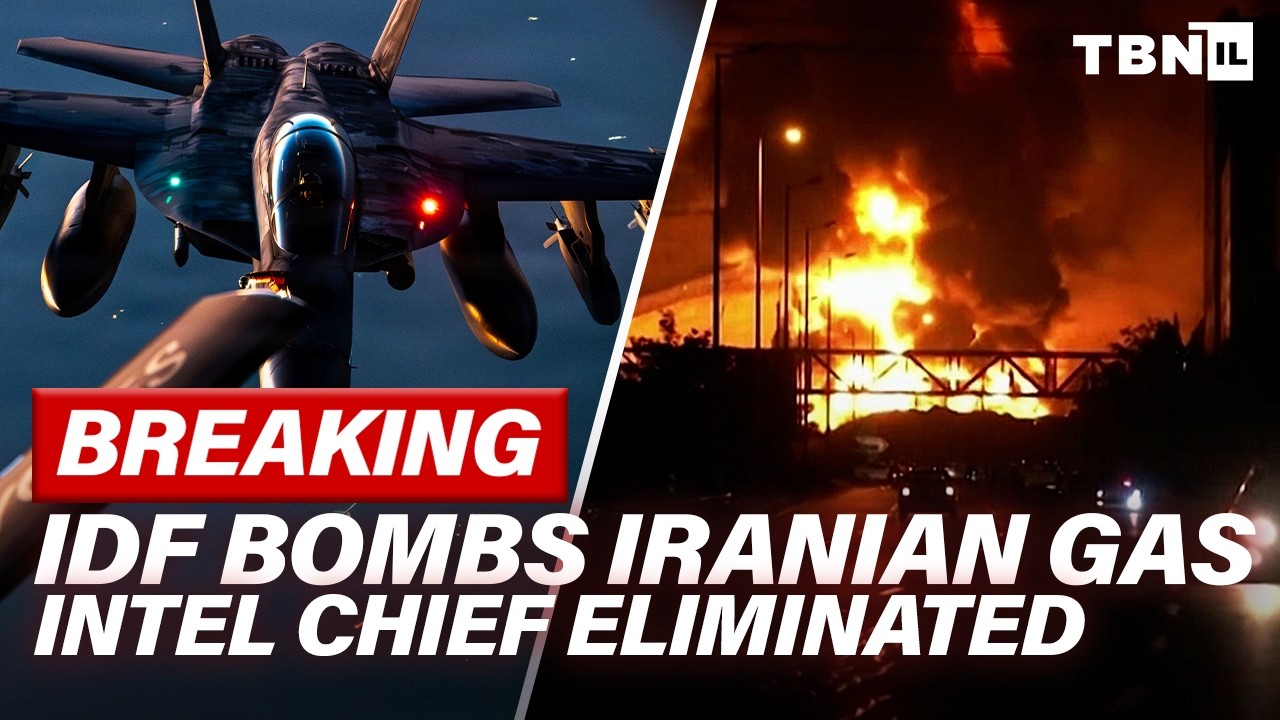
BREAKING: Israel BOMBS Major Iran Gas Site; Top Mullah ELIMINATED; Iran Vows VENGEACE | TBN Israel
"Israel and the United States have escalated their 'Roaring Lion War' against Iran, striking its largest gas facilities, eliminating key intelligence and military figures, and disrupting missile production, while Iran threatens a broader energy war in the Gulf."

Pentagon Prepares For EXTENDED War With Iran
"This episode dissects the geopolitical maneuvers surrounding potential US-Iran conflict, revealing strategic leaks, Netanyahu's diplomatic sabotage playbook, and the true intent behind economic sanctions."