Trump's FATAL Gamble SPELLS DOOM for His Presidency
YouTube · XuLyVwaeCm4
Quick Read
Summary
Takeaways
- ❖The US intervention in Venezuela was characterized as a 'kidnapping' of Maduro, leaving his regime largely intact, to secure oil interests.
- ❖Trump's administration is accused of 'regime coercion' rather than genuine regime change or nation-building in Venezuela.
- ❖The Monroe Doctrine is being 'inverted' to justify US imperialism in the Western Hemisphere, contradicting 'America First' rhetoric.
- ❖The timing of the Venezuela operation coincided with the delayed release of the Epstein files, pointing to a broader 'lack of transparency' from the administration.
- ❖US actions in Venezuela diminish its moral high ground to criticize Russia's invasion of Ukraine or China's ambitions in Asia.
- ❖Efforts to suppress votes, such as changes to postal service ballot processing, are highlighted as threats to democratic participation.
- ❖Despite perceived challenges, there is a strong 'pent-up demand' among voters to oppose Trump, particularly among independents and younger generations.
Insights
1Venezuela Intervention Driven by Oil Interests, Not Democracy
The hosts assert that the US operation in Venezuela, which involved removing Maduro but leaving his lieutenants in power, was not aimed at establishing democracy. Instead, it was designed to install a 'compliant regime' that would facilitate 'big oil' companies' access to Venezuela's vast oil reserves, which are among the largest globally.
Trump's press conference mentioned 'oil' 22 times; the sidelining of Nobel Prize-winning opposition leader Maria Corina Machado, who was deemed less compliant with big oil's goals; oil executives planning trips to Venezuela.
2Erosion of US Moral High Ground in International Relations
The US's unilateral intervention in Venezuela, driven by resource acquisition, significantly weakens its ability to condemn similar actions by other global powers. This creates a double standard, making it difficult for the US to credibly challenge Russia's actions in Ukraine or China's ambitions in Asia.
The hosts question how the US can tell Russia to 'get out of Ukraine' when the US is intervening in Venezuela, especially given Russia's ties to Venezuela.
3Systemic Lack of Transparency in Administration Actions
The hosts argue that the Venezuela intervention is part of a broader pattern of the administration's lack of transparency. The timing of the operation, coinciding with the delayed release of the Epstein files, is cited as an example of diverting public attention from inconvenient truths.
The Venezuela invasion launched the same day the DOJ explained delays on Epstein files; previous lies about Trump's health (MRI vs. CT scan); delaying economic numbers.
4Voter Suppression Efforts Targeting Midterm Elections
The administration is actively working to suppress votes ahead of the midterm elections, including manipulating postal service rules to delay postmarking mail-in ballots, which could disenfranchise voters in states with strict postmark deadlines.
The postal service announced no guarantee of same-day postmarking for dropped-off ballots, requiring voters to visit post offices for live clerk cancellation to ensure timely processing.
Key Concepts
Powell Doctrine
The principle that 'if you break it, you bought it,' meaning if a country intervenes militarily and destabilizes another, it incurs a responsibility for the subsequent nation-building and stabilization efforts. The hosts argue this doctrine was ignored in Venezuela.
Monroe Doctrine (Inverted/Don Row Doctrine)
Originally stating that European powers should not interfere in the Western Hemisphere, the hosts argue it is being 'inverted' by the Trump administration to justify unilateral US intervention and resource extraction anywhere in the hemisphere, effectively becoming a doctrine of 'open imperialism.'
Lessons
- Verify your voter registration status immediately, especially in red states, to ensure you haven't been purged and understand your state's voting process.
- If mailing in a ballot, go to an actual post office and have a clerk cancel it to ensure it's postmarked on time, then check online to confirm its receipt.
- Support independent media and commentary platforms (like Substack channels mentioned) to get unfiltered information and counter mainstream media's perceived 'chilling effect' or 'bending the knee' to power.
Quotes
"If you break it, you bought it. So if we break Venezuela, we bought it."
"We lose all moral high ground. I guess I have a question. So, has it been hard? Has it been a tightroppe messaging? Someone who has a close proximity to like communities that are refugees because obviously the refugees immediate stance will be hell yes, Maduro is gone. It's great."
"This is a larger coverup than Watergate in my opinion in size, scope, and scale."
Q&A
Recent Questions
Related Episodes

Larry Johnson: Iran Missiles Rain Down on Northern Israel – Massive Strikes!
"Geopolitical analyst Larry Johnson details how Israel's recent strike on an 'empty building' in Beirut triggered direct Iranian missile retaliation, escalating regional tensions and jeopardizing a US-Iran peace deal brokered by Pakistan."

LIVE: Trump HIDES FROM PUBLIC as US SOLDIER KILLED!!! 6/2/2026
"The host exposes alleged government cover-ups regarding military casualties, Trump's unexplained public absence, and questionable political appointments, arguing these reflect a 'regime of loser babies' and a failing foreign policy."
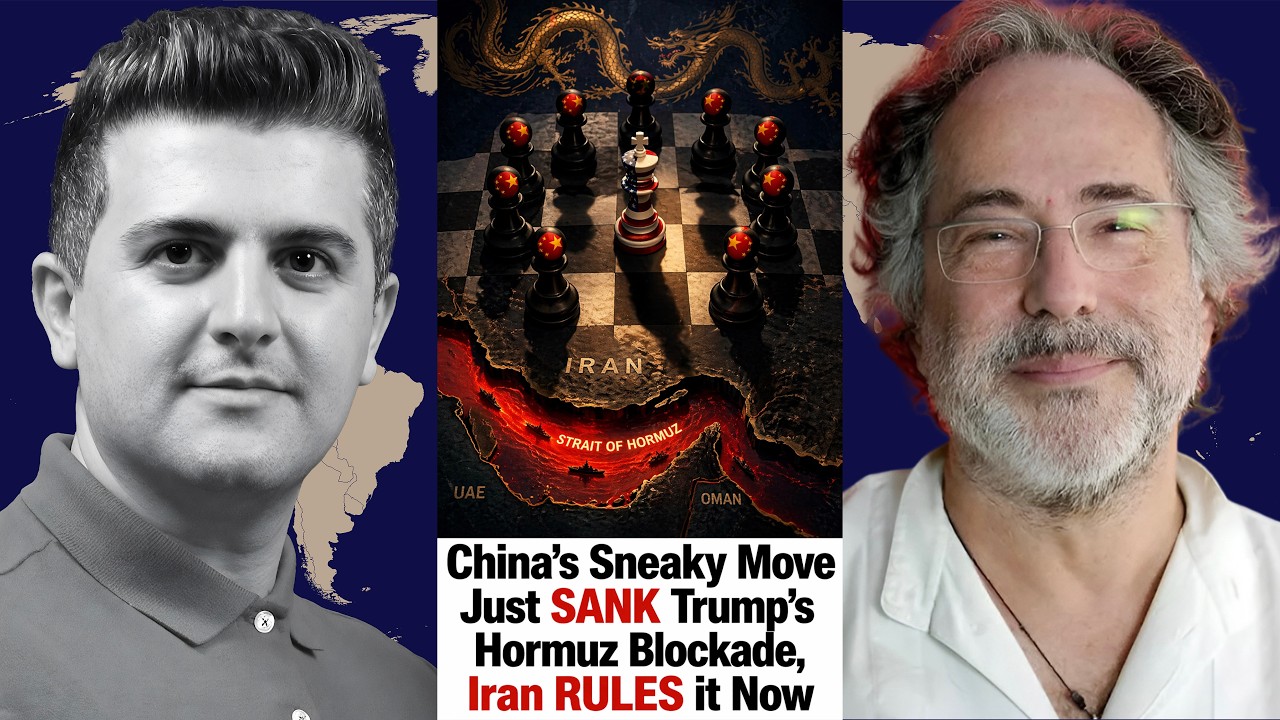
Pepe Escobar: “Total Failure”: Trump’s Blockade Just Backfired Disastrously
"Pepe Escobar argues that the US blockade against Iran, spearheaded by Donald Trump, has utterly failed and backfired, accelerating global economic chaos and challenging US geopolitical dominance."

Col. Jacques Baud: The World Is Entering a Lawless Era
"Colonel Jacques Baud details his personal experience with arbitrary EU sanctions and argues that the world has shifted from a law-based international order to a dangerous, rules-based system dictated by powerful actors, exemplified by US actions in Venezuela and the EU's 'teenager decision-making'."