BREAKING: Iran Leaders SCRAMBLE As U.S. Amps Pressure; Hezbollah PLEADS Iran For Help | TBN Israel
YouTube · YwHL2vHri1c
Quick Read
Summary
Takeaways
- ❖The Strait of Hormuz is severely disrupted by a US naval blockade and Iranian vessel seizures, impacting global trade.
- ❖Iran's Revolutionary Guards have effectively taken over state functions, creating a leadership vacuum and internal disunity.
- ❖The US is employing a 'choking blockade' strategy, causing an estimated $500 million daily economic damage to Iran.
- ❖Iran's 'mosquito fleet' of speedboats poses a significant, albeit asymmetric, threat to commercial shipping in the Strait of Hormuz.
- ❖Hezbollah has requested Iran to pressure the US to halt Israel's 'Operation Silver Plow' in southern Lebanon.
- ❖The US has suspended $500 million in cash shipments to Iraq to counter pro-Iranian militias and influence its government.
- ❖The US demands Iran transfer its enriched uranium, a core strategic humiliation for the regime.
Insights
1US Naval Blockade Cripples Iranian Economy
The US-led naval blockade in the Strait of Hormuz is inflicting severe economic damage on Iran, costing the regime approximately half a billion dollars per day. This pressure is not only impacting oil and gas revenues but also paralyzing petrochemical capacity, industrial output, and foreign currency reserves, threatening the regime's ability to govern and fund its security apparatus.
The naval blockade is costing Iran about half a billion dollars per day (). Before the war, Iran made tens of billions annually from oil and gas, which are now severely impacted, leading to widespread paralysis in petrochemical capacity, deep damage to industrial output, liquidity problems, high inflation, and a weakened currency ().
2Internal Rift and Revolutionary Guards' Takeover in Iran
A deep split exists within the Iranian leadership, with the Revolutionary Guards (IRGC) effectively taking control of state functions, neutralizing the elected president, and isolating the Supreme Leader. This internal disunity means the US is unsure if it is negotiating with authorized decision-makers, complicating diplomatic efforts.
A rift at the top of Iranian leadership is taking shape, with a dispute between the Revolutionary Guards and civilian leadership (). The IRGC, defined as a foreign terrorist organization by the US, has taken complete control over state functions, neutralizing the elected president and isolating the Supreme Leader (). The US is not sure if they are talking to the right people or if they have the power to make decisions ().
3Iran's Asymmetric Maritime Strategy in Hormuz
Despite the destruction of its classic navy, Iran's Revolutionary Guards utilize an 'asymmetric mosquito fleet' of thousands of speedboats operating from deep caves. These small, agile units employ hit-and-run tactics and threats to commercial vessels, effectively disrupting global shipping in the Strait of Hormuz and creating uncertainty without needing to sink ships.
The seizure of two commercial ships proves the Revolutionary Guards still maintain a shadow army of thousands of speedboats (). While the classic Navy was mostly destroyed, the asymmetric mosquito fleet operates with a hit-and-run method, using deep caves as hiding spaces (). These small boats, with minimal weaponry, are enough to stop and board large, slow commercial ships ().
4Hezbollah Seeks Iranian Intervention Against Israeli Operations
Israel's 'Operation Silver Plow' in southern Lebanon is severely targeting Hezbollah's territorial control and civilian-military infrastructure. This pressure is so intense that Hezbollah has reportedly turned to Iran, requesting that Iran pressure the United States to stop Israel's operations.
The IDF's Operation Silver Plow is hitting Hezbollah at its most sensitive points, leading Hezbollah to turn to Iran with a request to pressure the United States to stop Israel (). Israel is changing the reality in southern Lebanon, destroying villages and preventing a quick return of the population to reestablish Hezbollah near the border ().
5US Expands Financial Pressure to Iraq to Counter Iranian Influence
The United States has suspended cash shipments of approximately half a billion dollars to the Iraqi government. This move is intended to express anger over pro-Iranian militia activity in Iraq and to serve as leverage in influencing the selection of Iraq's next prime minister, demonstrating a broader strategy of squeezing Iran's regional influence.
Trump is pulling out economic weapons against Iraq, suspending cash shipments of about half a billion dollars to the Iraqi government (). This move illustrates anger over pro-Iranian militias and is intended to affect the identity of Iraq's next prime minister ().
Bottom Line
Iran's public displays of military strength (parades, ballistic missiles) are likely a sign of internal weakness and a need to project confidence to its public and mechanisms, rather than genuine operational superiority.
Aggressive military posturing from regimes under severe pressure can be a psychological tactic to mask internal vulnerabilities and maintain public morale, rather than an indicator of escalating offensive capabilities.
Analysts and policymakers should scrutinize such displays for signs of internal instability and economic strain, rather than taking them at face value as a direct threat, to better inform diplomatic and economic pressure strategies.
The US strategy of extending a ceasefire without a target date, while maintaining a choking blockade, is designed to prolong the internal weakening of the Iranian regime and deepen cracks in its leadership, rather than offering relief.
This 'slow burn' approach suggests a calculated long game where sustained economic pressure is prioritized over immediate military escalation, aiming for a more comprehensive capitulation on American terms.
Businesses reliant on Middle Eastern trade or energy should prepare for prolonged instability and disruptions in key chokepoints, as this strategy implies a protracted period of tension and economic strangulation.
Key Concepts
Economic Warfare
The strategy of using economic pressure, such as naval blockades and financial sanctions, to weaken an adversary's ability to function, fund its military, and maintain internal stability, thereby coercing them into diplomatic concessions. This is exemplified by the US blockade's impact on Iran's revenue streams and infrastructure.
Asymmetric Warfare (Maritime)
A military strategy where a weaker force leverages unconventional tactics and smaller, more agile units (like Iran's 'mosquito fleet' of speedboats) to disrupt the operations of a technologically superior adversary, particularly in critical chokepoints like the Strait of Hormuz, by creating uncertainty and fear rather than direct military confrontation.
Vacuum of Power
A situation where a central authority (like Iran's Supreme Leader) becomes incapacitated or isolated, leading to a struggle for control among competing factions (e.g., civilian leadership vs. Revolutionary Guards). This internal disunity complicates external negotiations and decision-making.
Lessons
- Monitor global energy markets and shipping routes, particularly the Strait of Hormuz, for continued volatility and disruptions due to ongoing US-Iran tensions and Iran's asymmetric maritime tactics.
- Assess supply chain vulnerabilities for any reliance on Middle Eastern shipping or energy, and consider diversification or alternative routes to mitigate risks from prolonged blockades and regional conflicts.
- Stay informed on the internal political dynamics within Iran, as the growing rift between civilian leadership and the Revolutionary Guards could impact the stability of any future diplomatic agreements or regional actions.
Quotes
"The United States is not running anywhere. It is simply moving from heavy bombings to a choking blockade. There's no time pressure. There's one goal, a deal on American terms."
"It doesn't take much of a military force or much of a threat to cause an enormous ship to stop and in the cases of what happened in recent days to be boarded by the IRGC forces."
"The fact that the Iranian regime is not speaking in one voice, the fact that they're playing their usual games, possibly worse than usual when it comes to negotiations doesn't mean that the United States is weakened..."
"Iran does not need to sink a fleet in order to cause damage. It only needs to create uncertainty."
Q&A
Recent Questions
Related Episodes

Patrick Henningsen: Hezbollah JUST Fired Back at Israel - Iran Vows to “Crush” All Attacks
"Patrick Henningsen argues that the US and Israel initiated an illegal war against Iran, driven by Trump's incompetence and Israeli influence, leading to an inevitable escalation with severe global economic repercussions."
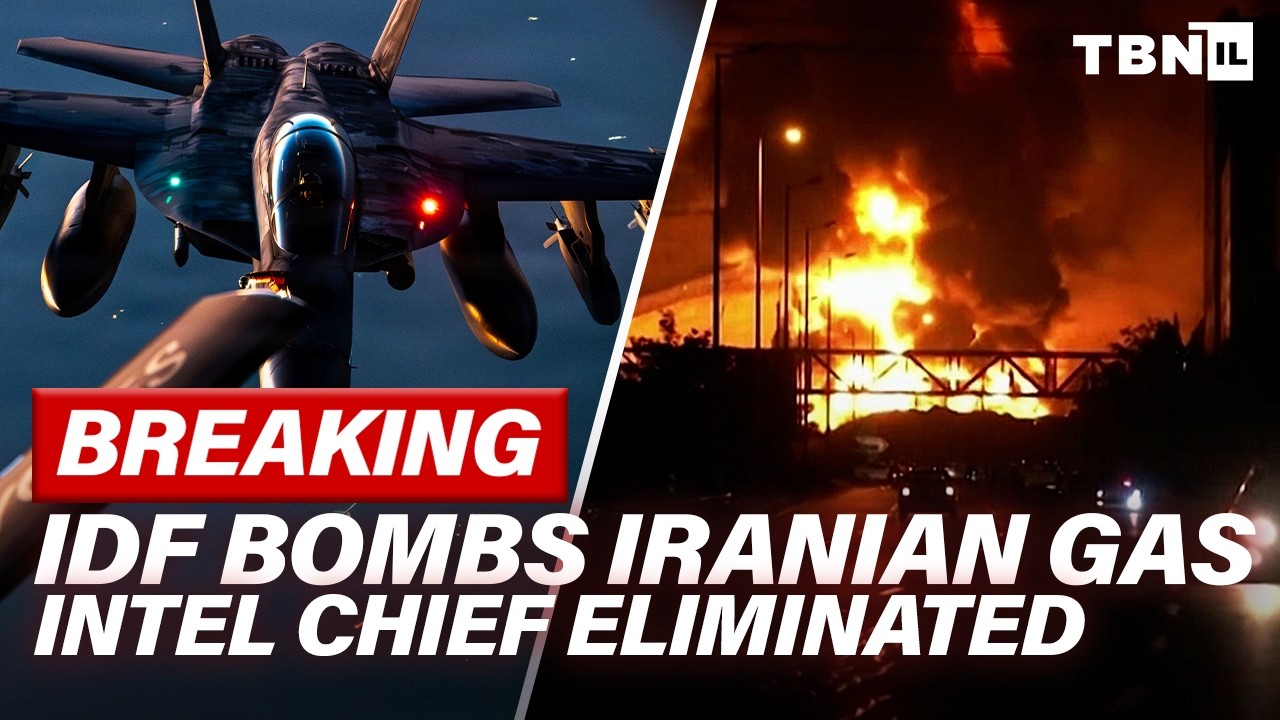
BREAKING: Israel BOMBS Major Iran Gas Site; Top Mullah ELIMINATED; Iran Vows VENGEACE | TBN Israel
"Israel and the United States have escalated their 'Roaring Lion War' against Iran, striking its largest gas facilities, eliminating key intelligence and military figures, and disrupting missile production, while Iran threatens a broader energy war in the Gulf."

BREAKING: Iran Threatens To END Talks; U.S. Vows Retaliation; Hezbollah Collapsing? | TBN Israel
"Iran is leveraging Hezbollah and the Strait of Hormuz to manipulate US negotiations, while Israel asserts its right to dismantle Hezbollah's eroding but still dangerous infrastructure in Lebanon, independent of international talks."
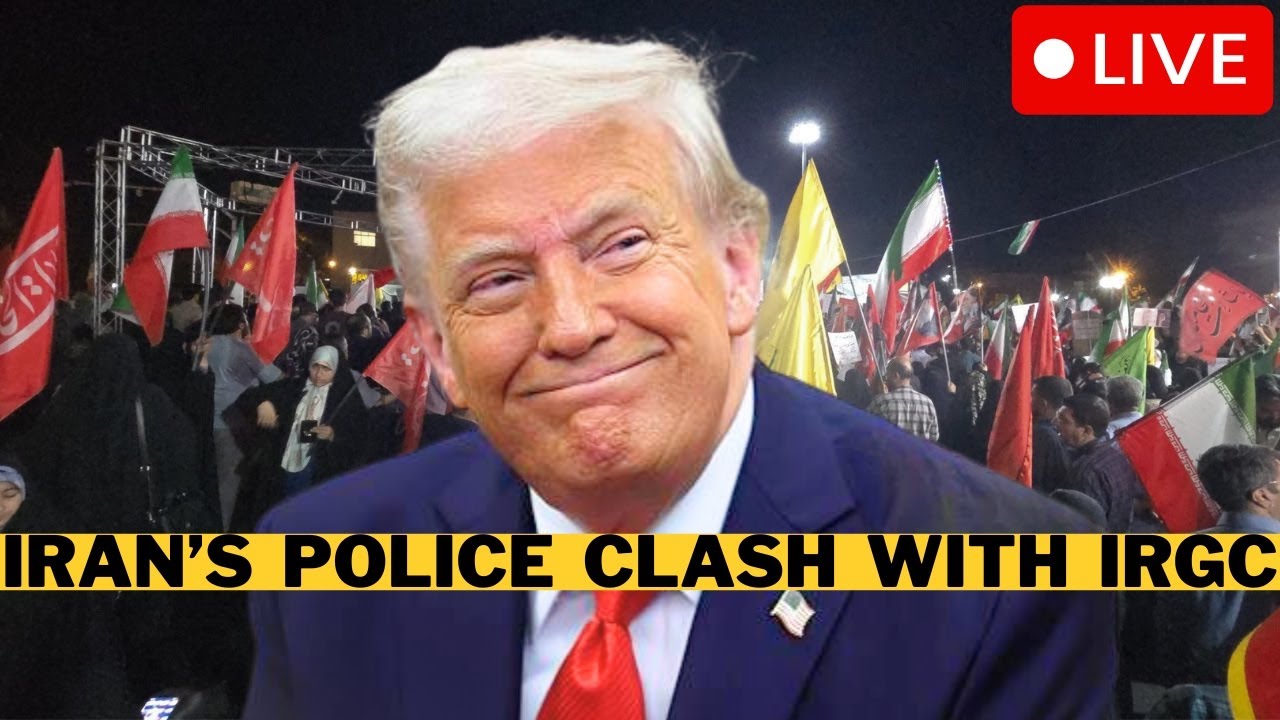
BREAKING: Protests ERUPT In Iran Over IRGC Surrendering To Trump - Infighting Clashes In Tehran
"Iran is experiencing severe internal infighting and protests as hardline IRGC elements clash with government figures over a perceived 'surrender' to the US, while mainstream Western media misrepresents the situation."