BREAKING: U.S. Nuclear-Armed Sub Surfaces; Iran Talks COLLAPSING; Regime DEFEATED? | TBN Israel
YouTube · ZQ0OtC2xx4M
Quick Read
Summary
Takeaways
- ❖The US publicly revealed the deployment of a nuclear-armed submarine to Gibraltar, a rare move intended as a strategic deterrent against Iran amidst collapsing negotiations.
- ❖President Trump's administration views Iran's negotiation proposals as unreasonable, leading to considerations of renewed and massive military action.
- ❖Iran's regime interprets its survival amidst sanctions and attacks as a victory, making it resistant to concessions and prone to setting 'absurd demands'.
- ❖The conflict is described as a 'financial, political, and geopolitical war of attrition' aimed at slowly breaking the Iranian Ayatollah regime.
- ❖The United Arab Emirates secretly attacked an oil refinery on Lavan Island in Iran, indicating a new phase of direct engagement by Gulf states.
- ❖Iran's judiciary, led by Gulam Hussein Musheni, is executing citizens accused of being 'enemy agents' to instill fear and maintain internal control.
- ❖The Iranian regime is driven by an 'apocalyptic religious fanaticism', believing in the return of the Mahdi and seeking global chaos to achieve its goals.
- ❖Effective conflict resolution in the Middle East requires demonstrating overwhelming strength and humiliating adversaries, rather than seeking traditional negotiations.
- ❖The IDF needs to rapidly adapt to modern 'Skynet warfare' involving drones and robotics, learning from conflicts like Ukraine to minimize human casualties.
Insights
1US Nuclear Submarine Deployment as Deterrent
The US Navy publicly announced the arrival of an Ohio-class nuclear ballistic missile submarine in Gibraltar, a highly unusual disclosure for one of its most secretive weapon systems. This move is a direct strategic reminder to Iran, signaling Washington's readiness to escalate military pressure if diplomatic talks continue to fail, rather than an immediate threat of nuclear use.
The Pentagon announced today, Tuesday, that a US Navy nuclear submarine carrying nuclear weapons has arrived in Gibralar. According to a report in the Wall Street Journal, this is an especially rare announcement about the location of one of the United States most secret weapon systems, published only hours after United States President Donald Trump responded to Iran's proposal.
2Iran's Negotiation Strategy: Concessions First, Then Discussion
Iran's negotiation approach demands immediate cessation of fighting, lifting of blockades, reopening of oil routes, and release of funds *before* discussing core issues like uranium enrichment or ballistic missiles. This is a deliberate tactic to gain breathing room and rebuild capabilities, rather than a technical misstep in diplomacy, aiming to shift focus from its capabilities to the global cost of continued pressure.
Iran wants first to stop the fighting, first to lift the blockade, first to reopen the oil routes, first to release funds, and only afterwards to truly discuss uranium enrichment facilities, ballistic missiles, and this isn't a technical mistake in negotiations. This is a method of operation. Iran is trying to move the discussion away from its capabilities and towards the price the world is paying.
3UAE's Secret Strikes Inside Iran
The United Arab Emirates (UAE) conducted secret attacks inside Iranian territory, including a strike on an oil refinery on Lavan Island in the Persian Gulf. This action, unacknowledged publicly by the UAE, caused significant damage and marks a strategic shift where Gulf states are no longer just targets but active participants willing to use force to protect their economic stability and security from Iranian aggression.
It's becoming clear that the United Arab Emirates secretly attacked Iran. The attacks, which the United Arab Emirates did not publicly admit to, included an attack on a refinery on Lavan Island in the Persian Gulf. According to sources familiar with the matter, this attack took place in early April... and it ignited a large fire and shut down a significant part of the production capacity for months.
4Iran's Internal Fear Tactics and Executions
The Iranian regime, through its judiciary head Gulam Hussein Musheni, employs severe internal repression, including public threats and executions of citizens labeled as 'enemy agents' or 'Mossad agents'. These actions, often following protests and fast proceedings, are designed to instill fear and project an image of toughness and control, masking underlying anxiety within a regime fighting both external adversaries and its own populace.
The head of Iran's judiciary, Gulam Hussein Musheni, has appeared frequently on television, spreading threats against the traitors at home and also making sure to carry them out with executions in an unimaginable number of Iranian citizens who dare to protest... In Iran, reports are increasing about executions of citizens marked as enemy agents or Mossad agents.
5The Apocalyptic Worldview of the Ayatollah Regime
The Iranian Ayatollah regime is driven by an apocalyptic religious fanaticism rooted in a specific Shia Islamic belief in the hidden Imam (Mahdi). They actively seek to create global chaos—financially, economically, socially, and militarily—as a necessary condition for the Mahdi's return and Islam's ultimate victory. This eschatological motivation makes traditional negotiation futile, as their goal is not compromise but the world's 'burn down' to fulfill prophecy.
They actually want to see the world burn down. And once you understand that, once that register, then you start understanding the entire conflict right now and the negotiation with the you see they believe in the hidden im the mai indifferent to the sunnah which think that one day the mai which is kind of some somewhat an image of the messiah in Islam... The world need to be in chaos financially, economically, socially and war-wise. And only then that mai will come and they will win and defeat and kill all their enemies.
Bottom Line
The US is leveraging its maritime and global superpower status to enforce peace and stand by allies, demonstrating its capability to wage a 'war of attrition' that is financially disruptive and slowly erodes the resolve of the Iranian regime and its backers like China and Russia.
This indicates a long-term strategy focused on systemic pressure rather than quick military victory, suggesting that the conflict's protracted nature is a deliberate tactic to exhaust adversaries.
Businesses and investors should anticipate prolonged geopolitical instability in the Middle East, with continued impacts on oil prices and shipping routes, and consider strategies for resilience against such 'asymmetrical warfare' and financial blockades.
The Middle East operates on a cultural language of 'power and respect,' where demonstrating overwhelming strength and even humiliating adversaries is more effective than traditional Western diplomacy in achieving stability and compliance.
Western powers often misinterpret or underestimate the cultural nuances of conflict resolution in the region, leading to ineffective negotiation strategies with groups like the Ayatollah regime.
For military and diplomatic strategists, understanding and adapting to this cultural context by projecting undeniable strength and consequences for aggression could lead to more successful outcomes in regional conflicts.
The IDF is currently 'ill-prepared' for the evolving 'Skynet warfare' characterized by cheap FPV drones and robotics, as seen in conflicts like Ukraine, due to a generational gap in military leadership.
This technological lag could expose Israeli soldiers to significant risks against asymmetrical enemies utilizing low-cost, high-impact drone technology, potentially impacting future military effectiveness.
There's an urgent need and significant opportunity for defense tech companies and innovators to develop and rapidly deploy advanced, cost-effective counter-drone and robotic warfare solutions for the IDF, potentially pioneering this field globally.
Strengthening non-radicalized populations (e.g., Christians, Druze) in border regions with Israel can create stable 'buffer zones' and demonstrate the prosperity of co-existence, thereby humiliating radical Islamic ideologies by contrasting their failing states with successful, pluralistic societies.
This offers a long-term, non-military diplomatic and economic strategy to counter radical Islam's influence by fostering successful alternative models of governance and society, rather than direct military occupation.
International development agencies, NGOs, and governments could invest in economic and social development programs in these specific communities, leveraging Israeli expertise and resources to build resilient, prosperous societies that serve as a counter-narrative to radicalism.
Key Concepts
War of Attrition (Financial, Political, Geopolitical)
The conflict with Iran is not a conventional war but a prolonged struggle involving continuous financial sanctions, political isolation, and geopolitical maneuvering designed to slowly erode the regime's resolve, finances, and capabilities over time.
Strength and Humiliation as Diplomatic Language
In the Middle East, particularly when dealing with radical Islamic regimes, the only effective 'language' for negotiation and achieving stability is demonstrating overwhelming power and publicly humiliating adversaries. This approach is seen as essential for gaining respect and deterring future aggression, as opposed to traditional Western diplomatic methods.
Apocalyptic Religious Fanaticism
The Iranian Ayatollah regime is driven by a specific, messianic interpretation of Shia Islam that actively seeks global chaos and turmoil as a prerequisite for the return of the Mahdi (hidden Imam). Understanding this eschatological motivation is crucial for comprehending their seemingly irrational actions and their resistance to conventional diplomatic solutions.
Lessons
- Consume diverse and firsthand content from sources like TBN Israel to gain a balanced understanding of geopolitical events, especially in complex regions like the Middle East.
- Prioritize understanding the ideological motivations and cultural 'language' of adversaries, particularly in the Middle East, to avoid misinterpreting their actions and negotiation stances.
- Support organizations like Magen David Adom (MDA) to ensure critical emergency services remain prepared and strong for ongoing crises in conflict zones.
Notable Moments
The host outlines a three-pronged approach for a balanced understanding of current events: consuming good content, reading biblical scripture, and living a rich spiritual life.
This provides a holistic framework for individuals to process complex geopolitical information, integrating factual analysis with spiritual and ethical grounding, which is particularly relevant for the podcast's audience.
Guest Mansul Ashka details how radical Islam, particularly its Shia messianic tendencies in Iran, seeks global chaos for the return of the Mahdi, making negotiation futile.
This moment exposes the deep ideological chasm between Western and radical Islamic worldviews, explaining why conventional diplomacy often fails and why the Iranian regime's actions appear irrational from a Western perspective.
The discussion highlights that in the Middle East, 'strength and humiliation' are the only languages that matter for conflict resolution, citing Lebanon's shift in sentiment after military pressure.
This offers a stark, culturally specific insight into regional dynamics, challenging conventional Western diplomatic norms and suggesting that a display of overwhelming force is often a prerequisite for any form of stability or negotiation.
The hosts discuss the IDF's need to adapt to 'Skynet warfare' (drone and robotic warfare), noting a generational gap in military leadership that hinders rapid adoption of these technologies.
This points to a critical vulnerability and an urgent need for technological evolution within advanced militaries, highlighting how asymmetrical warfare is changing the battlefield and requiring new strategic thinking.
Quotes
"The very fact that the regime survived is seen by them as a victory. When Trump offers negotiations, the Iranians do not see it as an opportunity to climb down from the tree, but as a weak position of a president seeking a ceasefire at any cost."
"If you can't explain it to a 5 years old, you don't understand it. And people need to understand the simplification of this colliding civilization and ideology are extremely different."
"They actually want to see the world burn down. And once you understand that, once that register, then you start understanding the entire conflict right now and the negotiation with the you see they believe in the hidden im the mai indifferent to the sunnah which think that one day the mai which is kind of some somewhat an image of the messiah in Islam."
"The only language in the Middle East that actually matters is power and respect. Peace through strength."
"A regime confident in itself does not need to hang citizens to prove it's in control. A regime confident in itself does not need to show interrogations of rioters on television."
Q&A
Recent Questions
Related Episodes
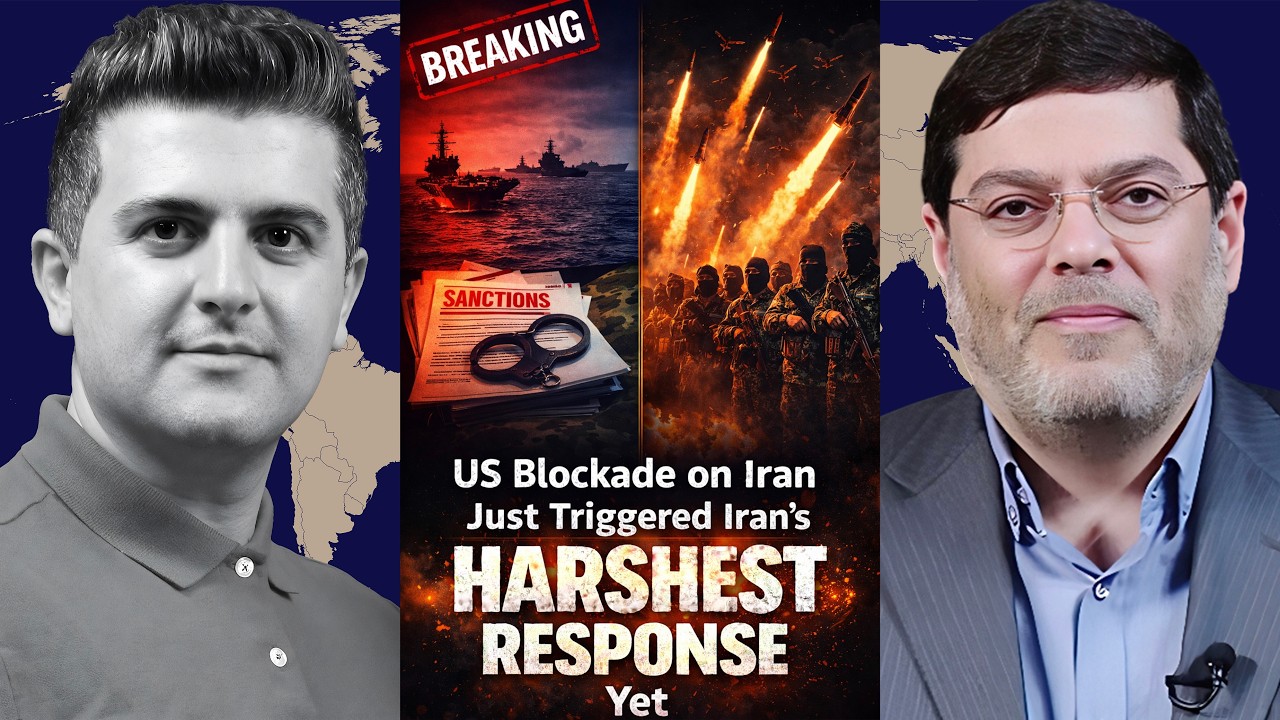
Seyed M. Marandi: US Blockade on Iran Just Triggered Iran’s HARSHEST Response Yet
"An Iranian professor details how US demands and an imposed blockade triggered Iran's harshest response, exposing American strategic missteps and the vulnerability of Gulf Arab states."

Patrick Henningsen: Hezbollah JUST Fired Back at Israel - Iran Vows to “Crush” All Attacks
"Patrick Henningsen argues that the US and Israel initiated an illegal war against Iran, driven by Trump's incompetence and Israeli influence, leading to an inevitable escalation with severe global economic repercussions."
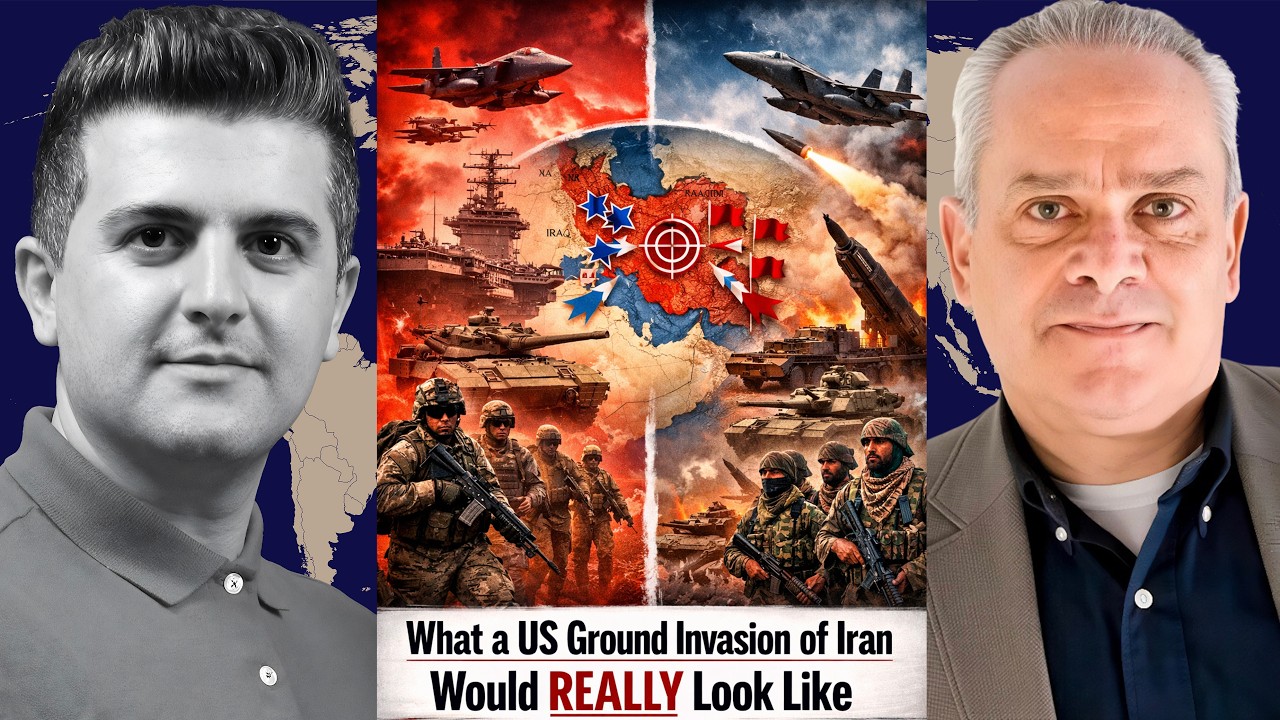
Col. Jacques Baud: What a US Ground Invasion of Iran Would REALLY Look Like
"Colonel Jacques Baud dissects the strategic futility of a US ground invasion of Iran, arguing that current troop levels are insufficient and such an action would backfire, exposing US allies and potentially leading to Iran's nuclearization."

Pentagon Prepares For EXTENDED War With Iran
"This episode dissects the geopolitical maneuvers surrounding potential US-Iran conflict, revealing strategic leaks, Netanyahu's diplomatic sabotage playbook, and the true intent behind economic sanctions."