BREAKING: U.S. CHOKES Iran At Hormuz; Israel-Lebanon Peace Talks Open | TBN Israel
YouTube · _Jdmlz-HbOI
Quick Read
Summary
Takeaways
- ❖The U.S. has implemented a full naval blockade on Iran's ports in the Strait of Hormuz, deploying over 10,000 personnel and a dozen warships.
- ❖Iran's economy is severely impacted, with 90% dependent on sea trade, leading to internal internet shutdowns and economic collapse warnings from its President.
- ❖Despite the blockade, some Iranian oil exports continue, mainly to China, using evasion tactics like foreign flags and turned-off transponders.
- ❖Israel, Lebanon, and the U.S. have initiated direct peace negotiations, aiming to disarm Hezbollah and end Iranian influence in Lebanon.
- ❖Hezbollah is operating under an 'ammunition economy,' reducing rocket launches but increasing drone and quadcopter attacks against Israeli forces.
- ❖The IDF continues systematic destruction of Hezbollah infrastructure in southern Lebanon, particularly in civilian areas used as shields.
- ❖European countries are planning a coalition to secure freedom of navigation in Hormuz post-war, potentially without U.S. involvement.
- ❖Iran is demanding compensation from the U.S. and Gulf States, an attempt to project strength despite its weakening position.
Insights
1U.S. Naval Blockade on Hormuz Intensifies Economic Pressure on Iran
The United States has imposed a naval blockade on Iran's ports in the Strait of Hormuz, deploying over 10,000 American soldiers, a dozen warships, and dozens of aircraft. This operation, described as a 'full success,' aims to block all maritime traffic to or from Iranian ports, without interfering with general freedom of navigation. The goal is to hit Iran's economy, which is estimated to be 90% dependent on international sea trade, and force flexibility in nuclear negotiations. The blockade has caused a heavy overload, with 732 ships anchored and waiting, creating a dilemma for the U.S. between crippling Iran and risking global energy market disruption.
More than 10,000 American soldiers are blocking vessels from Iran's ports... More than 20% of ships passed through the Strait of Hormuz in the last 24 hours. Washington and Thran are examining the possibility of renewing the talks... 732 ships that are anchored in the area and are waiting... around 90% of Iran's economy depends on international trade by sea.
2Iran's Internal Economic Collapse and Internet Shutdown
Internally, Iran's economy is on the brink of collapse, exacerbated by the naval blockade and a 45-day internet shutdown, the longest in its history. This disconnection has severely impacted millions of citizens and small to medium businesses, leading to warnings from Iranian President Masul Pazakan that the state is 'weeks away from collapse' and unable to pay salaries. The regime presents the internet shutdown as a security measure, but its primary effect is economic, social, and psychological isolation, fostering a loss of trust among citizens.
Iranian President Masul Pazakan is on the verge of a nervous breakdown. Bazakan has been hit by bursts of rage against the background of the failure of the diplomatic contacts and the worsening economic blockade... In closed talks, he warned that the state is only weeks away from collapse and will not be able to pay salaries... 45 days of disconnection from the world are pushing the Iranian economy to the brink of collapse with direct harm to the livelihoods of millions.
3Historic Israel-Lebanon Peace Talks Aim to Disarm Hezbollah
Israel, Lebanon, and the United States have issued a joint statement, marking the launch of direct negotiations between Israel and Lebanon—the first official direct talks in over four decades. This historic move seeks a permanent arrangement, disarmament of Hezbollah, and an end to Iranian influence in Lebanon. Lebanon is pushing for a ceasefire to prevent internal collapse, while Israel aims to dismantle Hezbollah's infrastructure and create a new strategic reality. The intensity of Hezbollah's reaction, calling the talks a 'humiliating surrender,' underscores the perceived threat to its power and Iran's regional agenda.
An official joint statement was published by the three governments, Israel, United States, and Lebanon, calling for the disarmament of the Hisbala terrorist organization, the end of the Iranian influence, and establishment of a comprehensive peace... Lebanon is pushing for direct negotiations to stop the war and prevent internal collapse within the country... Israel wants his disarmed. Lebanon speaks of sovereignty... Name custom of course understands exactly what is at stake. That's why he attacked the negotiations and called them humiliating surrender.
4Hezbollah Adapts Tactics Amidst Ammunition Economy and IDF Pressure
The IDF assesses that Hezbollah is operating under an 'ammunition economy,' showing a downward trend in rocket launches but an increase in drone and quadcopter attacks. This tactical adjustment is directly linked to the IDF's ground maneuver in southern Lebanon, particularly around Bingebbell, which has systematically destroyed Hezbollah's infrastructure. Hezbollah continues to embed its military network within civilian spaces, using the population as a shield, making IDF operations slow and systematic. Approximately 70% of Hezbollah's current fire is aimed at forces operating inside southern Lebanon, indicating a containment strategy.
The current assessment in the IDF is that Isbala is running an ammunition economy in the campaign with Israel. And in Israel, they identify a downward trend in rocket launchers. But on the other hand, an increase in the rate of drone and quat copper launches... This shift is linked directly to the ground maneuver in South Leanar, especially around Binge Bed... Hisbala uses the civilian population as a shield. That's not a slogan, that's a method.
Bottom Line
The U.S. blockade, while effective in pressuring Iran, is not fully airtight, with Iran still exporting oil via deceptive shipping practices (foreign flags, turned-off transponders).
This highlights the limitations of traditional blockades against determined adversaries and the need for advanced intelligence and enforcement methods to counter sophisticated evasion tactics.
Develop and deploy more advanced maritime surveillance and interdiction technologies capable of detecting and tracking vessels employing concealment and false reporting, potentially leveraging AI for anomaly detection in shipping data.
The Arab world, including Lebanese journalists, is openly expressing hatred towards Hezbollah and Iran's influence, seeing the peace talks as an opportunity to disconnect from Iran's grip.
This indicates a potential shift in regional alliances and public sentiment, creating a window for broader diplomatic efforts to stabilize the Middle East by empowering sovereign states over Iranian proxies.
Invest in public diplomacy and support for independent media in the Arab world to amplify voices advocating for national sovereignty and against foreign interference, fostering a more unified regional front against extremist influence.
Key Concepts
Two-Pronged Attack (Diplomacy & Military Pressure)
Israel is employing a dual strategy in Lebanon: simultaneously engaging in diplomatic talks with the Lebanese government to strengthen it and push for Hezbollah's disarmament, while maintaining military pressure against Hezbollah to weaken the terrorist organization and create a security buffer.
Economic Suffocation as Geopolitical Leverage
The U.S. naval blockade on the Strait of Hormuz exemplifies using economic pressure (cutting off Iran's primary revenue stream from oil sales) as a direct tool to force diplomatic concessions and weaken an adversary's regime, rather than relying solely on military confrontation.
War of Nerves and Tempo
The conflict in the Middle East is characterized by a 'war of nerves' where success is measured not just by military strikes, but by who can impose the tempo of events. The U.S. aims to dictate the pace for Iran via sea, Israel for Lebanon via ground, and Lebanon for itself via diplomacy, while Iran seeks to buy time.
Lessons
- Monitor the effectiveness of the U.S. naval blockade on Hormuz and Iran's adaptive strategies to bypass it, as this will dictate global oil prices and regional stability.
- Analyze the progress of Israel-Lebanon peace talks, specifically the commitment to disarming Hezbollah, as this could redefine the security landscape of Israel's northern border.
- Track the internal economic and social conditions in Iran, particularly the impact of internet shutdowns, as these factors could trigger internal unrest and influence the regime's negotiating posture.
Notable Moments
The first official direct talks between Israel and Lebanon in over four decades, facilitated by the United States, leading to a joint statement calling for Hezbollah's disarmament.
This marks a significant diplomatic breakthrough, offering a potential pathway to a permanent peace arrangement and a challenge to Iran's long-standing influence in Lebanon, even as military conflict continues.
Brigadier General Guy Levy standing in Bingebbell, the site of Nasrallah's 'spider web' speech in 2000, declaring that Nasrallah and his stadium 'no longer exist.'
This is a powerful symbolic act by the IDF, deliberately turning a key Hezbollah symbol into a representation of its collapse, aiming to undermine the organization's morale and public image.
Quotes
"The ceasefire is holding and I feel good about where we stand."
"We are here for the future. Hisbala belongs to the past."
"This is not some grassroots movement within Lebanon. This is a terrorist movement that came from Iran that is paying for, that is training, that is equipping the terrorists within Lebanon to fight against Israel."
"Nasrallah no longer exist. The stadium no longer exist as well."
Q&A
Recent Questions
Related Episodes

Larry Johnson & Col. Wilkerson: 4 US Warships Tried to Enter Strait of Hormuz – Then Iran Launched
"A critical analysis reveals escalating US-Iran military confrontations in the Strait of Hormuz, a stark disconnect in diplomatic rhetoric, and a significant geopolitical realignment in the Middle East away from US influence."
The REAL Story About The War From INSIDE IRAN! – Jimmy Interviews Prof. Marandi
"Professor Marandi, an Iranian academic, details how Iran emerged stronger from recent conflicts, now controlling the Strait of Hormuz and possessing a credible deterrent against its adversaries, despite facing economic siege and Western-backed regional proxies."

Pepe Escobar: China JUST Humiliated Trump’s Sanctions – Iran NOW Controls Hormuz
"Pepe Escobar argues that the US has suffered a comprehensive strategic defeat in its conflict with Iran, leading to a new geopolitical order where Iran, backed by Russia and China, now controls the Strait of Hormuz and dictates terms for global energy transit."
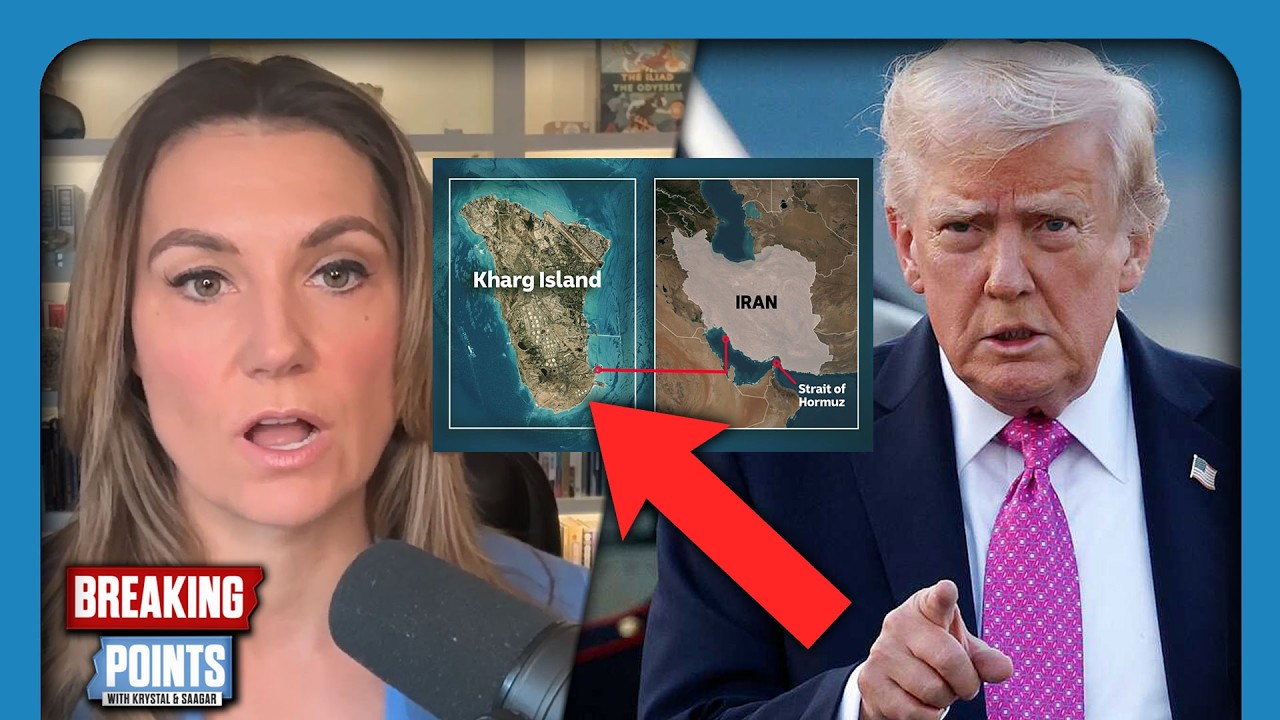
BREAKING: TRUMP ATTACKS OIL ISLAND, MARINES CALLED IN, 5 US PLANES HIT
"The US-Iran conflict escalates with a Trump-ordered strike on Iran's Karg Island, triggering Iranian retaliation against UAE oil facilities and US military assets, while the US deploys Marines and Israel plans a ground invasion of Lebanon."