
Trump’s Iran War Is A Personal Vendetta and Geopolitical Mess (w/ Erin Banco)
YouTube · a2Lw-Vk-1a8
Quick Read
Summary
Takeaways
- ❖Trump's decision to strike Iran was significantly influenced by Israeli Prime Minister Netanyahu's lobbying, which included educating Trump on ballistic missile threats.
- ❖US intelligence assessments indicated Iran's ballistic missile program was not developing as fast as Israel claimed, and posed no imminent threat to the US homeland.
- ❖A crucial factor for Trump was new intelligence on the Supreme Leader's location and Trump's personal belief that the leader had attempted to kill him.
- ❖The administration did not anticipate the intensity of Iranian retaliation against Gulf allies or adequately plan for the closure of the Strait of Hormuz.
- ❖US and Israeli objectives for the military action differed, with Israel focused on leadership decapitation and the US on destroying specific military capabilities.
- ❖Current options for de-escalation are limited and risky, including sending US troops to secure the Strait of Hormuz or Kar Island, or for nuclear containment.
Insights
1Netanyahu's Direct Influence on Trump's Iran Stance
Israeli Prime Minister Benjamin Netanyahu repeatedly met with Trump, personally educating him on ballistic missile technology and making a persuasive case for military action against Iran. This lobbying occurred despite US intelligence indicating Iran's ballistic missile program was not developing rapidly enough to pose an imminent threat.
Netanyahu met with Trump multiple times, 'quite literally teaches him about how ballistic missiles work' and why Israel was concerned. US intelligence officials, however, realized Iran's program was 'not developing as fast as the Israelis say it is' and would take 'years for any kind of intercontinental ballistic missile to reach the homeland.'
2Trump's Personal Vendetta as a Key Motivator for Strikes
A significant factor in Trump's decision to authorize strikes was new intelligence on the Iranian Supreme Leader's location and Trump's personal belief that the Supreme Leader had previously attempted to assassinate him. This personal animosity, combined with a recent perceived foreign policy success (capturing Maduro), provided the 'personal motivation to press the go button.'
Intelligence gathered by the US and Israel on the Supreme Leader's location became a focal point. Trump believed 'the Supreme Leader tried to kill him' and reportedly stated, 'I got him before he got me. They tried twice. Well, I got him first.'
3Intelligence Predicted Retaliation, Administration Still Surprised
US intelligence assessments prior to the strikes clearly laid out risks, including Iranian retaliation against US diplomatic and military outposts and the potential closure of the Strait of Hormuz. Despite these warnings, the administration was surprised by the 'rigor' of Iran's retaliation against Gulf allies and the actual closure of the Strait.
Intelligence community assessments 'all of them basically lay out the risks,' including 'US diplomatic and military outposts will likely be retaliated against' and 'the Strait of Hormuz might close.' However, the administration 'did not expect Thran to retaliate' with such rigor against Gulf allies, leading to 'a bit of a diplomatic mess.'
4Lack of Strategic Planning for Post-Strike Consequences
Trump's decision to launch strikes was made very last minute, without adequate prior planning for critical contingencies like the closure of the Strait of Hormuz or forming a coalition. Diplomats were only ordered to depart days after the strikes began, indicating a lack of preparedness.
Trump 'doesn't make the decision until the last day and a half, right before the US air strikes start.' There was 'not a lot of planning about the specific timing' and they 'didn't get a coalition together prior to the strikes' to navigate the Strait of Hormuz closure. Diplomats were 'ordered departure until days later, days after the strikes began.'
5Divergent US and Israeli Objectives in the Conflict
The intelligence community assessed that Israel's primary goal in the conflict was 'disabling the Iranian leadership' through decapitation strikes. In contrast, the US President's stated objectives were to 'destroy Iran's ballistic missile launching capability, their ballistic missile production capability, and their navy.'
Tulsi Gabbard, Chief Intel Officer, acknowledged that 'the objectives that have been laid out by the president are different from the objectives that have been laid out by the Israeli government.' Israel focused on 'disabling the Iranian leadership... beginning with the Ayatollah and the Supreme Leader,' while the President's objectives were to 'destroy Iran's ballistic missile... and their navy.'
Bottom Line
Trump's decision-making in foreign policy is often deeply personal and not always grounded in objective intelligence or 'reasonable thought process,' making outcomes less predictable and more susceptible to emotional drivers.
This highlights a significant vulnerability in national security decision-making, where the personal disposition of a leader can override established intelligence protocols and strategic assessments, leading to potentially irrational or highly risky actions.
Understanding this pattern allows for better anticipation of policy shifts under similar leadership styles and emphasizes the need for robust institutional checks and balances, or alternative communication channels, to present objective information effectively.
The administration's failure to anticipate the rigor of Iranian retaliation against Gulf allies and the Strait of Hormuz closure indicates a critical gap in strategic foresight and contingency planning, despite intelligence warnings.
This oversight led to a 'diplomatic mess' and a regional conflict 'gone a little bit off the rails,' demonstrating that even with intelligence, a lack of political will to plan for worst-case scenarios can escalate conflicts beyond initial intent.
There is an opportunity for defense and diplomatic strategists to develop more resilient and adaptive planning frameworks that explicitly account for leadership's potential disregard of intelligence, focusing on pre-emptive coalition building and economic impact mitigation.
Lessons
- When analyzing geopolitical conflicts, consider the personal motivations of key leaders, as these can significantly override conventional strategic logic and intelligence assessments.
- Evaluate the alignment of objectives between allied nations in a conflict; divergent goals can lead to uncoordinated actions and unexpected escalations.
- Recognize that public messaging around 'imminent threats' may not reflect the actual intelligence assessments or the true motivations behind military interventions.
Notable Moments
Netanyahu's personal 'education' of Trump on ballistic missiles.
This illustrates the direct, high-level influence a foreign leader had on US foreign policy, potentially bypassing traditional intelligence channels and shaping Trump's understanding of the threat.
Tulsi Gabbard's evasiveness on the 'imminent threat' question during a hearing.
Her refusal to directly answer, claiming it's the President's role to determine imminence, highlights the political sensitivity and potential manipulation of intelligence terminology in justifying military action.
Quotes
"Netanyahu quite literally teaches him about how ballistic missiles work."
"I got him before he got me. They tried twice. Well, I got him first."
"The only person who can determine what is and is not an imminent threat is the president."
"The objectives that have been laid out by the president are different from the objectives that have been laid out by the Israeli government."
Q&A
Recent Questions
Related Episodes
BREAKING: U.S. Weighs INVADING Iran Oil Island; Gulf Energy Crisis Grows | TBN Israel
"As the US and Israel systematically dismantle Iran's military and leadership, the conflict escalates into an energy war, with the US considering ground invasion of Iran's critical Karag oil island to secure global oil routes."

BREAKING: Iran Threatens To END Talks; U.S. Vows Retaliation; Hezbollah Collapsing? | TBN Israel
"Iran is leveraging Hezbollah and the Strait of Hormuz to manipulate US negotiations, while Israel asserts its right to dismantle Hezbollah's eroding but still dangerous infrastructure in Lebanon, independent of international talks."
BREAKING: Protests ERUPT In Iran Over IRGC Surrendering To Trump - Infighting Clashes In Tehran
"Iran is experiencing severe internal infighting and protests as hardline IRGC elements clash with government figures over a perceived 'surrender' to the US, while mainstream Western media misrepresents the situation."
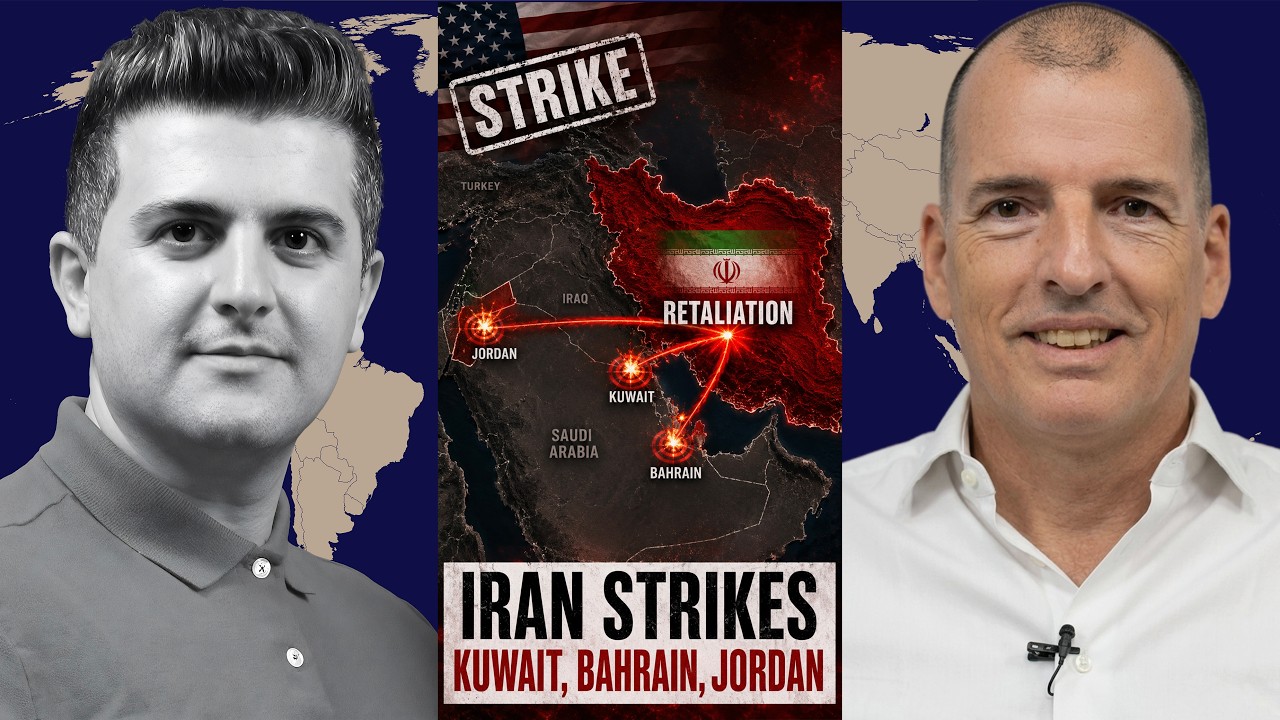
Alex Krainer: US STRIKES Iran – Iran RETALIATES Against Kuwait, Bahrain & Jordan!
"Amidst escalating US-Iran conflict and Iranian retaliation against regional US allies, this episode argues that US foreign policy is deeply controlled by an 'Anglo-Zionist conspiracy' led by the Rothschild banking dynasty, prioritizing Israeli interests over American ones."