
Lindsey Graham: "Wars of future Planned in ISRAEL"
YouTube · cApvPWF3I3Y
Quick Read
Summary
Takeaways
- ❖Senator Lindsey Graham views Israel as the planning ground for future wars due to its advanced military and necessity for survival.
- ❖The guest suggests Israel tests American weapons, which are then adopted by the US military.
- ❖US hawks, including Marco Rubio, have a long-standing desire for war with Iran, with Israel potentially acting as a proxy.
- ❖The guest argues that actions in Gaza have exposed the fragility of the 'rules-based order,' demonstrating that stronger nations can act unilaterally.
- ❖Israel is implementing a de facto annexation of the West Bank through policies that transfer control from military occupation to settlers.
- ❖Trump's potential intervention in West Bank annexation is tied to preserving his Abraham Accords legacy, which is currently not threatened.
- ❖Hamas has stated it will not disarm or demilitarize Gaza, citing past violence against unarmed Palestinians.
- ❖Israel's strategy in Gaza and the West Bank is interpreted as making Palestinians miserable enough to leave or be subjugated.
- ❖A US weapons ban is identified as the only effective means to halt Israel's current actions.
Insights
1Israel as a Proving Ground for Future Warfare and US Weaponry
Senator Lindsey Graham's statement about Israel planning 'wars of the future' is interpreted by the guest as Israel's role in testing new weaponry, often American-made, which subsequently informs and equips the US military. This positions Israel not just as an ally, but as a strategic partner in military innovation and doctrine development.
Lindsey Graham: 'The wars of the future are being planned here in Israel... Israel is advancing down the road of new weaponry far beyond us and it would be nice to have a process where we could be partners.' () Jasper: 'Israel is actually testing out new weaponry, in many cases American weapons, that will then go straight to the American military after it's been tested out there.' ()
2The 'Genocide in Gaza' as an Indicator of a Collapsing Rules-Based Order
The guest asserts that the events in Gaza have revealed the weakness of the international 'rules-based order,' demonstrating that powerful nations can act with impunity against weaker ones. This suggests a shift towards a might-makes-right global dynamic, where international law and norms are disregarded.
Jasper: 'Many people have noted that the genocide in Gaza has sort of stripped away the last pretenses of a rules-based order. It's shown that, you know, the stronger country can do whatever it wants, not just to Gaza... but in Lebanon and in Syria and in the West Bank and anywhere they want.' ()
3Israel's De Facto Annexation of the West Bank Through Policy
Israel is systematically annexing the West Bank not through overt declarations, but through a series of administrative and legal policies. These policies strip control from the military occupation and Palestinian Authority, transferring it to Israeli settlers, effectively amounting to annexation.
Jasper: 'The annexation of the West Bank is even before Trump... they are putting in place all these policies that... are stripping control away from the military occupation and from the Palestinian Authority and giving it to Israel... to the basically to the settlers one step at a time which amounts to a de facto annexation.' ()
4Palestinian Resistance to Disarmament and the Legacy of Violence
Hamas's refusal to disarm or demilitarize Gaza is presented as a rational response from the Palestinian perspective, given a history of violence and massacres, even during periods of supposed peace. The guest highlights the distrust that prevents Palestinians from accepting a position of complete vulnerability.
Jeremy Scul reporting a senior Hamas official stating Hamas will not accede to demands to disarm (). Jasper: 'If I was a Palestinian living in Gaza right now, I would be very concerned about the idea of completely disarming, knowing what's been done to us... hundreds of people were killed, thousands were maimed by Israeli snipers during a peaceful protest.' ()
Bottom Line
The 'wars of the future' are not just about new battlefields, but about new methods of warfare and weapon testing, with Israel serving as a critical proving ground for American military technology.
This implies a deeper, more integrated military-industrial relationship between the US and Israel than commonly perceived, where Israel's conflicts directly contribute to US military advancements and doctrine.
For defense contractors, understanding Israel's operational environment and its advanced military requirements offers insights into future US defense procurement and strategic priorities.
The current geopolitical landscape, particularly in the Middle East, is characterized by a significant erosion of the 'rules-based order,' where powerful nations can act with minimal international accountability.
This creates a more unpredictable and dangerous global environment, where traditional diplomatic and legal frameworks are less effective in restraining state actions. It also signals a potential shift towards a multipolar world where power dynamics dictate outcomes.
Analysts and policymakers need to develop new frameworks for international relations that account for this erosion, focusing on pragmatic power balancing and localized conflict resolution rather than relying solely on traditional international law.
Key Concepts
Proxy Warfare
The concept where a major power instigates or supports a conflict in which it is not directly involved, often using a third party. Here, Israel is framed as a potential proxy for US interests in a war with Iran.
Erosion of Rules-Based Order
The idea that international norms, laws, and institutions are losing their efficacy, allowing powerful states to disregard them without consequence. The guest cites the 'genocide in Gaza' as evidence of this breakdown.
De Facto Annexation
The process by which a state effectively incorporates territory without formally declaring sovereignty, often through administrative policies, settlement expansion, and control over resources. This is applied to Israel's actions in the West Bank.
Lessons
- Monitor Israeli military innovations and their integration into US defense strategies to anticipate future shifts in global military doctrine.
- Analyze the specific policy changes in the West Bank, beyond overt declarations, to understand the ongoing process of de facto annexation and its long-term implications for regional stability.
- Evaluate the effectiveness of international institutions and 'rules-based order' in light of recent conflicts, considering alternative approaches to global governance and conflict resolution.
Notable Moments
Lindsey Graham's assertion that Israel is where 'wars of the future are being planned' and is developing weaponry 'far beyond us,' suggesting a partnership for the US.
This statement from a senior US Senator provides a direct, albeit controversial, insight into the perceived strategic importance of Israel in global military planning and technological advancement, and its potential role in shaping future US defense capabilities.
The guest's interpretation that the 'genocide in Gaza has stripped away the last pretenses of a rules-based order,' indicating a significant shift in international norms.
This moment highlights a critical perspective on the current global political climate, suggesting that the actions of powerful states are increasingly unchecked by international law, potentially leading to a more chaotic and less predictable world order.
Quotes
"The wars of the future are being planned here in Israel because if you're not one step ahead of the enemy, you suffer. The most clever, creative military forces on the planet are here in Israel because they have to be to survive. So, what we're looking at is that Israel is advancing down the road of new weaponry far beyond us and it would be nice to have a process where we could be partners."
"The genocide in Gaza has sort of stripped away the last pretenses of a rules-based order. It's shown that, you know, the stronger country can do whatever it wants."
"If I was a Palestinian living in Gaza right now, I would be very concerned about the idea of completely disarming, knowing what's been done to us... in times of peace... hundreds of people were killed, thousands were maimed by Israeli snipers during a peaceful protest."
"The only thing that could really stop Israel is a weapons ban from the US in my opinion."
Q&A
Recent Questions
Related Episodes
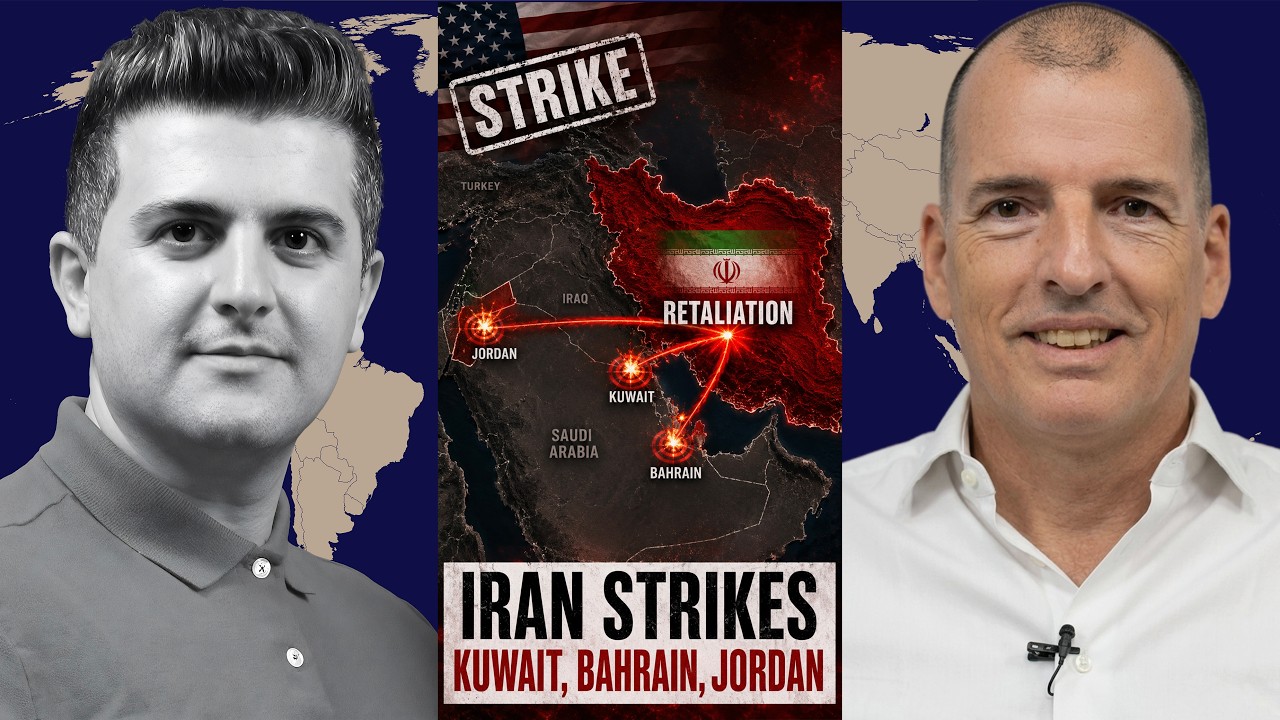
Alex Krainer: US STRIKES Iran – Iran RETALIATES Against Kuwait, Bahrain & Jordan!
"Amidst escalating US-Iran conflict and Iranian retaliation against regional US allies, this episode argues that US foreign policy is deeply controlled by an 'Anglo-Zionist conspiracy' led by the Rothschild banking dynasty, prioritizing Israeli interests over American ones."

Bibi DEMANDS Ground Troops As Marines Rushed to Iran
"Benjamin Netanyahu is pushing for US ground troops in Iran, framing air strikes as insufficient, while the US rushes Marines to the region and struggles to secure the Strait of Hormuz against surprisingly capable Iranian defenses."

Iran Update: Israel’s Newest Bombing Campaign, the Oncoming War With China and How to Avoid It
"Colonel Wilerson reveals how the US and Israel are actively bombing China's strategic infrastructure in Iran, escalating a covert economic war that Beijing intends to win without direct military conflict by dismantling the dollar's global dominance."

Patrick Henningsen: Hezbollah JUST Fired Back at Israel - Iran Vows to “Crush” All Attacks
"Patrick Henningsen argues that the US and Israel initiated an illegal war against Iran, driven by Trump's incompetence and Israeli influence, leading to an inevitable escalation with severe global economic repercussions."