BREAKING: U.S. Troops Build Up Around Iran, Blackout Bomb Suspected as Tehran Goes Dark | TBN Israel
YouTube · cEucqkFqPK8
Quick Read
Summary
Takeaways
- ❖Israel allegedly deployed a 'graphite bomb' (blackout bomb) in Tehran, causing widespread power outages by short-circuiting electrical infrastructure without physical destruction.
- ❖Tens of thousands of US troops, including special forces and the 82nd Airborne, are positioned near Iran, not for full conquest, but for limited operations like seizing strategic islands or extracting enriched uranium.
- ❖Israeli airstrikes systematically target Iran's missile production, launch sites, and Revolutionary Guard leadership, aiming to force launches from deeper within Iran and degrade its ability to rebuild.
- ❖Iran's proxies, particularly the Houthis, have entered the conflict as a 'doomsday reserve,' escalating threats to global trade and energy routes.
- ❖Diplomatic efforts are contradictory, with the US claiming progress in talks while Iran denies direct negotiations and calls for withdrawal from the Nuclear Non-Proliferation Treaty (NPT).
- ❖The conflict has expanded beyond security, impacting global supply chains, oil prices (Brent to $115/barrel), and aluminum markets due to attacks on Gulf factories.
Insights
1Israel's Use of Graphite 'Blackout Bombs' in Tehran
Israel reportedly deployed a graphite bomb for the first time, causing widespread power outages across Tehran. This 'blackout bomb' disperses conductive carbon filaments over power lines and transformers, creating massive short circuits without physically destroying buildings. The strategic intent is to disable electrical infrastructure and military facilities, cutting communication and power to government operations, while avoiding long-term damage to the grid for a future Iran.
Reports from Iran and open intelligence sources claimed Israel made a first-of-its-kind use of graphite bombs during deep strikes in Tehran. Mati Shosani explained it as a highly conductive powder blown over electrical facilities, causing short circuits without physical destruction.
2US Military Buildup for Limited Ground Operations, Not Full Conquest
The United States has significantly increased its military presence around Iran, deploying over 50,000 troops, including special operations personnel, Marines, and elements of the 82nd Airborne Division. This force is being positioned for specific, limited objectives such as extracting enriched uranium from sites like Isfahan and Natanz, or seizing strategic targets like Karag Island and the Strait of Hormuz, rather than a full-scale invasion of Iran.
Tens of thousands of American troops are surrounding Iran, with over 10,000 soldiers arriving this week, including hundreds of US Army commando personnel. The Pentagon is preparing for 'limited seizure' or 'narrow ground penetration,' not the conquest of a country the size of Iran.
3IDF's Systematic Air Campaign and Targeting Shift
The IDF is conducting a systematic air campaign against Iran, with dozens of fighter jets completing over 140 strikes in four waves against missile arrays, ballistic missile launch/storage sites, and weapons production facilities. A notable shift in targeting includes striking Revolutionary Guard (IRGC) leadership and infrastructure operating under 'academic shells' like Imm Hussein University, which is identified as a military center for ballistic missile and chemical weapons development.
Over the past 24 hours, dozens of Israeli fighter jets completed more than 140 strikes. The IDF reveals Imm Hussein University as a military center for the Revolutionary Guards, with infrastructure for ballistic missile development and chemical research. Israel is also targeting IRGC leadership on the ground.
4Houthi Entry as Iran's 'Doomsday Reserve' Escalates Global Crisis
The Houthis' delayed entry into the conflict is framed as a timed strategic move by Iran, deploying its 'doomsday reserves' after other proxies were weakened. Their actions, threatening global trade and energy routes in the Red Sea, transform the conflict into a multi-front global crisis, adding cost, uncertainty, and disruption to international markets and supply chains.
The Houthis' entry into this campaign is a timed strategic move that changes the nature of this conflict into a multifront global crisis. Iran was 'leaving on the shelf' their doomsday reserves, deploying the Houthis after other assets were depleted.
5Contradictory Diplomacy and Iran's NPT Withdrawal Threat
Diplomatic efforts are characterized by sharp contradictions: Donald Trump claims direct and indirect talks are progressing well, while Iran's Foreign Ministry spokesman denies direct negotiations, stating only messages are transferred through mediators. Amidst these stalled talks and ongoing strikes, a member of the Iranian Parliament called for Iran to withdraw from the Nuclear Non-Proliferation Treaty (NPT), signaling a potential hardening of its nuclear doctrine.
Donald Trump claimed progress in negotiations but Iran denied direct negotiations, claiming only transfer of messages. A member of the Iranian parliament is calling on Iran to withdraw from the treaty on the non-proliferation of nuclear weapons.
Bottom Line
The use of 'blackout bombs' represents a new frontier in cyber-kinetic warfare, allowing for strategic disruption of critical infrastructure without overt physical destruction, complicating attribution and response while preserving assets for post-conflict control.
This tactic minimizes international condemnation for civilian casualties or infrastructure damage, making it a 'cleaner' form of warfare for disabling enemy capabilities. It also implies a long-term strategic view of Iran's infrastructure.
Military strategists and defense contractors could explore and develop similar non-lethal, infrastructure-disabling technologies that offer tactical advantages with reduced collateral damage and political fallout.
The explicit distinction between 'conquest' and 'limited seizure' for US troop deployment indicates a refined military doctrine focused on achieving specific, high-value objectives (like uranium extraction or choke point control) rather than costly, prolonged nation-building or regime change.
This approach suggests a lower threshold for military intervention and a more precise application of force, potentially increasing the frequency of such operations in future conflicts. It also signals a clear message to adversaries about the specific red lines being enforced.
Governments and defense analysts should reassess military readiness and strategic planning for rapid, targeted interventions, focusing on specialized units and intelligence-driven objectives rather than large-scale conventional warfare.
The economic impact of the conflict is rapidly expanding beyond oil to other critical commodities like aluminum, demonstrating how regional instability can quickly globalize through supply chain disruptions and market reactions.
This highlights the vulnerability of globalized industries to localized conflicts and the potential for 'domino effects' across various sectors, not just energy. It also puts pressure on international bodies to intervene due to economic rather than purely humanitarian or security concerns.
Businesses and governments should diversify supply chains and invest in resilience planning for critical raw materials. Financial institutions should develop models to predict and mitigate commodity market volatility stemming from geopolitical events.
Key Concepts
Two-Track Strategy
The US is simultaneously pursuing diplomatic contacts with Iran while reinforcing military forces and preparing for an expansion of fighting if talks fail. This involves 'negotiations under fire,' where military pressure is used to strengthen diplomatic leverage.
Proxy Warfare Escalation
Iran's strategy involves deploying its 'doomsday reserves'—proxies like the Houthis—in a timed strategic move to create multi-front pressure and divert Israeli/US resources, transforming a regional conflict into a global crisis impacting trade and energy.
Precision Non-Destructive Warfare
The use of 'graphite bombs' exemplifies a strategy to disable enemy infrastructure (power grids) by causing short circuits without physical destruction, aiming to weaken the regime and its military capabilities while preserving the underlying infrastructure for a post-regime future.
Lessons
- Monitor global oil and commodity markets closely, particularly Brent crude and aluminum prices, as the conflict's expansion directly impacts supply chains and economic stability.
- Analyze the strategic implications of 'blackout bomb' technology and limited ground operations, as these tactics redefine modern warfare and could be replicated in other geopolitical hotspots.
- Track the evolving diplomatic rhetoric between the US and Iran, noting discrepancies in reported negotiations, as these indicate the true distance to any potential resolution and the likelihood of further military escalation.
Notable Moments
Tehran experienced a city-wide blackout, with residents describing darkness and fighter jets overhead, following alleged Israeli 'blackout bomb' strikes.
This event highlights a new, non-destructive form of warfare designed to cripple infrastructure and create psychological pressure without massive physical damage, signaling a strategic shift in conflict engagement.
Iran's Revolutionary Guards confirmed the elimination of Ali Raz Tangishiri, commander of their navy, four days after the incident, highlighting the severity of the blow to Iran's maritime operations.
Tangishiri was directly responsible for Iran's Strait of Hormuz operations, and his elimination signifies a significant disruption to Iran's ability to block maritime traffic, a key strategic objective for the US and Israel.
Spain announced it is closing its airspace to American aircraft participating in the war against Iran.
This indicates that the conflict is creating friction with outside players and impacting America's freedom of maneuver, demonstrating the broader international consequences and potential for diplomatic strain.
Quotes
"This weapon known as a blackout bomb is intended to disable electrical infrastructure and also military facilities by creating massive short circuits without physically destroying the buildings."
"We want to cut out their communication. We want to cut out the power that powers the different facilities of the government, but we don't want to destroy the grid for the future of Iran."
"No one's talking about taking over Iran. What we're talking about is a couple key operations: extracting enriched uranium... taking over the key islands... or allow ships to move through that area without the threat of Iranian violence against them."
"My hope is... that this is a precursor for a negotiation that takes place on our terms without enriched uranium, without them being able to deploy their proxies, which is why Israel is fighting right now, and with less of their ability to put a chokehold on the streets of Hormuz."
"Why should we agree to accept these restrictions? The spokesman asked."
"If they cannot even agree on whether direct negotiations are taking place at all, then diplomacy is still far from a breakthrough."
Q&A
Recent Questions
Related Episodes

BREAKING: Iran Threatens To END Talks; U.S. Vows Retaliation; Hezbollah Collapsing? | TBN Israel
"Iran is leveraging Hezbollah and the Strait of Hormuz to manipulate US negotiations, while Israel asserts its right to dismantle Hezbollah's eroding but still dangerous infrastructure in Lebanon, independent of international talks."
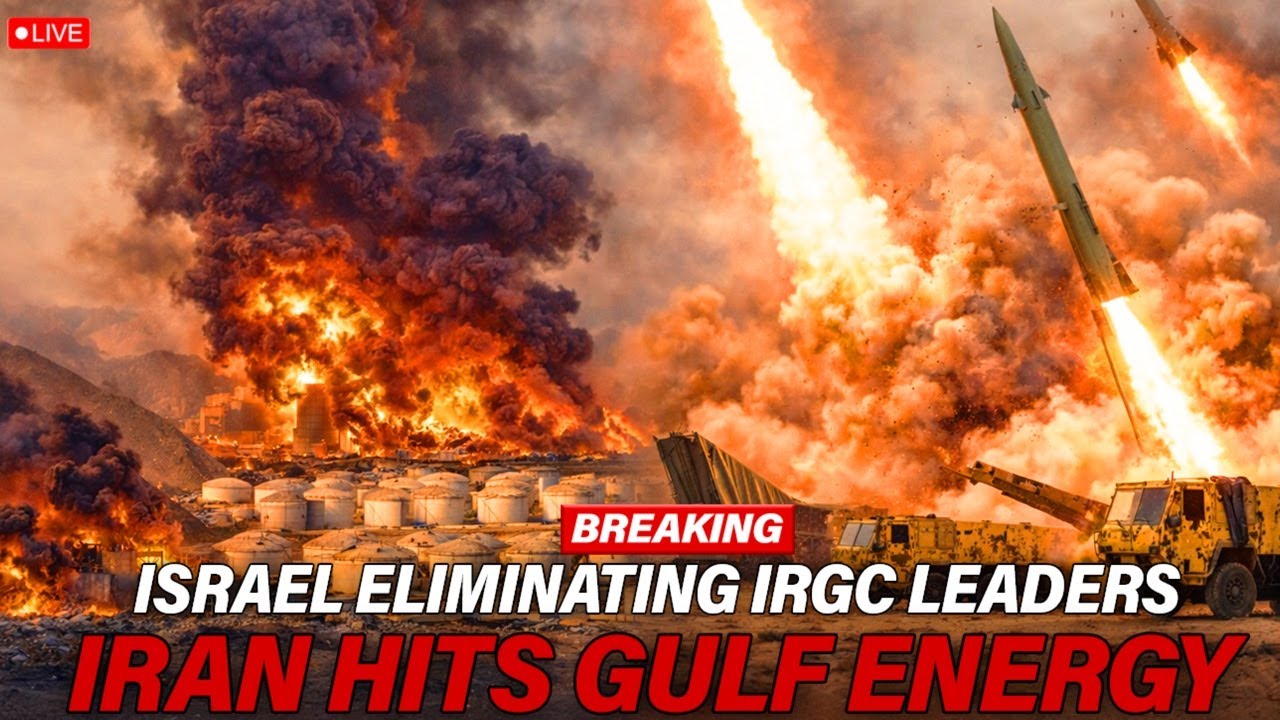
BREAKING: U.S. Weighs INVADING Iran Oil Island; Gulf Energy Crisis Grows | TBN Israel
"As the US and Israel systematically dismantle Iran's military and leadership, the conflict escalates into an energy war, with the US considering ground invasion of Iran's critical Karag oil island to secure global oil routes."

BREAKING: War Back On! Ships Bombed! Strait of Hormuz Closed Again!
"The Strait of Hormuz has closed again after Iran bombed two ships, with the host arguing this is a direct consequence of Trump's alleged lies about a peace deal and broader US foreign policy subservience to Israel."
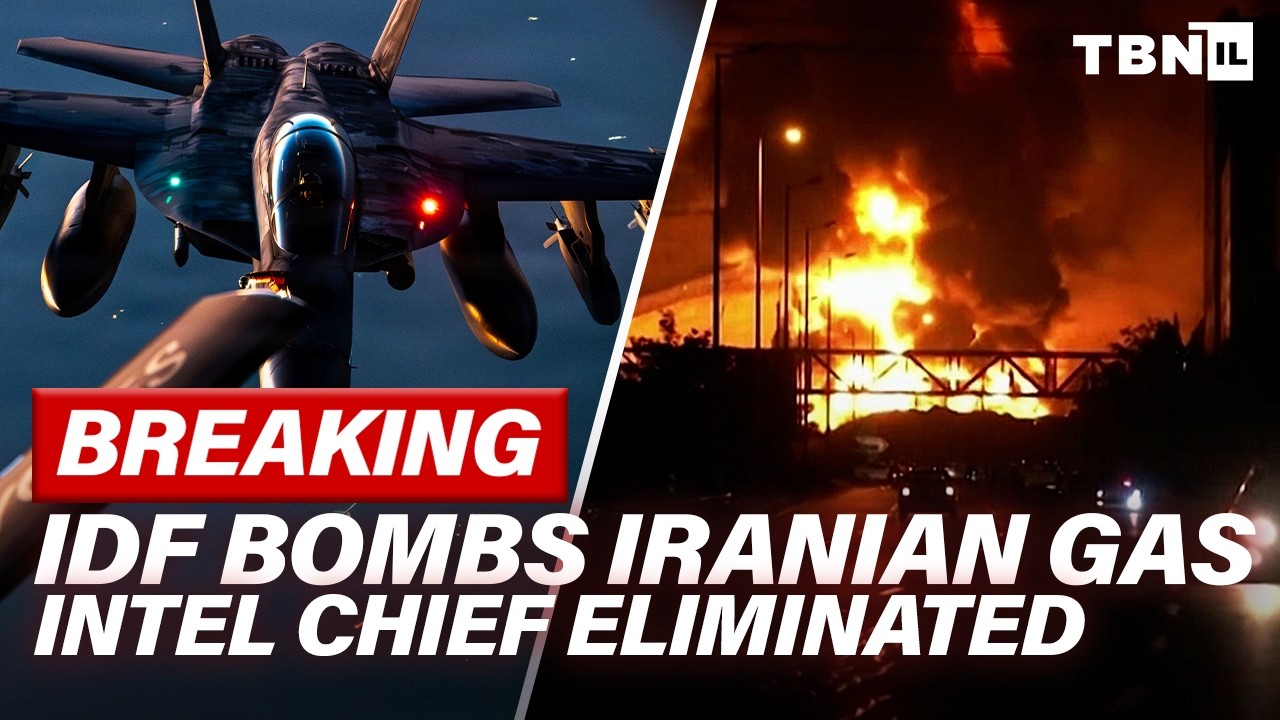
BREAKING: Israel BOMBS Major Iran Gas Site; Top Mullah ELIMINATED; Iran Vows VENGEACE | TBN Israel
"Israel and the United States have escalated their 'Roaring Lion War' against Iran, striking its largest gas facilities, eliminating key intelligence and military figures, and disrupting missile production, while Iran threatens a broader energy war in the Gulf."