A Unified Voice for Faith, Justice, and Civic Engagement in America
YouTube · cuCZ91cC-zs
Quick Read
Summary
Takeaways
- ❖The National Faith and Justice Council (NFJC) is a unified movement of faith leaders, congregations, and community partners dedicated to spiritual renewal, justice, civic responsibility, and generational transformation.
- ❖The council's mission is to unify faith leadership across regions and denominations to strengthen communities spiritually, morally, socially, and civically through organized engagement, education, advocacy, and transformational action.
- ❖Voting is framed as a stewardship and an exercise of responsibility, with non-participation leading to decisions being made without community voice.
- ❖The Black church's historical role as an organizing force for justice and democratic participation is cited as the foundation for the NFJC's structured and coordinated mobilization efforts.
- ❖Leaders across multiple denominations pledged full support, emphasizing that silence in moments of crisis is complicity and that civic engagement is an expression of faith, not separate from it.
- ❖The NFJC aims to build a national faith infrastructure to awaken civic responsibility, strengthen community influence, and restore hope through organized, faith-driven engagement, starting with voter registration and turnout.
Insights
1Launch of the National Faith and Justice Council (NFJC)
Dr. Byron T. Brazier introduced the NFJC as a unified movement of faith leaders, congregations, and community partners. The council is committed to advancing spiritual renewal, justice, civic responsibility, and generational transformation, recognizing that critical historical moments demand organized unity and disciplined action from faith institutions.
Today, we stand again at this moment. It is my honor to introduce to you the National Faith and Justice Council, known as the NFJC, a unified movement of faith leaders, congregations, and community partners committed to advancing spiritual renewal, justice, civic responsibility, and generational transformation throughout America.
2Civic Engagement as a Moral and Spiritual Imperative
Multiple bishops emphasized that civic engagement, particularly voting, is not merely a political act but a spiritual responsibility and an expression of faith. They argued that silence in times of crisis is complicity and that the church must not retreat from the public square when the soul of the nation is at stake.
Voting is not merely a political participation. It is stewardship. It is the exercise of responsibility toward our families, our children, our neighbors, and our future. When communities fail to participate, others make decisions that shape their schools and safety, economics, health care, and opportunities without their voice being present at the table.
3Addressing the Erosion of Voting Rights and Systemic Weakening
Bishop Talbert Swan highlighted a coordinated effort to roll back hard-fought gains, specifically citing attacks on voting rights, the erosion of civil liberties, and the systemic weakening of the Voting Rights Act. He noted that whenever protections are removed, suppression returns, and black progress is often met with backlash.
And now we've got to confront the painful reality that the Voting Rights Act, that signature act that was fought for uh by Dr. King and John Lewis and so many others. One of the most sacred achievements of the civil rights movement has been systemically weakened. Protections that once safeguarded access to the ballot have now been stripped away. Oversight that once prevented discrimination has been dismantled. And the result is exactly what history has shown us. Whenever protections are removed, suppression returns. And whenever there is black progress, there is white backlash.
4The Power of One Vote and Low Voter Turnout
Bishop Joel Peebles underscored the critical impact of individual votes, noting that the entire 2022 midterms could have been changed by just 7,000 votes. Bishop Donald Williams provided historical examples of how single votes have dramatically altered national and international outcomes, stressing that the power of the vote must not be minimized.
It amazed me to note that during the 2022 elections, during the midterms, that literally the entire midterms could have been changed by 7,000 votes. I want that to take a moment and resonate. So much of the struggles we're dealing with right now, we are struggling with because of 7,000 votes.
Key Concepts
Faith Without Action is Dead
This model, rooted in biblical scripture (James 2:17), posits that spiritual belief or conviction is insufficient without corresponding practical deeds or engagement. In the context of the NFJC, it means that religious institutions and individuals must translate their faith into tangible civic action, such as voting and advocacy, to address societal injustices and empower communities.
Unity as Strategy
This model asserts that collective, organized action among diverse groups (denominations, regions) is not merely symbolic but a powerful, divine design and a strategic imperative for achieving significant impact. Fragmented voices are ineffective against coordinated opposition; unified conviction and effort are required to change systems and shape policy.
The Widow's Persistence (Luke 18)
Drawing from the parable of the persistent widow and the unjust judge, this model emphasizes that power structures often respond not to politeness or moral appeals alone, but to relentless, organized, and sustained pressure. It suggests that communities must continuously 'show up' and demand justice, refusing to be silenced or disappear, to wear down unjust systems and achieve desired outcomes, even from those who lack a moral compass.
Lessons
- Lead your congregations beyond inspiration into active civic participation, ensuring sermons are followed by equipping members to engage the world.
- Mobilize communities for voter registration and turnout, recognizing that voting is a form of stewardship and a critical tool for shaping future outcomes.
- Establish voter engagement ministries within churches that operate consistently, not just during election cycles, to apply sustained moral and civic pressure on unjust systems.
NFJC Mobilization Strategy for Civic Engagement
Unify faith leadership across regions and denominations to speak with a clear, authoritative, and purposeful voice on issues of justice and civic responsibility.
Educate congregations and communities on the importance of civic participation, the impact of voting on daily life (schools, economics, healthcare, safety), and the consequences of non-participation.
Register and mobilize voters in communities that have historically been overlooked, discouraged, or disengaged, building a national infrastructure of bishops, pastors, and congregants for this purpose.
Engage systems and advocate for policies that protect voting rights and promote justice, moving from declarations to demonstrations and from vision to transformation through disciplined action.
Notable Moments
Bishop Brooks acknowledges the Pentecostal Assemblies of the World's historical non-visibility in the Civil Rights Movement, using it as a call to action for increased public engagement in the present.
This moment demonstrates humility and a commitment to learning from history, signaling a shift in the denomination's approach to civic engagement and strengthening the overall message of unified action.
Reverend Dr. Charles Franklin Ber recounts the parable of the persistent widow (Luke 18) to illustrate the need for relentless, organized public faith against unjust systems.
This provides a theological framework for the NFJC's strategy, emphasizing that systemic change often requires persistent pressure rather than polite requests, directly addressing the challenges posed by institutions like the Supreme Court.
Bishop Donald Williams defines politics as 'the art and science of who gets what, when, where, and how,' and illustrates its pervasive influence from birth certificates to death certificates.
This demystifies politics for a faith audience, making a compelling case for why churches cannot afford to be disengaged, as political decisions fundamentally shape every aspect of human life, even within a spiritual context.
Quotes
"Where there is unity, there is strength. And when we maintain and meet the goals of our organization, I believe that people who may not have ever voted before, people who may not ever have been involved with helping to determine our own destiny will make the kind of impact locally, statewise and nationally that will help send a message to politicians, legislators, and people who make decisions that inform and direct our destiny."
"Faith without action leaves communities vulnerable and that silence in moments of crisis permits injustice, division, despair, and disconnection to grow unchecked."
"In moments like this, silence is not an option. It's not neutrality. It is complicity and collaboration with the forces that would diminish our rights. The church cannot afford to be passive when the people are under pressure. The pull pit cannot retreat when the public square is under assault. And our faith cannot be confined to sanctuaries when the soul of the nation is at stake."
"The same forces that once used literacy tests now uses legislation. The same systems that once uh suppressed voices um that are now trying to silence them once again in more effective manners."
"We do not believe holiness is private and justice is public. We believe holiness includes justice, that a church which abandons the public square has misunderstood its own gospel."
"I am no longer accepting things I cannot change. I'm going to change the things I cannot accept."
"Power rarely responds to politeness, but it does respond to persistence."
"We live in a heavenly kingdom, but we also live down here. We're in the world, but we're not of the world. But while we're here, we have a responsibility to do like Martin Luther King did is to really make a a fuss about what's going on."
Q&A
Recent Questions
Related Episodes
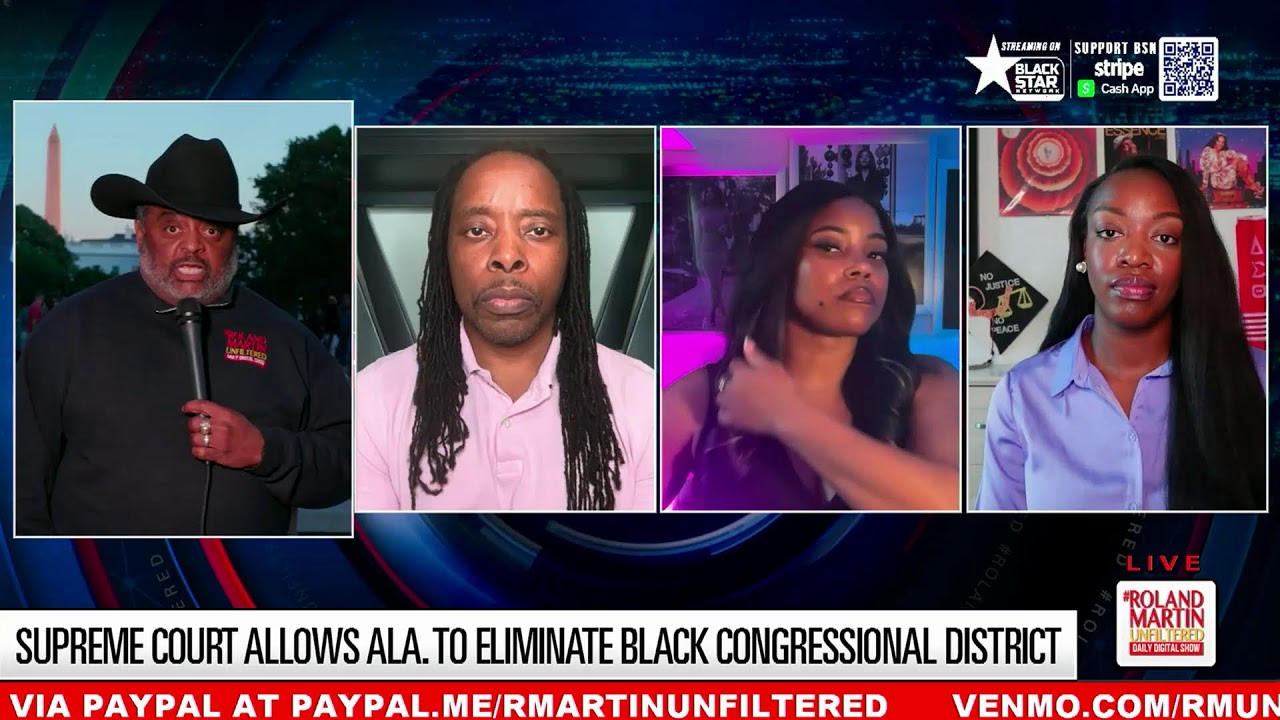
Moral Monday at BLM Plaza. Cleo Fields Sounds Alarm on Louisiana & Gary Chambers Pushes Turnout
"Activists and faith leaders gathered at Moral Monday to denounce 'policy violence' in various forms, from war and budget cuts to voter suppression and healthcare denial, urging sustained mobilization against a 'hijacked' democracy."
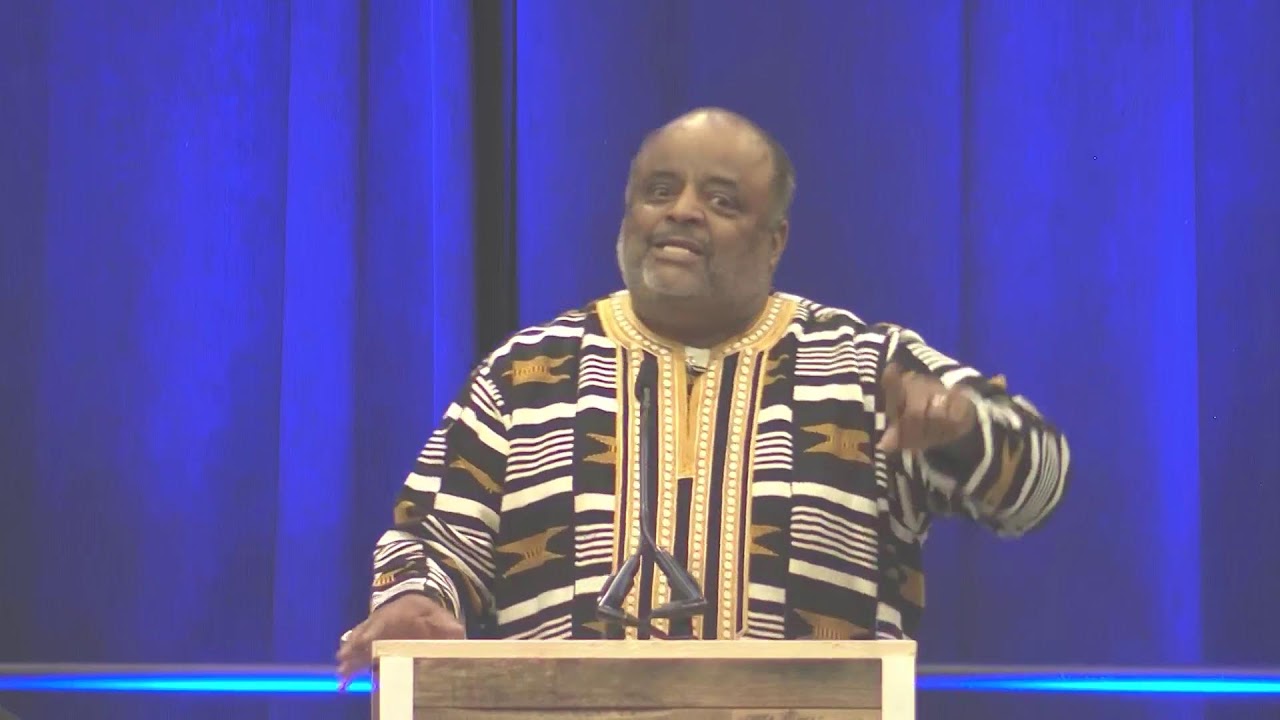
Roland speaks at Columbus Educ. Assoc. MLK Dinner
"Roland Martin challenges the audience at an MLK dinner to move beyond passive celebration and engage in active, sustained political and economic struggle, emphasizing that 'rest time is over' for those seeking real societal change."
George Floyd 6 Years Later. Redistricting War in The South. Talarico Senate Campaign
"This episode exposes the ongoing legislative battles and strategic resistance against efforts to diminish Black political power, from federal policing reform to state-level gerrymandering and calls for economic boycotts by Black athletes."

"Mini" Super Tuesday Primaries. Bodycam Clears Black Teen. Haitian Heritage Month. #TheBreakdown
"This episode breaks down critical political developments, highlights the power of bodycam footage in exonerating a Black teen, celebrates Haitian heritage, showcases innovative arts education, and champions breast cancer awareness for Black women."