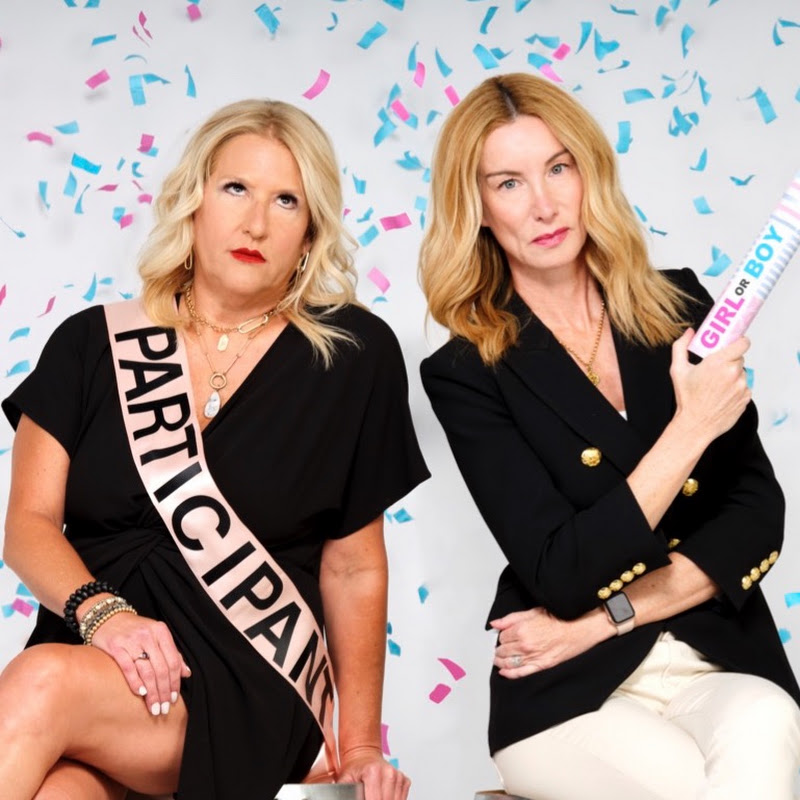
To Catch a Cheater
YouTube · eE2iniHQc8U
Quick Read
Summary
Takeaways
- ❖Social media is flooded with self-proclaimed 'experts' (e.g., 'skin experts,' 'smile experts') who lack formal qualifications, akin to the 'life coach of advertising' trend.
- ❖The hosts express strong disdain for 'fusion food' (e.g., Italian-Japanese sushi, Korean-Puerto Rican BBQ), arguing that some things should remain distinct and that such concepts often arise from a corporate culture where 'all ideas are good ideas'.
- ❖A growing 'main character energy' in society leads individuals to perceive others' independent actions (like eating a meal on a plane) as personal affronts, indicating a decline in resilience and an increase in entitlement.
- ❖Overprotective parents who micromanage their adult children's lives, even dictating where they live based on a neighbor's attractiveness, hinder their children's autonomy and ability to learn from life experiences.
- ❖Spousal intervention in professional matters, such as a husband writing to his wife's boss or a wife handling her husband's job application, is highly inappropriate and detrimental to the partner's career and perceived independence.
- ❖Extreme control in relationships, often stemming from past infidelity, can manifest in shared email accounts and constant monitoring, though determined individuals will always find ways to circumvent such measures.
- ❖Creative and public forms of harassment, like sending malicious messages via Venmo during a divorce, highlight the emotional intensity and unconventional tactics people employ in relationship breakdowns.
Insights
1The Erosion of Expertise on Social Media
The internet has democratized information to the point where individuals without formal training or qualifications readily declare themselves 'experts' in fields like skincare or dentistry. This trend, dubbed the 'life coach of advertising,' undermines genuine expertise and promotes products based on dubious claims, often promising unrealistic results.
Host Pumps observes people on social media claiming to be 'skin experts' or 'smile experts' just because they have skin or a smile, comparing it to the unregulated life coaching industry. She notes these individuals lack 'letters, no doctor, nothing,' and make 'extraordinary claims' without 'extraordinary evidence' about products.
2The Detrimental Impact of 'All Ideas Are Good Ideas' Culture
In many modern workplaces, a culture of non-critique, where 'all ideas are good ideas,' stifles genuine innovation and leads to the adoption of poorly conceived concepts. This lack of direct, honest feedback results in the creation of products or services that lack merit, such as unappealing food fusions.
Jennifer criticizes 'fusion food' like Italian-Japanese sushi, attributing its existence to 'roundtable meetings' where 'nobody can critique anybody's ideas.' She argues that 'sometimes talking too much and throwing out too many ideas is counterproductive' and that bosses should be able to say 'that's a bad idea.'
3The Rise of 'Main Character Energy' and Declining Social Tolerance
An increasing number of people exhibit 'main character energy,' interpreting others' independent actions as personal slights. This self-centered perspective leads to public disputes over minor issues, reflecting a generational shift towards greater sensitivity but also a reduced capacity for 'thicker skin' and tolerance for others' behaviors.
A Reddit story describes a plane passenger upset because a seatmate ate their special meal before others in the row were served. The hosts attribute this to 'main character energy,' where people 'react to a person doing their own thing in their own lane... as something personal to them.'
4Toxic Parental Control Over Adult Children's Autonomy
Some parents struggle to relinquish control over their adult children, viewing them as 'property' rather than autonomous individuals. This overprotective behavior, often masked as 'toxic love,' can extend to dictating living arrangements or relationships, preventing adult children from experiencing crucial life lessons and personal growth.
A mother insists her 25-year-old daughter move out of her new apartment because the neighbor is 'too attractive' and might 'seduce her and ruin her life.' The hosts frame this as parents failing to teach autonomy and preventing children from experiencing 'heartbreaking breakups, one night stands,' and other life lessons.
5Spousal Interference in Professional Life as a Red Flag for Relationship Issues
When a spouse excessively intervenes in their partner's job or career search, it signals a lack of independence and often points to deeper control issues or unresolved trust problems within the relationship, potentially stemming from past infidelity. Such interference can damage professional credibility and hinder career progression.
A husband considers writing to his wife's boss to get her a different role. Another story details a wife, Sue, completely taking over her husband Bob's job application process, responding to emails and calls. The hosts suggest this extreme involvement often indicates a 'not safe marriage' or attempts to 'monitor each other's' activities due to infidelity.
Bottom Line
The increasing public display of personal grievances (e.g., on Reddit about airplane etiquette) suggests a societal shift where individuals feel entitled to broadcast their discomforts, potentially normalizing petty complaints and reducing personal resilience.
This trend contributes to a more litigious or confrontational public sphere, where minor inconveniences are amplified, and the expectation for others to conform to one's personal preferences grows, impacting public spaces and social interactions.
Develop platforms or services focused on 'digital detox' or 'resilience training' that help individuals manage their reactions to minor stressors and reduce their reliance on public validation for personal grievances.
The use of financial transaction apps like Venmo for personal, emotionally charged communication (e.g., sending abusive messages during a divorce) reveals how digital tools, designed for specific functions, are repurposed for interpersonal conflict, creating new challenges for legal and social boundaries.
This highlights a gap in digital platform governance regarding misuse for harassment and emotional abuse, complicating legal proceedings and creating public records of private disputes. It also indicates a need for users to be aware of the public nature of some 'private' digital interactions.
Financial platforms could implement enhanced moderation or 'emotional intelligence' filters for transaction notes, or offer more robust private communication channels that are legally defensible and less prone to public misuse during disputes.
Key Concepts
Life Coach of Advertising
A term coined by the host to describe the phenomenon of individuals on social media proclaiming themselves 'experts' (e.g., 'skin expert,' 'smile expert') without formal qualifications, purely for advertising or promotional purposes, mirroring the often-unregulated 'life coach' industry.
Main Character Energy
A social observation describing individuals who act as if they are the central figure in every situation, expecting the world to revolve around them and taking others' independent actions personally. This often manifests as entitlement and a lack of 'thicker skin' in public interactions.
All Ideas Are Good Ideas (Negative Connotation)
A critique of a corporate or creative culture where every idea is accepted or 'workshopped' without sufficient critical evaluation, leading to the proliferation of bad or impractical concepts (e.g., unappetizing food fusions) because no one is allowed to say 'that's a bad idea'.
Lessons
- Critically evaluate 'experts' on social media by checking their formal qualifications and the evidence supporting their claims, rather than accepting self-proclaimed titles.
- Practice direct and honest feedback in professional settings, fostering a culture where bad ideas can be constructively critiqued without fear of retribution, to improve decision-making and innovation.
- Cultivate 'thicker skin' and self-awareness to avoid 'main character energy' in public spaces, recognizing that others' actions are not always personal affronts and promoting a more tolerant social environment.
- As parents, prioritize teaching autonomy and resilience to adult children, allowing them to make their own choices and learn from their experiences, even if they lead to mistakes.
- Maintain clear boundaries between personal relationships and professional life, avoiding spousal intervention in career matters to preserve independence and professional credibility.
Notable Moments
Pumps recounts confronting her friend's cheating husband on Christmas Eve at a restaurant, acting as a proxy for her friend who wanted to avoid revealing her knowledge of the affair.
This dramatic anecdote highlights extreme loyalty in friendship, the emotional intensity of infidelity, and the lengths people go to expose or conceal marital betrayals, illustrating a 'women supporting women' dynamic.
Jennifer shares a personal story about her mother's controlling behavior, even as an adult, recalling how she had to hide smoking cigarettes from her mother and lie about her whereabouts.
This moment provides a relatable example of the challenges adult children face with overbearing parents, reinforcing the earlier discussion about toxic parental control and the long-lasting impact it can have on personal autonomy.
A lawyer's anecdote reveals a client who, blocked on all other communication channels by her ex-partner, resorted to sending malicious 'F*** you' messages via Venmo transactions, making them public.
This illustrates the creative and often public ways individuals can engage in harassment during bitter breakups, highlighting the unexpected repurposing of digital platforms and the legal challenges posed by such novel forms of communication.
Quotes
"Because you have skin, you're a skin expert. Because you have a smile, you're a smile expert. And I'm just like, it's like the life coaching of advertising."
"If somebody had the fountain of youth to do that, we would all know."
"It's just that there's a lot of main character energy out there."
"You have to let your kids just go out and experience all of those things. And you can't interject."
"Hitting send is where you go to cuckoo for cocoa puff land."
Q&A
Recent Questions
Related Episodes

Decolonizing our tongues & celebrating Juneteenth through food w/ Dr. Sunyatta Amen | #TheBlackTable
"Explore Juneteenth's deep cultural roots through food, revealing how traditional red drinks and dishes serve as powerful symbols of resistance, healing, and diasporic connection against a backdrop of commercial exploitation."

Supermarket Etiquette! | Are You Garbage Comedy Podcast w/ Kevin Ryan & H. Foley
"Comedians H. Foley and Kevin Ryan debate the 'garbage' status of everyday behaviors, from bare-handing supermarket pretzels to eating at a bowling alley restaurant without bowling."
Clavicular Got A Nose Job on Stream - H3 After Dark #67
"This episode dives into internet culture's most bizarre trends, from 'stud names' and controversial plastic surgery streams to political health conspiracies and a shocking 'boy mom' essay, all while the hosts debate absurd merch ideas."

"THE FUNNIEST DUO IN THE GAME" W/ DC YOUNG FLY & KARLOUS MILLER | 85 SOUTH SHOW
"DC Young Fly and Karlous Miller recount hilarious and raw stories from their past lives, from firefighting and culinary arts to ingenious street hustles and the harsh realities of drug dealing."