
🚨 BREAKING: Khamenei Reportedly KILLED - Saudi & UK Join Iran War
YouTube · h80P3aOFMrw
Quick Read
Summary
Takeaways
- ❖The Israeli Defense Forces reported the elimination of Iran's Supreme Leader Ali Khamenei; Iranian state media failed to provide proof of life.
- ❖Iran's IRGC attacked civilian areas in Kuwait, Saudi Arabia, UAE, Bahrain, Jordan, Oman, and Iraq, as well as US bases and Israel.
- ❖Saudi Arabia confirmed joining coalition forces to defend against IRGC missiles, and the United Kingdom also deployed RAF fighter jets to assist.
- ❖The Israeli Air Force actively destroyed IRGC ballistic missile launchers and issued evacuation orders for civilians near military sites in Esfahan, Iran.
- ❖The IRGC Navy declared the Strait of Hormuz officially closed to all navigation, threatening global shipping.
- ❖Iran's Foreign Ministry spokesperson could not confirm the Supreme Leader's whereabouts or status during a BBC interview.
- ❖Reports from Iraqi Shia sources and a Tehran city council member suggested Ali Khamenei's son, Mojtaba, and other family members were killed.
Insights
1Unconfirmed Elimination of Supreme Leader Ali Khamenei
The Israeli Defense Forces reported that Iran's Supreme Leader Ali Khamenei was eliminated in initial strikes. This claim gained traction due to the Iranian state media's failure to produce Khamenei publicly for several hours after promising an appearance, and the inability of Iran's Foreign Ministry spokesperson to confirm his status during an interview. Reports from Iraqi Shia sources and a Tehran city council member also indicated the death of Khamenei's son, Mojtaba, and other family members, which the host suggests implies Khamenei's own death given their close association.
IDF reports, Iranian state media's silence, Iranian Foreign Ministry spokesperson's inability to confirm status, reports from Iraqi Shia sources and Tehran city council member.
2IRGC's Indiscriminate Attacks on Regional Civilian Targets
Following initial strikes on Iran, the IRGC launched missiles and suicide drones not only at Israeli and US military bases but also extensively targeted civilian areas and infrastructure across multiple Arab countries. Specific attacks mentioned include Kuwait's international airport (injuring 14 people), residential areas in Bahrain (partially destroying an apartment block), and strikes on Dubai, Abu Dhabi, Jordan, Saudi Arabia, Oman, and Iraq. The host describes this as 'absolutely disgusting behavior' and a 'suicide mission' by the IRGC.
Videos and reports of attacks on Kuwait International Airport, residential areas in Bahrain, and cities in UAE, Jordan, Saudi Arabia, Oman, and Iraq.
3Formation of a Broad Defensive Coalition Against Iran
In response to the IRGC's attacks, Saudi Arabia and the United Kingdom officially joined the coalition forces alongside the United States and Israel. Saudi Arabia's foreign minister condemned Iran's 'blatant and cowardly attacks' and affirmed the kingdom would take all necessary measures to defend its security, including responding to aggression. The UK Prime Minister announced that RAF fighter jets were actively helping coalition forces with defensive operations in the region.
Statements from Saudi Arabian Minister of Foreign Affairs, UK Prime Minister Rishi Sunak, and deployment of RAF fighter jets.
4IDF's Targeted Strikes and Civilian Evacuation Orders in Iran
The Israeli Air Force continued to actively hunt and destroy IRGC ballistic missile launchers inside Iran, framing this as the 'next phase' of attacks. Furthermore, the IDF issued explicit evacuation orders to Iranian civilians, urging people near weapons production and military facilities in cities like Esfahan to leave immediately, demonstrating a strategy of targeted strikes with advance warning to minimize civilian casualties.
IDF confirmations of destroying missile launchers, and published evacuation maps/warnings for Esfahan.
5IRGC Closes Strait of Hormuz, Threatening Global Shipping
The IRGC officially declared the Strait of Hormuz closed to all navigation, with an IRGC Navy representative broadcasting a warning that 'all navigating through the Strait of Hormuz is forbidden' until further notice. This action, described by the host as 'crazy' and a 'suicide mission,' directly impacts global oil and gas transit and could provoke strong international reactions, particularly from countries like China whose vessels frequently use the strait.
Official IRGC Navy audio broadcast declaring the closure of the Strait of Hormuz.
Bottom Line
The IRGC's decision to indiscriminately target civilian areas across multiple Arab countries, rather than solely military targets, forces regional powers like Saudi Arabia and the UAE to abandon neutrality and join the US-Israel-led coalition defensively.
This dramatically expands the scope of the conflict beyond a direct Iran-Israel/US confrontation, creating a broader regional war with a larger coalition against Iran.
For coalition forces, this provides a stronger mandate and broader base for military action, potentially isolating Iran further and increasing pressure for regime change.
The host repeatedly highlights the perceived inaction of Iranian proxies like the Houthis and Hezbollah, despite their prior threats to retaliate if Iran was attacked, framing it as a failure to support their patron.
This suggests a potential weakening of Iran's proxy network or a strategic decision by these groups to avoid full-scale engagement, which could indicate a miscalculation by Iran or a lack of real commitment from its allies.
For the coalition, this presents an opportunity to exploit perceived divisions or weaknesses within Iran's 'Axis of Resistance' and potentially neutralize these groups with less resistance than anticipated.
The host notes a surge in website traffic to 2CTV, causing server issues, due to people seeking independent news coverage during the conflict, contrasting it with mainstream media.
This demonstrates a strong public demand for alternative news sources during major geopolitical events, driven by distrust in traditional media or a desire for specific perspectives.
Independent media platforms that offer 'live' or 'real-time' commentary and 'fog of war' analysis can capture significant audience share during crises, provided they can scale their infrastructure and maintain perceived credibility.
Lessons
- Monitor official travel advisories for the Middle East, particularly for countries bordering Iran or those experiencing IRGC attacks (e.g., UAE, Saudi Arabia, Kuwait, Bahrain, Jordan, Oman, Iraq, Israel).
- Understand the evolving alliances in the Middle East, noting Saudi Arabia and the UK's explicit entry into a defensive coalition against Iran, which reshapes regional security dynamics.
- Recognize the IRGC's strategy of targeting civilian infrastructure and populations, which indicates a willingness to escalate conflict beyond military engagements and impacts regional stability.
Notable Moments
People in Iran celebrating in the streets, honking horns, after reports of the elimination of Ali Khamenei's right-hand man and the Supreme Leader himself.
This demonstrates significant internal dissent and opposition to the Iranian regime, suggesting that a military conflict could be intertwined with popular uprising aspirations.
Video footage of an IRGC suicide drone hitting Kuwait International Airport, injuring 14 people.
This is a concrete example of the IRGC's indiscriminate targeting of civilian infrastructure, directly leading to casualties and escalating regional tensions.
UK Prime Minister Rishi Sunak's statement condemning Iran's attacks and confirming RAF fighter jets are helping coalition forces defend against IRGC missiles.
This marks the official entry of a major Western power into the defensive coalition, broadening the international response to Iranian aggression.
Iran's Foreign Ministry spokesperson, Ismael Bari, unable to confirm the Supreme Leader's whereabouts or status during a BBC News interview.
This public inability to account for the Supreme Leader lends credibility to the reports of his elimination and highlights potential disarray within the Iranian regime's leadership.
IRGC Navy broadcast declaring the Strait of Hormuz closed to all navigation, delivered with a perceived lack of confidence by the speaker.
This is a direct threat to global maritime trade and energy supplies, indicating a desperate measure by the IRGC, but the host's commentary questions their actual capability to enforce it.
Quotes
"The Islamic nutters of Iran, the Islamic occupation forces continue to be all over the place."
"The moment the Islamic Republic is falling, I would give you guys a limited discount offer for 2CTV Plus memberships. Yes, it's time."
"The kingdom affirmed that it will take all necessary measures to defend its security and safeguard its territory, its citizens and its residents, including the option of responding to the aggression."
"From now on, all navigating through the Strait of Hormuz is forbidden. No ship in every type is not allowed to pass from a Strait of Hormuz till next notice. This is the Navy out."
"We kind of want him to die. We don't want him to die 'cause we want him to be captured to face justice. But if he dies, we wanted to see him die."
Q&A
Recent Questions
Related Episodes
The REAL Story About The War From INSIDE IRAN! – Jimmy Interviews Prof. Marandi
"Professor Marandi, an Iranian academic, details how Iran emerged stronger from recent conflicts, now controlling the Strait of Hormuz and possessing a credible deterrent against its adversaries, despite facing economic siege and Western-backed regional proxies."

Larry Johnson & Col. Wilkerson: 4 US Warships Tried to Enter Strait of Hormuz – Then Iran Launched
"A critical analysis reveals escalating US-Iran military confrontations in the Strait of Hormuz, a stark disconnect in diplomatic rhetoric, and a significant geopolitical realignment in the Middle East away from US influence."

BREAKING: Trump REJECTS Iran Deal - Panic In IRGC - U.S. Military & IDF Plan War
"President Trump rejected Iran's latest deal proposal, labeling it 'unacceptable,' while the US and Israel reportedly planned military strikes and Saudi Arabia urged the US to 'destroy the regime,' signaling a major escalation in Middle East tensions."
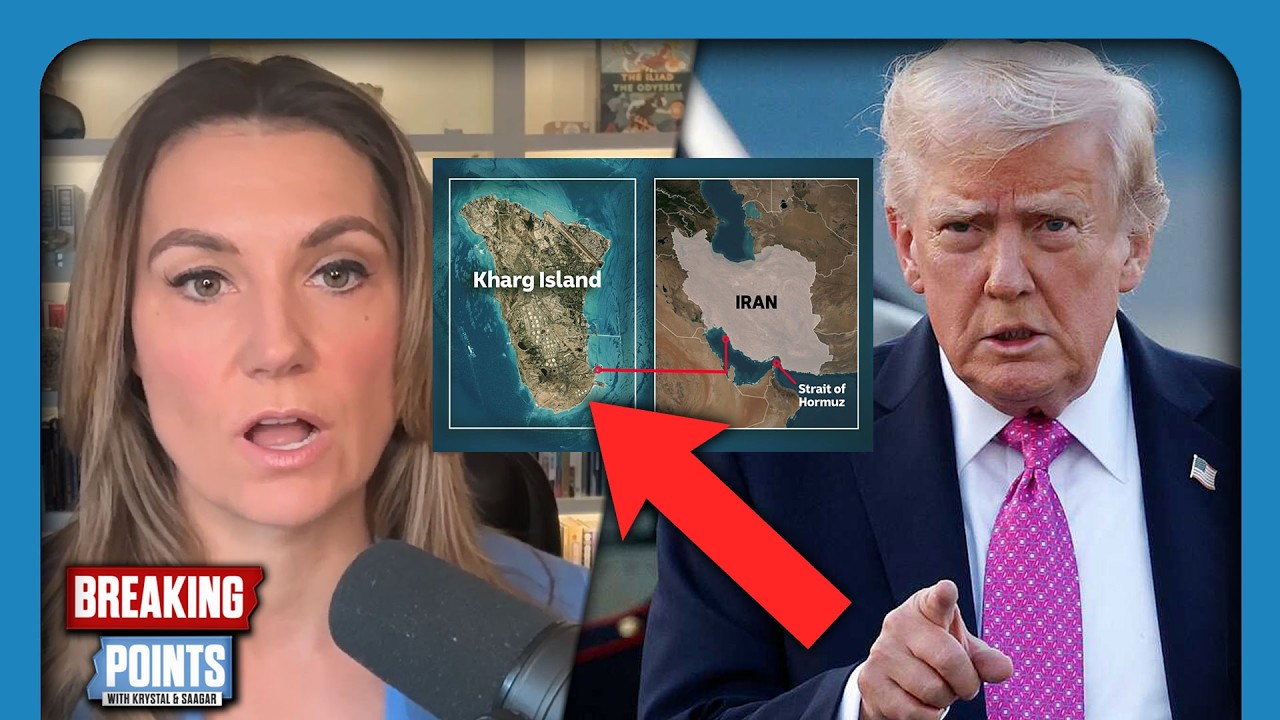
BREAKING: TRUMP ATTACKS OIL ISLAND, MARINES CALLED IN, 5 US PLANES HIT
"The US-Iran conflict escalates with a Trump-ordered strike on Iran's Karg Island, triggering Iranian retaliation against UAE oil facilities and US military assets, while the US deploys Marines and Israel plans a ground invasion of Lebanon."