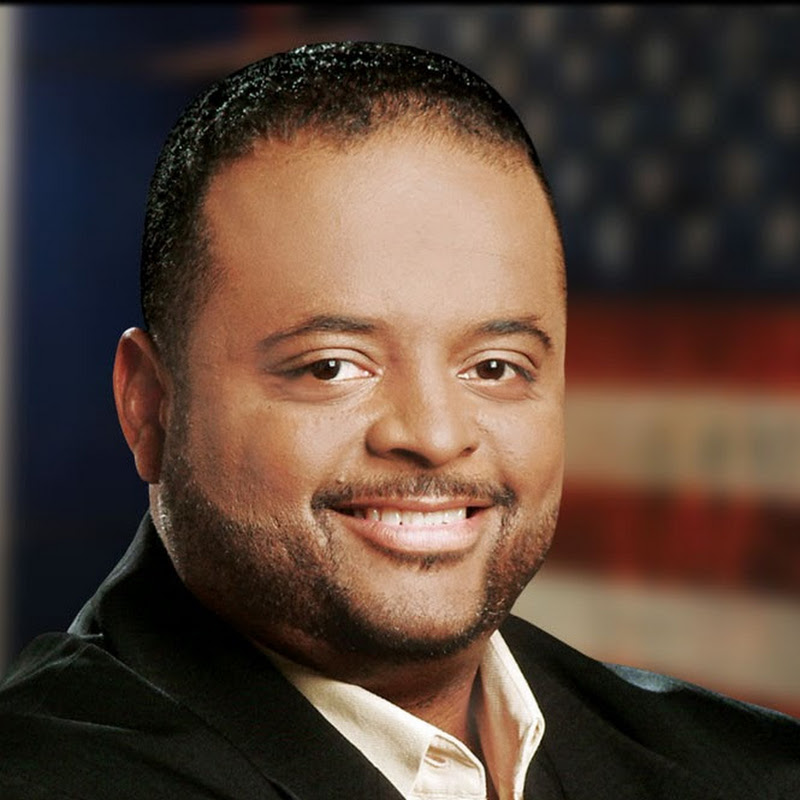
LIVE from Norfolk State. VA Referendum Could Flip 4 Seats. Youth Vote Push Intensifies (1)
YouTube · hnBE-nNOyes
Quick Read
Summary
Takeaways
- ❖Virginia's redistricting referendum on April 21st could change congressional maps from 11 districts to a 10-1 split, potentially favoring Democrats and flipping four seats.
- ❖The referendum is a direct response to Republican mid-decade gerrymandering in states like Texas, Florida, Missouri, and North Carolina, which has historically targeted and eliminated Black congressional districts.
- ❖Virginia Democrats, having achieved a 'trifecta' (control of governorship, House, and Senate), have used their power to pass significant legislation, including minimum wage increases, paid family leave, and advancing constitutional amendments for marriage equality, reproductive health, and voting rights.
- ❖Cameron Drew, a 19-year-old elected supervisor who won by eight votes, exemplifies the impact of youth engagement and the importance of every single vote.
- ❖Misinformation campaigns, including fake mailers using KKK imagery and falsely attributed endorsements from figures like Barack Obama, are being used to confuse voters and discourage a 'yes' vote.
- ❖The outcome in Virginia has national implications, potentially determining which party controls the U.S. House and influencing the certification of the 2028 presidential election.
- ❖Speakers urge voters to actively mobilize, encouraging individuals to ask five people to vote and those five to ask five more, emphasizing that 'when we vote, we win.'
Insights
1Virginia's Redistricting Referendum as a Counter-Gerrymander
Virginia Democrats are pushing a referendum to redraw congressional maps, aiming for a 10-1 Democratic majority, as a direct and aggressive response to Republican mid-decade gerrymandering tactics seen in states like Texas, Florida, and North Carolina. This move is framed as a necessary exercise of power to level the political playing field, rather than passively accepting previous Republican actions.
Roland Martin details how Republicans initiated mid-decade gerrymandering in Texas (2003, 2022), Florida (2022), Missouri, and North Carolina, wiping out Black congressional districts. Senator Lucas and Senator Kaine explicitly state that Virginia's referendum is Democrats 'rolling' and using power because Republicans used power. (, , )
2Impact of Trifecta Control on Legislative Achievements
When Democrats achieved a 'trifecta' (control of the governorship, House, and Senate) in Virginia, they swiftly passed long-stalled legislation, demonstrating the tangible benefits of unified political power. This includes significant advancements in minimum wage, paid family leave, and constitutional amendments related to marriage equality, reproductive health, and voting rights.
Senator Lock details multiple pieces of legislation passed and signed into law after the trifecta, including minimum wage, paid family leave, collective bargaining, and addressing unconscious bias in medical care. She also mentions three constitutional amendments (marriage equality, reproductive health, right to vote) that will be on the November ballot. (, , )
3Youth Engagement and the Power of a Single Vote
The election of Cameron Drew, a 19-year-old as a county supervisor by just eight votes, serves as a powerful illustration of how every vote matters and the potential for young people to enter and succeed in politics despite skepticism and opposition.
Roland Martin introduces Cameron Drew, who at 19, beat a conservative incumbent by 10 votes (later corrected by Drew to 8 votes). Drew explains he ran due to a large age gap in county representation and the youth feeling unrepresented. (, )
4Misinformation as a Voter Suppression Tactic
Opponents of the referendum are actively deploying deceptive mailers that use KKK themes and falsely attribute 'no' votes to respected Black figures like Barack Obama, aiming to confuse and disenfranchise voters, particularly older Black voters.
Senator Lock describes 'destructive mailers' using KKK themes and Obama's picture to tell people to vote 'no.' She explains how they counter this by showing the fake flyers in churches and asking, 'In what world does Barack Obama come on television in an ad and tell you to vote yes, then he sends you a mailer and tells you to vote no?' (, )
5National Implications of State-Level Electoral Outcomes
The Virginia referendum's outcome is critical for national politics, as flipping congressional seats could determine control of the U.S. House. This control dictates committee chairmanships, legislative agendas, and even the certification of future presidential elections, highlighting how state-level actions have cascading effects on federal power.
Senator Warner explains that Republicans passed a reconciliation bill, giving tax breaks to billionaires and cutting Medicaid/SNAP benefits, only because they 'stole' three seats in North Carolina, which provided their margin. Congressman Scott later clarifies the House majority is 228-215, meaning three seats would flip control. Speaker Scott emphasizes that whoever controls the House in November will control it in 2028, which is when the presidential election is certified. (, , )
6Black Political Power and Committee Leadership
Gaining Democratic control of the House would significantly enhance Black political power, leading to a substantial increase in Black members chairing committees and subcommittees, which directly influences legislative priorities and resource allocation.
Roland Martin states that if Democrats win the House, Hakeem Jeffries is likely to be the first Black Speaker. He also notes that six to seven African Americans would chair committees, including Congressman Bobby Scott, and up to 30 CBC members would chair subcommittees. (, , )
7Historical Context of Voting Rights and Jim Crow
The ongoing struggle for voting rights is deeply rooted in American history, with current voter suppression efforts echoing past Jim Crow tactics. The 1902 Virginia constitutional amendment, specifically designed to disenfranchise Black voters, serves as a historical precedent for modern attempts to restrict access to the ballot.
Speaker Don Scott explains that the law requiring the governor to restore voting rights for formerly incarcerated individuals was passed in 1902 specifically to keep Black people from voting. He quotes Carter E. Carter Glass, who explicitly stated this motive. (, , )
Key Concepts
The Exercise of Power
This model highlights that political power, once attained, must be actively and strategically used to achieve policy goals and counter opposition tactics. It contrasts a 'play nice' approach with an aggressive, 'fight fire with fire' strategy, especially in response to perceived abuses of power by the opposing party (e.g., mid-decade gerrymandering). Virginia Democrats' legislative achievements and the redistricting referendum are presented as examples of effectively exercising power.
Participation is Politics
This model underscores that political outcomes are directly determined by voter participation. It argues that disengagement or apathy leads to a lack of representation and allows opposing forces to dominate. The low turnout among younger demographics compared to older voters is cited as a reason for their underrepresentation, emphasizing that showing up to vote is the fundamental act of political agency.
Lessons
- Vote 'yes' in the Virginia redistricting referendum by April 21st, utilizing early voting options (mail, in-person early, election day) to maximize turnout.
- Mobilize your personal network: Ask five people you know to vote 'yes' and encourage them to ask five more, creating a ripple effect of engagement.
- Educate yourself and others on the referendum's importance and counter misinformation by sharing accurate information about voting procedures and legislative impacts.
Grassroots Voter Mobilization: The 'Ask Five' Strategy
Identify five individuals in your network (friends, family, neighbors) who are eligible to vote in the Virginia referendum.
Contact each of these five individuals and clearly explain the importance of voting 'yes' in the April 21st referendum, providing accurate information about early voting options.
Encourage each of your five contacts to, in turn, reach out to five of their own contacts and repeat the message, thereby exponentially expanding voter outreach.
Notable Moments
19-year-old Cameron Drew, a college student, shares his experience winning a local supervisor election by just eight votes against his former high school government teacher.
This highlights the direct impact of every vote, the potential for youth in politics, and the ability to overcome skepticism, serving as an inspiring example for young voters.
Senator Louise Lucas recounts pushing for the 10-1 redistricting map despite internal Democratic resistance, holding out for the most aggressive option.
This illustrates the importance of strong, uncompromising leadership in political negotiations and the strategic use of power to achieve desired outcomes, even against initial party hesitation.
Senator Mark Warner passionately declares, 'Until there's a Republican party, enough with bipartisanship and Louise, let's kick their ass.'
This moment encapsulates the aggressive, 'no more playing nice' stance advocated by the host and guests, reflecting a significant shift in Democratic strategy in response to perceived Republican intransigence and power grabs.
Host Roland Martin concludes by stating, 'Vote or shut the hell up,' emphasizing personal responsibility for political outcomes.
This blunt statement reinforces the central theme of the podcast: active participation through voting is non-negotiable for those who wish to see political change and hold leaders accountable.
Quotes
"If somebody is in a fight and they pick up a 2x4, I'mma pick up a crowbar. I'm not going to sit here and say that's not right, that's not fair, when you get clubbed upside the head."
"We have the power. We have the majority in the Senate. We know that we're going to get the majority in the House. So let's start talking about redistricting right now. And they started it. I'm not going to say what she said, but we can finish it."
"The most kingly of all oppressions is to take a country to war without seeking the approval of the legislative branch. Kings do this all the time and they impoverish and injure their people to change their minds or change the subject from something else. It is the most kingly of all oppressions. It's tyranny."
"We have an inescapable responsibility to do all we can for as long as we can, for as long as we have this power."
"There is no Republican party anymore. There is only a group of syncopants to Donald Trump. So to echo what my friend Tim Kaine said, I won't use it in Latin. Until there's a Republican party, enough with bipartisanship and Louise, let's kick their ass."
"The whole world want our swag. The whole world wants what we have. So now when we get out there and we start influencing and start talking and start voting, everybody is attracted to us. So this is not the time to hide your light under Busher barrel. You better let your light shine. Let your light shine right now in this moment in this time."
Q&A
Recent Questions
Related Episodes
George Floyd 6 Years Later. Redistricting War in The South. Talarico Senate Campaign
"This episode exposes the ongoing legislative battles and strategic resistance against efforts to diminish Black political power, from federal policing reform to state-level gerrymandering and calls for economic boycotts by Black athletes."

All Roads Lead To the South: Nat’l Day Of Action For Voting Rights | Mass Rally | Montgomery, AL
"A mass rally in Montgomery, Alabama, ignites 'Freedom Summer 2026' to combat the Supreme Court's decimation of Black political power and demand unprecedented voter mobilization across the South."

PBS News Hour full episode, May 8, 2026
"This episode unpacks escalating US-Iran military actions in the Strait of Hormuz, a resilient yet divergent US jobs market, the ongoing political battle over congressional redistricting, and the controversial new US counterterrorism strategy."

"Mini" Super Tuesday Primaries. Bodycam Clears Black Teen. Haitian Heritage Month. #TheBreakdown
"This episode breaks down critical political developments, highlights the power of bodycam footage in exonerating a Black teen, celebrates Haitian heritage, showcases innovative arts education, and champions breast cancer awareness for Black women."