
Col. Jacques Baud: The Middle East Just Changed Forever
YouTube · iYcnztEdjq0
Quick Read
Summary
Takeaways
- ❖Iran's military strategy successfully exhausts Israeli air defense systems through saturation attacks.
- ❖US and Israeli forces are experiencing ammunition shortages due to unexpected Iranian resilience.
- ❖The destruction of four out of thirteen global THAAD systems in the Middle East exposes US defense vulnerabilities.
- ❖Arab nations are realizing that US alliance is 'toxic' as it attracts conflict and offers unreliable protection.
- ❖The US prioritizes Israel's defense over its Arab allies, treating them as 'second-class' partners.
- ❖Western attempts to assassinate leaders like Iran's Supreme Leader or Russia's Putin are counterproductive, strengthening national unity and making situations more unpredictable.
- ❖Western foreign policy decisions are increasingly based on 'hate and obsession' rather than intelligence assessments, leading to repeated strategic failures.
- ❖A US ground invasion of Iran is deemed unfeasible due to challenging terrain, Iranian technological parity, and fragmented proxy groups.
Insights
1Iran's Attrition Strategy Exhausts Israeli Air Defenses
Iran's military approach involves overwhelming Israeli air defense systems, like the Iron Dome, with a high volume of missiles and drones in initial attacks. This saturation exhausts the defense's ammunition and capabilities, allowing subsequent, smaller waves of attacks to penetrate easily and inflict significant damage. This strategy has proven effective, leading to Israeli and American calls for a ceasefire due to ammunition shortages.
The speaker references the '12 days war' and current conflict, noting that after a few days, Israeli air defenses were 'completely exhausted,' allowing Iranian missiles to 'go through very easily.' He states Israelis and Americans are 'begging for ceasefire because they are short on ammo.'
2US as a 'Toxic Ally' in the Middle East
Arab countries hosting US bases are realizing that being an American ally is detrimental. The US presence attracts conflict and makes host nations targets for Iranian retaliation. Furthermore, US defense technology, such as the THAAD system, has shown vulnerabilities, with four out of thirteen global systems reportedly destroyed. The US is perceived as prioritizing Israel's security over its Arab allies, treating them as 'second-class' partners.
Baud states, 'some of these Arab countries realize that being an ally of the US is toxic because the US attracts war... and it's not a reliable partner.' He mentions 'four [THAAD] systems have been destroyed in the Middle East. So it's one-third of the US capacities.'
3Western Policy Driven by Hate, Not Intelligence
Western decision-making, particularly regarding Iran and Russia, is characterized by irrationality, hate, and obsession rather than objective intelligence assessments. This leads to counterproductive actions, such as attempts to assassinate leaders, which only serve to strengthen national unity and make situations more unpredictable. Intelligence advice, like the CIA's counsel against war with Iran, is often ignored by political leadership.
Baud describes Western warfare as 'no longer driven by reason... is driven by hate and obsession. Period.' He cites the British intelligence approach of not killing known IRA leaders to maintain predictability, contrasting it with current Western actions. He also mentions the CIA advising against war with Iran in 2002 and Ratcliffe advising Trump against it, both being ignored.
4Unfeasibility of a US Ground Invasion of Iran
A direct ground invasion of Iran by US forces is highly improbable and strategically unsound. Iran's mountainous terrain is ideal for guerrilla warfare, and its military possesses advanced technology to counter attacks. Attempts to use Kurdish groups as proxies are complicated by their political fragmentation and the strong ties some Iranian Kurdish factions have with the Iranian government, making them unreliable for regime change efforts.
Baud describes Iran as 'extremely difficult terrain, very mountainous, ideal for guerrilla warfare... it would be like Afghanistan but probably even worse.' He notes Kurdish groups are 'split politically' and 'most of them have good relation with the Iranian government.'
Bottom Line
The perceived 'toxicity' of US alliances could accelerate a broader geopolitical realignment in the Middle East, pushing traditional US partners towards non-Western powers like China and Russia for security and stability.
This shift would significantly diminish US influence, alter global energy markets, and potentially create new economic and security blocs, challenging the existing world order.
Nations and businesses can strategically position themselves by fostering relationships with emerging regional powers and diversifying their geopolitical risk exposure, anticipating a multi-polar Middle East.
Western sanctions and military threats against countries like Iran and Russia are inadvertently strengthening nationalist sentiment and internal unity, rather than fostering dissent or regime change.
This suggests that current Western foreign policy tools are counterproductive, leading to greater resistance and entrenchment of targeted regimes, making diplomatic solutions harder to achieve.
Policymakers could explore alternative engagement strategies focused on de-escalation, economic incentives, and cultural exchange to achieve long-term influence, rather than relying on coercive measures that backfire.
Key Concepts
Attrition Warfare
A military strategy focused on gradually wearing down an opponent's resources, personnel, and will to fight through sustained attacks, rather than decisive battles. Iran's strategy of saturating air defenses to exhaust Israeli systems exemplifies this.
Toxic Ally Syndrome
The concept that an alliance, particularly with a major power, can become a liability for smaller partners by drawing them into conflicts that are not in their direct interest, attracting enemy responses, or failing to provide adequate protection when needed. The US's role in the Middle East is framed this way.
Intelligence-Driven vs. Emotion-Driven Decision Making
The contrast between making strategic decisions based on thorough, objective intelligence analysis versus decisions influenced by emotional biases, political narratives, or ideological obsessions. The speaker argues Western policy often falls into the latter, leading to poor outcomes.
Lessons
- Re-evaluate the long-term strategic value of alliances, considering whether they attract conflict or provide genuine security, especially for smaller nations.
- Scrutinize intelligence sources and political narratives for emotional biases or unsubstantiated claims, particularly in foreign policy decision-making.
- Analyze the effectiveness of military technologies and defense systems in real-world attrition scenarios, rather than relying solely on theoretical capabilities or past performance against weaker adversaries.
Notable Moments
Baud recounts a British intelligence training anecdote from the Northern Ireland conflict where British intelligence deliberately chose not to kill known IRA leaders. The rationale was that knowing the enemy's leadership allowed for predictability and strategic anticipation, whereas killing them would introduce an unknown successor, restarting the intelligence gathering process and making the situation more volatile.
This anecdote serves as a powerful critique of current Western assassination strategies, arguing that they are counterproductive and lead to greater unpredictability and instability, rather than achieving desired political objectives.
Quotes
"The whole issue is not to reach an objective in Israel but the idea was to exhaust the air defense system and that's exactly what we are witnessing today."
"Being an ally of the US is toxic because it attracts such kind of reaction and it's not a reliable partner because at the end of the day it's not its technology may not be as performing as claimed."
"The US is not there to protect the Arab world. They are there to protect Israel and they are using the Arab world to protect Israel. Period."
"Our wars are driven by obsession and an inadequate judgment."
"The only impact of all these sanction threats and and all the military bases you deploy all around Iran, all that has the only effect to strengthen the nationalist sense in the population."
"We are beyond rationality when it talk when it it's that and nobody wants to listen to their intelligence services and that's that's the the the thing that concerns me because we are in in a phase in the west at large... where we decide without knowing what we decide."
Q&A
Recent Questions
Related Episodes
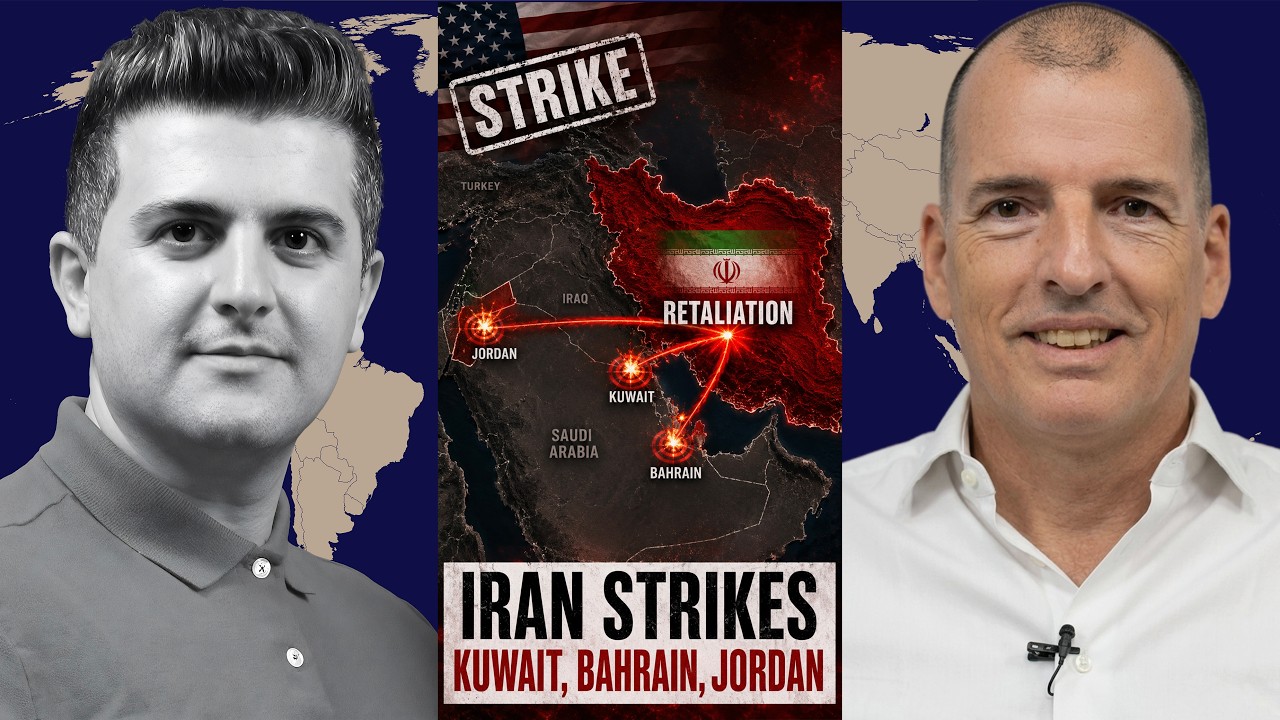
Alex Krainer: US STRIKES Iran – Iran RETALIATES Against Kuwait, Bahrain & Jordan!
"Amidst escalating US-Iran conflict and Iranian retaliation against regional US allies, this episode argues that US foreign policy is deeply controlled by an 'Anglo-Zionist conspiracy' led by the Rothschild banking dynasty, prioritizing Israeli interests over American ones."

Patrick Henningsen: Hezbollah JUST Fired Back at Israel - Iran Vows to “Crush” All Attacks
"Patrick Henningsen argues that the US and Israel initiated an illegal war against Iran, driven by Trump's incompetence and Israeli influence, leading to an inevitable escalation with severe global economic repercussions."
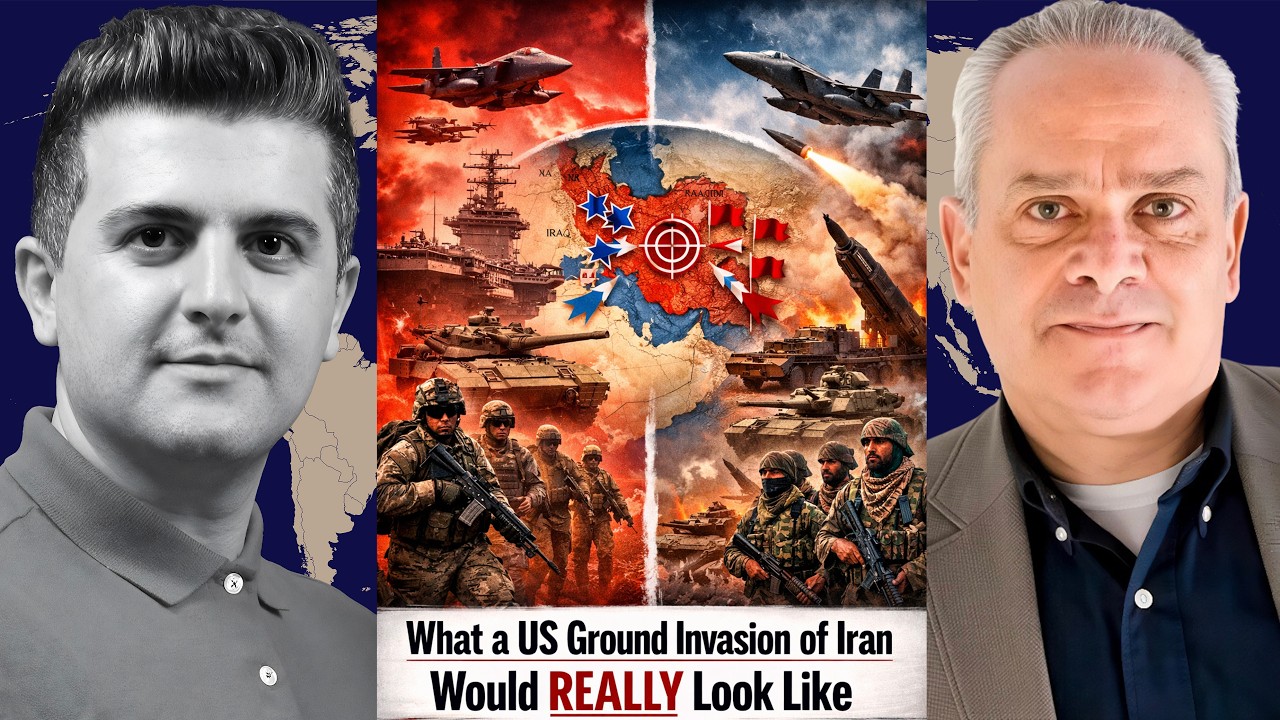
Col. Jacques Baud: What a US Ground Invasion of Iran Would REALLY Look Like
"Colonel Jacques Baud dissects the strategic futility of a US ground invasion of Iran, arguing that current troop levels are insufficient and such an action would backfire, exposing US allies and potentially leading to Iran's nuclearization."

Robby Soave GOES OFF On ANNOYING Liberal Black Woman Making Emotional Trump Deranged Arguments!
"The host dissects a heated foreign policy debate, arguing that 'left-wing' emotionalism and 'Trump derangement' prevent a rational understanding of US sanction strategies against Cuba and Iran."