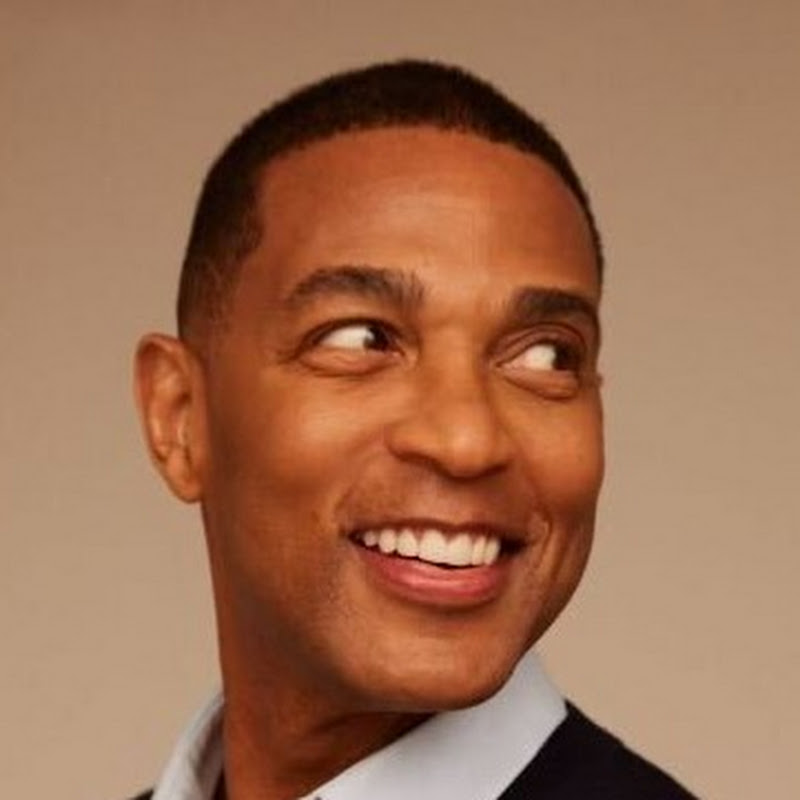
Lemon LIVE at 5 | Donald Trump's Racist Redistricting Plans Are Failing!
YouTube · inUvnmbBNQc
Quick Read
Summary
Takeaways
- ❖Everything in America is about race, even if people don't want to discuss it.
- ❖True patriotism involves the right to dissent and criticize one's country, not just performative displays.
- ❖The concept of 'white identity' is often predicated on Black people being at the bottom of a societal hierarchy.
- ❖Black people's achievements do not negate the reality of systemic racism in America.
- ❖Conservative political figures are strategically co-opting civil rights language (e.g., 'reparations') to advance a 'white nationalist agenda'.
- ❖Voter turnout, especially among Black communities, is a powerful counter to efforts to diminish voting power.
Insights
1The 'Stain' of Race on the American Project
Eddie Glaude Jr. uses the metaphor of black ink spilling over the Declaration of Independence and Constitution to illustrate how race 'stains' the American project. While the principles and ideals are still visible, they must be viewed 'through the stain' of slavery and its enduring impact. This means race is not just an 'issue' but fundamentally informs the economy, social, cultural, and political realities of the country, even influencing a sense of entitlement where Black people don't need to be present for racial dynamics to operate.
Glaude describes the inkwell spilling over foundational documents, stating, 'race stains the American project... it impacts the economy. It impacts the social and cultural and political reality of the country at every turn.'
2White Identity Predicated on Black Subjugation
Glaude argues that a certain notion of 'white identity' acquires meaning only by positioning Black people at the 'bottom of the well.' This hierarchy is essential for their self-understanding, creating an 'ongoing reproduction of the hierarchy that requires of us to be fixed in our place.' Any movement outside this 'fixity' causes 'all hell to break loose' because it interrupts the established racial orbit, where Black people serve as the 'anchor' for white self-definition.
Glaude states, 'That hierarchy is predicated upon us being at the bottom of the well. That's how a certain notion of white identity acquires meaning. We're not them.'
3Strategic Co-option of Civil Rights Language
Conservative figures are deliberately adopting and inverting language from the civil rights movement, such as 'reparations' and 'reverse discrimination,' to advance their own 'white nationalist agenda.' This strategy aims to frame their actions as rectifying perceived injustices against white people, thereby undermining the original intent of civil rights protections and distorting democratic principles.
Glaude notes, 'He's using the language of reparations, Don, because they believe that reverse discrimination, right, is actually more prevalent than uh the discrimination against black and brown folk.'
4Redistricting Battles as a 'Second Redemption'
The host and guest frame recent legal challenges and legislative actions regarding redistricting in states like Alabama and South Carolina as a contemporary 'second redemption.' This refers to a historical period after Reconstruction where Southern Democrats used violence and legal means to disenfranchise Black voters and reassert white political control. The current efforts are seen as a continuation of this historical pattern, aiming to diminish Black voting power and consolidate conservative political influence.
Glaude states, 'We're in the midst of a second redemption.' Monique Pressley later details how South Carolina's Senate rejected a map that would have eliminated the only Black majority district, and Alabama's map was rejected by courts for being 'intentionally race-based.'
Bottom Line
The court system, historically, has often served to consolidate 'white power' rather than consistently advance civil rights, with the Warren Court era being an exception rather than the rule.
Reliance solely on courts for racial justice may be a miscalculation, as their historical role often aligns with maintaining existing power structures. Activists and citizens must understand this broader historical context.
Advocacy for racial justice needs to diversify its strategies beyond legal challenges, incorporating grassroots organizing, political pressure, and direct action to counteract systemic biases within judicial systems.
The 'grift' and corruption observed in certain political administrations are not merely financial but also threaten the fundamental 'foundations of the republic,' revealing a deeper cynicism among those who claim patriotism.
This suggests that for some, 'patriotism' is a performative facade, allowing for the exploitation of national resources and institutions as long as it aligns with their ideological goals (e.g., deconstructing the administrative state).
Challenging performative patriotism by exposing its contradictions and linking corruption directly to the erosion of democratic principles could be a powerful rhetorical and political strategy to mobilize broader public opposition.
Key Concepts
Double Consciousness (Nation-State)
Expanding on W.E.B. Du Bois's concept, Eddie Glaude Jr. argues that America itself suffers from a 'double consciousness,' imagining itself simultaneously as a beacon of freedom and a white republic. This inherent contradiction leads to a 'madness' at the heart of the country, where the nation struggles to reconcile its ideals with its historical and ongoing racial realities, often requiring the erasure or subjugation of non-white groups to maintain a perceived 'white republic' identity.
Performative Patriotism
This model describes patriotism as a superficial display of loyalty (e.g., waving flags, standing for the anthem) that often serves to mask deeper political agendas or racial biases. It contrasts with 'actual patriotism,' which is defined as understanding and upholding the constitutional rights to dissent, protest, and criticize the country, allowing for a more inclusive and honest national dialogue.
Second Redemption / Second Lost Cause
This framework draws a parallel between current efforts to suppress Black voting power and the post-Reconstruction 'Redemption' period (late 19th century) when Southern Democrats used violence and disenfranchisement to regain control and establish Jim Crow. The guest suggests that contemporary redistricting and voting rights assaults represent a 'second redemption' or 'second lost cause,' aiming to reassert white political dominance and undermine multi-racial democracy.
Lessons
- Challenge 'performative patriotism' by advocating for the right to dissent and criticize the country, emphasizing that true patriotism involves holding the nation accountable to its ideals.
- Educate yourself and others on the historical context of 'redemption' and its modern manifestations in efforts to suppress voting rights, particularly through redistricting.
- Support organizations and legal efforts (like the LDF and ACLU) actively fighting against racially discriminatory redistricting and voter suppression tactics in the courts and through grassroots organizing.
Notable Moments
Don Lemon describes an encounter with an 'entitled white man' who took up multiple parking spaces and refused to move his SUV, highlighting the racial double standard where Lemon's reaction would be met with severe consequences.
This anecdote provides a concrete, relatable example of the everyday racial and gendered entitlement that Black individuals often face, illustrating how different groups are policed and perceived in public spaces and the implicit power dynamics at play.
Don Lemon criticizes the erection of a UFC wrestling ring on the White House lawn, contrasting it with how a Black president like Barack Obama would have been perceived for similar actions.
This moment underscores the perceived racialized standards of decorum and 'taste' applied to presidential administrations, suggesting that actions deemed 'ghetto' or 'tacky' when associated with a Black president are tolerated or even celebrated from a white president.
Quotes
"I do not love America and never have, especially now. That's what I wrote. And and and part of that has to do with the fact that I've had to survive the country."
"Without us at the bottom, whiteness doesn't have its meaning. So there's always this ongoing reproduction of the hierarchy that requires of us to be fixed in our place."
"Not everything in I I have this sentence in the book, not everything is in the US is about race, but everything is, you know."
"When we're talking about race, I'm not talking about black folk. I'm talking about the very way in which the white American as a concept distorts and disfigures democratic principles."
"Our task in this moment is to make sure our babies make it to the other side. And the way we're going to be able to do that... is tell the truth with love lit by rage."
Q&A
Recent Questions
Related Episodes
George Floyd 6 Years Later. Redistricting War in The South. Talarico Senate Campaign
"This episode exposes the ongoing legislative battles and strategic resistance against efforts to diminish Black political power, from federal policing reform to state-level gerrymandering and calls for economic boycotts by Black athletes."

"Mini" Super Tuesday Primaries. Bodycam Clears Black Teen. Haitian Heritage Month. #TheBreakdown
"This episode breaks down critical political developments, highlights the power of bodycam footage in exonerating a Black teen, celebrates Haitian heritage, showcases innovative arts education, and champions breast cancer awareness for Black women."

All Roads Lead To the South: Nat’l Day Of Action For Voting Rights | Mass Rally | Montgomery, AL
"A mass rally in Montgomery, Alabama, ignites 'Freedom Summer 2026' to combat the Supreme Court's decimation of Black political power and demand unprecedented voter mobilization across the South."

The Immortal Jim Crow. 'Goon Squad' Defamation Suit. Google Race Discrimination Case. #TheBreakdown
"This episode exposes the enduring grip of systemic racism through a Mississippi defamation suit, Google's racial discrimination settlement, and a deep dive into how Jim Crow's legacy still shapes Black America today."