
The 24-Hour Turnaround: Start Today & Feel Different Tomorrow
YouTube · jfLwabNA9IQ
Quick Read
Summary
Takeaways
- ❖Persistent feelings of being stuck, avoiding tasks, or a messy environment signal a need for a reset.
- ❖The 24-hour turnaround begins the moment you take the first step, regardless of the time of day.
- ❖Clearing mental clutter via a 'brain dump' reduces the 'Zagarnic effect,' where the brain holds onto incomplete tasks.
- ❖Tidying a small physical space for five minutes reduces mental processing load and negative emotions.
- ❖Intentional movement, even for five minutes, shifts emotional states and improves brain function by regulating stress.
- ❖Making tomorrow easier by preparing one small thing today reduces friction and increases the likelihood of follow-through.
- ❖Claiming one 'win' at the end of the day trains your brain (Reticular Activating System) to focus on progress and build self-trust.
Insights
1Clear the Mental Clutter with a Brain Dump
Write down every thought, task, and worry from your mind onto paper. This 'mental vomiting' gets open loops out of your head. Then, cross off anything not happening today and circle one single most important item to focus on.
The Zagarnic effect shows the brain holds onto incomplete tasks. Research in the Journal of Personality and Social Psychology indicates that completing a task or making a clear plan reduces mental drain and intrusive thoughts.
2Clear the Physical Clutter in One Small Space
Dedicate five minutes to tidying one small, visible area, such as a nightstand, car, or a corner of your desk. This isn't about deep cleaning but about creating immediate visual order.
A Yale study (Neuron journal) found physical mess makes the brain work harder. A 2025 study (Journal of Environmental Psychology) linked cluttered homes to more negative emotions and lower life satisfaction.
3Move Your Body Intentionally for Five Minutes
Engage in any form of intentional physical movement for at least five minutes, without needing to change clothes or break a sweat. The goal is to shift your emotional state, not to achieve a full workout.
Movement helps the brain regulate stress and emotion, boosting mood and lowering anxiety (Frontiers in Psychology, 2025). It also improves brain functions like focus, memory, and decision-making (British Journal of Sports Medicine).
4Make Tomorrow Easier Today
Identify one small thing you can do today to reduce friction or effort for yourself tomorrow. This could be laying out clothes, preparing coffee, packing a bag, or doing dishes.
James Clear's research (Atomic Habits) highlights that the biggest predictor of follow-through is how easy a behavior is to start, as behavior follows the path of least resistance.
5Claim One Win Before the Day Ends
Before going to sleep, acknowledge at least one thing you are proud of or that went well during the day. This practice retrains your brain to notice progress and build self-trust.
Dr. Martin Seligman's 'What Went Well' study (positive psychology) showed that focusing on daily positives increases happiness and reduces sadness, with lasting benefits. This also leverages the Reticular Activating System to filter for positive evidence.
Key Concepts
The Zagarnic Effect
The brain holds onto incomplete tasks more strongly than completed ones, creating 'open loops' that clutter the mind. Writing down these tasks and making a plan to deal with them reduces this mental drain.
Behavior Follows the Path of Least Resistance
As articulated by James Clear, the biggest predictor of whether you follow through on a behavior is how easy it is to start. Reducing friction makes actions more likely to occur.
Reticular Activating System (RAS)
A filter in the brain that decides what you notice consciously and what you ignore. By intentionally focusing on 'wins' or positive aspects, you train your RAS to scan for progress instead of problems, building self-trust and confidence.
Lessons
- Perform a 'brain dump' by writing down every thought and task, then cross off non-urgent items and circle your single most important task for the day.
- Spend five minutes tidying one small, visible area in your home or workspace to immediately reduce mental clutter.
- Engage in five minutes of intentional physical movement (e.g., walking, stretching, dancing) to shift your emotional state and improve cognitive function.
- Identify and complete one small task today that will make tomorrow morning or your day easier, such as laying out clothes, preparing coffee, or doing dishes.
- Before bed, reflect on your day and consciously identify at least one 'win' or something you are proud of to build self-trust and train your brain to recognize progress.
The 24-Hour Turnaround: 5 Steps to Regain Control
Step 1: Clear Mental Clutter - Do a brain dump, cross off non-urgent tasks, and circle one priority.
Step 2: Clear Physical Clutter - Tidy one small space for 5 minutes (e.g., nightstand, car, desk).
Step 3: Move Your Body - Engage in 5 minutes of intentional movement (e.g., walk, stretch, dance).
Step 4: Make Tomorrow Easier - Complete one small task today that reduces friction for tomorrow (e.g., lay out clothes, set up coffee).
Step 5: Claim One Win - Before bed, acknowledge at least one thing you did well or are proud of today.
Quotes
"If you want to feel better, you have to move while you feel worse. Confidence doesn't come from just motivation or affirmations. It comes from evidence."
"If everything's important, nothing is. And if everything's up in your mind, you got open loops weighing you down."
"Movement isn't something you do once you feel better. Movement is what helps you feel better."
"The single biggest predictor of whether you're going to follow through is not discipline. It's not willpower. It's how easy the behavior is to start."
"If you don't stop to acknowledge what you're doing right, your brain doesn't register it at all."
Q&A
Recent Questions
Related Episodes

The Science of Making & Breaking Habits: How to Change Your Life in 1 Month
"James Clear, author of 'Atomic Habits,' reveals the science-backed systems for building lasting habits and achieving significant life changes through tiny, consistent actions."
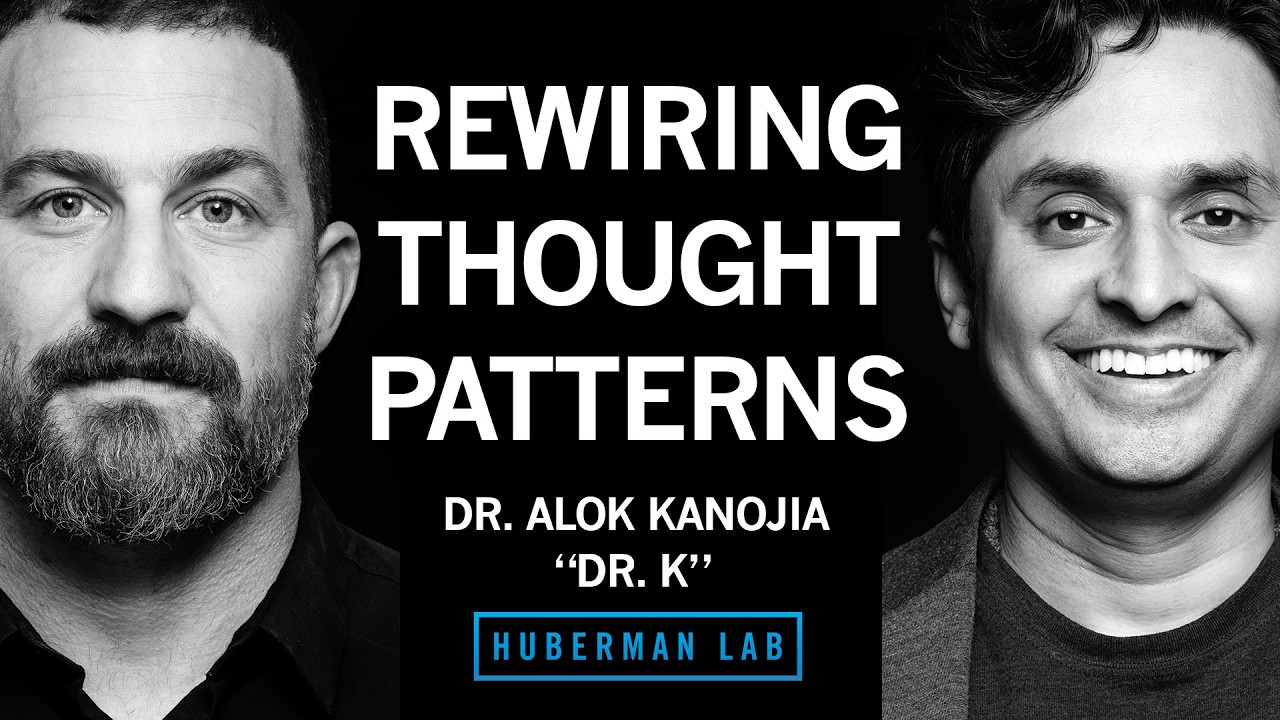
Unlearn Negative Thoughts & Behaviors Patterns | Dr. Alok Kanojia (Healthy Gamer)
"Dr. Alok Kanojia, a psychiatrist and former monk, details how to unlearn unhealthy thought patterns and behaviors by understanding the ego, cultivating distress tolerance, and leveraging ancient meditative practices like Shunya and Yoga Nidra to reprogram the subconscious mind."

Unc, Ocho & Iso Joe REACT to NBA Draft: AJ Dybantsa goes No. 1, NFL denies Brendan Sorsby | Nightcap
"The Nightcap crew breaks down the NBA Draft's top picks, dissecting team strategies, player potential, and the financial implications of rookie contracts and major trades, alongside broader discussions on athlete development and life lessons."

Recording Scary FIRST DATE Stories!!!
"Four terrifying first-date stories expose the dark side of modern dating, from stalkers and cheating spouses to drug-spiking and gang violence, revealing critical lessons in vigilance and self-preservation."