
Jesse Jackson's Legacy: From Marching with MLK to Building the Rainbow Coalition
YouTube · k8mWe-eayU4
Quick Read
Summary
Takeaways
- ❖Jesse Jackson effectively married grassroots social movements with electoral politics, creating a powerful vehicle for change.
- ❖He founded the National Rainbow Coalition, expanding the civil rights movement's reach into the 1980s and beyond.
- ❖Jackson's international activism included a significant role in the global anti-apartheid movement.
- ❖His presidential campaigns in 1984 and 1988 were instrumental in democratizing the Democratic Party's delegate selection process.
- ❖Jackson championed proportional representation not only in voting but also in economic contracts and media employment for marginalized communities.
- ❖His work laid crucial groundwork that enabled Barack Obama's presidential victory in 2008.
Insights
1Marrying Grassroots Movements with Electoral Politics
Jesse Jackson uniquely understood and implemented a strategy to connect the energy and demands of grassroots social movements with the formal structures of electoral politics. This approach allowed activists to leverage political vehicles to advance their causes, moving beyond traditional protest to influence policy and party platforms.
Prior to the 1980s, many activists had a 'sketchy relationship' with electoral politics, but Jackson 'saw that that was a vehicle for being able to bring this country to its principles.' He built both an electoral movement within the Democratic Party and the National Rainbow Coalition outside it.
2Democratizing the Democratic Party's Delegate System
A significant, yet often overlooked, contribution of Jackson was his successful push to change the Democratic Party's delegate selection rules from a 'winner take all' system to proportional representation. This reform ensured that candidates received delegates in proportion to their votes, making the process more inclusive and representative of diverse voter bases.
Larry Ham states, 'Jesse Jackson helped change that so it was proportional. You got the number of delegates in proportion to the number of votes you received.' This 'mechanistically was one of the things that helped pave the way... for Barack Obama to become president.'
3Paving the Way for Barack Obama's Presidency
Jackson's persistent efforts to democratize the Democratic Party, particularly through changes in delegate allocation, created a more equitable political environment. These structural changes, alongside his coalition-building, established a foundation that made it possible for a Black candidate like Barack Obama to successfully run for and win the presidency decades later.
Professor Lusain notes, 'the reason Barack Obama becomes president in 2008 is because of the work that Jackson and others like Fanny Liu Hamer who made sure that the Democratic Party would democratize and change the rules of the game.'
4Advocacy for Proportional Representation Beyond Politics
Jackson extended the principle of proportional representation beyond political elections into economic and media spheres. He challenged corporations and media outlets to ensure that Black people received contracts, business opportunities, and employment in proportion to their presence in the population, aiming to address systemic economic and representational disparities.
Larry Ham explains, 'he introduced that principle not only into the political sphere, but into the economic sphere that black people... should have representation proportional to our presence in the population, should have contracts and business in proportion to our population.'
5International Human Rights and Anti-Apartheid Activism
Jackson's influence was not confined to the United States; he was a prominent figure in international human rights and peace movements. His consistent advocacy against South African apartheid, including his presence during Nelson Mandela's release, highlighted his commitment to global justice.
Professor Lusain states, 'Jackson was a central voice in this country consistently on raising that issue' regarding anti-apartheid, and 'when finally Mandela was released from prison... Jackson was there.'
Lessons
- Actively engage in both grassroots organizing and electoral politics to drive systemic change, following Jackson's model of marrying movements with political vehicles.
- Advocate for proportional representation and equity in all sectors—political, economic, and media—to ensure fair access and opportunities for marginalized communities.
- Support and participate in efforts to democratize political processes and party rules, recognizing that such structural changes can pave the way for future progress and diverse leadership.
Quotes
"Jackson's life contributed to making this country more democratic, more inclusive, more fair. What Jackson was able to do was to marry movements, grassroots movements with electoral politics."
"The reason Barack Obama becomes president in 2008 is because of the work that Jackson and others like Fanny Liu Hamer who made sure that the Democratic Party would democratize and change the rules of the game."
"Jesse Jackson helped change that so it was proportional. You got the number of delegates in proportion to the number of votes you received. And I think that that mechanistically was one of the things that helped pave the way... for Barack Obama to become president."
"He introduced that principle not only into the political sphere, but into the economic sphere that black people... should have representation proportional to our presence in the population, should have contracts and business in proportion to our population."
"We must never surrender. America will get better and better. Keep hope alive. Keep hope alive. Keep hope alive."
Q&A
Recent Questions
Related Episodes

Iran Deal Skepticism. Whoopi Vs Vance. Potomac Park Invasion. Racist Hurls Slurs At Black Boy.
"This episode dissects multiple instances of alleged anti-Black policies and racial injustice, from the Trump administration's legal challenges to reparations and the Iran deal, to police brutality and the erasure of Black history."

All Roads Lead To the South: Nat’l Day Of Action For Voting Rights | Mass Rally | Montgomery, AL
"A mass rally in Montgomery, Alabama, ignites 'Freedom Summer 2026' to combat the Supreme Court's decimation of Black political power and demand unprecedented voter mobilization across the South."
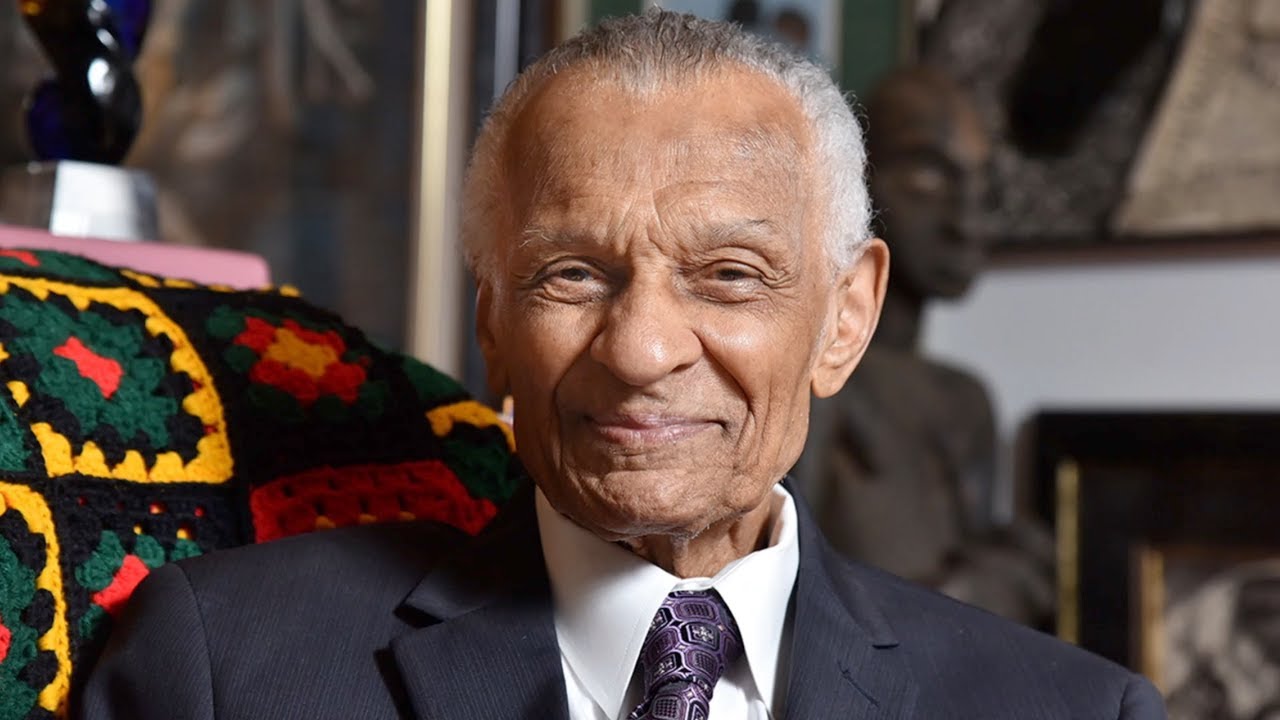
Rev. C.T. Vivian talks MLK and staring death in the face. #MLKDay2026
"Civil Rights icon Rev. C.T. Vivian reflects on a lifetime of struggle, from facing childhood bullies to confronting Jim Clark, and shares his profound insights on the continuous fight for freedom and the true cost of a movement."

Secret Podcast Preview: The Last Temptation of Sarah Longwell
"Sarah Longwell and JVL delve into Pete Buttigieg's evolving political philosophy and critically analyze a viral tweet about Democratic election lessons, revealing their differing views on institutional reform and voter sentiment."