
Trump Treasury Secretary SNAPS On CLUELESS NBC Host As NATO Receives BRUTAL Reality Check!
YouTube · kv9Ups5AkX8
Quick Read
Summary
Takeaways
- ❖Iran's missile range is significantly longer than previously believed, putting European capitals at risk.
- ❖The Trump administration is allegedly executing a 'Jiu-Jitsu' economic strategy by temporarily lifting Iranian oil sanctions to stabilize global prices before seizing Car Island.
- ❖Capturing Car Island, which handles 90% of Iran's oil exports, would permanently cut off Iran's funding and shift oil supply to US allies.
- ❖The overarching goal is US energy dominance, controlling critical choke points (Strait of Hormuz, Car Island) to gain leverage over China and power future AI compute.
- ❖The host frames this as a 'checkmate' move, establishing American global dominance for the next 50-100 years.
Insights
1Iran's Extended Missile Capabilities Threaten Europe
An attempted attack suggested Iran's missile reach extends 2500 miles, capable of striking Diego Garcia and, by extension, more European countries. This capability was previously underestimated, changing the threat assessment.
The host references an 'attempted attack' and states Diego Garcia is 2500 miles from Iran, implying this range puts European capitals at risk.
2The 'Jiu-Jitsu' Sanctions Strategy on Iranian Oil
The Trump administration strategically lifted sanctions on Iranian oil stored on tankers, allowing it to be sold to Asian allies instead of exclusively to China at a discount. This move, while seemingly counterintuitive, aims to stabilize global oil prices and provide the US with better oversight of Iran's oil revenue, preventing it from being 'recycled' through China.
Treasury Secretary Scott Bessant explains that Iranian oil was always going to China at a discount. Lifting sanctions allows it to go to Japan, Korea, Indonesia, etc., giving the US 'much better line of sight' to block accounts, effectively using Iran's oil against them.
3The Car Island Capture Plan: Iran's Economic Choke Point
The core of the strategy involves capturing Car Island, which is responsible for over 90% of Iran's oil exports. This action, preceded by destroying fortifications in the Strait of Hormuz and buffering allies with unsanctioned oil, would permanently cut off Iran's primary revenue source, leading to the regime's collapse.
The host details that Car Island is responsible for 'over 90% of their oil exports' and its capture would 'cut off Iranian oil revenue permanently,' leading to the regime's toppling.
4Energy Dominance as a Foundation for AI Supremacy
The ultimate goal of controlling global energy flows (Iranian, Venezuelan, Saudi oil) is to secure American dominance for the next century. This energy control is framed as essential for powering future AI development and compute, giving the US a critical strategic advantage.
The host states, 'Whoever wins AI is going to win the next century. You need energy in order to power AI. And if the world is dependent on the US for energy, that puts us in a great strategic position.'
Bottom Line
The connection between controlling global energy resources and powering future AI compute is a critical, often overlooked, aspect of long-term geopolitical strategy.
Nations vying for AI supremacy must also secure vast, reliable energy sources. This reframes energy policy as a direct component of technological and military dominance.
Investing in energy infrastructure and securing strategic energy assets globally becomes paramount for any nation aiming for leadership in the AI era.
The host suggests that the Trump administration's foreign policy is not about short-term gains but is designed for a 20-50 year strategic horizon, aiming to establish multi-century American dominance.
This perspective implies that current actions, often criticized or misunderstood, are part of a much larger, intricate plan, requiring a different lens for analysis.
Analysts and policymakers should consider longer-term implications (decades, not just years) when evaluating current geopolitical maneuvers, especially concerning critical resources and emerging technologies.
Key Concepts
Jiu-Jitsu Strategy
Using an opponent's strength or existing situation (Iran's oil, which China was already buying at a discount) against them. By temporarily lifting sanctions, the US gains visibility and control over oil sales to allies, buffering against future price shocks when Car Island is seized.
Geopolitical Checkmate
A decisive strategic move that renders an opponent (Iran) helpless by cutting off their economic lifeline and regional influence, without necessarily requiring a full-scale ground invasion.
Long-Term Strategic Thinking (20-50 Year Horizon)
The idea that current geopolitical and economic moves are not for immediate gains but are foundational steps to establish dominance and control over critical resources (energy, rare earth minerals) for future centuries, particularly in the context of emerging technologies like AI.
Lessons
- Re-evaluate geopolitical strategies by considering how control over energy resources directly impacts future technological dominance, particularly in AI.
- Analyze the 'Jiu-Jitsu' approach to sanctions: how seemingly counterintuitive economic moves can serve a broader, long-term strategic objective.
- Consider the potential for non-traditional military objectives, such as seizing critical economic infrastructure (like oil export hubs) as a primary means of regime change or control, rather than full-scale invasion.
The 'Cuba Iran' Strategy for Economic Strangulation and Regime Toppling
**Destroy Military Capabilities**: Systematically demolish the target nation's air force, navy, and missile systems (e.g., Iran's capabilities).
**Secure Choke Points**: Demolish fortifications along critical maritime routes (e.g., Strait of Hormuz) to ensure control over shipping.
**Buffer Allies with 'Jiu-Jitsu' Sanctions**: Temporarily lift sanctions on existing oil supplies to flood the market and stabilize prices, mitigating the impact of future disruptions on allies while gaining oversight of revenue flows.
**Seize Economic Lifeline**: Capture the primary resource export hub (e.g., Car Island for Iran) to permanently cut off the regime's funding.
**Achieve Economic Freefall**: The loss of revenue leads to domestic economic collapse, inability to fund military or proxies, and ultimately, regime change or irrelevance.
Notable Moments
The host directly challenges the mainstream media's narrative, stating they don't have 'good framing' of the situation and are 'too busy black pilling' or suffering from 'Trump derangement' to understand the strategic genius.
This highlights a significant ideological divide in interpreting geopolitical events and underscores the host's contrarian stance, framing his analysis as a revelation of hidden truths.
The Treasury Secretary's blunt response to the NBC host, 'Kristen, you're missing the point, so please listen to me. They were getting it from China anyway,' regarding the lifted sanctions.
This exchange exemplifies the perceived disconnect between the administration's strategic thinking and the media's immediate interpretation, reinforcing the host's argument about misunderstood policy.
Quotes
"Iran came out and said, 'Yeah, we've been lying to you guys the whole time, right? We actually do have capabilities that are better than we let on.'"
"We have demolished the Iranian capabilities. Their air force is completely destroyed, navy destroyed, and every day we are taking out their missiles, their missile systems, and the factories that build those missiles."
"We are jiu-jitsuing the Iranians. We are using their own oil against them. We have a much better line of sight."
"The best weapon that Iran has right now is elevated oil prices. The reason why is because with the sanctions limiting the supply of oil going to the rest of the world that is driving up the price."
"Whoever wins AI is going to win the next century. You need energy in order to power AI. And if the world is dependent on the US for energy, that puts us in a great strategic position."
Q&A
Recent Questions
Related Episodes

Patrick Henningsen: Hezbollah JUST Fired Back at Israel - Iran Vows to “Crush” All Attacks
"Patrick Henningsen argues that the US and Israel initiated an illegal war against Iran, driven by Trump's incompetence and Israeli influence, leading to an inevitable escalation with severe global economic repercussions."
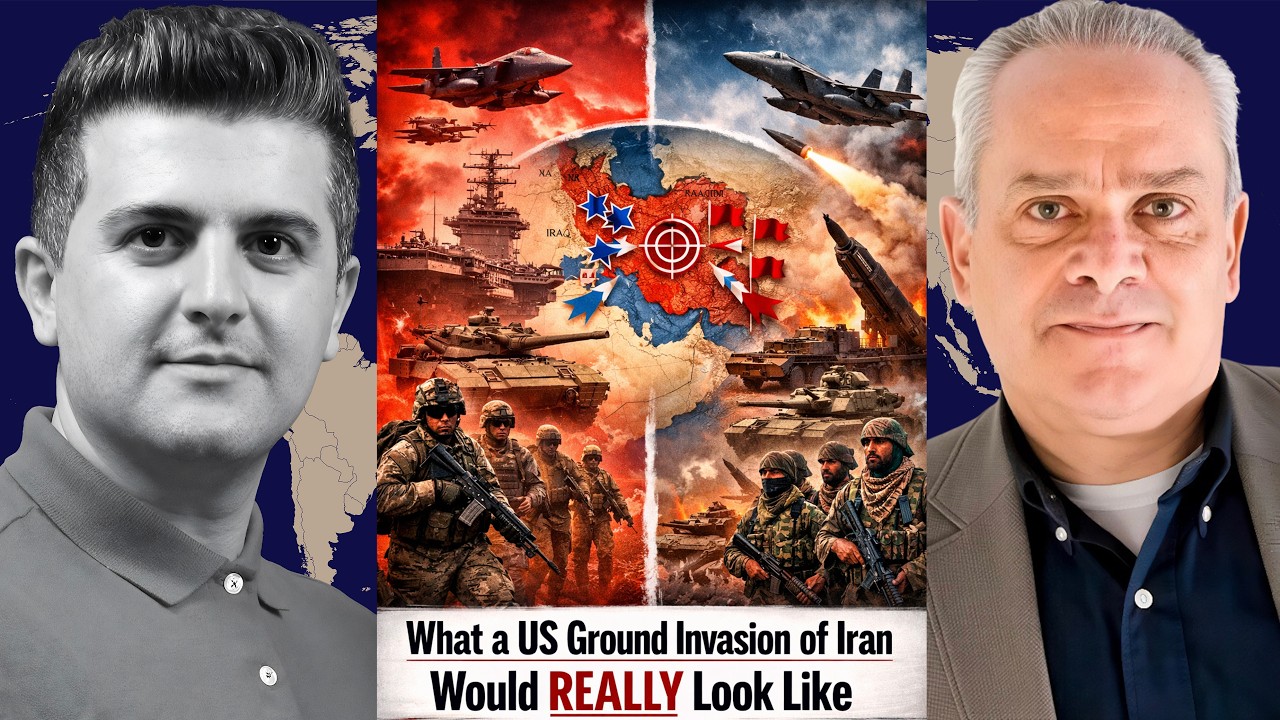
Col. Jacques Baud: What a US Ground Invasion of Iran Would REALLY Look Like
"Colonel Jacques Baud dissects the strategic futility of a US ground invasion of Iran, arguing that current troop levels are insufficient and such an action would backfire, exposing US allies and potentially leading to Iran's nuclearization."
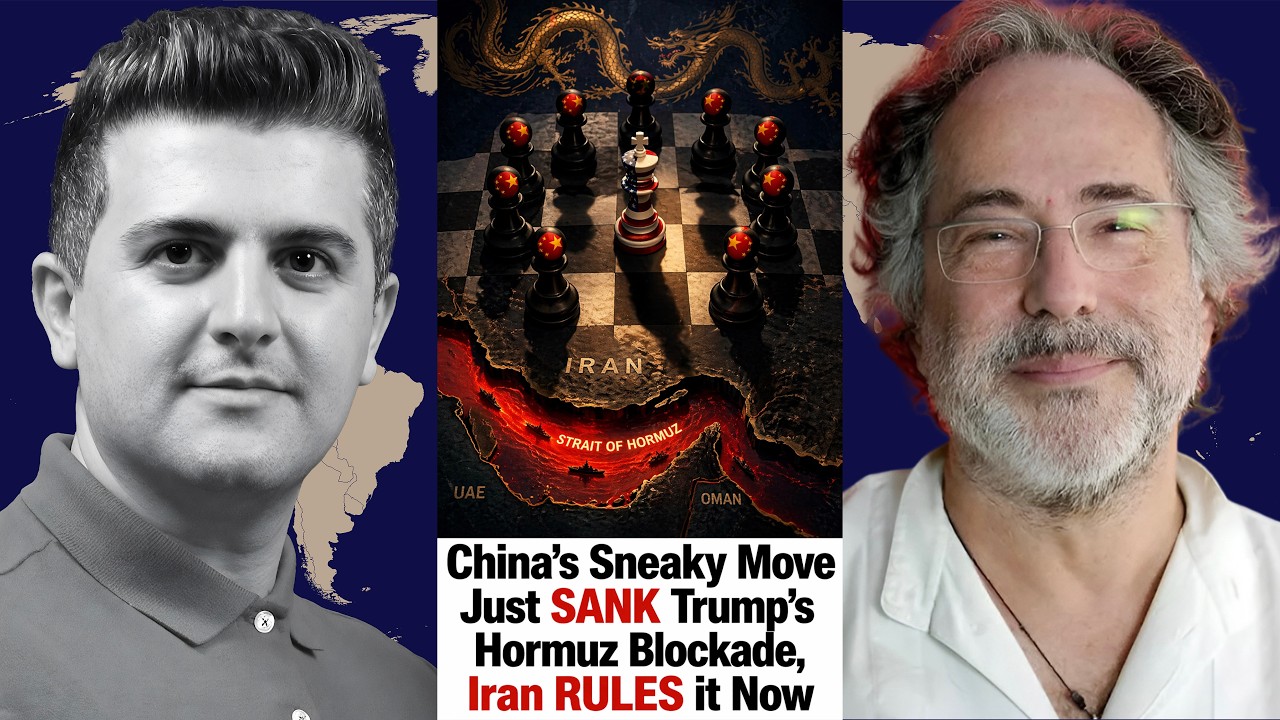
Pepe Escobar: “Total Failure”: Trump’s Blockade Just Backfired Disastrously
"Pepe Escobar argues that the US blockade against Iran, spearheaded by Donald Trump, has utterly failed and backfired, accelerating global economic chaos and challenging US geopolitical dominance."

Bibi DEMANDS Ground Troops As Marines Rushed to Iran
"Benjamin Netanyahu is pushing for US ground troops in Iran, framing air strikes as insufficient, while the US rushes Marines to the region and struggles to secure the Strait of Hormuz against surprisingly capable Iranian defenses."